CDX Plywood vs BC Plywood: Which to Use for Subfloor?
Use CDX plywood for hidden subfloors that will sit under underlayment or a forgiving finish floor. Choose BC plywood when the top surface needs to be flatter and cleaner, with fewer face defects. Wrong panel choice can telegraph bumps through thin flooring, weaken fastener holding, and lead to extra patching or replacement. This guide compares CDX and BC for subfloors, explains when each belongs, and gives a simple decision rule for your project.
| Decision factor | CDX Plywood | BC Plywood | Winner |
|---|---|---|---|
| Up-front cost | Usually starts around a lower price point per 4 x 8 sheet. | Costs can vary; a standard 4 x 8 sheet may run from under $40 to over $60. | CDX Plywood |
| Surface quality | C-grade face with more visible defects. | B-grade face is smoother and cleaner. | BC Plywood |
| Structural use | Common structural sheathing for hidden subfloors. | Can be used for subfloor, but the better face does not change the structural job. | Tie |
| Moisture tolerance during construction | Exposure 1 glue tolerates temporary construction moisture. | Exposure 1 glue tolerates temporary construction moisture. | Tie |
| Best fit for visible or sensitive finishes | Less suitable when surface defects could telegraph through thin flooring. | Better when the top layer needs a cleaner, flatter base. | BC Plywood |
What the letters mean
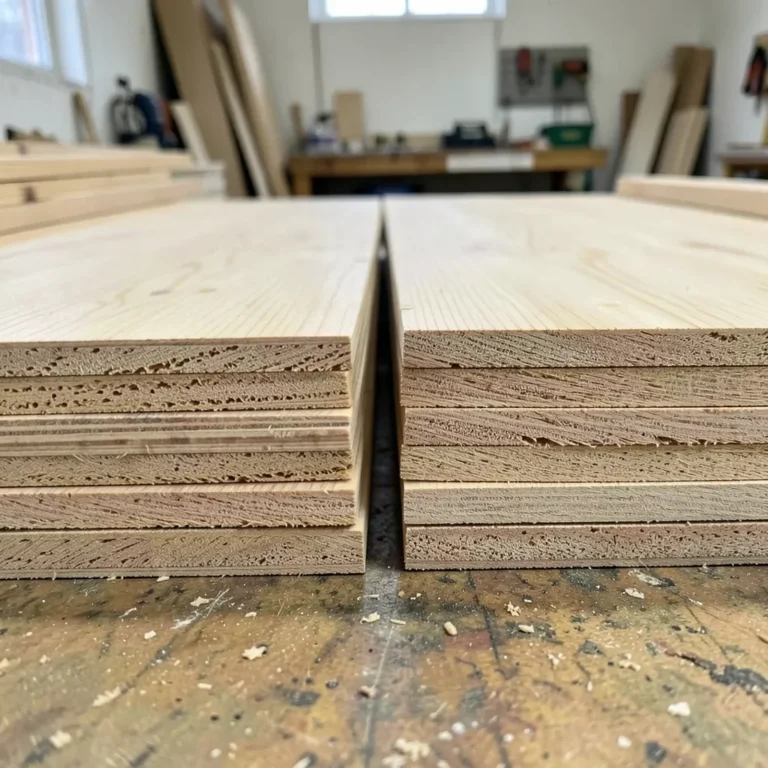
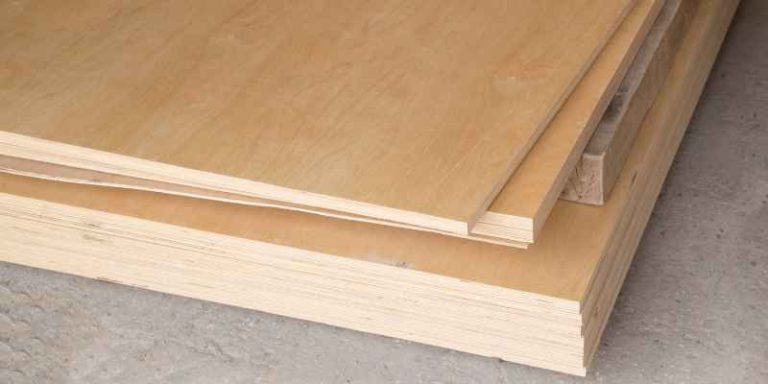
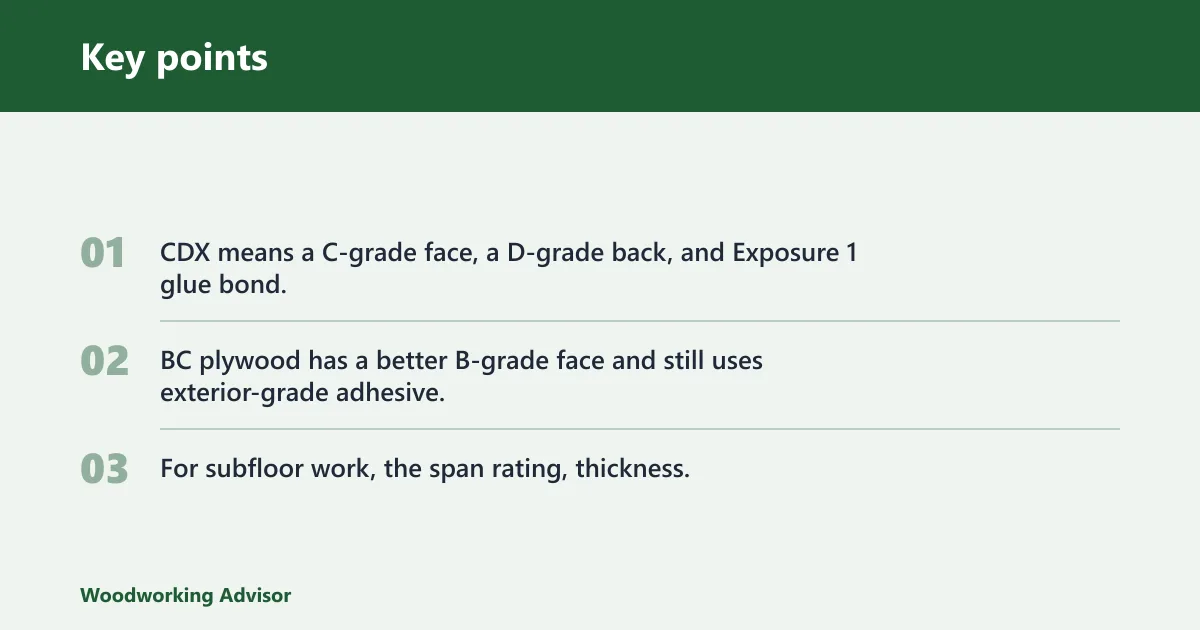
CDX means a C-grade face, a D-grade back, and Exposure 1 glue bond. BC plywood has a better B-grade face and still uses exterior-grade adhesive, so glue performance is not the separator here. For subfloor work, the span rating, thickness, and edge detail matter more than the face grade.
Is CDX plywood good for subfloor?
Yes, CDX plywood is a common subfloor panel when the assembly will be covered and the panel meets the required span rating and thickness. It is a practical choice because it balances cost, structural use, and temporary moisture tolerance without paying for a better-looking face you will not see.
When CDX is the right call
Choose CDX for hidden subfloors under carpet, many floating floors, or other forgiving coverings. It also fits rooms where the panel will be covered by underlayment, where a smooth face is not the priority, and where the budget matters more than appearance.
When CDX is the wrong call
Skip CDX when the subfloor will be visible, when tile needs a cleaner base, or when a thin finish floor may telegraph ridges and voids. In those jobs, the rougher face can mean extra patching, more prep, or a better panel choice from the start.
A good-looking top veneer does nothing for a panel that sits under flooring. In a concealed assembly, the key question is whether the panel meets the span stamp, thickness, and edge requirements for the joist spacing.
Can BC plywood be used for subfloor?
Yes, BC plywood can be used for subfloor, and it is often the better choice when the surface matters more than the budget. Its smoother B face helps when you want fewer blemishes at the top of the assembly, but the structural decision still depends on thickness and span rating first.
What the smoother face changes
The B-grade face gives you a cleaner panel surface than CDX. That matters if the panel will stay visible longer during a project, if you need a flatter substrate for finish work, or if you want fewer face defects telegraphing through thin coverings.
When BC plywood is worth the extra cost
BC plywood earns its keep when the top layer is sensitive to surface flaws, or when you want less patching before installing a finish floor. Say your bathroom subfloor stays exposed for a while before tile backer goes down; the cleaner face can make layout and prep easier.
When the face grade does not matter
Once the panel is fully buried under underlayment and a forgiving floor covering, the B face is mostly wasted money. In that case, a correctly rated CDX panel gives the same structural role for less cost.
What thickness plywood do you need for subfloor?
Subfloor plywood often needs 3/4-inch or thicker panels depending on joist spacing. For 16-inch on-center joists, 5/8-inch tongue-and-groove plywood is the practical minimum in some guidance, while 3/4 inch is the common preference. For 19.2 to 24-inch on-center joists, use 3/4-inch or thicker rated sheathing.
Joist spacing and span rating stamps
Check the APA span-rating stamp before you buy. A stamp such as 32/16 tells you the maximum joist spacing the panel is rated for, and that matters more than the face grade for structural use. If the stamp does not match the framing, leave the sheet at the yard.
Tongue-and-groove versus square edge
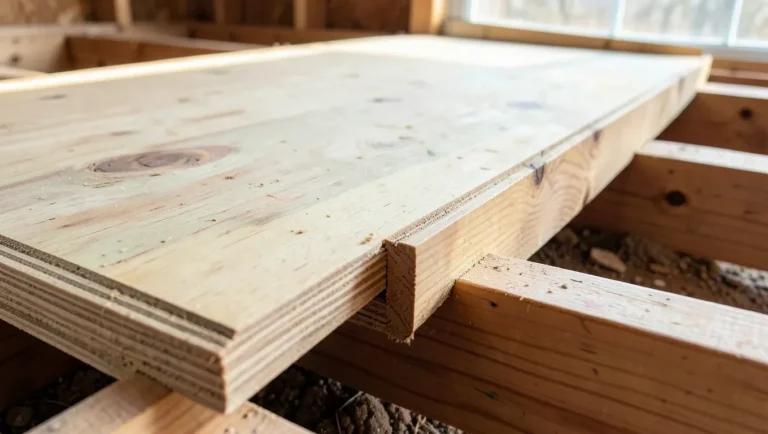
Tongue-and-groove subfloor panels lock adjacent sheets together at the edges, which reduces movement at the joint and helps prevent squeaks. That interlocking edge is most useful on 3/4-inch panels and on spans where edge support matters more.
CDX Plywood vs BC Plywood checklist
- Missing span stamp or unreadable APA rating
- Wrong thickness for the joist spacing
- Non-T&G panels where tongue-and-groove is required
- Damaged edges, delamination, or crushed corners
Subfloor choice by finish flooring
The finish floor changes the plywood choice. Carpet and many floating floors can tolerate a rougher hidden subfloor, while tile, thin vinyl, and other defect-sensitive finishes need a flatter, cleaner base. Hardwood falls in between: it can hide some flaws, but a wavering subfloor still invites squeaks and visible movement.
Carpet and floating floors
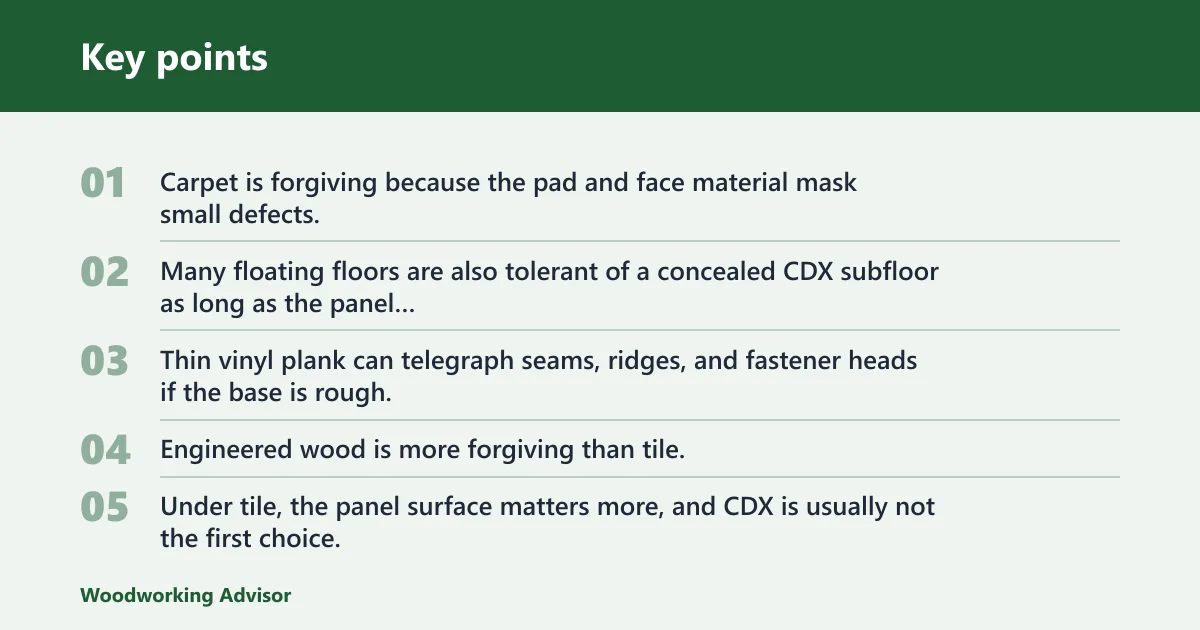
Carpet is forgiving because the pad and face material mask small defects. Many floating floors are also tolerant of a concealed CDX subfloor as long as the panel meets the span rating and thickness requirements and the surface is flat enough for the product limits.
Vinyl plank and engineered wood
Thin vinyl plank can telegraph seams, ridges, and fastener heads if the base is rough. Engineered wood is more forgiving than tile, but it still benefits from a flatter subfloor, especially at seams and around doorway transitions.
Tile and other defect-sensitive finishes
Under tile, the panel surface matters more, and CDX is usually not the first choice. A smoother panel or an added underlayment is a better starting point, because tile and grout expose small humps, dips, and panel-edge movement that a rough subfloor would hide under carpet.
CC plugged plywood for smoother surfaces
For tile, 3/4-inch CC Plugged is recommended instead of CDX. It gives you a smoother surface with fewer open defects, which helps when the finish system needs a cleaner and more stable substrate.
Should I choose plywood or OSB for subfloor?
Plywood and OSB can both work, but the choice often comes down to price, edge behavior, and the finish floor above. OSB is typically a few dollars cheaper per sheet than plywood, but it can swell at cut edges when wet, while plywood is often preferred where temporary moisture exposure and repair tolerance matter more.
Cost and practical fit
If you are covering a large hidden floor and the budget is tight, OSB can save money. If the room has more moisture risk, or if cut edges may sit exposed during a longer build sequence, plywood gives you more comfort at the edges.
Moisture behavior at the edges
OSB is more likely to swell at cut edges if it gets wet before the finish floor goes down. Exposure 1 plywood still is not an outdoor panel, but it tolerates temporary construction moisture better than panels that are not rated for that exposure.
Choose CDX Plywood if… / Choose BC Plywood if…
Choose CDX Plywood if the subfloor will be hidden, the finish floor is forgiving, budget matters, and the panel matches the span stamp and thickness required for the joist spacing. Choose BC Plywood if the subfloor or substrate will be more visible, the finish is surface-sensitive, or you want a cleaner top face without changing the structural design.
Room moisture risk
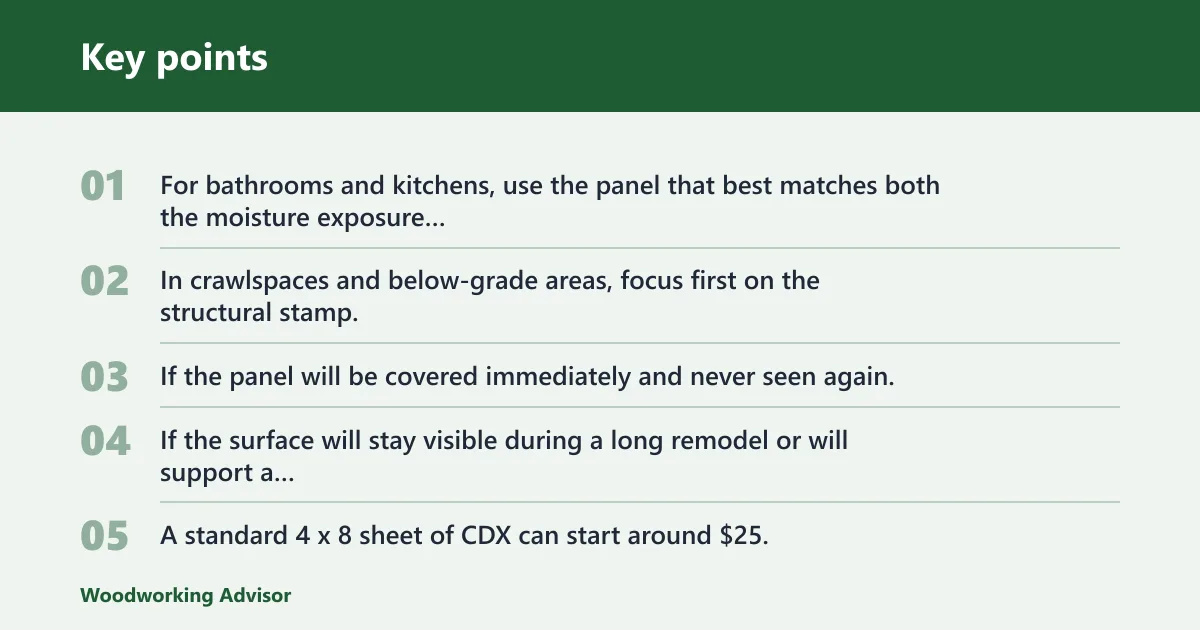
For bathrooms and kitchens, use the panel that best matches both the moisture exposure during construction and the finish floor above. In crawlspaces and below-grade areas, focus first on the structural stamp, then choose the face grade only if surface quality matters later.
If the panel will be covered immediately and never seen again, CDX is usually the sensible buy. If the surface will stay visible during a long remodel or will support a defect-sensitive finish, BC plywood is easier to live with.
Budget and surface quality trade-offs
A standard 4 x 8 sheet of CDX can start around $25, while a standard 4 x 8 sheet of BCX can range from below $40 to over $60. That gap adds up quickly across a room, so spend the extra only when the cleaner face or flatter substrate will affect the final result.
Scenario examples
Say your 12 by 14 bedroom will get carpet over a concealed subfloor. CDX is the practical pick if the panel stamp fits the joists and the sheet thickness is correct, because the carpet hides the face defects and the extra BC face would not change performance.
Suppose a kitchen remodel uses a thin vinyl plank over a new subfloor. BC plywood or a smoother underlayment is the safer choice, because the floor will show ridges and patches more easily than carpet would.
CDX vs BC plywood for subfloor
| Joist spacing | Room moisture risk | Finish flooring type | Visible subfloor? | Recommended panel grade | Reason to choose it |
|---|---|---|---|---|---|
| 16-inch on-center | Low | Carpet | No | CDX Plywood | Concealed subfloor where cost and structural rating matter more than face quality. |
| 16-inch on-center | Moderate | Vinyl plank | No | BC Plywood | Cleaner face helps reduce surface defects that can telegraph through thin flooring. |
| 19.2 to 24-inch on-center | Moderate | Floating floor | No | CDX Plywood | Use 3/4-inch or thicker rated sheathing; the span stamp matters more than veneer grade. |
| 16-inch on-center | High | Tile | Yes, during build | BC Plywood | Cleaner panel face is better for prep, but 3/4-inch CC Plugged is better under tile. |
| 19.2 to 24-inch on-center | High | Tile | Yes, during build | CC Plugged plywood | Smoother surface and better tile prep than CDX, with thickness and span rating suited to the framing. |
Frequently asked questions
What is the difference between CDX and BC plywood for subfloor?
CDX has a C-grade face and a D-grade back, while BC plywood has a smoother B-grade face. Both use exterior-grade adhesive, so the main difference is surface quality and price, not a structural leap. For hidden subfloors, CDX is usually enough.
Do I need tongue-and-groove plywood for subfloor?
Not every floor requires it, but tongue-and-groove panels are the better choice when you want tighter joints and fewer squeaks. The interlocking edges help reduce movement at sheet seams, especially on 3/4-inch subfloors where edge support is important.
Sponsored / affiliate links. As an Amazon Associate I earn from qualifying purchases. I may earn additional commission from eligible campaigns.