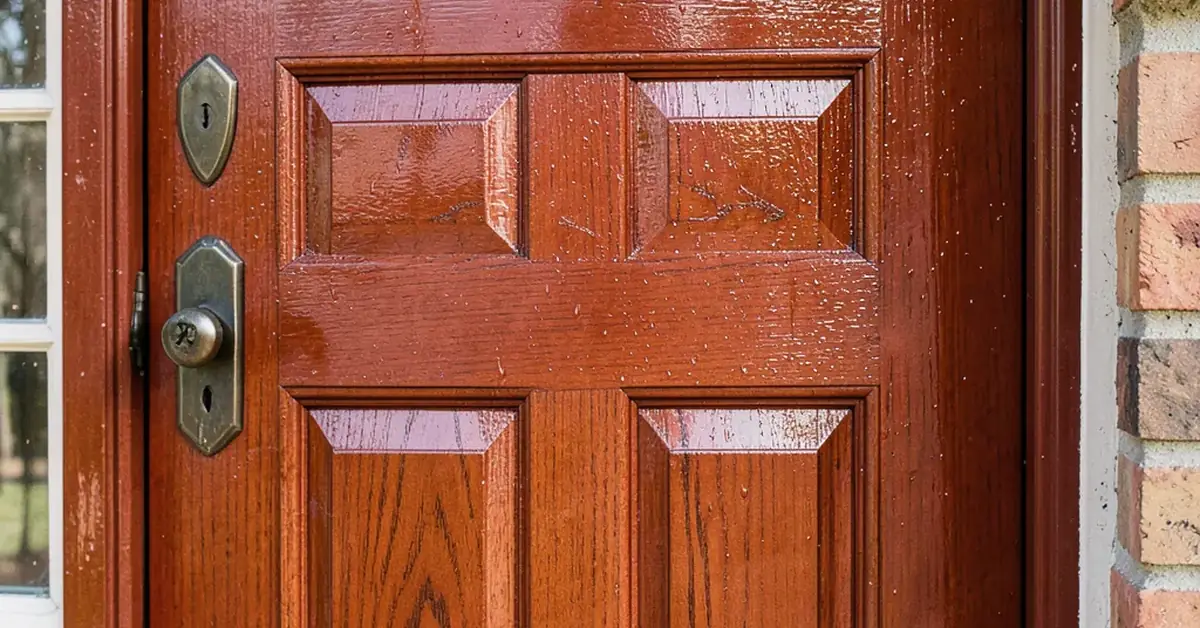
Mahogany Exterior Wood Paint: Primer + Topcoat Combo That Works
Mahogany exterior wood paint needs a shellac-based stain-blocking primer before any topcoat — mahogany’s natural tannins bleed through latex-only systems and leave rust-brown blotches within weeks. Skipping that primer step is the single most common reason mahogany paint jobs fail early, especially under white or light colors.
This guide covers the primer-and-topcoat system that actually blocks tannin bleed, why 100% acrylic latex now outperforms oil-based topcoats, and how to prep mahogany so the color holds for 5+ years instead of 1–2.
Why Mahogany Needs a Shellac Primer Before Any Topcoat
Best Mahogany Primer Pick
 |
Zinsser B-I-N Shellac Primer-Sealer – $29.77 Blocks mahogany’s natural tannins from bleeding through the topcoat — the exact prep step the Preparation section below covers before any paint goes on.
|
As an Amazon Associate we earn from qualifying purchases.
Mahogany is a dense, oil-rich hardwood with natural tannins that migrate to the surface as paint dries. According to Sherwin-Williams, mahogany will almost always bleed tannin stains through paint — especially white and light colors — unless the surface is sealed first with an alkyd/oil or shellac-based stain-blocking primer.
Shellac primer is the more reliable choice of the two: it dries in under an hour, sands to a smooth finish, and locks in tannins better than latex-only “stain blocking” primers, which often let brown discoloration bleed through within the first rainy season.
📊 Mahogany bleeds tannin stains through paint in most cases, regardless of paint quality, if the wood isn’t sealed first. — Source: Sherwin-Williams, Tannin Staining
Characteristics Of Mahogany Wood
Mahogany wood is valued for its density, tight grain, and natural resistance to rot and insects, which is part of why it holds up so well outdoors once it’s properly sealed and painted.
Durability Against The Elements
- Water resistance: Mahogany’s tight grain sheds water better than open-grained woods like oak.
- Rot resistance: Naturally resistant to decay, though painted mahogany still needs sealed end grain to stay that way.
- Pest resistance: Less attractive to wood-boring insects than pine or fir.
Distinct Grain And Color
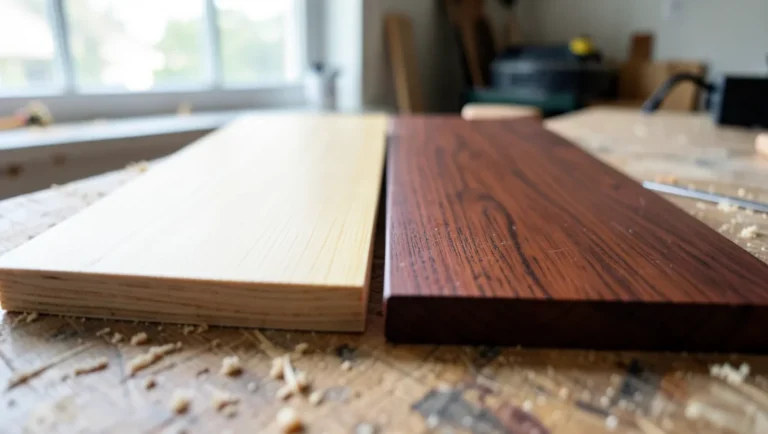
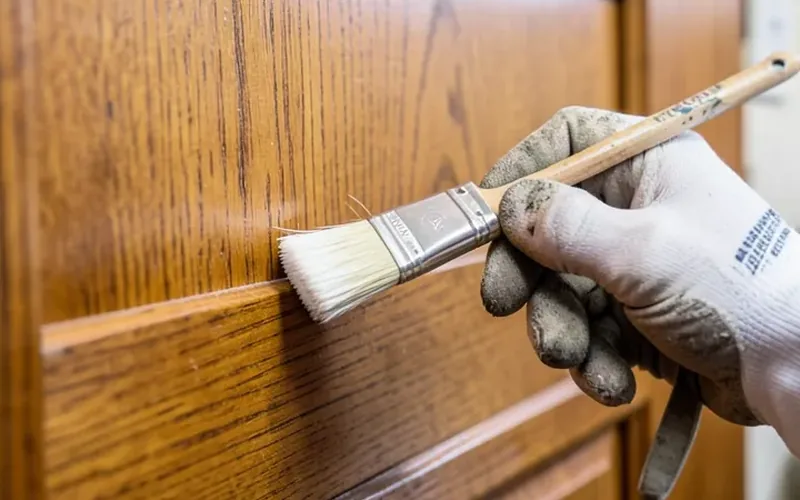
Mahogany’s heartwood ranges from light reddish-brown to deep red, and it darkens with age and UV exposure. No two boards look identical, which is why test patches matter more on mahogany than on more uniform woods like poplar.
Choosing The Right Topcoat: Acrylic Vs. Oil
100% acrylic latex is the better topcoat choice for mahogany today, not oil-based paint. Oil-based topcoats were the old standard, but modern acrylic-latex formulas now match or exceed oil’s durability while staying flexible enough to move with mahogany’s seasonal expansion and contraction — oil paint gets brittle over time and is more prone to cracking on dense hardwoods.
The system that holds up best: an oil-based or shellac stain-blocking primer, followed by two coats of 100% acrylic exterior latex. This combines oil’s superior tannin-sealing with acrylic’s flexibility and UV stability.
| Finish | Sheen Level | Best For |
|---|---|---|
| Semi-Gloss | Medium-high | Doors, trim — easiest to clean, most weather-resistant |
| Satin | Low-medium | Larger wall/siding areas where high gloss looks too busy |
| Matte/Flat | None | Not recommended for mahogany exteriors — traps dirt, hides less wear but sheds water worse |
Semi-gloss is the safest default for mahogany doors and trim specifically because it’s the easiest sheen to keep clean and shows water beading rather than absorption — a visual cue that the topcoat is still doing its job.
Preparation And Application
Proper preparation determines whether the primer-and-topcoat system above actually works. Rushing this stage is the second most common cause of early paint failure on mahogany, after skipping the primer entirely.
- Clean the surface: Remove dirt, mildew, and old paint with a pressure washer or soap and water. Let the wood dry fully — at least 48 hours in dry weather.
- Sand the wood: Use medium-grit sandpaper first, then fine-grit to smooth the surface and help the primer bite.
- Check for damage: Fill cracks or holes with an exterior-rated wood filler and let it cure completely before priming.
- Prime with shellac or oil-alkyd primer: Apply one full coat, covering all bare wood including end grain, which bleeds tannins the most.
- Topcoat with acrylic latex: Apply two thin coats, allowing full dry time between coats per the label — usually 4–6 hours.
Paint in dry, moderate-temperature weather (50–85°F) and follow the wood grain with each stroke. Thin coats prevent drips and dry more evenly than one thick coat.
Maintenance For Longevity
A correctly primed and topcoated mahogany surface still needs routine care to reach its full lifespan.
- Clean regularly: Soft brush and mild soap, rinsed well.
- Inspect annually: Look for hairline cracking or dulling, which shows up before full peeling does.
- Touch up early: Spot-prime and repaint small worn areas as soon as they appear rather than waiting for a full failure.
The Environmental Aspect Of Wood Painting
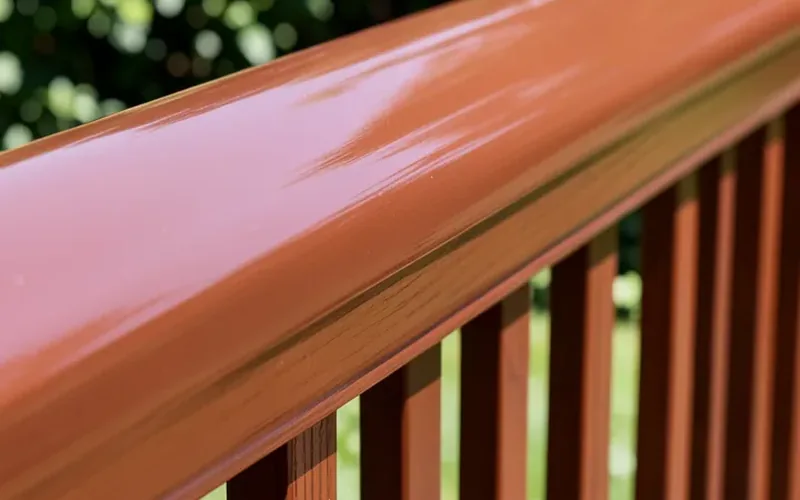
Low-VOC and water-based acrylic formulas have closed most of the performance gap with oil-based paints while cutting harmful emissions, which is part of why acrylic latex is now the recommended topcoat over oil on mahogany.
| Paint Type | Environmental Impact |
|---|---|
| Low-VOC acrylic | Reduces air pollution, lower odor during application |
| Water-based | Fewer harmful solvents than oil-based paints |
| Shellac primer (spot use) | Higher VOC but used in small quantities as a sealer coat only |
How Long Does Mahogany Exterior Paint Actually Last?
With a proper shellac or oil-alkyd primer and two coats of 100% acrylic latex, a mahogany exterior paint job typically lasts 5–7 years on doors and trim before it needs a fresh coat, versus 1–2 years when the primer step is skipped and tannins bleed through early. South- and west-facing surfaces with heavy sun exposure will land at the shorter end of that range regardless of prep quality.
Frequently Asked Questions
What Is Mahogany Exterior Wood Paint?
Mahogany exterior wood paint refers to exterior-rated paint used on mahogany surfaces, paired with a stain-blocking primer. It protects against moisture, UV rays, and weathering while working with mahogany’s natural tannins instead of letting them bleed through.
How Do I Apply Mahogany Exterior Wood Paint?
Clean and sand the surface, fill any damage, then apply one coat of shellac or oil-alkyd primer over all bare wood, including end grain. Once the primer is fully dry, apply two thin coats of 100% acrylic latex paint, letting each coat dry fully before the next.
Is Mahogany Exterior Wood Paint Durable?
Yes, but only when the mahogany is sealed with a stain-blocking primer first. Skip that step and even premium paint will show tannin bleed-through and early peeling within a season. Primed correctly, a 100% acrylic topcoat resists cracking and fading for 5 or more years.
How Often Should I Repaint Mahogany Surfaces?
Expect to repaint every 5 to 7 years with proper primer and acrylic topcoat, or every 1 to 2 years if the original job skipped the primer. Inspect annually for hairline cracking or dulling sheen, which shows up before visible peeling does.
Can I Use Regular Oil-Based Paint On Mahogany?
Not as the topcoat. Use an oil-based or shellac primer to seal tannins, but finish with 100% acrylic latex on top. Oil-based topcoats are more brittle and prone to cracking on dense hardwoods like mahogany than modern acrylic formulas.
Why Does Paint Turn Brown Or Yellow On Mahogany Doors?
That discoloration is tannin bleed — natural compounds in mahogany migrating through the paint film, most visible under white or light colors. According to Sherwin-Williams, mahogany almost always bleeds tannins unless it’s sealed first with a shellac or oil-alkyd stain-blocking primer.
Conclusion
Mahogany exterior wood paint jobs fail early for one reason more than any other: skipping the stain-blocking primer that keeps tannins from bleeding through. Seal bare mahogany with a shellac or oil-alkyd primer, finish with two coats of 100% acrylic latex in a semi-gloss sheen, and a properly prepped surface will hold its color for 5 to 7 years.
Sponsored / affiliate links. As an Amazon Associate I earn from qualifying purchases. I may earn additional commission from eligible campaigns.