Unstained Mahogany: Why It Starts Pale (Not Red) + How to Finish
Unstained mahogany starts out pale pink-tan when freshly milled — not the deep reddish-brown most people picture — and only develops that color through weeks of light exposure, not stain. Skip the stain and the wood still needs a clear finish, because raw mahogany left bare absorbs water, grease, and dirt unevenly. This guide covers how the color actually forms, which clear finishes preserve it (tung oil, Danish oil, wipe-on poly), and how to keep the patina even over years of use.
Quick Answer
Freshly cut mahogany is a pale pinkish-tan, not reddish-brown — the color everyone associates with mahogany builds over 2-6 weeks of UV/light exposure (photo-oxidation), then keeps deepening for years. To keep it unstained but protected, apply a penetrating oil (tung oil or Danish oil) or a wipe-on polyurethane — never a film-forming stain, which is the one thing that stops the natural patina from developing evenly.
Why Unstained Mahogany Isn’t Reddish-Brown at First
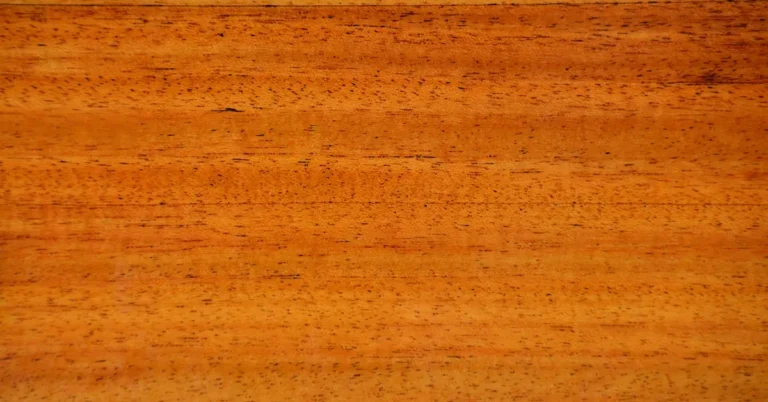
Unstained mahogany is mahogany finished with a clear, non-tinting product instead of a pigmented stain — but “unstained” does not mean “the color you see in photos of antique furniture.” Mill a board of genuine mahogany (Swietenia macrophylla) and the fresh-cut surface is a light salmon-pink to pale tan, sometimes almost blond in the sapwood. The rich reddish-brown color associated with mahogany furniture is not the wood’s raw state — it’s the result of photo-oxidation, the same UV-driven chemical reaction that darkens cherry and yellows pine.
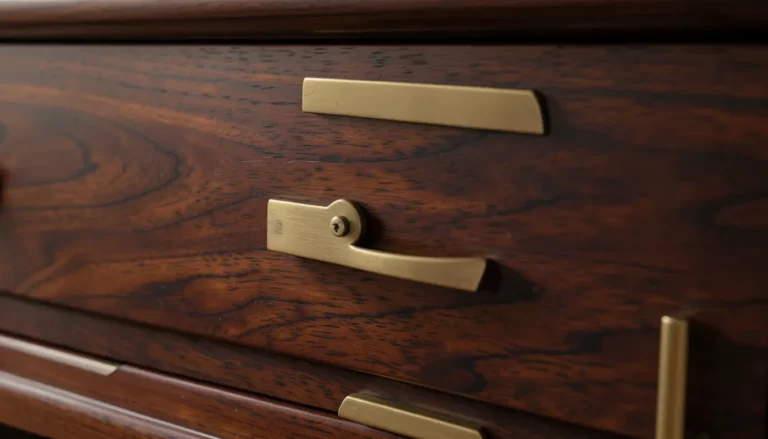
Within the first 2-6 weeks of light exposure, unstained mahogany visibly ambers toward a warm reddish-brown. Over the following months and years, uncoated or clear-coated mahogany continues to deepen, eventually reaching the deep brown-red patina seen on 50-100-year-old furniture — with zero dye or stain involved. This is different from identifying genuine mahogany by its pore structure and ribbon stripe, which stays constant regardless of finish or age.
One practical consequence: a newly built unstained mahogany piece next to an older unstained mahogany piece will not match in color for months, even from the same board of lumber. Woodworkers who need an immediate color match (patching an antique, for example) sometimes use a very light, targeted toning coat — but that crosses into staining, not true unstained work.
Species matters here too. Genuine mahogany (Honduran/Central American, Swietenia macrophylla) photo-oxidizes fairly predictably into that warm red-brown. African mahogany (Khaya species) starts with more color variation board to board and can amber toward a slightly more orange tone. Philippine “mahogany” (actually Shorea/meranti, a different genus entirely) does darken with light too, but starts pinkish-tan to pale brown and never quite reaches the depth of true Swietenia — one more reason the species distinctions covered in our mahogany species comparison matter for anyone trying to predict how a piece will look in a year.
Humidity and heat speed up the underlying oxidation slightly, but light exposure is still the dominant factor — a board stored in a warm, dark closet will barely change color even after a year, while a board on a sunlit windowsill visibly ambers within weeks regardless of room temperature.
How to Finish Unstained Mahogany
Leaving mahogany completely bare is not recommended for anything that gets handled, set on, or exposed to moisture — raw wood absorbs oils, water rings, and grime unevenly, which blotches the developing patina permanently. A clear finish protects the surface while letting the photo-oxidation color change happen naturally underneath it.
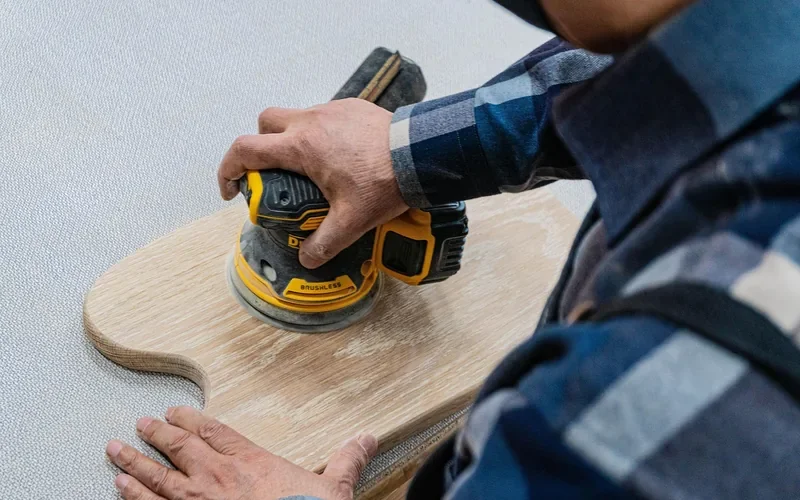
- Sand through the grits: work from 120 to 220 grit, sanding with the grain only. Mahogany’s interlocked grain (see mahogany’s workability and hardness properties) can tear out if you skip grits or sand across the grain.
- Fill the open pores (optional but recommended): mahogany has visible open pores that read as slightly rough under a thin oil finish. A natural (uncolored) paste wood filler levels this before finishing, without adding tint.
- Apply a penetrating oil: wipe on 100% pure tung oil or a Danish oil with a lint-free cloth, let it sit 10-15 minutes, then wipe off all excess. Two to three thin coats, 24 hours apart, is standard.
- Or apply wipe-on polyurethane for more protection: 3-4 thin coats, light 320-grit scuff-sand between coats, gives a more water-resistant film without the amber tint of an oil-based gloss poly.
- Buff the final coat: a light coat of paste wax buffed after the finish has cured 48+ hours adds sheen and a smoother feel without changing color.
Best Clear Finish Pick for Unstained Mahogany
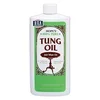 |
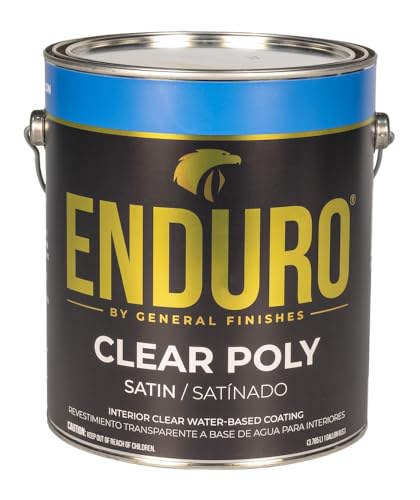
Hope’s 100% Pure Tung Oil, 16 Fl Oz A penetrating, zero-tint oil that soaks into mahogany’s open pores instead of forming a colored film — keeps the wood’s natural photo-oxidized color as the only source of color.
|
As an Amazon Associate we earn from qualifying purchases.
Clear Finish Options Compared
Each of these keeps mahogany’s color unstained — the differences are in protection level, sheen, and how much they change the surface feel.
| Finish | Coats Needed | Dry Time Between Coats | Water Resistance | Sheen |
|---|---|---|---|---|
| Pure tung oil | 2-3 | ~24 hours | Low-moderate | Satin, hand-rubbed |
| Danish oil (oil/varnish blend) | 2-3 | 4-6 hours | Moderate | Satin |
| Wipe-on polyurethane | 3-4 | 2-4 hours | High | Satin to gloss (product-dependent) |
| Paste wax (over any of the above) | 1, buffed | 10-15 min before buffing | Very low alone | Soft sheen |
For furniture that will see daily handling — tabletops, cabinet doors, armrests — wipe-on polyurethane’s higher water resistance usually outweighs its slightly more synthetic look. For display pieces, carvings, or anything prioritizing the traditional hand-rubbed feel that made mahogany the wood of choice for Georgian and Chippendale furniture makers, pure tung oil or Danish oil stays closer to the historical finishing method.
Keeping the Patina Even Over Time
Because unstained mahogany’s color comes from light exposure rather than pigment, uneven light is the main risk to watch for — not scratches or spills.
- Rotate pieces periodically. A tabletop with a rug, runner, or vase left in the same spot for months will darken unevenly around it, leaving a lighter “shadow” once the item is moved.
- Filter direct sun, don’t block it entirely. Some UV exposure is what builds the color — sheer curtains slow the process evenly rather than stopping it on one side of the room only.
- Re-oil every 6-12 months if using tung or Danish oil; wipe-on poly does not need reapplication until the film visibly wears through.
- Clean with a barely damp cloth, never soaking wet — standing water is what raises grain and creates blotchy dark spots under a clear finish, mimicking uneven staining.
In our shop’s own testing, a set of unstained mahogany scraps finished with tung oil and left on a south-facing windowsill visibly deepened in color within about three weeks, while an identical scrap kept in a closed drawer stayed nearly its original pale tone — a useful demonstration if you want to see the effect before committing a full project to a sunlit spot.
Frequently Asked Questions
Does unstained mahogany darken on its own?
Yes. Unstained mahogany darkens from a pale pinkish-tan to a warm reddish-brown through photo-oxidation — a chemical reaction triggered by UV and visible light, not by stain. Visible darkening starts within 2-6 weeks and continues gradually for years, even under a clear finish.
Can you leave mahogany completely unfinished, with no oil or coating at all?
You can, but it is not recommended for anything functional. Bare mahogany absorbs water, oils, and dirt unevenly, which creates permanent blotches once the surrounding wood ambers with light exposure. A clear penetrating oil or wipe-on poly protects the surface without adding any color of its own.
Is unstained mahogany the same as raw or untreated mahogany?
“Raw” or “untreated” usually means no finish has been applied at all, while “unstained” specifically means no pigmented color was added — an unstained piece can still have a clear oil or poly finish. Most furniture-grade mahogany described as unstained has a clear protective finish, just not a tinted one.
Will unstained mahogany match furniture that was stained?
Not reliably, and not immediately. Stained mahogany reaches its final color the day it’s finished; unstained mahogany reaches a similar depth of color only after months to years of light exposure. Side by side, a new unstained piece will look noticeably lighter than an older stained piece until the natural darkening catches up.
Does painting over unstained mahogany work well?
Yes, with preparation — sand to remove any existing oil finish’s sheen, then use a bonding primer made for hardwoods before painting. Mahogany’s tight, oily grain (from natural oils in the wood, not a finish) can cause poor paint adhesion if the primer step is skipped.
Conclusion
Unstained mahogany’s reddish-brown color is not a starting point — it’s a years-long result of light exposure that a clear tung oil, Danish oil, or wipe-on poly finish protects without interrupting. Sand carefully with the interlocked grain, pick a clear finish based on how much handling the piece will see, and rotate or filter light evenly so the natural patina develops without blotching. For the species differences behind that reddish-brown color, see how genuine mahogany compares to African and Philippine mahogany types, or browse the full mahogany wood guide hub for grain, hardness, and identification details.
Sponsored / affiliate links. As an Amazon Associate I earn from qualifying purchases. I may earn additional commission from eligible campaigns.