Mahogany Wood Mirrors: Real Mahogany vs. ‘Mahogany Finish’, and What to Check Before Buying
Most mirrors sold as “mahogany” are actually a cheaper wood (often rubberwood, poplar, or MDF) stained or finished to mimic mahogany’s reddish-brown color, not genuine mahogany itself. That distinction matters more than it sounds — real mahogany has different weight, hardness, and grain character, and it costs meaningfully more, so knowing the difference before buying prevents paying a mahogany-level price for a mahogany-colored finish.
How to Tell Real Mahogany From “Mahogany Finish”
Actually Made of Mahogany
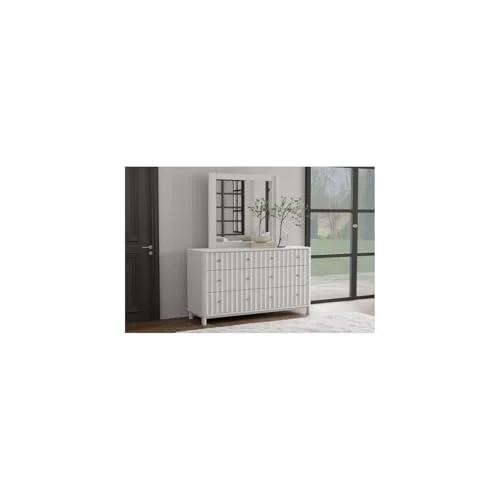 |
Maykoosh Mirror, Mahogany Solids & Veneers – $236.90 Listed material is mahogany specifically, not a generic “wood” or “mahogany finish” on a different species.
|
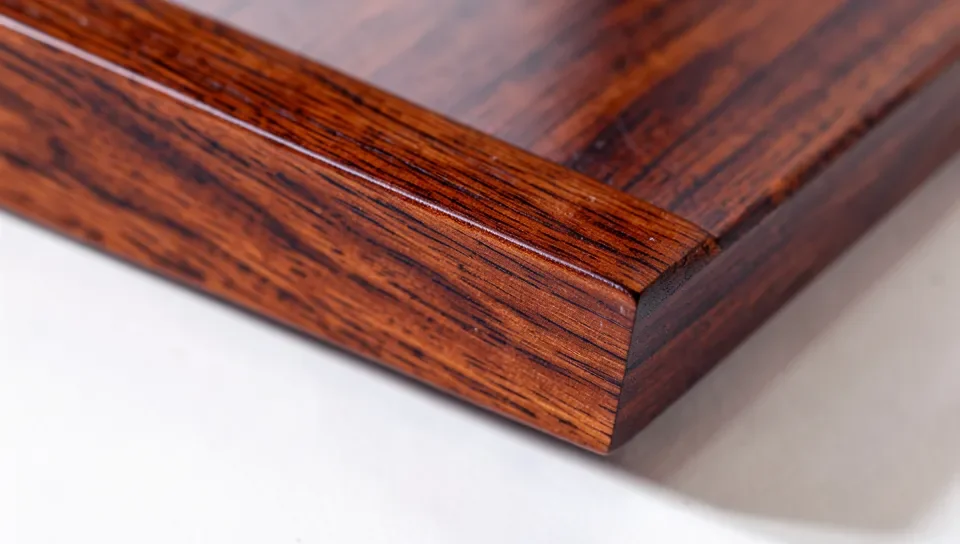
Genuine mahogany has a fine, straight-to-interlocked grain with a slight natural sheen even unfinished, and it’s noticeably heavier than budget hardwoods like rubberwood or poplar of the same size. Product listings that say “mahogany finish,” “mahogany-style,” or just “wood” with a reddish-brown photo are describing the color, not the species — look specifically for “solid mahogany,” “mahogany veneer,” or “mahogany” listed directly under the Material field, not just in the product name or marketing copy, since the name is often chosen for search visibility rather than accuracy.
Honduran Mahogany Is CITES-Restricted — African Mahogany Usually Isn’t
True Honduran mahogany (Swietenia macrophylla) is listed under CITES Appendix II due to overharvesting concerns, which restricts its international trade and is a real reason it’s become harder to find and more expensive over the past two decades. Most mahogany furniture and mirrors sold today actually use African mahogany (Khaya species), which isn’t CITES-restricted, is more readily available, and looks similar enough that most buyers can’t tell the difference by eye. If a listing specifically claims genuine Honduran or Cuban mahogany at a suspiciously low price, that claim is worth being skeptical of — it’s more likely African mahogany or a different species mislabeled than the real, trade-restricted wood.
Solid vs. Veneer Construction
Many mahogany mirror frames use veneer (a thin layer of real mahogany bonded over a substrate like MDF or a cheaper solid wood) rather than solid mahogany throughout, which isn’t a defect — it’s a legitimate way to get real mahogany’s appearance and grain at a lower cost and with less wood movement than a solid frame. Solid mahogany is more resistant to surface damage since sanding out a scratch removes real wood all the way through, while a veneer that gets scratched deeply enough can expose the substrate underneath. For a mirror frame specifically, where movement/joint stress matters less than on a large tabletop, veneer construction is a reasonable and common choice, not a corner-cutting one.
Care: What Actually Damages a Mahogany Mirror Frame
Direct sunlight is the most common real damage source for mahogany furniture — UV exposure fades and shifts its color over time, more noticeably than on lighter woods because the color change from rich reddish-brown to a duller, grayer tone is more visually obvious. Dust with a soft, dry or slightly damp cloth rather than furniture polish sprays with silicone, which can build up a hazy film on a finished mahogany surface over repeated use. An occasional coat of furniture wax (not oil, which can darken and blotch a factory-finished piece unevenly) maintains shine on a solid mahogany frame specifically; a veneered frame generally just needs dusting, since the factory finish over the veneer is thinner and more sensitive to added products.
Why Mahogany Was the Standard for Historic Mirror Frames
Mahogany became the dominant furniture wood in Georgian and Federal-era design (roughly the mid-1700s through early 1800s) largely because it carves crisply without splintering, takes a high polish, and is dimensionally stable compared to the oak and walnut it replaced. Chippendale-era mirror frames in particular relied on mahogany’s carvability for detailed scrollwork and shell motifs that would chip out in a coarser-grained wood. That historical pedigree is part of why mahogany still reads as “traditional” or “formal” in a mirror frame today, even in a otherwise modern room, in the same way brass hardware or a claw foot signals a specific design lineage.
Janka Hardness and What It Means for a Mirror Frame
Genuine mahogany runs around 800-900 lbf on the Janka hardness scale depending on species and growing conditions — softer than oak (1,290 lbf) or maple (1,450 lbf), but harder than pine (420 lbf for eastern white pine). For a mirror frame, that mid-range hardness is actually a practical advantage: it’s dense enough to hold fine carved detail and resist everyday dings, but soft enough to carve, sand, and finish without the tool wear or splintering risk that oak’s harder, more open grain presents. This is part of why mahogany remained the preferred wood for detailed frame work even after harder, cheaper domestic woods became widely available.
Frame Styles That Actually Suit Mahogany
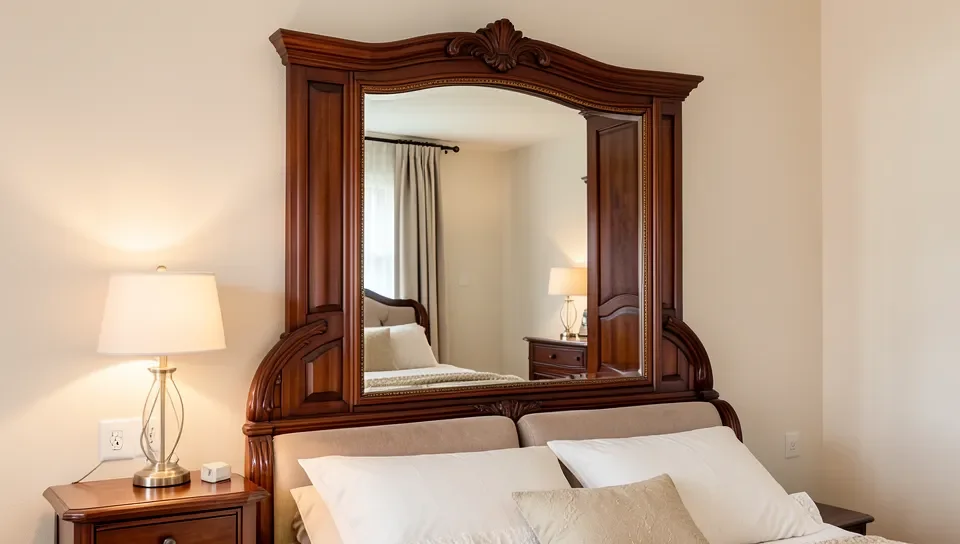
A wide, ornately carved frame profile showcases mahogany’s ability to hold crisp detail and suits traditional, Federal, or Chippendale-inspired rooms. A slim, unadorned frame with a simple beveled edge lets the wood’s grain and color carry the design on its own, which works better in a transitional or modern room where heavy carving would feel out of place. Oval and arched-top frames were historically common specifically because mahogany’s workability made curved, shaped frame stock practical to produce, unlike a brittle hardwood that would be prone to breaking along a curved cut.
Sizing and Placement for a Mahogany Frame
A mahogany frame’s visual weight is heavier than a light wood or a thin metal frame of the same dimensions, both literally and stylistically, so sizing rules that work for a minimalist metal-framed mirror don’t transfer directly. Over a mantel or mahogany console table, a mahogany mirror generally looks proportional at roughly two-thirds the width of the furniture below it rather than the same width, since the frame’s visual density needs breathing room on either side to avoid looking cramped. In a hallway or entryway, a narrower, taller mahogany frame reads as more traditional and formal, while a wider horizontal frame suits a more relaxed, transitional space.
Pairing Mahogany With Other Wood Tones in a Room
Mahogany’s reddish-brown undertone doesn’t automatically clash with cooler wood tones the way some warm-vs-cool pairing rules suggest — a mahogany mirror next to gray-toned oak flooring or a cool walnut dresser can work fine as an intentional contrast, rather than needing every wood in the room to match. Where mismatches actually read as accidental rather than intentional is when two different reddish woods of noticeably different saturation sit close together (a bright cherry-red piece next to a deep mahogany one, for example) — that’s the pairing worth avoiding, more than mixing mahogany with an unrelated wood tone entirely.
Frequently Asked Questions
Is “mahogany finish” the same as real mahogany?
No. “Mahogany finish” usually means a different, cheaper wood (often rubberwood or MDF) stained to look like mahogany’s color. Check the listed Material field for “solid mahogany” or “mahogany veneer” to confirm it’s genuine.
Is all mahogany furniture restricted or endangered?
No, only Honduran/big-leaf mahogany (Swietenia macrophylla) is CITES-restricted. Most furniture sold today uses African mahogany (Khaya), which isn’t restricted and looks very similar.
Is a mahogany veneer mirror lower quality than solid mahogany?
Not necessarily. Veneer construction is a legitimate way to get real mahogany’s look at a lower cost, and for a mirror frame specifically, it’s a reasonable choice rather than a sign of poor quality.
Conclusion
The real buying question for a “mahogany” mirror isn’t style, it’s species — confirm the Material field actually says mahogany (solid or veneer) rather than trusting a product name chosen for search visibility. Genuine African mahogany, unrestricted and widely available, covers most of what buyers actually want from the look, and understanding the CITES restriction on Honduran mahogany explains why a “genuine” claim at a bargain price deserves a second look.
Sponsored / affiliate links. As an Amazon Associate I earn from qualifying purchases. I may earn additional commission from eligible campaigns.