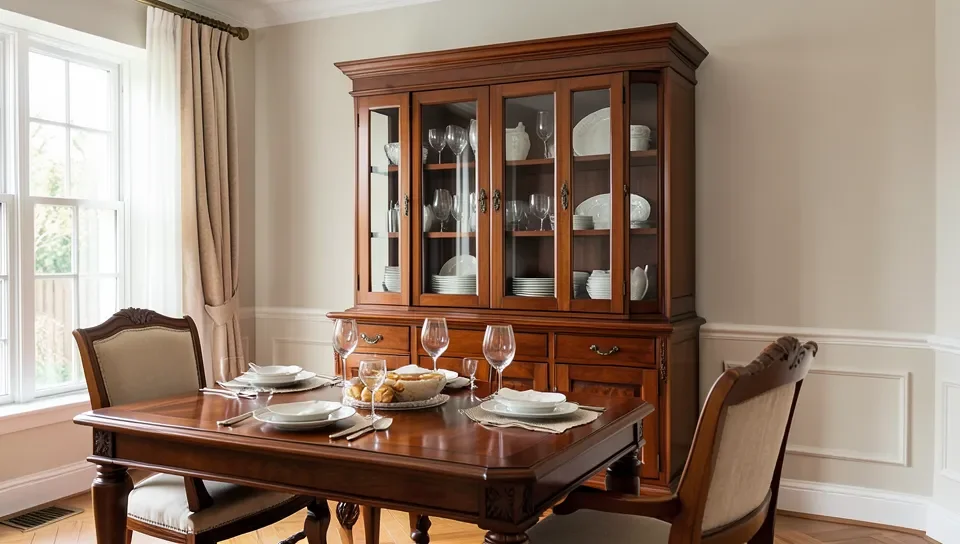
Mahogany Wood Hutch: Real vs. Veneer, and Why Weight Matters More Than Style
A genuine mahogany hutch (real mahogany pricing varies more than you might expect) is noticeably heavier than a particleboard or MDF piece with a mahogany-colored laminate, and that weight is actually one of the more reliable ways to spot the difference in person — a real hardwood hutch of comparable size takes two people to move comfortably, while a composite piece often doesn’t. Since you usually can’t lift a piece before buying online, checking the listed Material field directly (not just the color name or finish) is the practical substitute for that weight test.
Solid Mahogany vs. Mahogany Veneer vs. Mahogany Finish
Listed Material: Solid Mahogany
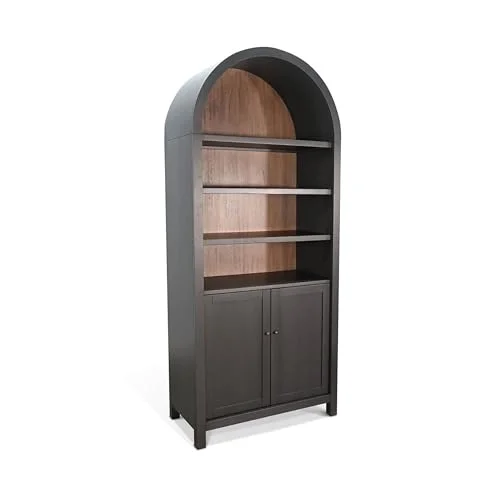 |
Benzara Arched Display Cabinet, Solid Mahogany – $1,312.10 Material field explicitly says solid mahogany wood, not a mahogany-colored composite.
|
Three genuinely different things get sold under “mahogany hutch”: solid mahogany construction throughout, mahogany veneer (a thin real-mahogany layer over a composite or cheaper wood core), and mahogany finish (a different material entirely, stained to mahogany’s color). All three are legitimate products at different price points, but only the first two involve actual mahogany wood. Check the listing’s Material field specifically — “solid mahogany,” “mahogany veneer,” or a named substitute like MDF or particleboard with a mahogany finish should be stated directly, not inferred from the product name or photos.
Why Weight Matters Beyond Just Spotting Real Wood
Beyond authenticity, a hutch’s actual weight matters for two practical reasons a lighter composite piece doesn’t share: stability (a heavier piece is less prone to tipping, especially a tall hutch loaded with dishware) and floor load, since a genuinely large solid-wood hutch fully loaded with china can weigh several hundred pounds, worth checking against your floor’s load capacity in an older home or a second-story dining room. Anti-tip wall anchoring is worth doing regardless of material or weight, but it’s a more urgent safety step for a tall, top-heavy hutch than for a low, wide piece of the same overall weight.
Care: What’s Different From a Mahogany Table or Mirror
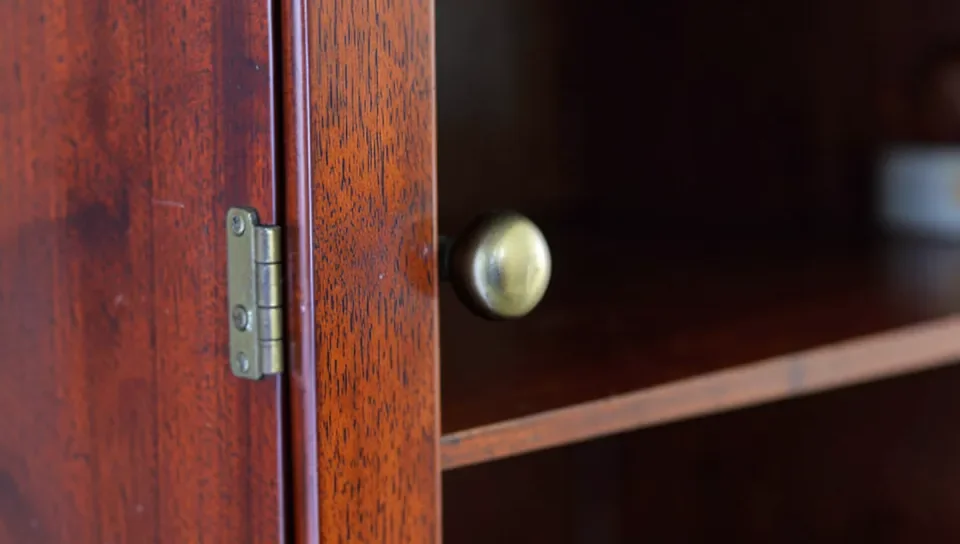
A hutch’s glass doors and interior shelving see different wear than a tabletop or mirror frame — interior shelves rarely need more than dusting, but hinges and door hardware on a frequently-used hutch benefit from an occasional drop of light oil to prevent squeaking and premature wear, something a rarely-touched mirror frame never needs. Direct sunlight through a nearby window remains the biggest real threat to a mahogany hutch’s finish over time, same as with any mahogany furniture, so placement away from a sun-facing window matters as much as any product choice.
Hutch, China Cabinet, or Sideboard: Which Is Which
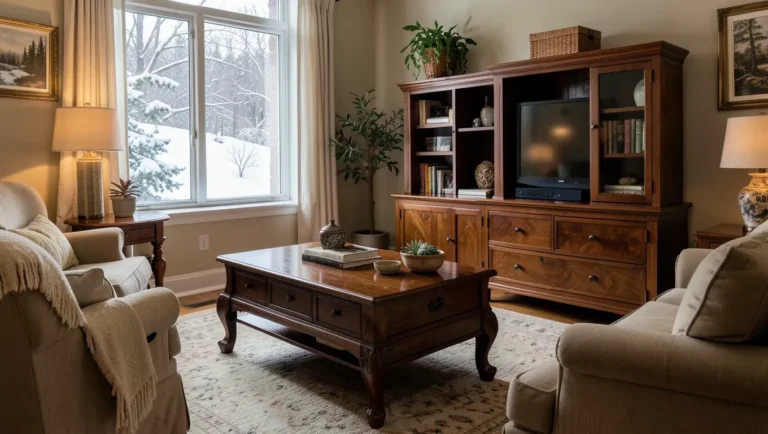
These terms overlap in casual use but describe genuinely different pieces: a hutch typically means a two-part unit with a lower cabinet/drawer base and an upper glass-front display section (sometimes sold with the two parts separable for moving); a china cabinet is usually a single tall unit built primarily for display with less base storage; a sideboard is low and wide with no upper display section at all, built for serving and storage rather than showing off dishware. Mahogany’s traditional association with formal dining furniture means all three show up in mahogany fairly often, so checking which specific silhouette a listing actually shows (not just the word “hutch” in the title) avoids ordering the wrong configuration for your space.
Historic Design Roots
The mahogany hutch’s formal, symmetrical glass-front design descends from Georgian and Federal-era dining furniture, the same historical period that established mahogany as the standard wood for formal dining rooms generally. Mahogany’s workability let cabinetmakers of that era produce crisp astragal glazing bars (the thin wood strips dividing a glass door into panes) and detailed cornice moldings at the top of the piece, details that would be harder to execute cleanly in a coarser-grained wood and that still define what a “traditional” mahogany hutch looks like today.
Sizing a Hutch to Your Dining Room
Leave at least 36-42 inches of clearance in front of a hutch for a chair to pull out and a person to walk behind it comfortably, more than the 24-30 inches often cited for furniture along a wall that doesn’t get walked behind. A hutch wider than roughly two-thirds the length of the wall it sits against generally reads as proportional; wall-to-wall coverage tends to look crowded rather than intentional, similar to the sizing guidance that applies to a mahogany mirror over a console table. Measure the doorway and any hallway turns the piece has to pass through before ordering, not just the final room — a tall two-piece hutch that separates into an upper and lower section for moving is often the more practical choice for a home with narrow doorways or a tight stairwell turn.
Frequently Asked Questions
How can I tell if a hutch is real mahogany before buying online?
Check the listing’s Material field for “solid mahogany” or “mahogany veneer” specifically, not just the product name or a mahogany-colored photo, which can describe a finish on a different material entirely.
Is mahogany veneer a lower-quality option than solid mahogany?
Not necessarily. Veneer construction is a legitimate way to get real mahogany’s appearance at a lower cost, though solid mahogany is more resistant to deep scratches since there’s real wood all the way through.
Do I need to anchor a mahogany hutch to the wall?
Yes, anti-tip wall anchoring is worth doing on any tall hutch regardless of material, and it’s especially important on a tall, top-heavy piece loaded with dishware.
Conclusion
A mahogany hutch’s real weight is a genuine tell that a mahogany-colored composite piece can’t replicate — check the listed Material field directly rather than trusting the product name, anchor a tall piece to the wall regardless of material, and keep it away from direct sunlight to protect the finish over time.
Sponsored / affiliate links. As an Amazon Associate I earn from qualifying purchases. I may earn additional commission from eligible campaigns.