Mahogany Wood Chairs: 800-900 Janka Hardness & Real vs Fake
Mahogany chairs rate 800-900 lbf on the Janka hardness scale, tougher than walnut but softer than red oak – plenty for daily dining use, but soft enough to dent under a dropped cast-iron pan. Many “mahogany” chairs sold today are actually sapele or lyptus with a mahogany-tone stain, not Swietenia species at all. This guide covers real hardness numbers, how to tell genuine mahogany from a look-alike, and how to keep a mahogany chair looking sharp for decades.
How Hard Is Mahogany, Really?
Genuine mahogany (Honduran/big-leaf, Swietenia macrophylla) sits at roughly 800-900 lbf on the Janka scale. That’s a middle-of-the-road number for furniture-grade hardwood – hard enough to resist everyday dings, soft enough to carve and finish without a fight. Here’s how it stacks up against the woods most often compared to it for chair frames.
| Wood | Janka Hardness (lbf) | Chair-Frame Verdict |
|---|---|---|
| Eastern White Pine | ~380 | Too soft for a load-bearing frame |
| Mahogany (Honduran) | ~800-900 | Good balance of strength and workability |
| Black Walnut | ~1,010 | Slightly harder, pricier, darker grain |
| Red Oak | ~1,290 | Harder and more dent-resistant, heavier |
| Hard Maple | ~1,450 | Hardest of the five, but tougher on hand tools |
For more on how mahogany’s hardness compares to specific rivals, see our mahogany hardness breakdown and full properties guide.
Is Your Chair Real Mahogany or a Look-Alike?
A lot of “mahogany” furniture on the market is actually African sapele, lyptus, or gum wood finished with a reddish-brown stain to mimic the real thing. It’s not necessarily a bad chair – sapele is a legitimate, durable wood in its own right – but you should know what you’re paying for.
- Weight: Genuine solid mahogany feels noticeably heavier per chair than pine or particleboard substitutes, but lighter than oak of the same dimensions.
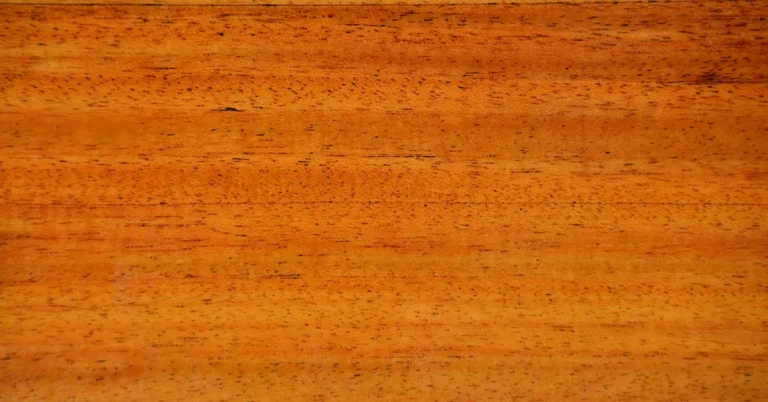
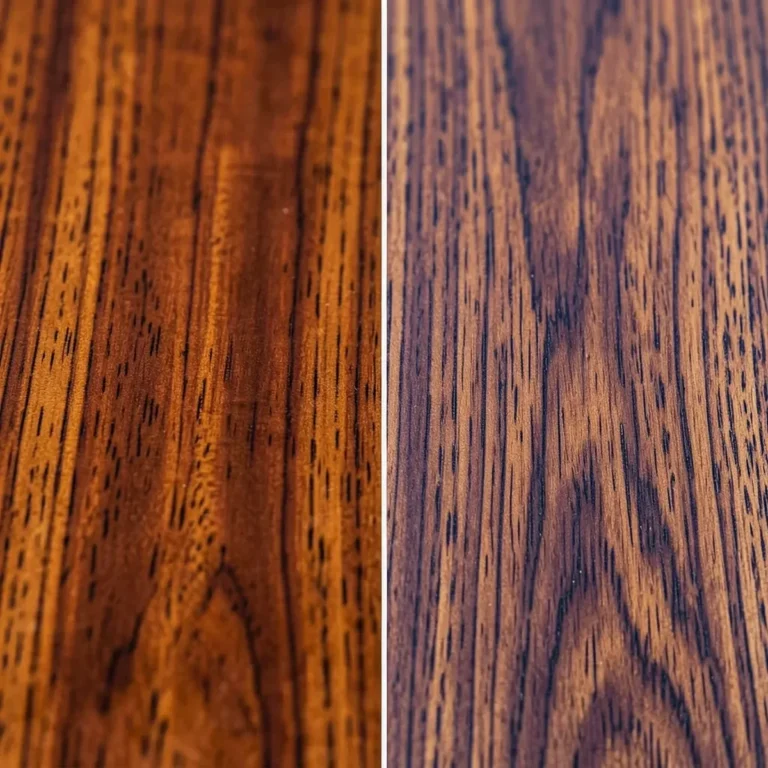
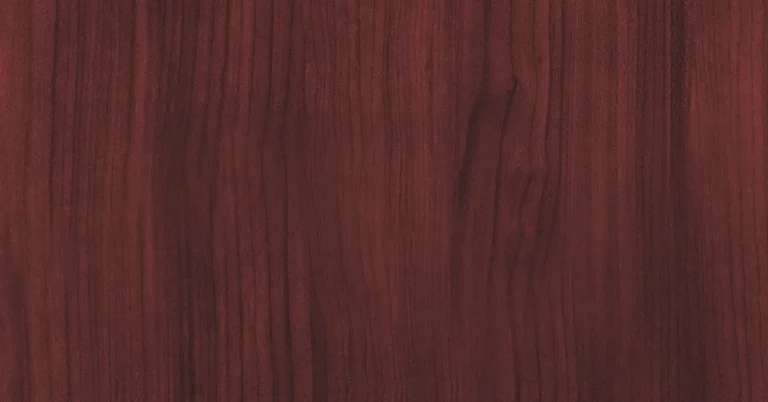
- Grain and ribbon figure: True mahogany shows a fine, straight grain with an occasional interlocked “ribbon” figure that catches light differently as you tilt the piece – a stained substitute usually looks flat and uniform under raking light.
- End grain color: Cut a hidden edge (underside of a rail) and check the end grain – real mahogany is reddish-brown all the way through, not just on the surface.
- Smell when sanded lightly: Genuine mahogany gives off a faint, slightly sweet cedar-like scent; sapele has a more bitter, resinous smell.
- Listing language: “Mahogany finish” or “mahogany-tone” on a listing means stained substitute wood, not solid mahogany. Only “solid mahogany” or a named species (Honduran, African, Swietenia) confirms the real wood.
If you’re deciding between the real thing and a common substitute, our mahogany vs. sapele comparison breaks down price, hardness, and grain differences side by side.
Best Mahogany-Finish Chair Pick
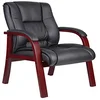 |
Boss Office Products Mid Back Wood Finished Guest Chair, Mahogany A solid mahogany-finished wood frame with upholstered seat and back – a practical entry point if you want the mahogany look on a chair rated for daily seating.
|
As an Amazon Associate we earn from qualifying purchases.
Types of Mahogany Wood Chairs
Mahogany chairs span several period styles, each recognizable by its silhouette rather than the wood itself.
| Style | Distinguishing Feature | Best For |
|---|---|---|
| Chippendale | Pierced splat back, curved cabriole or straight legs | Formal dining rooms |
| Queen Anne | Curved cabriole legs, simple vase-shaped splat | Traditional living rooms |
| Wingback | Tall upholstered back with side panels | Studies, reading nooks |
| Mid-Century Modern | Tapered legs, minimal ornamentation | Contemporary interiors |
For the full species and grain comparison across mahogany varieties, browse the mahogany wood types guide or the complete mahogany hub.
Craftsmanship and Joinery: What Separates a Good Chair From a Cheap One
Chairs take more structural stress than almost any other piece of furniture – leaning back, shifting weight, being dragged across a floor. The joinery matters more than the wood species.
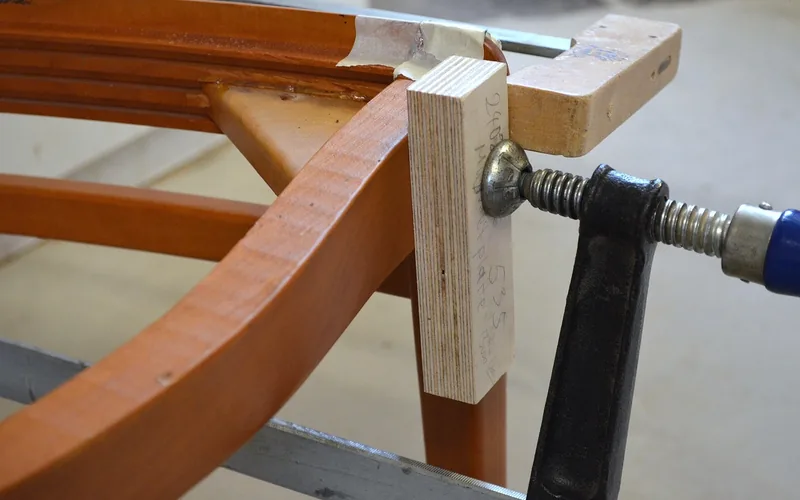
- Mortise-and-tenon joints at the leg-to-seat connection hold up far longer under racking stress than dowel joints or metal corner brackets.
- Corner blocks glued and screwed into the underside of the seat frame reinforce the whole structure – lift the chair and check for them.
- Hand-carved details (splat backs, cabriole legs) take longer to produce and typically signal a higher-grade shop than CNC-only production, though modern CNC work can still be precise and durable.
Styling Your Space With Mahogany Chairs
Mahogany chairs read as formal by default, so the easiest way to keep a room from feeling stuffy is to pair the wood tone with lighter, more casual elements elsewhere in the space.
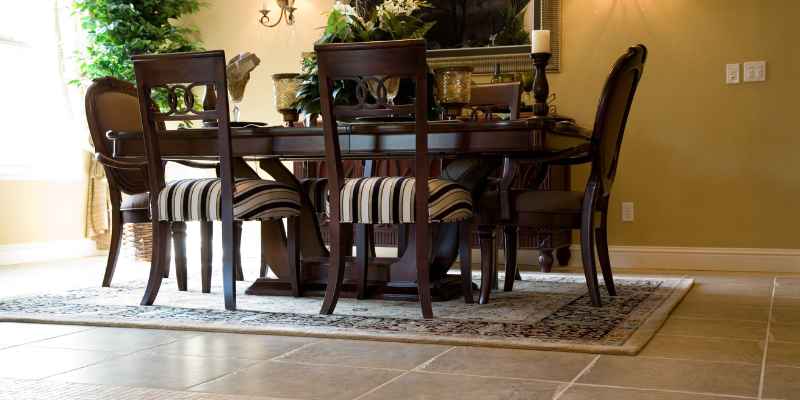
- Neutral walls: White, beige, or soft gray backgrounds let the wood’s color do the work instead of competing with it.
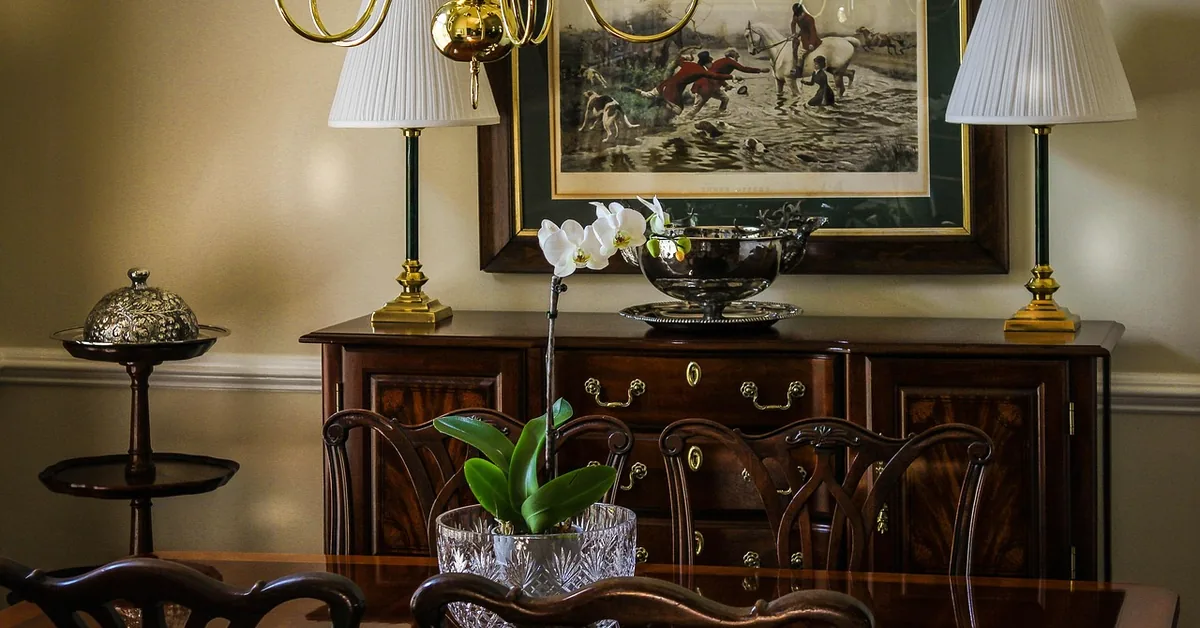
- Mixed metals: Brushed brass or nickel hardware nearby echoes traditional mahogany furniture without looking dated.
- Textured, lighter fabrics: Linen or woven natural-fiber upholstery keeps a mahogany dining set from feeling like a period reproduction.
Caring for Mahogany Chairs
Mahogany’s open grain takes finish well but also shows water rings and scratches more readily than a denser wood like oak, so routine care matters more here than on harder furniture.
| Task | Frequency | Notes |
|---|---|---|
| Dust with a soft, dry cloth | Weekly | Grit left on the surface scratches the finish over time |
| Wipe spills immediately | As needed | Standing liquid can penetrate an aging finish and stain the wood |
| Apply furniture polish or wax | Every 3-6 months | Avoid silicone-based sprays, which can complicate future refinishing |
| Condition with oil | Yearly | Helps prevent the wood from drying and hairline-cracking in low humidity |
Sustainability and Sourcing
Big-leaf (Honduran) mahogany, Swietenia macrophylla, has been listed under CITES Appendix II since November 2003 – the first time a high-volume commercial timber species received that protection. That means legal international trade requires export permits verifying the wood was harvested under an approved management plan, not illegal logging.
- Look for FSC certification on solid mahogany furniture, which verifies the wood came from a managed, legal source.
- African mahogany (Khaya) and sapele are not CITES-listed in the same way and are often used as legal, more sustainable substitutes – one more reason “mahogany finish” pieces are common on the market.
- Ask for species and origin when buying solid mahogany furniture from a smaller retailer; reputable sellers can tell you both.
Frequently Asked Questions
What is the Janka hardness of mahogany used in chairs?
Genuine Honduran mahogany rates roughly 800-900 lbf on the Janka hardness scale. That places it above soft woods like pine (~380 lbf) but below denser hardwoods like red oak (~1,290 lbf) or hard maple (~1,450 lbf), making it a workable middle-ground choice for chair frames.
How can you tell if a chair is real mahogany or a look-alike?
Check the end grain on a hidden edge – real mahogany is reddish-brown all the way through, not just stained on the surface. Genuine mahogany also shows a fine, straight grain with occasional ribbon figure, feels heavier than pine substitutes, and gives off a faint sweet scent when lightly sanded. A listing that says “mahogany finish” rather than “solid mahogany” is describing a stained substitute like sapele.
Is mahogany strong enough for daily-use dining chairs?
Yes. At 800-900 lbf, mahogany comfortably handles the stress of daily seating, leaning, and moderate impact. The joinery – mortise-and-tenon connections and glued corner blocks – matters more to a chair’s longevity than the exact hardness number.
How do you care for a mahogany wood chair?
Dust weekly with a soft, dry cloth, wipe spills immediately, and apply furniture polish or wax every 3 to 6 months. Avoid silicone-based sprays and harsh chemical cleaners, and condition the wood with oil yearly to prevent drying and cracking in low-humidity conditions.
Is Honduran mahogany legal to buy?
Yes, but it’s regulated. Honduran (big-leaf) mahogany has been listed under CITES Appendix II since 2003, meaning legal international trade requires documentation showing the wood was harvested under an approved management plan. Look for FSC certification or ask the retailer for species and origin documentation when buying solid mahogany furniture.
Conclusion
Mahogany earns its reputation in chairs by striking a genuine balance: at 800-900 lbf it’s hard enough for daily use and easy enough to carve into the curved backs and legs that define classic chair styles. The bigger risk isn’t the wood’s strength – it’s paying solid-mahogany prices for a stained substitute. Check the end grain, ask about species, and look for mortise-and-tenon joinery before you buy, and a mahogany chair should outlast most furniture in the room.
Sponsored / affiliate links. As an Amazon Associate I earn from qualifying purchases. I may earn additional commission from eligible campaigns.
 The Hardwood Edge Mahogany Hardwood Planks - 2-Pack Mahogany Wood for Unfinished Wood Crafts - 1/8’’ (3mm) 100% Pure Hardwood - Laser Engraving Blanks - Exotic Mahogany Planks for Crafts and Gifts
 The Hardwood Edge Mahogany Hardwood Planks - 4-Pack Mahogany Wood for Unfinished Wood Crafts - 1/8’’ (3mm) 100% Pure Hardwood - Laser Engraving Blanks - Exotic Mahogany Planks for Crafts and Gifts