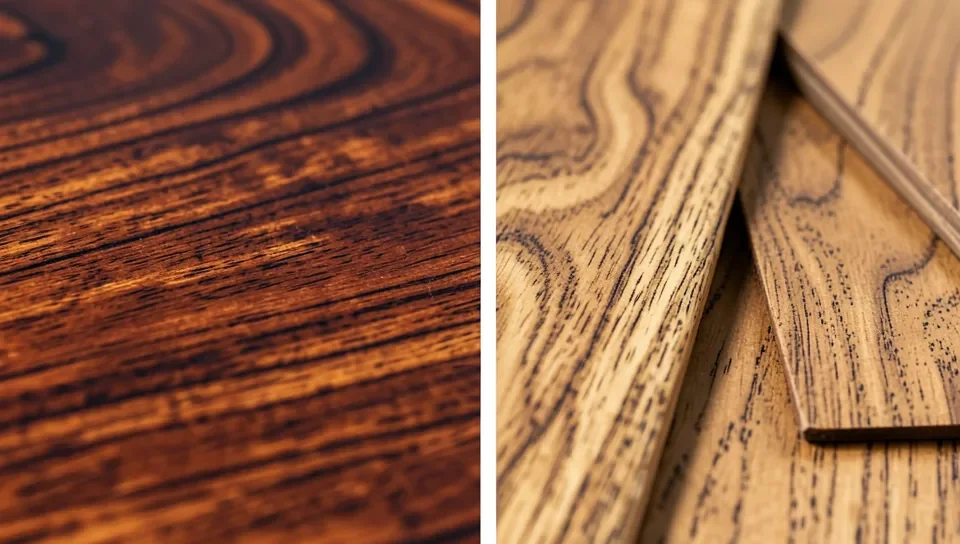
Is Mahogany Wood Expensive? Depends Which Mahogany
Whether mahogany is expensive depends entirely on which mahogany you mean. African mahogany runs roughly $8-15 per board foot from a specialty dealer, putting it in the same general range as walnut or cherry, not dramatically pricier. Genuine Honduran mahogany, by contrast, hits $20-40+ per board foot, a real premium driven directly by its CITES Appendix II trade restriction, not just brand prestige.
How Mahogany Actually Compares to Other Hardwoods
Try It Before Committing to a Project
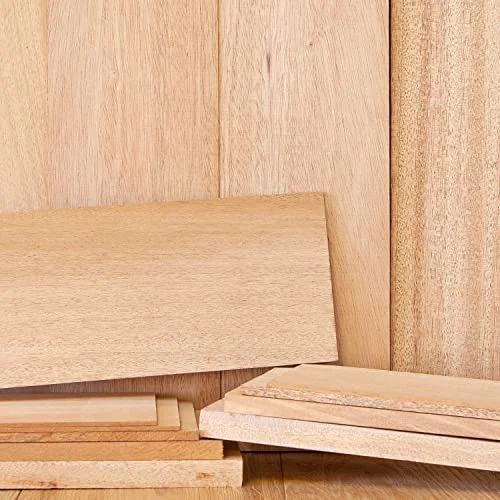 |
African Mahogany Hobby Board – $12.30 A small, affordable way to see real mahogany’s grain and weight before buying enough for a full project.
|
Common domestic hardwoods like red oak typically run $5-8 per board foot, walnut $10-18, and cherry $8-12 — African mahogany’s $8-15 range sits squarely inside that same middle tier, not above it. The “mahogany is expensive” reputation mostly comes from genuine Honduran mahogany specifically, which really is a premium-tier price due to its restricted, limited legal supply, not from mahogany as a category being inherently costly wood.
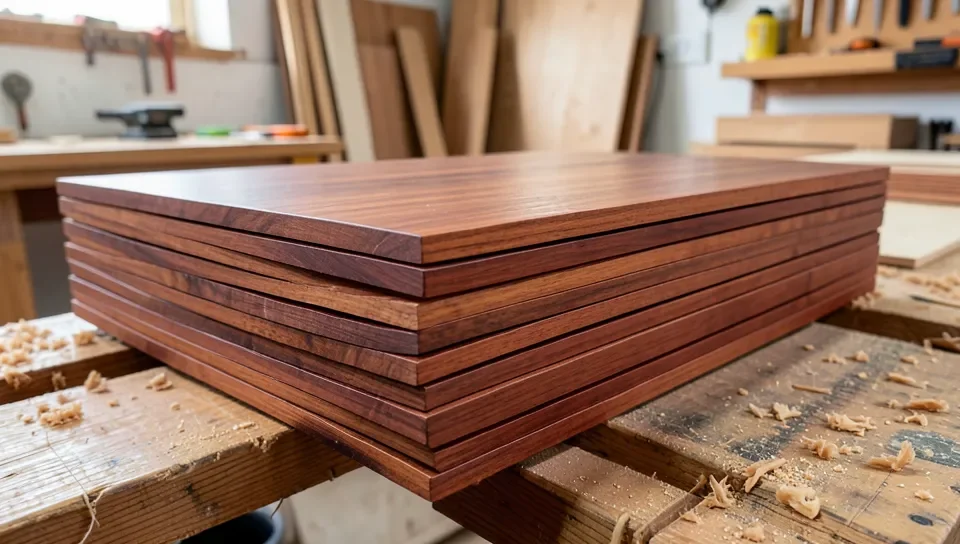
Why Genuine Honduran Mahogany Costs So Much More
Honduran mahogany’s CITES Appendix II listing restricts international trade due to decades of overharvesting, which directly limits legal supply and pushes the price well above what a simple supply-demand curve for an unrestricted wood would produce. This is the real driver behind mahogany’s expensive reputation — not mahogany generally, but this one specific, legally-restricted species that most buyers actually encounter far less often than they assume, since African mahogany has become the default substitute in most modern furniture and lumber sold as “mahogany.”
Other Cost Factors: Grade, Figure, and Board Width
Beyond species, the same mahogany can vary significantly in price based on grade (clear, furniture-grade stock costs more than lower-grade boards with knots or sapwood), figure (highly figured or quartersawn boards with striking grain patterns command a real premium over plain-grain stock of the same species), and width (wide, single-piece boards cost disproportionately more than narrow stock of the same total board footage, since wide old-growth logs are rarer). These factors apply within either African or Honduran mahogany, meaning a premium-grade African mahogany board can sometimes cost more than a plain-grade Honduran one, despite the general price tier difference between the two species.
How “Board Foot” Pricing Actually Works
A board foot is a volume measurement (12″ x 12″ x 1″ nominal, roughly 144 cubic inches), not a length measurement like a linear foot, which is why comparing prices across suppliers requires checking they’re actually quoting the same unit. A thicker board contains more board feet per linear foot of length than a thin one, so a “$12/board foot” quote for 8/4 (2-inch-thick) stock costs meaningfully more per linear foot than the same price quoted for 4/4 (1-inch) stock. Always confirm whether a quoted price is per board foot or per linear/running foot before comparing two suppliers’ numbers directly.
Veneer: The Budget Path to Real Mahogany’s Look
Mahogany veneer (a thin real-mahogany layer bonded over a substrate) costs a fraction of solid lumber per square foot of coverage, since a single board’s worth of mahogany can be sliced into many veneer sheets covering far more surface area than the same board used as solid stock. This is a legitimate way to get genuine mahogany’s appearance and grain on a larger project (a tabletop, cabinet doors) without solid-lumber pricing, not a compromise reserved only for budget furniture — see our mahogany hutch guide for how veneer construction applies to furniture-scale pieces specifically.
Frequently Asked Questions
Is mahogany more expensive than oak or walnut?
African mahogany ($8-15/board foot) is comparable to walnut and pricier than red oak, but not dramatically more expensive. Genuine Honduran mahogany ($20-40+/board foot) is a real premium tier above all of these.
Why is Honduran mahogany so much more expensive than African mahogany?
Honduran mahogany is CITES Appendix II-restricted due to overharvesting, which limits legal international trade and supply. African mahogany isn’t restricted, making it far more available and affordable.
Does mahogany grade affect price as much as species?
Yes, significantly. Grade, figure, and board width all affect price within a single species, sometimes enough that a premium-grade African mahogany board costs more than a plain-grade Honduran one.
Conclusion
Mahogany’s expensive reputation really belongs to genuine, CITES-restricted Honduran mahogany specifically — African mahogany, the species most modern furniture and lumber actually uses, prices comparably to walnut and cherry, not as a premium exotic. Check the species and grade specifically before assuming any “mahogany” purchase falls into the expensive tier. See our mahogany furniture overview for the full pros-and-cons picture.
Sponsored / affiliate links. As an Amazon Associate I earn from qualifying purchases. I may earn additional commission from eligible campaigns.