Mapei Ultrabond ECO 995 Wood Flooring Adhesive: Full Review, Specs & Where to Buy
Mapei Ultrabond ECO 995 is a premium, 100%-solids urethane adhesive built for wood and bamboo flooring installs that also need moisture-vapor control and sound reduction – think concrete slabs, condos, and multi-story buildings where impact noise matters. This guide covers what’s actually in the can, how it differs from Mapei’s other Ultrabond ECO adhesives (975 and 977 get confused with it constantly), real coverage and open-time numbers pulled from Mapei’s own technical documentation, and where you can realistically buy it.
What Is Mapei Ultrabond ECO 995?
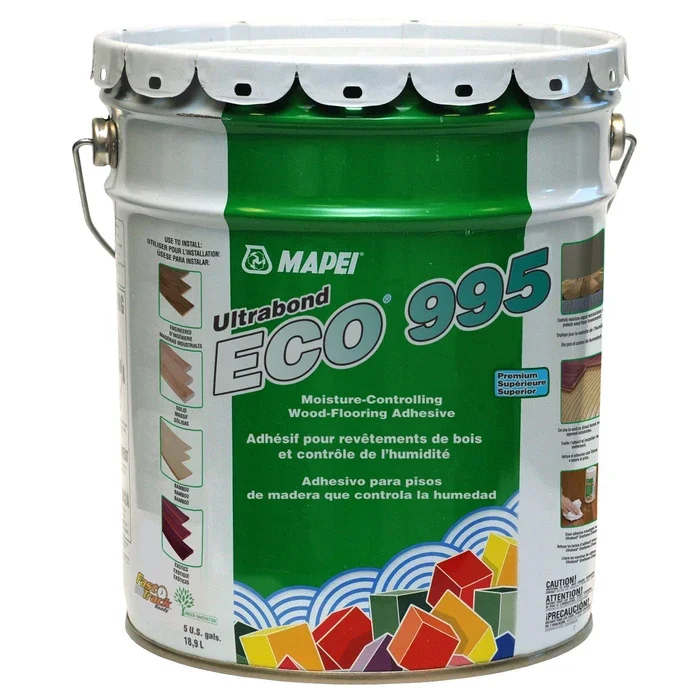
Ultrabond ECO 995 is Mapei’s premium urethane adhesive for wood and bamboo flooring. It’s a 100%-solids, one-component, moisture-curing formula, which means there’s no water or solvent to evaporate out of it – it cures by reacting with ambient humidity, so what you trowel down is essentially what stays as the bond line. What sets it apart from a basic wood-flooring glue is that it does three jobs in a single coat: it bonds the flooring, it acts as a moisture-vapor barrier against a concrete subfloor, and it includes a sound-reduction component that cuts down on impact noise between floors. That combination is why it’s specified so often for condos, apartments, and any multi-story build where a downstairs neighbor’s footsteps are a real concern.
Closest Amazon-Available Alternative
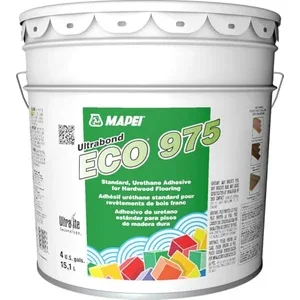 |
Mapei Ultrabond ECO 975 Urethane Wood Flooring Adhesive – $199.89 Mapei’s Ultrabond ECO 995 is sold mainly through flooring distributors and stores like Floor & Decor (frequently out of stock online), not general retail. ECO 975 is the same 100%-solids, moisture-cured urethane technology from the same Ultrabond ECO line, just without the 995’s added sound-reduction membrane – and it ships on Amazon.
|
It’s rated for a wide range of wood species and formats – solid and engineered hardwood, bamboo, acrylic-impregnated wood, and finger-block parquet – over both wood and concrete subfloors, which is part of why it shows up so often in commercial specs as well as residential jobs.
Ultrabond ECO 995 vs. ECO 975 vs. ECO 977: What’s Actually Different
Most pages that mention Ultrabond ECO 995 also throw around “975” and “977” without explaining what separates them, which is a real problem since they’re all in the same product family and easy to grab the wrong one for a job. If you’re still weighing urethane against other wood flooring adhesive types altogether, start there first. Otherwise, here’s the actual breakdown within Mapei’s own urethane line, straight from how Mapei positions each one:
- Ultrabond ECO 975 (Standard): The base version – 100%-solids, one-component, moisture-cured urethane for domestic solid and engineered wood flooring. No built-in moisture membrane or sound layer. This is the one you’ll actually find in stock on Amazon.
- Ultrabond ECO 977 (Fast-Set): The same core chemistry as 975, but formulated to set up faster – useful when a crew needs to get foot traffic or sanding started sooner and can’t wait out a long open time.
- Ultrabond ECO 995 (Premium): Adds the moisture-vapor barrier and sound-reduction properties in the same single coat. This is the one to specify for concrete slabs, below-grade installs, and multi-unit buildings with noise requirements – the other two don’t have that layer.
If your job is a straightforward wood-subfloor residential install with no moisture or sound-transmission concerns, 975 or 977 will do the job for less money and they’re easier to actually get your hands on. If you’re gluing down over concrete, below grade, or in a condo/apartment building, 995’s extra layer is the reason to spend more and track it down through a dealer.
Technical Specs at a Glance
These numbers come from Mapei’s own published technical documentation for the Ultrabond ECO line. Always confirm against the current Technical Data Sheet for your specific batch before ordering, since coverage and open time shift with jobsite conditions – our wood flooring calculator can help you translate square footage into how many pails to order once you’ve picked a trowel size.
| Spec | Value |
|---|---|
| Formula type | 100%-solids, one-component, moisture-curing urethane |
| VOC content | Negligible – no added solvents, low odor |
| Coverage (small square-notch trowel, ~1/16 in., cork/rubber underlayment) | Roughly 75–95 sq. ft. per U.S. gallon |
| Coverage (1/8 in. square-notch, finger-block parquet) | Roughly 50–60 sq. ft. per U.S. gallon |
| Coverage (3/16 x 5/32 in. sawtooth, engineered wood under 1/2 in.) | Roughly 45–55 sq. ft. per U.S. gallon |
| Open/working time | Trowel out only what you can cover in about 45–60 minutes; varies with heat, humidity, and substrate porosity |
| Suitable substrates | Concrete slabs and wood subfloors, above and below grade per Mapei’s install guidelines |
| Suitable wood types | Solid and engineered hardwood, bamboo, acrylic-impregnated wood, finger-block parquet |
| Packaging | Sold in multi-gallon pails (5-gallon pail weighs roughly 70 lbs) |
How to Apply It
The application steps aren’t unique to ECO 995 – they’re the same fundamentals as any trowel-applied urethane wood-flooring adhesive, but skipping them is the most common reason an adhesive that’s rated to perform well still fails on a real job.
1. Prep the substrate
Sweep and vacuum the subfloor so there’s no dust, grit, or old adhesive residue under the new bond line – even fine debris can telegraph through as a hollow spot. On concrete, check the moisture content with a proper meter before you commit; a slab that’s still releasing moisture is exactly the situation ECO 995’s vapor-barrier property exists for, but it isn’t a substitute for a slab that’s simply too wet to cover yet. Patch any low spots or cracks first, since a trowel-applied adhesive won’t bridge a gap the way a thicker mortar bed might.
2. Pick the right trowel and work in sections
Match the trowel notch to the flooring type using Mapei’s chart (a bigger sawtooth notch for thicker engineered planks, a smaller square notch for thin parquet or underlayment). Trowel a section you can realistically cover with flooring inside that 45-60 minute open time – not the whole room. Comb it out evenly rather than globbing it on; excess adhesive squeezing up between planks is more cleanup, not more bond strength.
3. Set and press the flooring
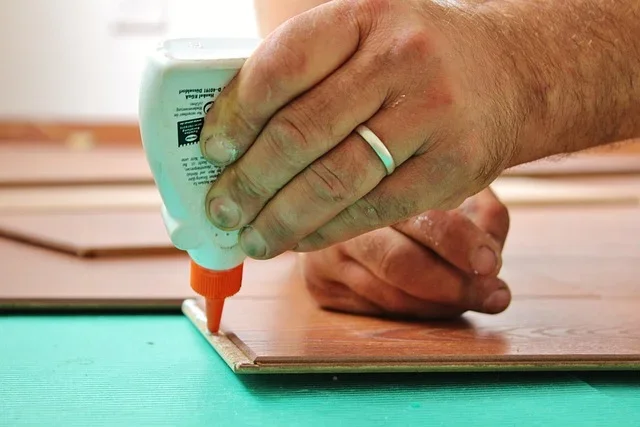
Lay each plank into the wet adhesive and tap it home with a tapping block, keeping consistent spacing between rows for expansion. Roll or tamp the flooring firmly so it makes full contact with the adhesive bed – a plank that’s just resting on ridges of adhesive rather than pressed flat into it is a common cause of squeaks and hollow spots months later. Clean up any squeeze-out with the manufacturer-recommended cleaner (Mapei sells a dedicated urethane adhesive cleaner) before it skins over, since cured urethane adhesive is much harder to remove from a finished wood surface.
Where to Actually Buy Ultrabond ECO 995
This is the part a lot of “review” pages gloss over: Ultrabond ECO 995 isn’t a general-retail product. It’s sold mainly through flooring distributors and specialty retailers like Floor & Decor, and even there it’s routinely listed as out of stock online (it was showing out-of-stock in the 5-gallon size during this update). If you need the real ECO 995 – because your job specifically needs that moisture-membrane-plus-sound-reduction combination – your most reliable route is a Mapei-authorized flooring distributor or contractor supply house that can special-order it, not a marketplace search.
If you don’t specifically need the sound-reduction layer – say, a straightforward wood-subfloor residential install – Ultrabond ECO 975 (the standard version in the same product line, same core urethane chemistry) is the one that’s actually in stock and shippable on Amazon, which is why it’s the pick in the box above.
Frequently Asked Questions
What makes Ultrabond ECO 995 different from ECO 975 and ECO 977?
All three are 100%-solids, one-component, moisture-cured urethane adhesives from Mapei’s Ultrabond ECO line, so the core chemistry is the same. ECO 975 is the standard version for basic domestic wood-flooring installs. ECO 977 is a fast-setting version of that same standard formula, meant for jobs where you want to walk on the floor or start sanding sooner. ECO 995 is the premium option: it adds a built-in moisture-vapor barrier and a sound-reduction layer in the same single-coat application, which is why it’s the one specified for concrete slabs and multi-story or multi-unit buildings where impact noise matters.
Is Mapei Ultrabond ECO 995 low-VOC and safe for indoor use?
Yes. It’s a 100%-solids formula with no added solvents, so it has negligible VOC content and a low odor compared to older solvent-based flooring adhesives. Mapei markets the Ultrabond ECO line specifically for indoor air quality-sensitive jobs, and the line is positioned to contribute credits toward green-building programs such as LEED and the WELL Building Standard. For the exact certification and VOC test numbers for your batch, check the current Technical Data Sheet on Mapei’s own site, since formulations and certifications can be updated.
How much coverage do I get per gallon?
It depends entirely on the trowel notch and the flooring type, because coverage is a function of how much adhesive that notch size deposits, not a fixed number. As a rough range across the Ultrabond ECO line’s published trowel guides, expect roughly 30 to 95 sq. ft. per U.S. gallon: smaller square-notch trowels (around 1/16 in.) used for thin cork or rubber underlayments land near the high end, while larger sawtooth trowels (around 3/16 x 5/32 in.) used for engineered wood under 1/2 in. thick land closer to 45-55 sq. ft. per gallon. Always check the trowel size Mapei specifies for your specific flooring type before estimating your job’s gallons.
How long do I have to set the flooring after troweling the adhesive?
Mapei’s guidance is to only trowel out as much adhesive as you can cover with flooring within about 45 to 60 minutes, and that window shrinks in hot, dry, or low-humidity conditions and stretches slightly in cool, humid ones. Working in smaller sections rather than troweling out the whole room at once is the safest way to avoid the adhesive skinning over before you get the planks set and rolled or tamped down.
Bottom Line
Ultrabond ECO 995 earns its premium price when a job actually needs its built-in moisture barrier and sound-reduction layer – concrete slabs, below-grade rooms, condos, and multi-story buildings. For a standard wood-subfloor residential install with no moisture or noise concerns, ECO 975 delivers the same low-VOC, 100%-solids urethane bond for less, and it’s the one you can actually order and have arrive this week.
Sponsored / affiliate links. As an Amazon Associate I earn from qualifying purchases. I may earn additional commission from eligible campaigns.