J-B Weld WoodWeld Review: Does It Fix Wood Rot Effectively?
J-B Weld WoodWeld can fix minor to moderate wood rot when the damaged area is dry, stable, and fully cleaned back to sound wood. It is a poor choice for soft-through rot, active leaks, or load-bearing failure, where replacement is the safer repair.
This guide is part of our How Much Does It Cost to Refinish Wood Furniture? series.
Verdict
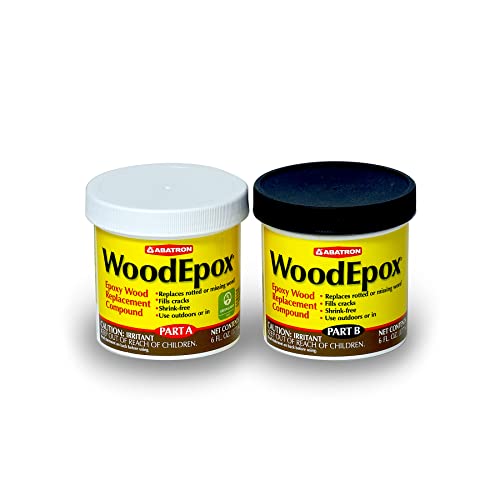

Judge it by the repair target. Use WoodWeld for filling, bonding, and limited consolidation after loose decay is removed. If the wood crumbles under probing, stays damp, or fails through its thickness, epoxy can hide the problem instead of solving it.
📊 Wikipedia says J-B Weld can withstand a constant temperature of 500 °F. Source: J-B Weld.
Specs at a glance
| Item | What matters for wood rot repair |
|---|---|
| Product type | Two-component epoxy wood repair adhesive |
| Formula | No-foam adhesive for wood repair |
| Use | Bonding and repairing interior or exterior wood |
| Mixing | Resin and hardener are mixed before use |
| Prep | Use 80-120 grit sandpaper for a light scuff, then wipe with acetone or lacquer thinner and let the wood dry fully |
| Finish after cure | Can be sanded, drilled, and painted after full cure |
| Limits | Will not bond well to polypropylene, polyethylene, flexible rubber, leather, or vinyl |
Who is J-B Weld WoodWeld for?
WoodWeld is for DIY woodworkers and homeowners who need a repair epoxy for dry, localized damage in interior or exterior wood. It suits cosmetic fill jobs, small voids after rot removal, and limited consolidation where the surrounding wood is still sound.
It is not for someone trying to rescue a post, sill, rafter, or trim board that has gone soft through its thickness. If the repair goal is structural recovery, the first question should be whether replacement is cheaper and safer than patching.
Best-fit projects
Use it for shallow rot at a window sill edge, a small gouge in a fascia board, or a crack that has already been opened to sound wood. In those cases, the epoxy can bond to clean, dry fibers and restore shape.
Projects that need a different product
If the issue is insect damage with hollowed channels, a deeper consolidant like Liquid Hardener may be the better prep step. If the task is mainly filling holes, cracks, or surface damage for paint, Wood Restore Repair Putty is a closer match.
Skill level and prep tolerance
WoodWeld rewards careful prep. It is not a skip-the-sanding fix. A common first-timer mistake is packing epoxy over dark, soft, damp rot, then painting it before the wood has dried fully and been cleaned back to firm material.
What works: where WoodWeld does the job well
WoodWeld generally works best as a bonding filler for small repairs after loose rot has been removed. It can bridge voids, hold shape, and give you a sandable, paintable surface after cure. That makes it useful when the damaged zone is localized and the rest of the board is solid.
Cosmetic filling of cracks, voids, and small holes
For shallow edge damage, hairline cracks, and small cavities, a two-component epoxy can restore profile better than conventional filler. Because the resin and hardener are mixed before use, the material sets into a hardened repair rather than drying by evaporation.
Repairing limited rot after sound wood is exposed
WoodWeld can help after you cut, scrape, or chisel away all loose decay and reach firm wood. That is the point where epoxy makes sense: it bonds to stable fibers instead of sealing over active breakdown.
Sanding, drilling, and painting after cure
After the epoxy hardens, you can shape it to match trim profiles and prep it for paint. That matters on exterior trim and interior millwork, where the repair has to disappear under primer and topcoat rather than remain as a soft filler line.
How to apply it correctly
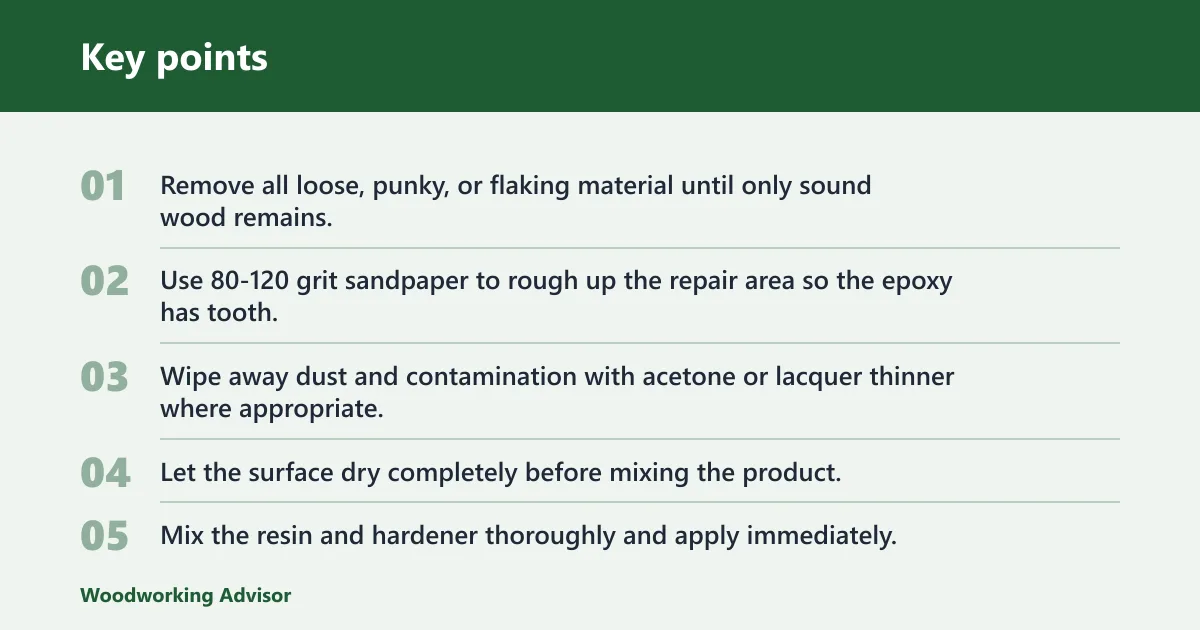
- Remove all loose, punky, or flaking material until only sound wood remains.
- Use 80-120 grit sandpaper to rough up the repair area so the epoxy has tooth.
- Wipe away dust and contamination with acetone or lacquer thinner where appropriate.
- Let the surface dry completely before mixing the product.
- Mix the resin and hardener thoroughly and apply immediately.
- Shape the repair before it hardens, then wait for full cure before sanding or drilling.
Say your window sill has a 2-inch soft spot at one corner, but the rest of the board is firm. After cutting away the mushy edge and drying the area, WoodWeld can rebuild the missing corner and give you a paintable profile.
What does not work?
WoodWeld does not belong on wet wood, active leaks, or rot that runs deep into the member. It also should not be used where the remaining wood has lost structural integrity, because epoxy can bridge a problem without restoring true strength.
Wet wood and active leaks
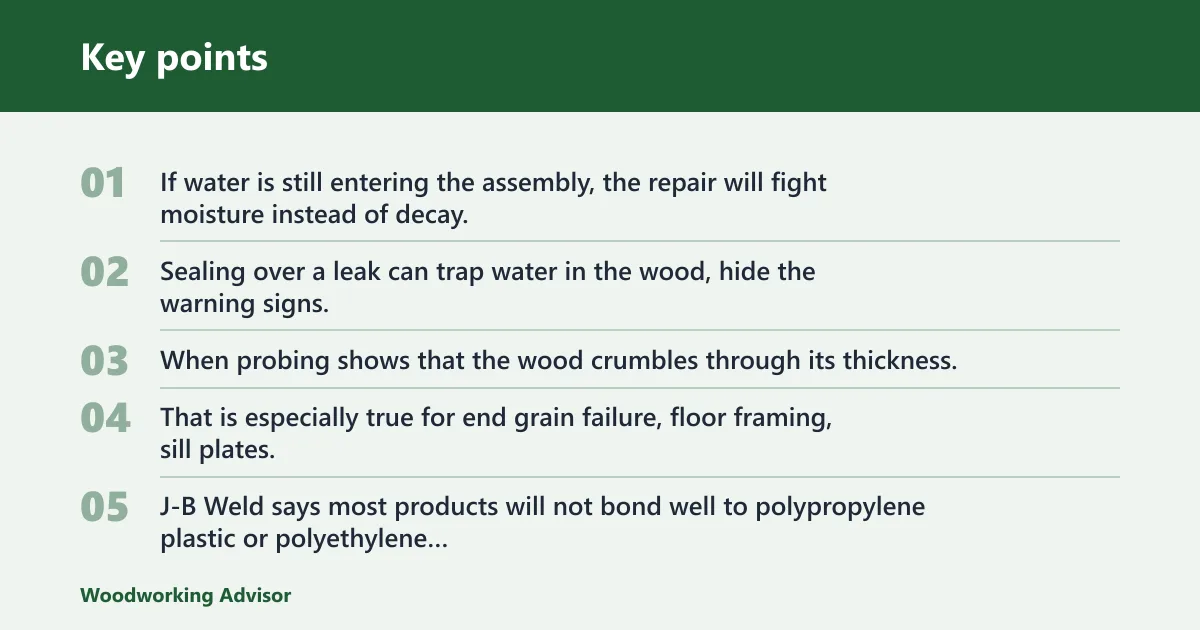
If water is still entering the assembly, the repair will fight moisture instead of decay. Sealing over a leak can trap water in the wood, hide the warning signs, and shorten the life of the patch.
Severe structural decay
When probing shows that the wood crumbles through its thickness, the member has moved past simple repair. That is especially true for end grain failure, floor framing, sill plates, and any part that carries load.
Materials and surfaces it will not bond to
J-B Weld says most products will not bond well to polypropylene plastic or polyethylene plastic. The same caution applies to flexible rubber, leather, and vinyl. Those surfaces flex, release, or resist adhesion in ways that wood rot epoxy is not designed to handle.
Suppose a porch column base is soft at the bottom 6 inches and flakes apart when pressed with a screwdriver. That is not a candidate for WoodWeld. The safer move is to replace the failed section or the full column, depending on how far the decay has spread.
Pros and cons
Pros
- Useful for small to moderate rot repairs after sound wood is exposed
- Works on interior or exterior wood
- Can be sanded, drilled, and painted after cure
- No-foam adhesive form keeps the repair in a wood-filling lane, not a foam-filling lane
Cons
- Not a fix for wet, active, or structurally failing rot
- Requires careful prep and complete drying
- Can mask deeper decay if used too early
- Not meant for several non-wood materials, including polypropylene and polyethylene
Wood rot decision table: repair, consolidate, or replace
| Rot scenario | Best repair method | Expected lifespan | Prep level | When replacement is mandatory |
|---|---|---|---|---|
| Surface rot on trim, still firm beneath | WoodWeld after removing loose decay | Good for a lasting cosmetic and limited repair if kept dry | Moderate: scrape, sand, clean, dry | If the rot keeps returning from a leak or the board softens deeper than the surface |
| Small end grain damage on trim or molding | WoodWeld or Wood Restore Repair Putty for fill | Moderate to long, depending on moisture exposure and paint maintenance | High: end grain must be cleaned back to firm wood and fully dried | If the end grain is soft through the thickness or split away from the member |
| Insect damage with hollowed pockets but sound outer shell | Liquid Hardener first, then a filler such as WoodWeld or Wood Restore Repair Putty | Varies with the amount of sound wood left | High: clean out debris, dry thoroughly, then consolidate | If the shell is too thin to hold shape or carry any load |
| Deep rot in a sill, post, joist, or rafter | Replacement | Repair epoxy is not the right solution | Very high, and still not enough to make it safe | Yes, replacement is mandatory when the member carries load or crumbles on probing |
| Active leak or persistently damp area | Fix the leak first, then reassess | Epoxy should not be applied until the wood is dry | High, after moisture source is corrected | If the wood cannot stay dry or the source cannot be eliminated |
How WoodWeld compares with KwikWood, Liquid Hardener, and Wood Restore Repair Putty
WoodWeld sits in the middle of J-B Weld’s wood-repair lineup. It is the bond-and-fill option: a two-component epoxy for dry, localized repairs where you need adhesion and shape retention. The other products lean either toward putty-style filling or toward consolidation.
WoodWeld vs KwikWood

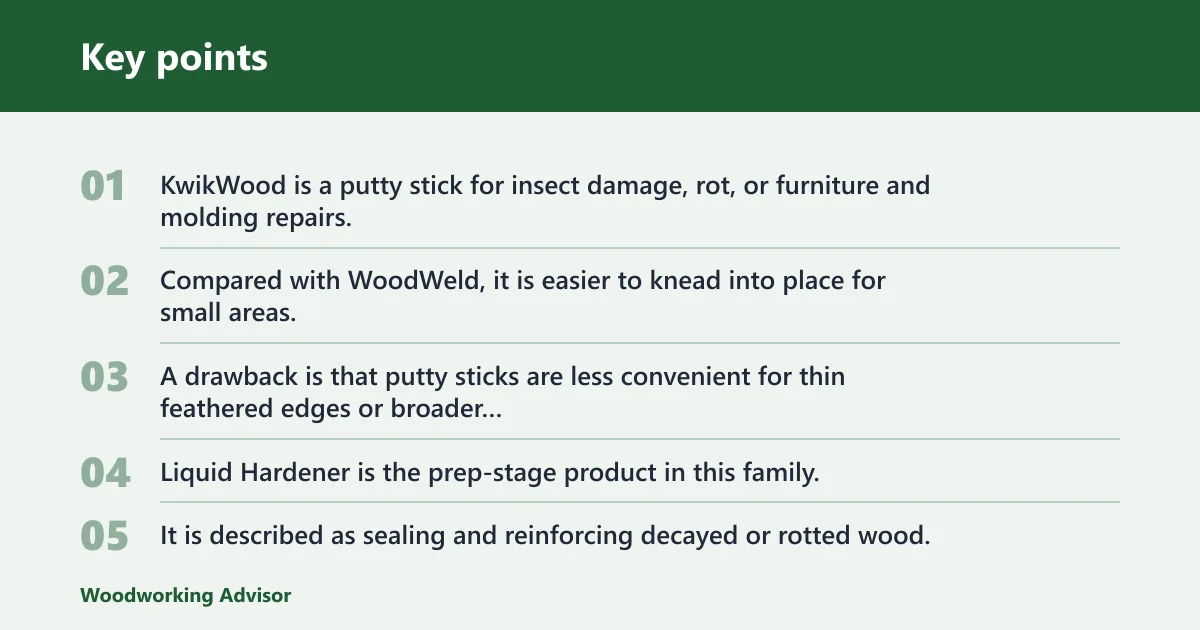
KwikWood is a putty stick for insect damage, rot, or furniture and molding repairs. Compared with WoodWeld, it is easier to knead into place for small areas, but it is less suited to repair scenarios that need a more adhesive, spreadable epoxy workflow. A drawback is that putty sticks are less convenient for thin feathered edges or broader bonding jobs.
WoodWeld vs Liquid Hardener
Liquid Hardener is the prep-stage product in this family. It is described as sealing and reinforcing decayed or rotted wood, so it fits when the goal is to stiffen weakened fibers before filling. WoodWeld is the repair phase; Liquid Hardener is the consolidation phase. The drawback is that hardener alone does not rebuild missing material.
WoodWeld vs Wood Restore Repair Putty
Wood Restore Repair Putty is aimed at filling holes, cracks, and damage, especially when the goal is to prepare for painting. That makes it useful for finish work, while WoodWeld is the better pick when you need a more adhesive epoxy bond. The drawback of putty-first thinking is that it can solve shape more than strength.
Should you buy it?
Buy WoodWeld if you need a repair epoxy for dry, localized wood rot where the remaining wood is still sound and you can do careful prep. Skip it if the board is soft through its thickness, the area is wet, or replacement is already the safer and cheaper option.
For trim, molding, and small exterior patches, it can be a practical choice. For joists, posts, sills, and other structural members, epoxy should only follow a sober inspection, not replace one.
Buy it if…
You need to fill and bond a small area, you can dry and clean the wood fully, and you want a paintable repair after cure. It also fits repairs where the rot has been cut back to firm material and the remaining damage is localized.
Skip it if…
The wood is still damp, the decay keeps spreading, or the member carries load. In those cases, a patch can become a cover-up, and a cover-up is not a repair.
Frequently asked questions
Does J-B Weld WoodWeld really fix wood rot?
Yes, but only for minor to moderate rot that has been cleaned back to sound, dry wood. It works as a filler or consolidant, not as a cure for deep structural failure. If the wood is soft through its thickness, replacement is the safer fix.
How strong is WoodWeld on rotted wood?
Its strength depends on how much solid wood is left for it to bond to. On a well-prepared, localized repair it can hold shape and take finishing work. On deeply decayed or load-bearing wood, the repair may look complete while the underlying structure remains unsafe.
Can WoodWeld be used indoors and outdoors?
Yes. J-B Weld says WoodWeld is for bonding and repairing interior or exterior wood. Outdoor use still demands dry substrate, good prep, and paint or finish protection where appropriate, because standing moisture or recurring leaks can shorten the repair life.
Do I need to remove all the rot before using WoodWeld?
You do not need to remove all discoloration, but you do need to remove all loose, soft, or punky material until only firm wood remains. Epoxy should not bridge over decay that continues under the surface, because that traps moisture and hides the problem.
How long does WoodWeld take to cure?
J-B Weld products in twin tubes are two-component epoxies that harden after the resin and hardener are mixed. Cure time depends on temperature and conditions. A typical reference point for J-B Weld epoxy is set in roughly 4-6 hours and full cure in around 15 hours, but the specific WoodWeld label should guide final timing.
Can you sand, drill, or paint WoodWeld after it cures?
Yes. After full cure, you can sand, drill, and paint it. Wait for full cure, not just handling strength, before you shape or finish it. If you rush that step, the repair can gum up sandpaper or distort under a drill bit.
Sponsored / affiliate links. As an Amazon Associate I earn from qualifying purchases. I may earn additional commission from eligible campaigns.