What is the Difference Between Ash and Oak Wood: Explained
Ash and oak are close in hardness (ash’s Janka rating of about 1,320 sits between red oak’s 1,290 and white oak’s 1,360), so the real differences come down to grain appearance, outdoor durability, and price rather than raw toughness. Ash has a straighter, more uniform grain and a paler color; oak shows a bolder, more varied grain and comes in a wider range of tones. White oak resists rot and moisture far better than either red oak or ash, which is the main reason it’s the default choice for anything going outdoors.
Appearance: Grain and Color
For Telling Species Apart With Confidence
 |
Identifying Wood: Accurate Results with Simple Tools The standard reference for telling species apart by grain, pore structure, and simple hand-lens tests – goes well beyond ash vs. oak.
|
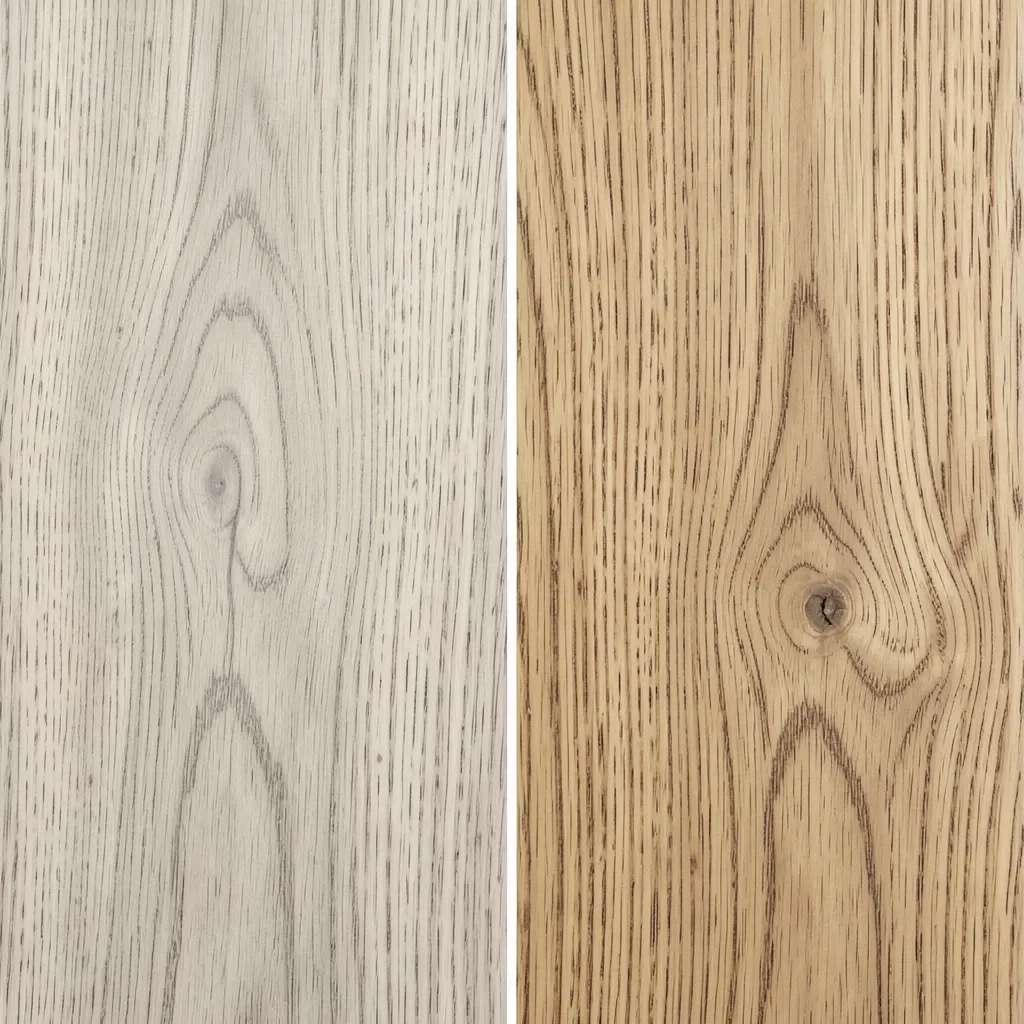
Ash has a straight, fairly uniform grain with relatively subtle figure, and its color runs pale – white to light tan, occasionally with a faint yellow cast. Oak’s grain is bolder and more varied: red oak shows an open, porous grain with a pinkish-brown cast, while white oak has a tighter grain with visible ray fleck patterns (small silvery streaks across the grain, especially obvious on quarter-sawn boards) and runs more olive-brown. Side by side, oak generally reads as the “busier,” more dramatic grain, while ash looks calmer and more uniform – a difference that shows up clearly even on unfinished, unstained boards sitting next to each other.
Hardness and Real-World Durability
| Species | Janka Hardness (lbf) | Outdoor Rot Resistance |
|---|---|---|
| White Ash | ~1,320 | Poor |
| Red Oak | ~1,290 | Fair |
| White Oak | ~1,360 | Good |
This table is the real corrective to a common myth: ash is not a notably “soft” wood next to oak. Its hardness sits right in the same range as red oak and only modestly below white oak – a well-finished ash floor holds up to daily foot traffic about as well as a red oak one. Where the two genuinely diverge is rot resistance: white oak’s closed pore structure (tyloses) blocks moisture in a way neither red oak nor ash can match, which is exactly why white oak, not ash, is the traditional choice for boat building and outdoor furniture. Ash, regardless of finish, is not recommended for direct outdoor exposure.
Why Oak Stains When It Touches Metal (and Ash Doesn’t)
Oak contains a much higher concentration of tannins than ash. When damp oak contacts iron or steel – nails, screws, or certain tool blades – a chemical reaction leaves dark, blue-black stains in the wood. Red oak is especially prone to this because of its higher tannin content. Ash’s much lower tannin level means this reaction essentially doesn’t happen, so ash tolerates ordinary steel fasteners without the same staining risk. Woodworkers working with oak commonly switch to stainless-steel or brass fasteners specifically to avoid this.
Common Uses
- Ash: Baseball bats, hockey sticks, tool handles, and canoe paddles, where its flex and shock absorption under sudden impact matter more than raw hardness. Also common in furniture and indoor flooring for its pale, uniform look.
- Red Oak: Traditional furniture, cabinetry, and flooring, where its bold, open grain reads as classic and takes stain evenly.
- White Oak: Outdoor furniture, boat building, wine and whiskey barrels (its closed pores make it watertight), and flooring where rot resistance matters.
Working With Each Wood
Ash is generally easier to cut, shape, and sand with hand tools thanks to its straight grain and slightly lower density than white oak. Oak’s harder, denser structure (especially white oak) dulls blades faster and often benefits from power tools rather than hand tools alone. Both woods take stain reasonably well, though oak’s more open grain shows a bolder result with the same stain, while ash’s tighter, more uniform grain gives a subtler, more even finish.
Finish and Stain Compatibility
Because red oak’s grain is open and porous, stain sinks in unevenly unless the surface gets a pre-stain conditioner or a grain filler first – skip that step and blotching is common, especially with darker stains. White oak’s tighter pores take stain more evenly than red oak but still show plenty of the wood’s natural ray fleck figure through the finish. Ash’s straighter, more uniform grain generally takes stain more predictably than either oak variety, though its subtler natural figure means a heavily pigmented dark stain can flatten out some of the grain interest that a lighter stain would preserve. For a natural, unstained look, oak’s grain reads as more dramatic under a clear finish; ash reads as calmer and more understated.
Availability and Cost
Oak is generally the more widely available and consistently priced of the two in most U.S. lumber yards. Ash’s supply picture has changed significantly over the past two decades: the emerald ash borer, an invasive beetle first detected in Michigan in 2002, has killed hundreds of millions of ash trees across North America, and the ongoing damage has tightened ash lumber supply and pushed prices up in many regions. Ash that was once reliably cheaper than oak is, in a growing number of markets, now priced comparably or even higher, depending on local availability.
Weight and Feel
White oak is the heaviest of the three at roughly 47 lbs per cubic foot dry, red oak comes in around 44 lbs, and ash is the lightest at about 42 lbs per cubic foot. The difference is noticeable when handling boards or finished pieces by hand – a solid ash chair frame feels distinctly lighter than the same design built from white oak, which matters for anything meant to be moved or carried regularly, like portable furniture, tool handles, or sporting equipment. That same weight difference is part of why ash became the traditional choice for baseball bats and axe handles: a lighter tool swings faster for the same swing force, and ash’s flex absorbs shock well enough to make the weight tradeoff worth it.
How to Tell Ash From Oak at a Glance
- Grain: Ash’s grain is straighter and calmer; oak’s is bolder, with visible ray fleck patterns on quarter-sawn white oak specifically.
- Color: Ash runs pale white to light tan; oak runs from pinkish-brown (red oak) to olive-brown (white oak).
- Bark (on standing trees): Ash bark has a distinctive diamond-shaped ridge pattern; oak bark is typically rougher and more irregularly furrowed.
- Leaves (on standing trees): Ash has compound leaves with an odd number of leaflets arranged opposite each other; oak has simple, lobed leaves arranged alternately.
Sustainability Considerations
Oak forests are typically managed on longer harvest rotations since oak trees grow more slowly, which historically made oak somewhat less renewable on a short timeline than faster-growing ash. That calculation has flipped in an important way over the last two decades: the emerald ash borer’s spread means large volumes of dead and dying ash are being salvaged rather than sustainably harvested, and long-term ash forest regeneration in affected regions is genuinely uncertain. Buying oak from a certified sustainably-managed source (FSC-certified lumber is worth looking for) is currently a more predictable sustainability choice than ash in many parts of North America, which is a reversal of the older conventional wisdom that ash was automatically the more renewable option.
Frequently Asked Questions
Which wood is better, oak or ash?
Neither is categorically better – they’re close in hardness. Choose white oak for outdoor or moisture-exposed projects, oak generally for a bolder traditional grain look, and ash for tool handles, sporting goods, or a paler, more uniform-grained furniture look.
How can you tell ash from oak?
By grain and color: ash is straighter-grained and paler; oak is bolder-grained with ray fleck patterns (white oak) and runs pinkish to olive-brown. On standing trees, ash has diamond-patterned bark and opposite compound leaves, while oak has rougher bark and alternate lobed leaves.
Is ash as durable as oak?
In terms of hardness, yes – ash’s Janka rating (~1,320) is close to red oak’s (~1,290) and only modestly below white oak’s (~1,360). Where ash falls behind is rot resistance: it lacks white oak’s natural resistance to moisture and isn’t recommended for outdoor use.
Conclusion
Ash and oak aren’t separated by hardness the way many people assume – they’re genuinely close. The real differences are grain character (calm and pale vs. bold and varied), outdoor durability (white oak wins clearly), and increasingly, price, as emerald ash borer damage tightens ash supply in many regions. Pick based on the look and the environment the piece will live in, not an assumption that one is simply “tougher” than the other.
Sponsored / affiliate links. As an Amazon Associate I earn from qualifying purchases. I may earn additional commission from eligible campaigns.