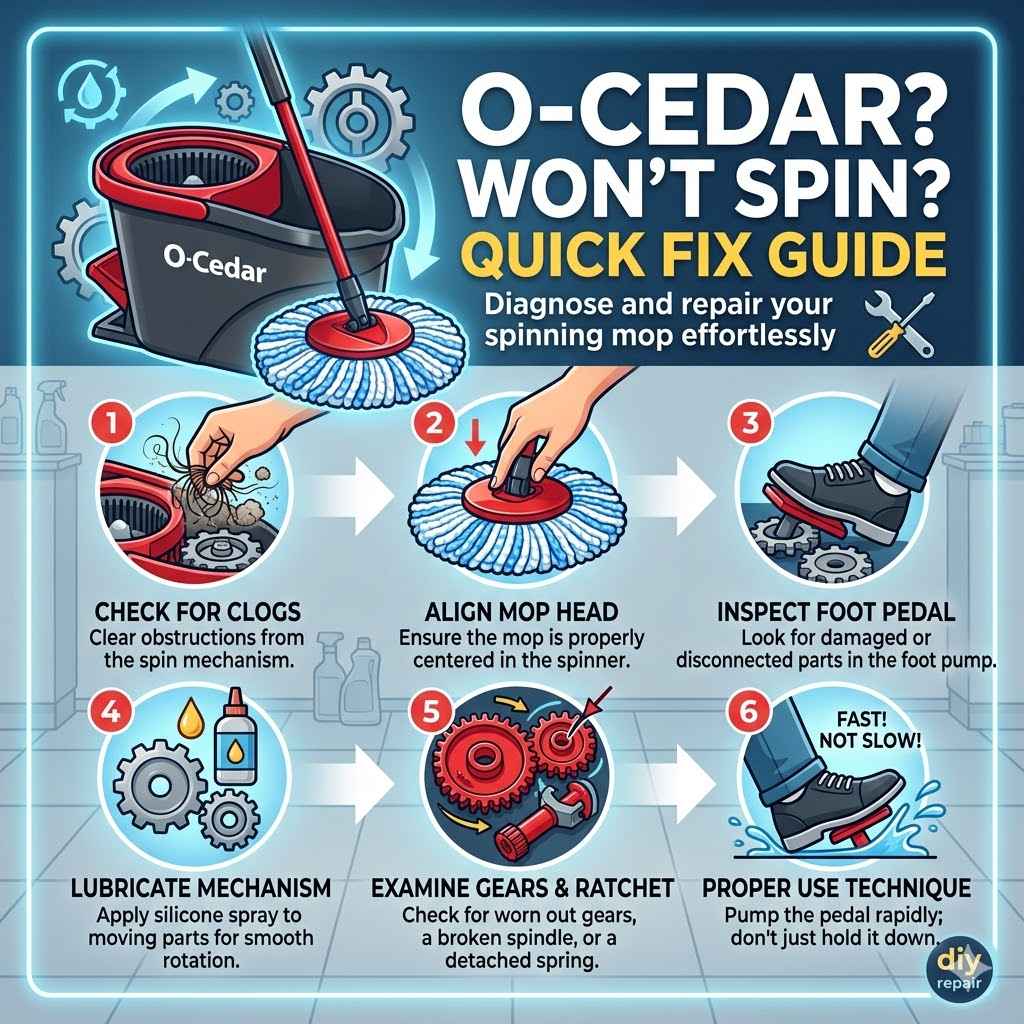
O-Cedar Won’t Spin? Quick Fix Guide
Is your O-Cedar mop head not spinning like it used to? It’s a common problem, especially if you’re new to these handy spin mops. Sometimes, simple things can get in the way of that satisfying spin.
Don’t worry, it’s usually not a big deal! This O-Cedar Won’t Spin? Quick Fix Guide will walk you through easy steps to get it working again.
We’ll cover the most likely reasons and how to fix them fast.
Troubleshooting Your O-Cedar Spin Mop
Many people run into issues with their O-Cedar mop’s spin mechanism. This section helps you figure out why the spin feature might not be working correctly. We’ll look at the common culprits that stop the bucket from doing its job.
Getting your mop back to its best spin means you can clean your floors with less effort.
Why Isn’t My O-Cedar Mop Spinning
When your O-Cedar mop won’t spin, it can be frustrating. Usually, the problem is something simple you can fix yourself. You don’t need to be a repair expert to sort this out.
Let’s explore the most frequent reasons for this issue.
Bucket Assembly Issues
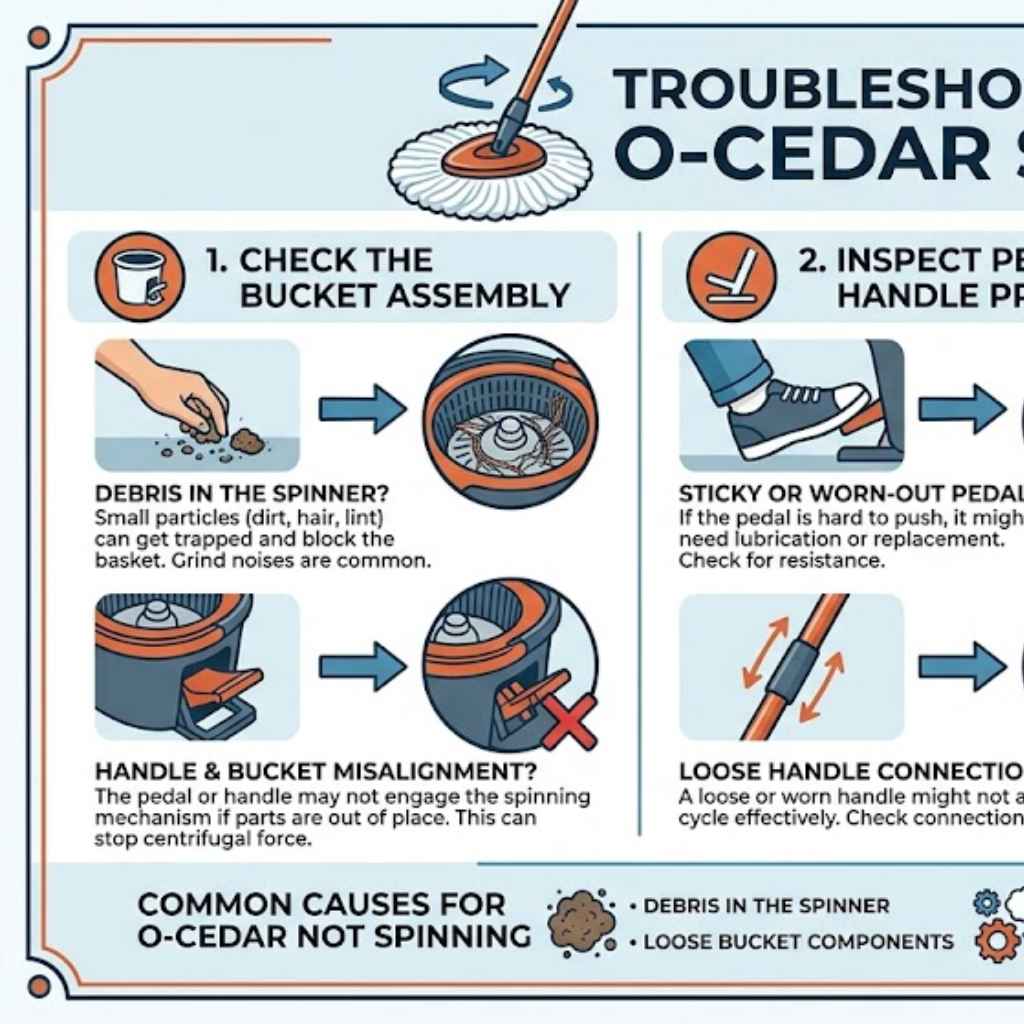
The bucket itself has moving parts that allow the mop head to spin. If these parts are blocked or out of place, the spinning action won’t happen. Sometimes, debris can get stuck in the spinner mechanism.
This can prevent it from turning freely. Also, the handle and the bucket might not be aligned perfectly. This misalignment can stop the centrifugal force from working properly.
Pedal or Handle Problems
The pedal or handle is what you use to activate the spin cycle. If the pedal is sticky or the handle is loose, it might not engage the spinning mechanism. Wear and tear over time can cause these parts to become less effective.
You might need to check if there’s any resistance when you try to push down on the pedal or move the handle. A worn-out part might need replacing.
Mop Head Attachment
How the mop head connects to the handle is key. If the mop head isn’t secured properly, it can affect the spin. Sometimes, the mop head might be too wet or too heavy.
This can make it harder for the bucket to spin it fast enough. Ensure the mop head is snapped on tight. Also, make sure it’s not overloaded with water before you try to spin it dry.
Common Causes for O-Cedar Not Spinning
Several things can cause your O-Cedar mop to stop spinning. Understanding these common issues helps you find a quick solution. Most problems are related to how the mop is used or maintained.
Let’s break down the most likely causes.
Debris in the Spinner
Small particles like dirt, hair, or lint can get trapped in the spinner basket. This basket is the part inside the bucket that spins the mop head. When something blocks its path, it simply can’t turn.
You might hear grinding noises if debris is present. Cleaning this area regularly prevents such blockages. Keeping the spinner basket clear is vital for proper function.
Loose Bucket Components
The O-Cedar spin mop bucket has several parts that fit together. If any of these parts become loose, the spinning mechanism might not work. This can happen from regular use or if the bucket is dropped.
A loose part can cause the spinner to wobble or not spin at all. You should check all the seams and connections on the bucket. Make sure everything feels secure.
Incorrect Assembly or Use
Sometimes, the mop isn’t put together right after cleaning. Or, it might be used in a way that interferes with the spinning. For example, pressing down too hard on the handle while spinning can jam the mechanism.
Always follow the instructions when assembling or using your O-Cedar mop. Proper usage ensures the parts work as intended.
Fixing Your O-Cedar Spin Mop
Now that we know some reasons why your O-Cedar mop might not be spinning, let’s talk about how to fix it. These steps are easy to follow and should get your mop working again in no time. You’ll be able to wring out your mop effectively after these simple fixes.
Step-by-Step O-Cedar Won’t Spin? Quick Fix Guide
This guide provides clear steps to address the spin issue with your O-Cedar mop. Follow these instructions carefully for the best results.
Empty the Bucket
First, ensure the bucket is empty of water. A bucket full of water can be too heavy. This weight can make it difficult for the spinning mechanism to operate.
You might also want to rinse out any loose dirt or debris that has settled at the bottom. This initial step is crucial.
Inspect the Spinner Basket
Look inside the bucket at the spinner basket. This is where the mop head goes to get spun dry. Check for any stuck hair, strings, or other small items.
Carefully remove any debris you find. A clear spinner basket is essential for smooth operation. You might need to use your fingers or a soft brush.
Clean the Spinner Mechanism
Sometimes, dirt can get into the parts that make the spinner turn. Gently use a damp cloth or a soft brush to clean around the base of the spinner basket. Make sure you don’t force anything.
The goal is to remove any buildup that could be hindering movement. A clean mechanism spins more freely.
Check the Mop Head Attachment
Ensure the mop head is firmly attached to the handle. It should click or lock into place securely. If it feels loose, detach it and reattach it, making sure it’s properly aligned.
A securely attached mop head is necessary for effective spinning.
Test the Pedal or Handle
With the mop head off the bucket (or just positioned above the spinner), try pressing the pedal or pumping the handle. You should feel it engage the spinning mechanism. If it feels stiff, loose, or doesn’t move at all, there might be an issue with the pedal or handle connection to the spinner.
Gently test its movement.
Reassemble and Test Spin
Once you’ve performed the checks and cleaning, reassemble everything correctly. Attach the mop head to the handle. Place the mop head into the spinner basket.
Now, try using the pedal or handle to spin the mop. It should spin much more freely now.
Maintenance Tips for Your O-Cedar Mop
Keeping your O-Cedar mop in good condition helps prevent spin issues. Simple maintenance can make a big difference. Follow these tips to ensure your mop stays functional for a long time.
Regular care means fewer problems down the road.
Rinse After Each Use
Always rinse your mop head thoroughly after you finish cleaning. This removes dirt and grime that could harden or build up. A clean mop head is less likely to shed fibers that can clog the spinner.
Rinsing also helps the mop dry faster, preventing mildew and odors.
Dry the Bucket and Mop Head
After rinsing, let both the mop head and the bucket dry completely. You can hang the mop head to air dry. Leave the bucket lid open so the inside can dry out.
Storing a wet mop can lead to mold and make parts stick together. Proper drying prevents rust and corrosion.
Occasional Deep Cleaning
Once in a while, give your O-Cedar mop a deeper clean. You can detach the mop head for washing. Inspect the spinner basket and the bucket for any stubborn buildup.
Using a mild soap and water can help keep all parts clean and moving smoothly. This type of cleaning is good for longevity.
Inspect for Wear and Tear
Regularly check the mop head for signs of wear, like frayed threads. Also, look at the pedal and handle to see if they seem loose or damaged. If you notice any issues, it’s better to address them early.
Replacing a worn mop head or fixing a loose part can prevent bigger problems.
Understanding O-Cedar Spin Mop Components
To truly fix your O-Cedar mop, it helps to know what each part does. When you understand the components, you can better identify the source of the problem. This knowledge empowers you to perform more effective troubleshooting and maintenance.
Let’s break down the key parts of your O-Cedar spin mop system.
The O-Cedar Spin Mop System Explained
The O-Cedar spin mop system is designed for easy cleaning. It uses a bucket with a built-in spinner to wring out the mop. This allows you to control how wet or dry your mop gets.
The system is made up of a few main parts that work together.
The Bucket
This is the main container that holds water and cleaning solution. It also houses the spinning mechanism. The bucket is usually made of durable plastic.
It often has a handle for easy carrying. Some models might have a special place to hold the mop handle when not in use. The structure of the bucket is key to its function.
The Spinner Basket
Inside the bucket is a removable, perforated basket. This basket is where you place the mop head. When you activate the spinner, this basket rotates at high speed.
The centrifugal force pushes water out of the mop head and through the holes in the basket. This effectively wrings out the mop. It’s the heart of the spinning action.
The Handle and Pedal/Wringer System
The handle is what you hold to maneuver the mop. The spinning action is activated either by a foot pedal on the bucket or by pumping the handle itself. This mechanism is connected to the spinner basket.
When you press the pedal or pump the handle, it engages gears that spin the basket. This system is what translates your effort into a spinning mop.
The Mop Head
This is the absorbent part of the mop, usually made of microfiber or cotton. It attaches to the end of the handle. The mop head absorbs water and cleaning solution.
Its design allows it to effectively pick up dirt from floors. The material and its ability to hold water are important for cleaning performance.
How the Spin Mechanism Works
The magic of the O-Cedar spin mop lies in its spinning mechanism. It’s a clever design that uses simple physics. Understanding this helps you appreciate why certain issues can stop it.
It’s not complicated, but it relies on smooth operation of its parts.
Centrifugal Force
The spinning action is powered by centrifugal force. When the spinner basket rotates rapidly, any object inside it (like the wet mop head) is pushed outwards. This outward force is centrifugal force.
For a spin mop, this force is strong enough to sling the water away from the mop fibers.
Gear System
The pedal or handle is connected to a gear system. This system multiplies the force you apply. When you push the pedal or pump the handle, you turn these gears.
The gears, in turn, make the spinner basket spin very fast. The speed is what creates the effective wringing action.
Water Drainage
As water is spun out of the mop head, it goes through the holes in the spinner basket. The water then collects at the bottom of the bucket. This keeps the water separate from the mop head, allowing it to dry effectively.
The design ensures clean water stays in the bucket and spun-out dirty water stays away.
Troubleshooting Specific O-Cedar Models
While most O-Cedar spin mops share similar mechanisms, some models might have slight differences. Knowing these can help if you have a particular model that’s giving you trouble. We’ll look at common issues that might be model-specific.
O-Cedar EasyWring Spin Mop Issues
The O-Cedar EasyWring model is very popular. Its foot pedal is a key feature for activating the spin. If your EasyWring mop isn’t spinning, the pedal is often the first thing to check.
Issues with the pedal can prevent the entire mechanism from working.
Stuck or Stiff Pedal
The foot pedal might become stiff or stuck due to debris or lack of lubrication. If the pedal doesn’t fully depress or return to its original position, it won’t engage the spinner. Try cleaning around the pedal mechanism.
Sometimes, a small amount of silicone lubricant can help. Ensure the pedal moves freely in both directions.
Loose Pedal Connection
The pedal connects to the spinner via a rod or cable. If this connection becomes loose, the pedal’s action won’t transfer to the spinner. Check that the pedal is securely attached to its housing.
Ensure any connecting rods or cables are in place and taut. A loose connection means the spin won’t activate.
Damaged Pedal Mechanism
In rare cases, the internal parts of the pedal mechanism can break. This is usually due to excessive force or wear. If you suspect internal damage, it might be harder to fix without specialized parts.
However, often the issue is just dirt or a loose connection that can be resolved.
O-Cedar ProMist MAX Spray Mop Issues
While the ProMist MAX is a spray mop, it doesn’t have a spin feature. It uses a refillable tank for cleaning solution and a microfiber pad. If you’re experiencing issues with a ProMist MAX, they won’t relate to the spinning function.
Common problems with spray mops include spray nozzle clogs or issues with the refillable tank not dispensing liquid. This guide is specifically for spin mops.
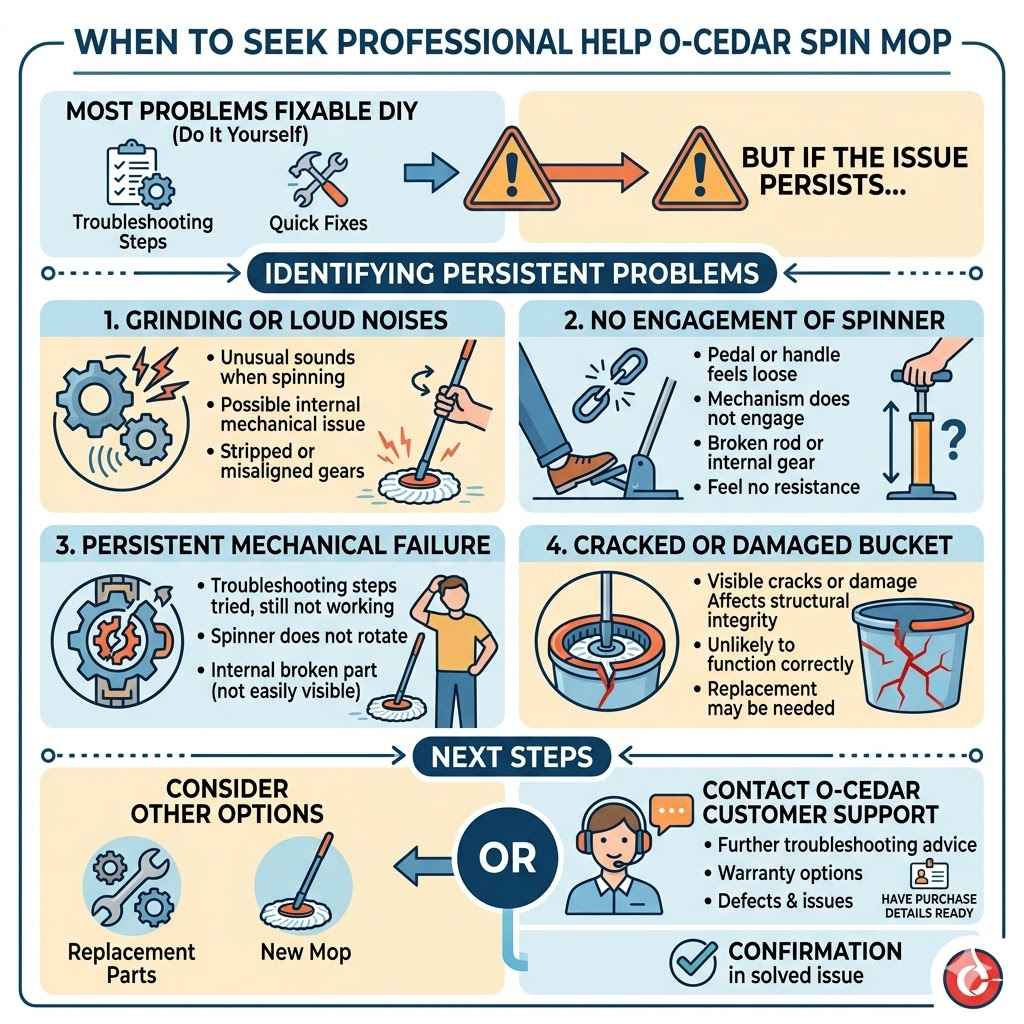
When to Seek Professional Help
Most O-Cedar spin mop problems can be fixed with simple DIY solutions. However, there are times when you might need more help. If you’ve tried everything and your mop still won’t spin, it might be time to consider other options.
Don’t get discouraged if a quick fix doesn’t work.
Identifying Persistent Problems
If your mop continues to have issues after you’ve followed the troubleshooting steps, it suggests a more significant problem. This could be a mechanical failure within the bucket’s wringing system. Sometimes, a part might be broken internally and not easily visible.
If the spinner still doesn’t rotate or makes strange noises, it’s a sign of a persistent issue.
Grinding or Loud Noises
If you hear loud grinding or unusual noises when trying to spin, it indicates a mechanical problem. This could be gears that are stripped or misaligned. It might also mean that a foreign object is stuck deep within the mechanism.
These noises are not normal and suggest something is seriously wrong.
No Engagement of Spinner
When you activate the pedal or pump the handle, you should feel some resistance and hear the mechanism engage. If you feel nothing, or the spinner doesn’t move at all, the link between your action and the spinner is broken. This could be a detached rod or a broken internal gear.
Cracked or Damaged Bucket
Inspect the bucket for any visible cracks or damage, especially around the spinner mechanism. A compromised bucket can affect the integrity of the entire spinning system. If the bucket is broken, it’s unlikely the spinner will function correctly, and the bucket might need replacement.
Contacting O-Cedar Customer Support
If you believe your O-Cedar spin mop has a defect or a persistent mechanical issue, contacting customer support is a good next step. They can offer further troubleshooting advice or discuss warranty options. O-Cedar typically provides support for their products.
Having your purchase details handy will be helpful when you contact them.
Frequently Asked Questions
Question: How often should I clean my O-Cedar mop head?
Answer: It’s best to rinse your O-Cedar mop head thoroughly after each use. For a deeper clean, you can wash the mop head in a washing machine (check manufacturer instructions for specific models) every few weeks or when it looks visibly dirty.
Question: Can I use bleach in my O-Cedar spin mop bucket?
Answer: It is generally not recommended to use bleach in your O-Cedar spin mop bucket unless explicitly stated in the product manual. Bleach can damage the mop head material and potentially corrode parts of the bucket or spinner mechanism over time.
Question: My O-Cedar mop handle feels loose. What should I do?
Answer: If your O-Cedar mop handle feels loose, check where the mop head attaches to the handle. Ensure it is screwed on tightly or properly locked into place. Also, inspect the connection point between the handle and the bucket’s wringing mechanism; some handles can be tightened or may require professional attention if broken.
Question: How do I store my O-Cedar spin mop?
Answer: After cleaning and drying, store your O-Cedar spin mop in a dry place. It’s recommended to hang the mop head to air dry completely. Keep the bucket lid open to allow the interior to dry and prevent mold or mildew.
Avoid storing it in damp or humid areas.
Question: Why does my O-Cedar mop smell bad even after cleaning?
Answer: A bad smell usually indicates that the mop head or bucket is not drying completely between uses. Bacteria and mold can grow in damp environments. Ensure you are rinsing thoroughly, drying all components completely, and consider a deeper clean or replacing the mop head if the odor persists after thorough drying and cleaning.
Conclusion
Getting your O-Cedar mop to spin again is usually a simple fix. By checking for debris, ensuring proper assembly, and performing regular maintenance, you can keep it working well. These steps from our O-Cedar Won’t Spin?
Quick Fix Guide should help resolve most common issues quickly so you can get back to clean floors.