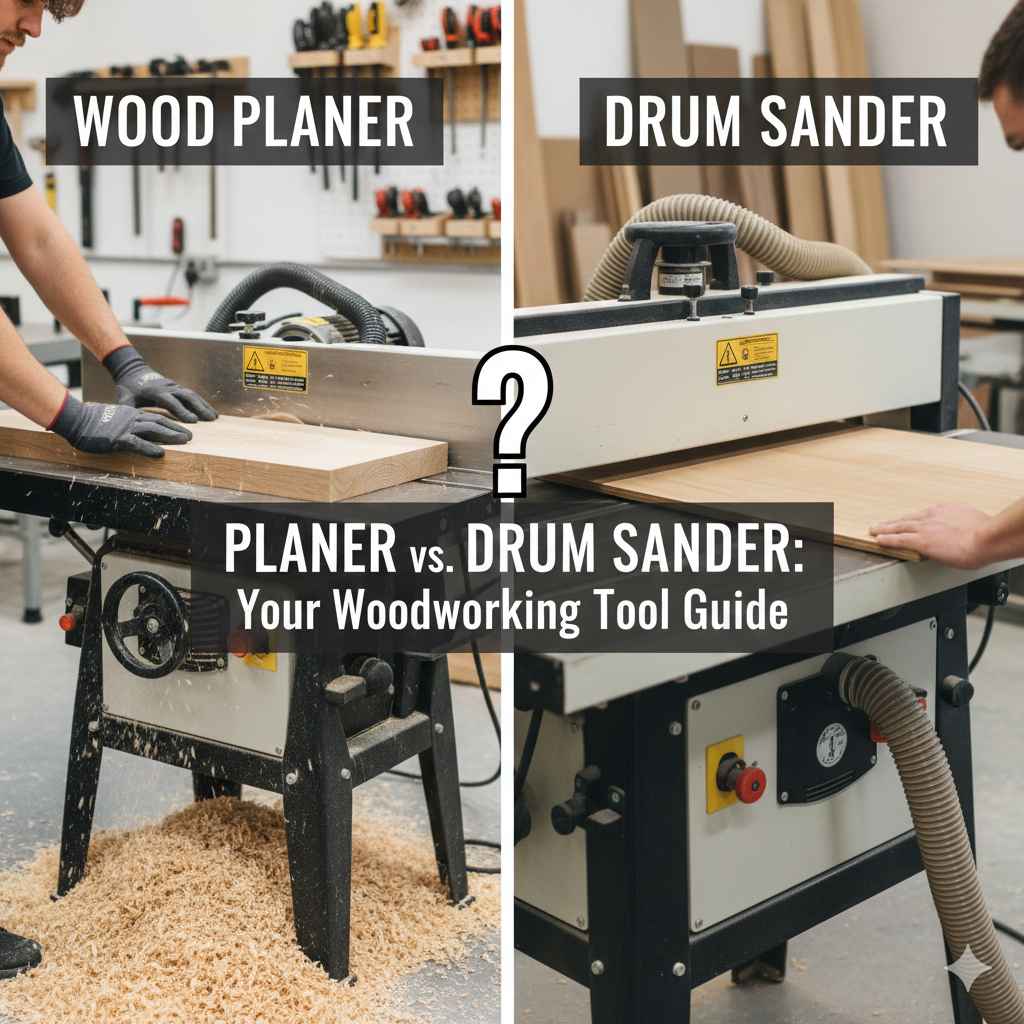
Planer vs Drum Sander: Your Woodworking Tool Guide
Choosing between a Planer vs Drum Sander: Which One Do You Need? is a common question for anyone starting woodworking. It’s tricky because both tools are for smoothing wood, but they work very differently. Don’t worry, this isn’t as hard as it seems! We’ll break down everything in simple terms, step by step, so you can pick the right tool for your project. Next, we’ll see exactly how these machines work and their specific applications.
What Do Planers and Drum Sanders Do?
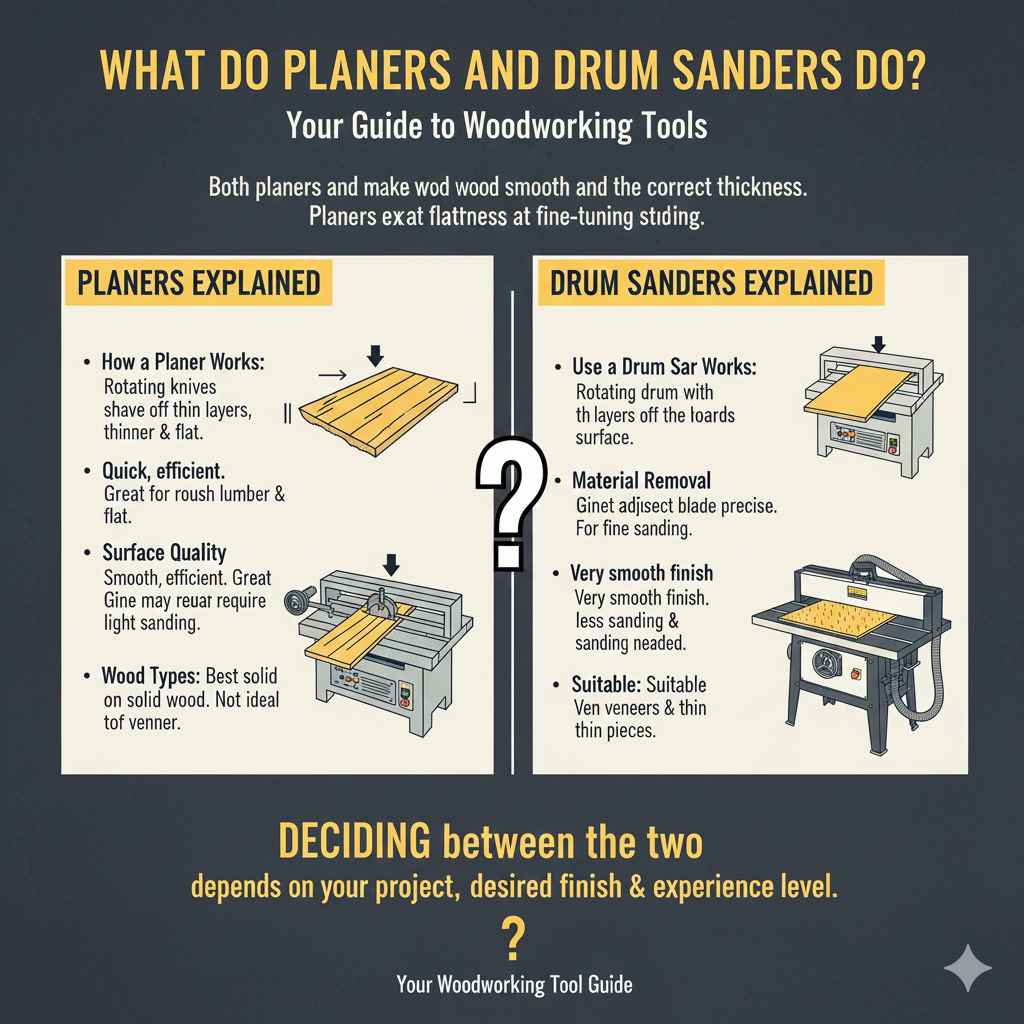
Both planers and drum sanders are used to make wood pieces smooth and the correct thickness. They both remove material, but their methods and results differ significantly. A planer is generally used for making boards flat and parallel. It’s like a giant, super-powered pencil sharpener for wood. A drum sander is more like a very precise belt sander, often used for detailed work or smoothing wide surfaces. Deciding between a planer and drum sander depends on what you are working on, the look you want, and your experience level.
Planers Explained
A planer uses a rotating cutter head with knives to shave off thin layers of wood, making a board thinner and perfectly flat on one or both sides. Think of it like a slicing machine, but for lumber. Planers excel at taking rough-sawn lumber and making it ready for projects. They are particularly good at making boards of consistent thickness. A significant advantage is their speed: planers can remove a lot of material quickly. However, they are best suited for solid wood and are not usually ideal for veneer or thin pieces.
- How a Planer Works: Wood passes through the planer under a series of rollers. The cutter head, spinning at high speed, shaves off thin layers.
- Material Removal: Planers remove wood quickly and efficiently. The depth of cut can be adjusted to take off more or less material with each pass.
- Surface Quality: Planers generally leave a smooth surface, but it might still require sanding depending on the desired finish and the quality of the knives.
- Wood Types: Solid wood performs best with a planer. Some planers are designed to handle larger pieces or more exotic woods.
Drum Sanders Explained
A drum sander uses a rotating drum covered in sandpaper to sand wood surfaces. It works in a fashion similar to a belt sander, but with a flat, rotating drum. It’s often used for smoothing surfaces too wide or delicate for a regular belt sander. Drum sanders are usually employed for fine-tuning and finishing work. They are great for flattening wide boards and can also handle veneers and thin materials without tearing or chipping. The abrasive paper is typically changed as it wears down.
- How a Drum Sander Works: The wood is fed under the spinning drum. The sandpaper on the drum sands the wood.
- Material Removal: Drum sanders remove material more slowly than planers but offer more precision, especially when working on detailed shapes or curves.
- Surface Quality: Drum sanders provide a smooth finish, usually requiring less additional sanding compared to a planer.
- Wood Types: Drum sanders are suitable for many wood types, including veneers and thin pieces that might splinter in a planer.
Comparing the Planer and Drum Sander: Features
When selecting between a planer and drum sander, several factors influence your choice. Comparing their features can help you determine which tool best fits your needs. Each tool offers distinct advantages based on the type of projects you’ll be doing. Looking at the features helps you understand what each machine is made for.
Thickness and Surface Accuracy
The thickness of a board after using a planer is very exact. The planer’s design ensures consistency, and the depth of cut is easy to adjust to the specific needs of the job. Drum sanders can also achieve accuracy, but they might need more passes to get the same results. Their strength lies in fine adjustments, making them great for achieving the perfect thickness on each pass.
- Planer: Is designed to create flat, parallel surfaces. This makes it perfect for making the thickness of the wood just right.
- Drum Sander: More effective in dealing with slight imperfections and fine-tuning.
- Accuracy in Practice: You can expect a planer to deliver highly accurate thicknesses across the entire board, while a drum sander may require more passes to achieve similar levels of consistency.
- Example: If you need to make several boards of equal thickness for a table, a planer might be the quicker choice. For a custom inlay, where precision is important, the drum sander is more suitable.
Wood Removal Rate and Capacity
The speed at which a tool removes wood is a key consideration. Planers work quickly, making them efficient for high-volume jobs. However, drum sanders remove material slower. Both tools handle different maximum widths. Consider the largest piece of wood you will work with to make sure it will fit.
- Planer: Removes wood rapidly. It is the best choice when a lot of material must be removed.
- Drum Sander: Removes wood slowly, with more control. This is important for detailed projects.
- Capacity: Consider the maximum width and thickness each tool can handle.
- Efficiency Example: For a small woodworking shop making several doors, a planer will quickly prepare the wood. For a detailed design requiring a specific thickness, a drum sander is best.
Safety and Ease of Use
Both planers and drum sanders can be safe to use, but safety requires proper training and practices. Using either tool needs careful consideration of safety features like guards and dust collection. How easy a tool is to use impacts the woodworking process. Ease of use means considering how the machine controls are designed and how easy it is to change the abrasive media.
- Planer Safety: Always use push blocks to feed wood and wear safety glasses.
- Drum Sander Safety: Be aware of the moving drum. Protect your hands and eyes.
- Ease of Use: Look for models with clear controls and easy-to-change sandpaper.
- Scenario: A beginner might find a drum sander easier to manage because it’s less aggressive, but proper training is needed for both tools.
Choosing the Right Tool: Planer or Drum Sander?
Picking the correct tool comes down to your project and woodworking style. If you work mainly with solid wood, the speed and accuracy of a planer might be a great choice. If your work involves delicate pieces or detailed designs, the precision of a drum sander might be better.
Types of Projects: Planer
A planer is useful for various projects, especially those requiring precise thickness and flat surfaces. Its ability to quickly remove material makes it ideal for tasks that demand speed and efficiency. Consider the types of woodworking projects you are likely to do to guide your decision-making.
- Furniture Making: Planers are great for preparing wood for table tops, shelves, and other furniture parts.
- Door Construction: Planing solid wood doors to ensure consistent thickness is a common application.
- Flooring Preparation: Planers can be used to make planks even and ready for installation.
- Example Project: Building a dining table. You’ll need to make boards that are the same thickness.
Types of Projects: Drum Sander
A drum sander shines in areas where finesse and precision are needed. Projects that include veneer, detailed design, or slight adjustments benefit from its capabilities. The drum sander is especially helpful for smoothing and refining surfaces with care.
- Veneer Work: Perfect for sanding veneers, as it minimizes the risk of tear-out and damage.
- Inlay Work: Essential for smoothing and flattening inlays, providing a smooth finish without disturbing the surrounding wood.
- Refinishing: Useful for sanding and removing old finishes from furniture or other items.
- Example Project: Restoring an antique table with a veneer top. The drum sander is the right tool to keep it looking perfect.
Comparison Table: Planer vs Drum Sander
The following table compares the main characteristics of planers and drum sanders. It makes it easier to compare the features of each tool at a glance. Comparing the tools using different criteria helps in deciding which best fits your specific needs.
| Feature | Planer | Drum Sander |
|---|---|---|
| Primary Function | Thicknessing and flattening solid wood | Smoothing and fine finishing |
| Material Removal | Fast | Slower, more controlled |
| Best Use | Preparing lumber, furniture parts | Veneer, inlays, detail work |
| Surface Finish | May require sanding | Generally smoother finish |
| Suitable Materials | Solid wood, thicker materials | Various woods, veneers, thin stock |
| Precision | High thickness accuracy | High surface accuracy, fine adjustments |
| Ease of Use | Requires care, potential for tear-out | More forgiving, but requires care |
A study showed that using a planer can reduce the time spent in material preparation by up to 40% when compared to using hand tools only (Source: Woodworking Industry Research). This increased efficiency makes planers an excellent choice for workshops.
Frequently Asked Questions
Question: Can I use a planer on plywood?
Answer: It’s generally not recommended to use a planer on plywood because the veneer can chip or tear. Planers are better for solid wood, while a drum sander is safer for plywood.
Question: Is a drum sander better than a belt sander?
Answer: Both have their uses. A drum sander is for fine detail work and smoothing large, flat surfaces. A belt sander is good for fast stock removal, like when you need to quickly remove a lot of material.
Question: What’s the main difference in the final result?
Answer: Planers focus on making surfaces parallel and of consistent thickness, great for building components. Drum sanders focus on fine finishing and smoothing, making them ideal for precise work.
Question: How do I choose between them?
Answer: Consider the type of projects you’ll be doing. If you work with solid wood and need accurate thicknesses, the planer is a good choice. For intricate details and working with veneers, the drum sander is your best bet.
Question: Do I need both tools?
Answer: Depending on the projects you do, having both tools is ideal. The planer handles the rougher work, while the drum sander does the finishing touches.
Final Thoughts
Choosing between a Planer vs Drum Sander: Which One Do You Need? involves careful thought about your projects and woodworking style. A planer is for making wood even and the right thickness quickly. A drum sander is all about detailed work and getting things smooth and perfect. Think about the types of projects you want to make, and your space. Both machines are great, but for different jobs. This will help you select the right tool for your specific needs.
Understanding the differences between these two powerful woodworking machines is a good start. Keep practicing and experimenting. Have fun and be safe as you continue to build your woodworking skills!