DeWalt Reciprocating Saw Power Compared: DCS380 vs DCS389
The DeWalt DCS389 FlexVolt delivers the most raw power in DeWalt’s reciprocating saw lineup – 3,000 SPM and a 1-1/8 inch stroke – but the budget DCS380 cuts nearly as fast for half the price. Picking the wrong model wastes money on power you don’t need, or leaves you underpowered for thick lumber and metal demolition. This guide compares stroke length, SPM, motor type, and price across DeWalt’s 20V MAX and FlexVolt saw lineup.
DeWalt Reciprocating Saws: What Makes Them Powerful?
When people talk about the “power” of a reciprocating saw, it’s not just raw brute force. It’s a combination of factors that work together to get the job done efficiently. For DeWalt, a brand known for robust, reliable tools, understanding these key elements will help you pinpoint the right saw for your needs.
Here are the main contributors to a reciprocating saw’s power:
- Motor Type: Brushed or brushless? Brushless motors are generally more powerful, efficient, and last longer because they have fewer moving parts that wear out.
- Stroke Length: The distance the blade travels back and forth in a single stroke. A longer stroke length usually means the saw can cut through thicker materials more quickly.
- Strokes Per Minute (SPM): How many times the blade moves back and forth in one minute. A higher SPM usually translates to faster cutting.
- Battery Voltage (for cordless models): Higher voltage (20V MAX or FlexVolt’s 60V MAX) typically means more power and runtime.
- Ampere-Hours (Ah) (for cordless models): Not directly related to instantaneous power, but a higher Ah rating means the battery can sustain that power for longer.
Best Power Pick
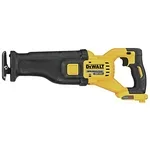 |
DEWALT DCS389B FlexVolt 60V MAX Reciprocating Saw (Tool Only) – $198.80 This is the 0-3,000 SPM, 1-1/8 inch stroke model this guide covers in the DCS388/389 section above – the highest-power cordless reciprocating saw DeWalt sells short of the full FlexVolt Advantage line.
|
Understanding DeWalt’s Reciprocating Saw Lineup
DeWalt offers a wide range of reciprocating saws, from corded options for consistent power to high-performance cordless models. This guide focuses on the battery-powered saws, since they offer flexibility and are the most popular choice for DIY and professional use. DeWalt’s battery systems, like 20V MAX and the higher-voltage FlexVolt line, are built to deliver serious performance.
When comparing DeWalt reciprocating saws for power, a few key model families stand out. Here’s how they stack up:
DeWalt DCS367 / DCS369 / DCS380 (Compact and Standard 20V Reciprocating Saw)
These are the go-to choice for many users because of their balance between size and capability. See our full DEWALT DCS367 review for verified specs and real pricing. They are designed for easy maneuverability, making them excellent for tight spaces and general-purpose cutting. The DCS380 is DeWalt’s brushed-motor budget option in this class – it trades some efficiency for a lower price, but still hits close to 3,000 SPM.
- Motor: DCS367/369 are brushless; the DCS380 uses a brushed motor.
- Stroke Length: Typically 0.8 to 1 inch.
- SPM: Up to 3,000 SPM.
- Best For: Wood, drywall, PVC, general demolition, pruning.
- Power Profile: Good power for its compact size and very user-friendly. Great for most tasks a homeowner or DIYer will face.
While not the absolute powerhouse in DeWalt’s lineup, the compact and standard models offer a strong blend of power, control, and portability. For many users, this is all the power they’ll ever need.
DeWalt DCS388 / DCS389 (20V MAX and FlexVolt 60V MAX Brushless Reciprocating Saw)
Stepping up, DeWalt’s brushless XR and FlexVolt reciprocating saws are built for more demanding applications where speed and cutting through tougher materials are key. The DCS389B (60V MAX FlexVolt) is the highest-power cordless model DeWalt sells, delivering up to 19 percent more power than its predecessor, the DCS388.
- Motor: Brushless.
- Stroke Length: 1-1/8 inches.
- SPM: 0-3,000 SPM with a variable-speed trigger.
- Best For: Demolition, cutting thicker lumber, pipe cutting, metal cutting.
- Power Profile: Significantly more cutting power thanks to the longer stroke and stronger motor. You’ll feel the difference cutting dense wood or metal.
These saws are built for bigger challenges and offer a noticeable increase in cutting speed and efficiency compared to their more compact siblings.
DeWalt DCS577 (FlexVolt Advantage Reciprocating Saw)
For those who need maximum performance, DeWalt’s FlexVolt Advantage tools are the top of the lineup. These saws use the power of DeWalt’s 60V MAX FlexVolt batteries, delivering corded-tool performance in a cordless package.
- Motor: Brushless.
- Stroke Length: 1-1/8 inches or more.
- SPM: Very high SPM, often exceeding 3,000, with excellent power delivery.
- Best For: Heavy-duty demolition, cutting large pipes, thick lumber, and any task that requires maximum cutting power and speed.
- Power Profile: DeWalt’s top-tier power in a reciprocating saw, designed to rival or even surpass many corded tools.
When comparing DeWalt reciprocating saws for sheer power, the FlexVolt Advantage line is the clear champion. It’s a bigger investment but delivers exceptional results for professional contractors and serious DIYers tackling the toughest jobs.
“The cordless reciprocating saw has up to 19% more power vs the DCS388.”
Key Features to Consider When Comparing Power
Beyond the model name, specific features tell you how a DeWalt reciprocating saw will actually perform. Comparing these will help you make the best choice:
Brushless vs. Brushed Motors
This is a crucial distinction for power and longevity. Most modern, higher-end DeWalt reciprocating saws feature brushless motors. Here’s why that matters:
- Brushless:
- More efficient power delivery
- Less heat generated, leading to longer motor life
- Better control and more consistent speed under load
- Typically more powerful for their size
- Brushed:
- Traditional motor design
- Brushes wear out over time, requiring replacement
- Can be less efficient and generate more heat
- Often found in older or more budget-friendly models like the DCS380
If raw power is your priority, lean toward DeWalt’s brushless offerings.
Stroke Length: The Longer the Better for Tougher Materials
Think of stroke length like the stride of a runner. A longer stride covers more ground with each step. In a reciprocating saw, a longer stroke length means the blade cuts through thicker materials more aggressively.
- Short Stroke (0.8 to 1 inch):
- Great for detail work and cutting thinner materials.
- Offers more control.
- Less efficient for thick lumber or demolition.
- Long Stroke (1-1/8 to 1-1/4 inch):
- Ideal for aggressive cutting through thick wood, metal, and demolition.
- Faster cutting speed.
- Can be slightly less precise for fine work.
If raw cutting power through challenging materials is your priority, a longer stroke length is a significant advantage.
Strokes Per Minute (SPM) & Variable Speed Trigger
SPM is like the cardiovascular rate of the saw – more strokes per minute means faster cutting. But it’s not just about the maximum speed; it’s about control too.
- High SPM (3,000+): Essential for quickly cutting through wood and softer materials.
- Variable Speed Trigger: Lets you adjust the SPM on the fly – start a cut slowly and precisely, then ramp up speed for faster material removal once the blade is engaged. This matters for safety and for cutting different materials; metal cutting often needs lower speeds to avoid overheating the blade.
When comparing saws, look for a high maximum SPM and a variable speed trigger for the best control and versatility.
DeWalt Reciprocating Saw Power Comparison Table
Here’s a clearer picture of how DeWalt’s reciprocating saw families stack up on power and price. Specific model numbers within these families can have slight variations.
| Feature | DeWalt Standard/Compact (DCS380/367/369) | DeWalt XR/FlexVolt Brushless (DCS388/389) | DeWalt FlexVolt Advantage (DCS577) |
|---|---|---|---|
| Motor Type | Brushed (DCS380) or Brushless (DCS367/369) | Brushless | Brushless |
| Stroke Length | 0.8″ – 1″ | 1-1/8″ | 1-1/8″ – 1-1/4″ |
| Max SPM | Up to 3,000 | 0-3,000 | 3,000+ with stronger power delivery |
| Battery System | 20V MAX | 20V MAX (388) or 60V MAX FlexVolt (389) | 60V MAX FlexVolt or 20V MAX with adapter |
| Tool-Only Price (approx.) | $99 – $130 | $180 – $199 | $250+ |
| Best For | General tasks, everyday DIY | Tougher materials, frequent use | Heavy demolition, pro contractors |
This table shows that while all three families are capable, the FlexVolt Advantage line is engineered for the highest power output, followed closely by the XR/FlexVolt brushless series. The compact and standard series offers a strong balance of power and price for everyday use.
Choosing the “Best Power” for Your Needs
The “best power” isn’t always about having the most extreme specs. It’s about having the right amount of power for your jobs, combined with control and ease of use. Here’s how to match power to your tasks:
- For Occasional Home Projects & Lighter Demolition (cutting drywall, small branches, PVC pipes): A DeWalt compact or standard reciprocating saw (DCS367/369/380) is likely all the power you’ll need. It’s easy to handle and efficient.
- For Frequent DIY, Medium-Duty Demolition, and Woodworking (cutting through 2x4s easily, dismantling decks, cutting thicker pipes): The DeWalt 20V MAX XR or FlexVolt reciprocating saw (DCS388/389) offers a real step up in power and speed – a great all-around choice for a serious DIYer.
- For Professional Contractors & Heavy-Duty Demolition (cutting concrete blocks, structural demolition, fast pipe cutting): The DeWalt FlexVolt Advantage reciprocating saw (DCS577) delivers uncompromising power, designed for the toughest jobs where speed and raw cutting ability matter most.
The Importance of Blade Selection
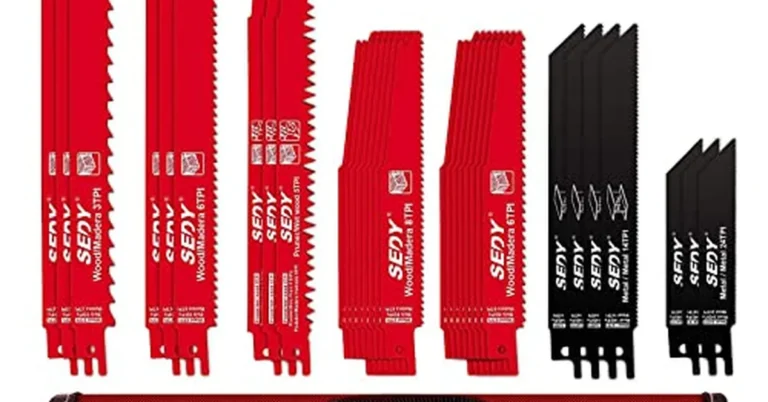
The saw is only half the equation. The blade you use dramatically impacts cutting performance and what materials you can tackle. For effective cutting, always use the right blade:
- Wood Blades: Thicker teeth for general wood cutting, finer teeth for tougher woods or clean cuts.
- Metal Blades: Finer teeth, often with a variable tooth count, designed to cut through metal without overheating.
- Demolition Blades: Thick, strong blades designed to cut through wood with nails, screws, and general construction debris.
- Specialty Blades: For materials like brick, mortar, or even ice.
A dull or incorrect blade will make even the most powerful saw feel sluggish and ineffective.
Battery Considerations: Powering the Saw
For DeWalt’s cordless reciprocating saws, especially the more powerful models, the battery is key to sustained performance. While all 20V MAX batteries work with 20V MAX tools, the Ampere-hour (Ah) rating makes a real difference in how long the tool maintains its power.
- Higher Ah (5.0Ah, 6.0Ah): More runtime – you can cut for longer before needing to swap batteries or recharge. This matters for extended demolition or construction tasks.
- FlexVolt Batteries (60V MAX): A game-changer for the DCS577 and DCS389, providing the raw power needed to put the saw in the same league as corded tools. When attached to a 20V MAX tool, FlexVolt batteries also offer extended runtime.
If you’re aiming for the best power and looking at DeWalt’s higher-end models, investing in higher-Ah 20V MAX batteries or FlexVolt batteries is essential to fully use the saw’s capabilities. For a deeper look at why FlexVolt costs more, see our guide on the difference between DeWalt 20V and 60V battery systems.
Reciprocating Saw or a Different Tool?
A reciprocating saw isn’t always the right tool for the cut. If you’re doing detail or flush-cutting work rather than demolition, it’s worth knowing when a different oscillating tool is the better pick – see our comparison of the reciprocating saw vs. oscillating saw for how the two tools differ in control and use case.
Safety First: Power and Precision
As you move up in power, safety becomes even more critical. Powerful tools, used improperly, can cause injury. Always follow these basic safety practices:
- Wear Safety Glasses: Always protect your eyes from flying debris.
- Wear Gloves: For better grip and protection.
- Wear Hearing Protection: Reciprocating saws can be loud.
- Secure Your Workpiece: Make sure the material you’re cutting is stable.
- Maintain a Firm Grip: Keep both hands on the saw for maximum control, especially with more powerful models.
- Be Aware of Your Surroundings: Make sure no one is in the path of debris or the saw’s operation.
- Read the Manual: Familiarize yourself with your specific model’s features and safety guidelines. The U.S. Consumer Product Safety Commission (CPSC) also offers general power tool safety advice.
A powerful tool is a safe tool when operated with respect and knowledge. DeWalt tools are built with ergonomics and safety in mind, but user diligence is what actually prevents injuries.
FAQ: Your DeWalt Reciprocating Saw Questions Answered
Which DeWalt reciprocating saw is the MOST powerful?
The DeWalt FlexVolt Advantage reciprocating saw (DCS577) is generally the most powerful in DeWalt’s cordless lineup, delivering performance comparable to corded tools using 60V MAX FlexVolt batteries. The DCS389B FlexVolt is a close second, with the same 1-1/8 inch stroke and 0-3,000 SPM rating.
Do I need a powerful reciprocating saw for basic home repairs?
No. For most basic home repairs – cutting drywall, PVC pipes, or small branches – a compact DeWalt brushless reciprocating saw (DCS367/369) offers plenty of power with better control and a lower price. You likely don’t need a FlexVolt model.
How does stroke length affect a reciprocating saw’s power?
A longer stroke length (over 1 inch) lets the blade travel further with each pass, letting it cut through thicker and denser materials more quickly and aggressively. This contributes significantly to perceived cutting power, more than SPM alone.
Is a brushless motor always more powerful than a brushed motor?
Generally yes. Brushless motors are more efficient, produce less heat, and deliver more consistent power under load, making them feel more powerful and perform better than a brushed motor with similar specs, like the budget DCS380.
What’s the cheapest DeWalt reciprocating saw that still cuts fast?
The DCS380B (brushed, 20V MAX) is DeWalt’s best value option, priced well under the brushless models while still reaching close to 3,000 SPM. It sacrifices some motor efficiency and longevity, but is a reasonable pick for occasional DIY use.
Once you know which power tier fits your projects, matching the saw to the right battery and blade combination is what actually determines how it performs on the jobsite.
Sponsored / affiliate links. As an Amazon Associate I earn from qualifying purchases. I may earn additional commission from eligible campaigns.