Crafting a Plywood Christmas Tree: A Heartwarming Holiday Project
Hey there! If you’re like me, the holiday season sparks a special kind of joy—the kind that makes you want to roll up your sleeves, grab some tools, and create something beautiful for your home. One of my favorite projects to dive into is making a plywood Christmas tree. It’s a fun, budget-friendly way to add a rustic, handmade touch to your holiday decor. Whether you’re a seasoned woodworker or just starting out, a plywood Christmas tree pattern is a fantastic place to begin.
I’ve spent hours experimenting with different designs, cuts, and finishes, and I’m excited to share everything I’ve learned with you. Let’s dive into this festive project and explore how you can craft your own plywood Christmas tree that’ll be the talk of your holiday gatherings!
Why Choose a Plywood Christmas Tree?
I’ll be honest—when I first heard about plywood Christmas trees, I wasn’t sure they’d have the same charm as a real evergreen. But after making my first one, I was hooked! Plywood is affordable, easy to work with, and incredibly versatile. You can cut it into any shape, paint it any color, or leave it raw for that natural, earthy vibe. Plus, it’s a sustainable option if you’re looking to reduce waste or skip the hassle of a real tree.
A plywood Christmas tree is perfect for small spaces, like apartments or cozy cabins, because you can make it as big or as small as you need. It’s also a great project for families—kids can help decorate it, and it’s sturdy enough to handle their enthusiasm. I’ve made trees that stood proudly in my living room and others that added a quirky touch to my porch. The best part? You can reuse it year after year, tweaking the design to keep things fresh.
Choosing the Right Plywood for Your Christmas Tree
Picking the right plywood is the first step to a successful project. When I started, I grabbed the cheapest sheet I could find, but I quickly learned that quality matters. Here’s what I’ve figured out after a few trials.
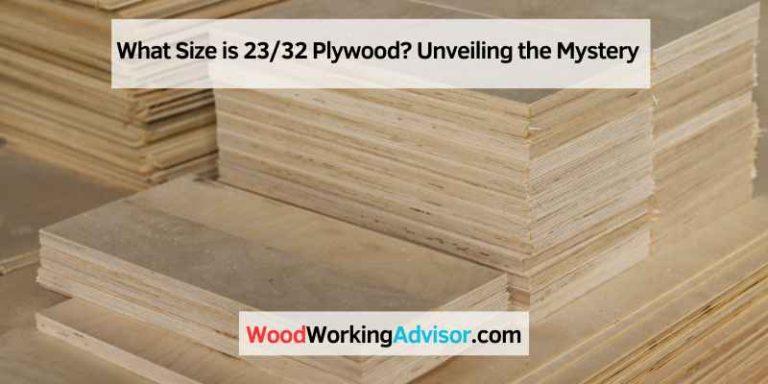
Plywood comes in different grades, and for a Christmas tree, you’ll want something smooth and sturdy. Birch plywood is my go-to because it has a beautiful grain and takes paint or stain really well. It’s a bit pricier, but the finish is worth it. If you’re on a budget, pine plywood works fine, but it might need extra sanding to smooth out rough spots. Avoid construction-grade plywood—it’s splintery and looks rough, which isn’t ideal for a decorative piece.
Thickness is another thing to consider. I usually use ½-inch plywood for smaller trees (up to 4 feet tall) because it’s easy to cut and lightweight. For larger trees, ¾-inch plywood gives extra stability. If you’re making a 3D tree with slots that fit together, thicker plywood holds up better. Here’s a quick table to help you choose:
| Plywood Type | Thickness | Best For | Pros | Cons |
|---|---|---|---|---|
| Birch | ½ inch | Small trees, detailed designs | Smooth surface, great for painting | More expensive |
| Birch | ¾ inch | Large or 3D trees | Sturdy, holds shape well | Heavier, pricier |
| Pine | ½ inch | Budget-friendly projects | Affordable, widely available | Rougher grain, needs sanding |
| MDF | ½ inch | Indoor trees, smooth finishes | Super smooth, easy to paint | Not weather-resistant, heavy |
Always check your plywood for warping or knots before buying. I learned this the hard way when a warped sheet made my tree lean like it had one too many eggnogs!
Finding or Creating Your Plywood Christmas Tree Pattern
The pattern is where the magic starts. A good pattern is like a roadmap—it guides your cuts and ensures your tree looks just right. You can find free plywood Christmas tree patterns online, but I love making my own because it lets me customize the size and style.
If you’re new to woodworking, start with a simple triangular silhouette. I sketched my first pattern on graph paper, measuring a base width of 2 feet and a height of 3 feet for a small tabletop tree. For a modern look, I added a few angled branches to mimic a real tree. If you’re feeling fancy, try a layered design with multiple pieces that stack or slot together for a 3D effect. I’ve also seen patterns with star-shaped cutouts or wavy edges for a whimsical vibe.
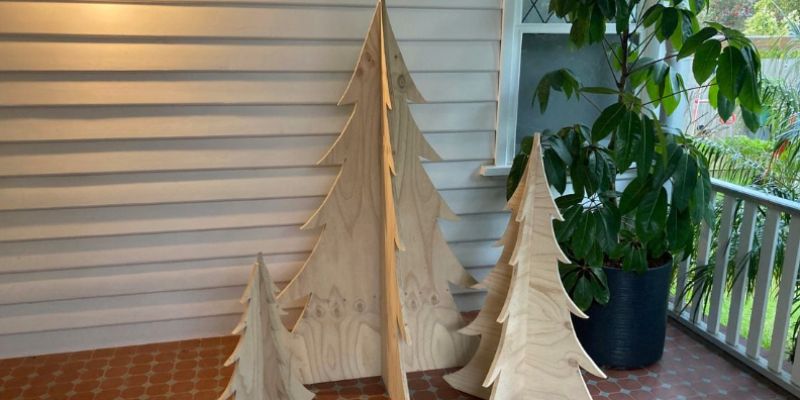
To create your own pattern, grab some butcher paper or cardboard. Draw your tree shape, keeping the base wide enough to keep it stable. If you’re not confident in your drawing skills, trace a photo of a Christmas tree and scale it to size. For a 3D tree, you’ll need two patterns: one for the front piece and one for the back, with slots in the middle so they interlock. I made a 4-foot 3D tree last year, and sketching the slots was the trickiest part—measure twice, cut once!
If you’d rather not start from scratch, websites like Etsy or Pinterest have tons of downloadable patterns. Just make sure the pattern matches your plywood size and skill level. I once bought a pattern that looked amazing but required a jigsaw I didn’t own—lesson learned!
Tools and Materials You’ll Need
Before you start cutting, let’s talk tools. I remember feeling overwhelmed by the idea of needing a full workshop, but you can make a plywood Christmas tree with just a few basics. Here’s what I use:
- Jigsaw or Scroll Saw: A jigsaw is great for most cuts, especially if your pattern has curves. A scroll saw is better for intricate details, but it’s not essential.
- Sandpaper: Get a variety of grits (80, 120, and 220) to smooth edges and surfaces.
- Measuring Tape and Ruler: For precise measurements.
- Pencil and Marker: For tracing your pattern onto the plywood.
- Clamps: To hold the plywood steady while cutting.
- Safety Gear: Safety glasses and gloves are a must—splinters are no fun!
- Paint or Stain: To finish your tree. I love chalk paint for a matte look or wood stain for a natural finish.
- Decorations: Think mini ornaments, fairy lights, or garland to jazz it up.
You’ll also need a sturdy base. For my first tree, I used a scrap piece of 2×4 wood, but you can buy pre-made bases at craft stores. If you’re making a freestanding 3D tree, the interlocking pieces might be enough to keep it upright.
Step-by-Step Guide to Building Your Plywood Christmas Tree
Now, let’s get to the fun part—building your tree! I’ll walk you through the process I follow, step by step, based on my own projects.
First, transfer your pattern to the plywood. Lay your pattern on the sheet and trace it with a pencil. I like to use a marker for darker lines, especially on rougher plywood. Double-check your measurements before moving on. One time, I skipped this step and ended up with a lopsided tree that looked more like a cactus!
Next, secure the plywood to your workbench with clamps. This keeps it from wobbling while you cut. Use your jigsaw to carefully follow the lines of your pattern. Go slow around curves to avoid jagged edges. If you’re making a 3D tree, cut the slots precisely—they should be the same width as your plywood’s thickness for a snug fit.
Once your pieces are cut, it’s time to sand. I start with 80-grit sandpaper to smooth rough edges, then move to 120-grit and finish with 220-grit for a polished look. Sanding is tedious, but it makes a huge difference, especially if you’re painting. I learned this after my first tree looked patchy because I rushed the sanding.
If you’re assembling a 3D tree, test-fit the pieces to make sure the slots align. You might need to sand the slots a bit for a smooth fit. For a flat tree, attach the base now. I use wood glue and screws to secure the tree to a wooden base, but you can also use brackets for extra stability.
Finally, finish your tree with paint or stain. I love experimenting with colors—last year, I painted my tree white for a snowy effect, and this year, I’m trying a deep green. Apply thin coats to avoid drips, and let each coat dry completely. If you’re staining, wipe off excess stain with a cloth for an even finish.
Decorating Your Plywood Christmas Tree
This is where your tree comes to life! Decorating is my favorite part because it’s where your personality shines. I’ve tried all sorts of ideas, from minimalist to over-the-top festive.
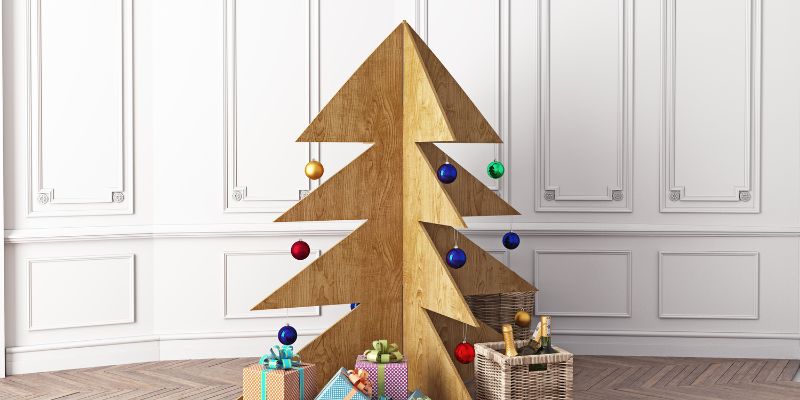
For a rustic look, wrap your tree in twine or burlap garland. I added tiny wooden stars to one tree, which gave it a cozy, handmade feel. If you want sparkle, string fairy lights around the edges—battery-powered ones are easiest for a plywood tree. Mini ornaments work great, too, especially if you drill small holes to hang them.
For a modern vibe, paint your tree in a bold color like red or gold and add geometric ornaments. I made a black-and-white tree for my office last year, and it was a hit with everyone who saw it. If you’re crafting with kids, let them paint designs or glue on pom-poms—it’s a fun way to make memories.
One tip: don’t overload your tree with heavy decorations, especially if it’s a smaller design. I made that mistake once, and my tree tipped over mid-party—not the holiday cheer I was going for!
Storing and Reusing Your Plywood Christmas Tree
One of the best things about a plywood Christmas tree is that it’s reusable. I’ve stored mine in the garage for years, and they still look great. To keep your tree in top shape, store it flat in a dry place to prevent warping. If it’s painted, wrap it in an old sheet to avoid scratches.
For 3D trees, disassemble the pieces and stack them neatly. I label my pieces with a marker (e.g., “front” or “back”) so I don’t get confused next year. If you’re tight on space, a flat tree takes up barely any room compared to a traditional tree.
Each year, you can refresh your tree with a new coat of paint or different decorations. I love how versatile these trees are—one year, mine was a glittery centerpiece, and the next, it was a rustic porch display.
Tips for Beginners and Common Mistakes to Avoid
If you’re new to woodworking, don’t worry—this project is totally doable. My first tree wasn’t perfect, but it taught me a lot. Here are some tips to help you out:
- Start Simple: A basic triangular tree is easier than a 3D design. Build your confidence before tackling complex patterns.
- Measure Carefully: A small mistake in your pattern can throw off the whole tree. I’ve had to recut pieces because I rushed this step.
- Sand Thoroughly: Rough edges make your tree look unfinished. Take your time to get a smooth surface.
- Test Your Base: Make sure your tree stands steady before decorating. A wobbly base is a recipe for disaster.
- Have Fun: This is a creative project, so don’t stress about perfection. Every tree I’ve made has its own quirks, and that’s what makes them special.
Why This Project Is Worth Your Time
Making a plywood Christmas tree isn’t just about crafting decor—it’s about creating something meaningful. Every time I look at my tree, I’m reminded of the hours I spent sketching, cutting, and decorating with my family. It’s a project that brings people together, whether you’re building it alone or with loved ones. Plus, it’s a budget-friendly way to add a unique touch to your holiday season.
I’ve found that this project also sparks conversations. Friends and neighbors always ask about my trees, and it’s fun to share the story behind them. Whether you’re displaying it in your living room, on your porch, or even at a holiday market, a plywood Christmas tree is a statement piece that shows off your creativity.
Wrapping Up the Holiday Magic
There’s something incredibly satisfying about turning a plain sheet of plywood into a festive masterpiece. From choosing the perfect plywood to sketching your pattern and adding the final decorations, this project is a journey of creativity and joy. I’ve loved experimenting with different designs over the years, and each tree I make feels like a new adventure. Whether you’re a beginner or a woodworking pro, a plywood Christmas tree is a project that’s accessible, fun, and full of holiday spirit.
So, grab your tools, pick a pattern, and start crafting. I promise you’ll end up with more than just a tree—you’ll have a handmade treasure that lights up your home and your heart. Happy woodworking, and here’s to a cozy, craft-filled holiday season!
Frequently Asked Questions
What’s the best plywood for a Christmas tree?
Birch plywood is my favorite because it’s smooth and looks great painted or stained. For budget projects, pine works, but it needs more sanding. Aim for ½-inch thickness for small trees or ¾-inch for larger ones.
Can I make a plywood Christmas tree without power tools?
Yes, but it’s tougher. A hand saw can work for simple shapes, but it takes more effort. If you’re avoiding power tools, stick to a basic design and consider pre-cut plywood from a hardware store.
How do I make a 3D plywood Christmas tree?
You’ll need two pieces of plywood with slots cut in the middle—one slot from the top down, one from the bottom up. They slide together to form a standing tree. Make sure the slots are the same width as your plywood for a tight fit.
How can I decorate my plywood Christmas tree?
Get creative! I love using fairy lights, mini ornaments, or garland. Paint it for a bold look or keep it natural with stain. Just keep decorations light to avoid tipping.
How do I store my plywood Christmas tree?
Store it flat in a dry place to prevent warping. For 3D trees, take them apart and label the pieces. Wrap painted trees in a sheet to protect the finish.