Veneer Core Plywood vs. MDF, Particleboard, and Lumber Core
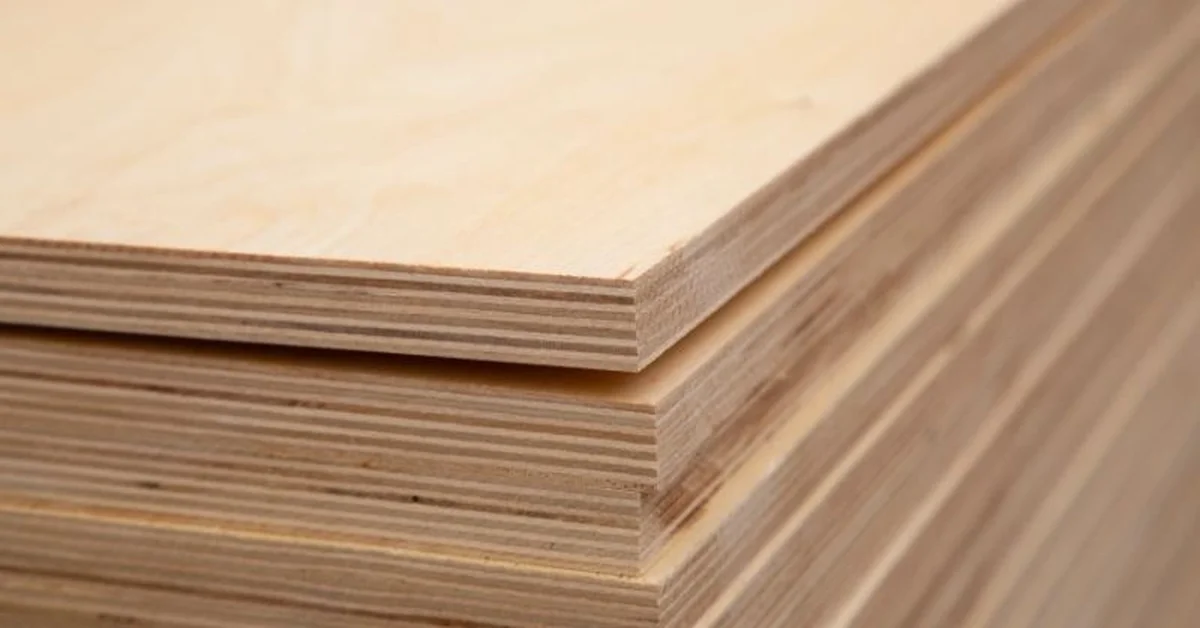
Veneer core plywood is plywood built entirely from thin cross-laminated wood veneers, all the way through the panel — no MDF, particleboard, or solid lumber strips anywhere in the stack. That all-veneer construction is what gives it the best screw and nail holding of any plywood core type, plus the lightest weight for a given strength. The gap in most explainers: they describe veneer core in isolation without comparing it to the other core types you’ll actually see on a lumberyard shelf, which is the comparison that determines whether it’s the right choice for your project.
Want to build an all-veneer panel like this yourself instead of buying it? Our guide on how to make your own plywood walks through the cross-grain veneer layup and pressing steps for a realistic shop-sized panel.
Veneer Core Vs. The Other Plywood Core Types
Best For Shop Projects & CNC Work
 |
Baltic Birch Plywood, 24 x 24 x 1/2″, Pack of 2 – $59.52 All-veneer, void-free B/BB grade construction — the same all-veneer-core build discussed in this guide, in a size that ships without a freight quote.
|
Compare more veneer-core panel sizes
 Thinner 1/4″ stock for small boxes and jigs — $15.49 Check Price |
 Bulk quantity for repeat cuts — $48.94, lowest per-sheet cost here Check Price |
 Thinnest option here — $28.99, made for scroll saw and laser projects rather than structural parts Check Price |
Plywood is sold with four common core types, and the differences actually matter for how a project performs:
| Core Type | Screw Holding | Weight | Flatness | Typical Use |
|---|---|---|---|---|
| Veneer Core | Best (holds at any edge) | Lightest | Very good, can show slight core lines under thin veneer | Furniture, cabinetry, jigs, shop projects |
| MDF Core | Poor at edges, needs pilot holes and care | Heaviest | Excellent, dead flat | High-end veneered cabinet doors, painted surfaces |
| Particleboard Core | Weakest, strips out easily | Heavy | Good, but least durable under moisture | Budget cabinet boxes, shelving that stays dry |
| Lumber Core (Combination) | Very good, similar to solid wood | Medium | Good, can telegraph strip lines through thin veneer face | Table tops, workbenches, load-bearing panels |
The practical takeaway: if a project needs screws driven into the edge of the panel (cabinet sides, drawer boxes, shop jigs), veneer core or lumber core beats MDF or particleboard every time. If the panel needs a perfectly flat, void-free surface for a painted finish and won’t be screwed into on the edge, MDF core is usually the better and cheaper choice.
How Veneer Core Plywood Is Made
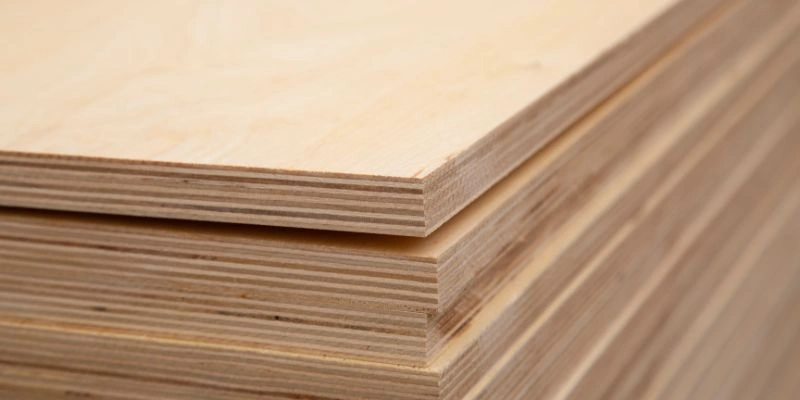
Thin veneer sheets are peeled or sliced from logs, dried, then stacked with the grain of each layer running perpendicular to the layer beneath it before being glued and pressed under heat. That cross-graining is what gives plywood its dimensional stability — wood is strong along the grain and weak across it, so alternating the direction in each layer cancels out most of the expansion and contraction you’d get from a solid board.
Where Veneer Core Plywood Makes Sense
Cabinet boxes and drawer sides are the classic use case, since the sides need to hold screws securely along their edges. It’s also the standard choice for jigs, shop fixtures, and any project going through a CNC or laser cutter, where void-free layers cut more cleanly than MDF’s dustier edge or particleboard’s inconsistent density.
For furniture with an exposed edge, look for “void-free” or Baltic birch / Russian birch grading specifically — standard AC or BC grade veneer core plywood can have internal voids that show up as gaps when you cut and expose the edge, while Baltic birch is graded to eliminate that.
Care And Handling
Store sheets flat or fully vertical rather than leaning at an angle, which lets thin panels bow over time. Keep it away from standing moisture — the veneer layers resist warping far better than solid wood, but the glue lines can still fail under sustained wet conditions. For finished pieces, a damp cloth and mild soap is enough for cleaning; avoid soaking the surface.
Frequently Asked Questions
What Is Veneer Core Plywood?
Veneer core plywood is plywood built entirely from thin, cross-laminated wood veneer layers rather than an MDF, particleboard, or solid-lumber core. This gives it the lightest weight and the strongest screw-holding of the common plywood core types.
How Is Veneer Core Plywood Different From MDF Core Or Particleboard Core?
MDF and particleboard cores use a solid engineered-wood slab under a thin veneer face, giving a flatter surface but much weaker screw holding at the edges. Veneer core is all cross-laminated wood layers throughout, so it holds screws well anywhere on the panel, including the edges.
Is Veneer Core Plywood Durable?
Yes. The alternating grain direction between layers resists warping and cracking far better than solid wood, and void-free grades like Baltic birch hold up well even with repeated screwing and unscrewing at the edges.
When Should I Choose Mdf Core Instead Of Veneer Core?
Choose MDF core when you need a perfectly flat surface for painting or veneering and won’t be screwing into the panel’s edge — cabinet doors and flat panels are the typical case. Choose veneer core whenever edge screw-holding matters, like cabinet boxes, drawer sides, or shop jigs.
Bottom Line
Veneer core plywood is the right call whenever a project needs to hold screws at the edge or go through a CNC/laser cutter cleanly. Reach for MDF core instead when a dead-flat, void-free surface for paint or veneer matters more than edge strength.
Sponsored / affiliate links. As an Amazon Associate I earn from qualifying purchases. I may earn additional commission from eligible campaigns.
 Baltic Birch Plywood Sheets Box of 45 - Laser Engraving Cutting, Scroll Saw Nature Veneer Color, Stronger Than Basswood, A/A Grade,12 x 12 x 1/8”, 3mm Thickness Perfect for Wood Burning
 Baltic Birch Plywood 1/8'' x 12'' x 18'', 6 Pack, B/BB Grade, Void-Free Core, Laser Cutting Ready, Flat Sheets for CNC, Engraving, DIY Crafts, Art Painting, Wood Burning, Staining