What Size Plywood for a Queen Bed? (Why One Sheet Won’t Do)
A queen mattress is 60 by 80 inches, but plywood does not come that big, so you need two 4×8 sheets rather than one. Cut them into two 30 x 80 in halves or three 20 x 80 in panels, in 3/4 inch thickness, and support the middle. This guide gives the cut plans, sheet counts, slat math and support rules.
What Size Plywood Does a Queen Bed Need?
Best Plywood Cutting Guide Pick
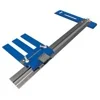 |
Kreg Rip-Cut Circular Saw Guide, KMA2685 ($49.00) Breaking a 4×8 sheet into bed panels takes long, straight rips. This guide turns a regular circular saw into an edge-guided tool, so the 30 x 80 in and 20 x 80 in cuts below can come out straight.
|
The short answer is a deck of about 60 x 80 inches made from two 4×8 sheets of 3/4 inch plywood. The old advice to buy “a sheet of plywood measuring 60 by 80 inches” does not work in a store, because standard sheets are 48 by 96 inches. Everything below explains how to turn two ordinary sheets into a queen-size deck.
Queen Mattress and Frame Dimensions
Start from the mattress, not the plywood. According to the Sleep Foundation, a standard queen mattress is 60 inches by 80 inches, and a typical queen frame runs about 62 to 65 inches wide by 82 to 85 inches long once the frame structure is added. Two other queen sizes exist, and they change your plywood plan.
| Queen type | Mattress width x length (in) | Typical frame outside size (in) |
|---|---|---|
| Standard queen | 60 x 80 | 62-65 x 82-85 |
| Olympic queen | 66 x 80 | 68 x 82 to 71 x 85 |
| California queen | 60 x 84 | 62 x 86 to 65 x 89 |
Measure your actual mattress before you cut anything. If it is an Olympic or California queen, use its numbers in every plan below. The deck you cut should match the inside dimensions of your frame, which is a little bigger than the mattress and smaller than the frame’s outside size.
Why One Sheet of Plywood Will Not Cover a Queen
A 4×8 sheet is sold as 48 by 96 inches, but the sizes listed by cutlist.us put the real panel at about 47-7/8 by 95-7/8 inches because mills trim the edges. Multiply that out and a single sheet holds roughly 4,590 square inches. A queen deck is 60 x 80, or 4,800 square inches. One sheet is about 210 square inches short, even before you lose anything to saw kerf, and it is only 47-7/8 inches wide against a 60 inch mattress.
This is the angle most “queen bed plywood” pages skip. They say to use 60 x 80 inch plywood, and a reader who walks into the store finds nothing that size. The fix is to cut and butt two or three pieces together. Our standard plywood size chart lists the other sheet sizes and how thickness is measured.
Two Cut Plans That Work With Two Sheets
Both plans below use two 4×8 sheets and give a deck 60 inches wide by 80 inches long. The measurements are our own arithmetic from the 47-7/8 x 95-7/8 inch sheet size, with 1/8 inch allowed for each saw kerf. Keep the real sheet width in mind: it is 1/8 inch shy of 48, so a full-width rip has to be cut at 47-3/4 inches or less.
| Plan | Sheets | Pieces to cut | Leftover | Best for |
|---|---|---|---|---|
| Two halves | 2 | Two panels, 30 x 80 in (one from each sheet) | From each sheet: about 17-3/4 in of width left over, plus a roughly 15-7/8 in end offcut | Fewest cuts; strong, but each panel is awkward to carry up stairs |
| Three panels | 2 | Two panels 20 x 80 in from sheet one, one panel 20 x 80 in from sheet two | About a 7-3/4 x 95-7/8 in strip from sheet one; a 27-3/4 x 95-7/8 in piece from sheet two | Easier to move; the two seams give you places to add cross supports |
With the two-halves plan the seam runs down the center of the bed, right over the center rail, which is where you want it. With three panels the seams fall at 20 and 40 inches, so put a support rail under each seam or glue a cleat under it so the edges cannot ride up on each other. The leftover strips are useful as cleats, rails or a headboard brace.
A circular saw with a straightedge is enough for these cuts. Our guide on cutting plywood with a circular saw covers support and blade choice, and a saw guide like the one in the box above keeps an 80 inch rip from wandering off the line.
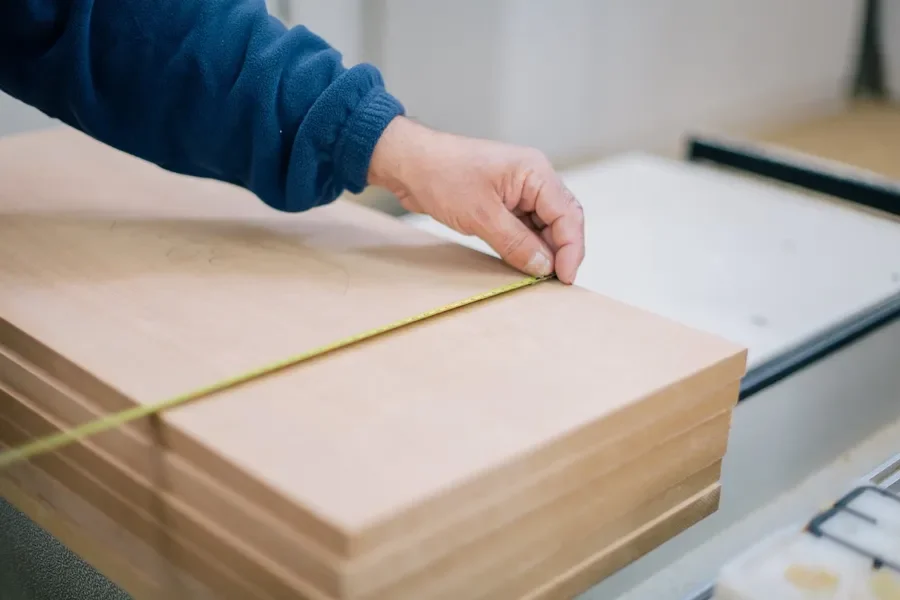
3/4 Inch vs 1/2 Inch: Which Thickness for a Queen
Choose 3/4 inch. The sources we read agree on this: one advises 3/4 inch rather than 1/2 inch because thinner plywood may bend and collapse under the weight, and another notes that 3/4 inch plywood still needs support at the middle because it will not carry the load across the full width. A queen bed carries two adults, so the extra stiffness is worth it.
| Thickness | Nominal vs actual | What to expect on a queen deck |
|---|---|---|
| 3/4 in | Nominal 3/4 in; actual about 23/32 in | Standard choice; needs a center rail and cross supports |
| 1/2 in | Nominal 1/2 in; actual slightly thinner | Flexes more; only reasonable with closely spaced supports, and we would not use it |
| 1/4 in | Nominal 1/4 in | A liner or backer, not a bed deck |
We have not load-tested any of these and we do not publish a weight rating, because the real capacity depends on the plywood grade, the support spacing and the joints. For the full thickness breakdown see our page on plywood thickness for a bed base, and for how 3/4 inch stiffness compares with thinner panels see 5/8 vs 3/4 plywood.
Supporting the Deck: Center Rail, Legs and Cross Supports
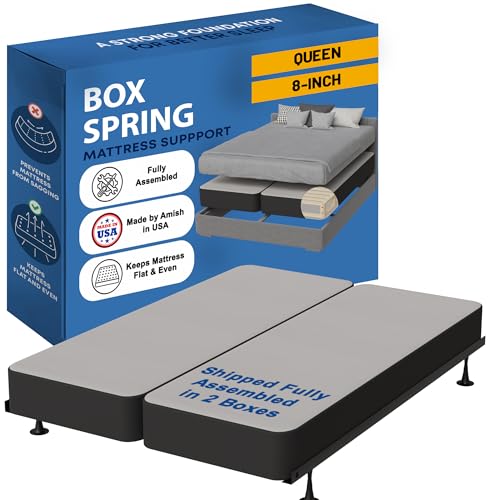
The plywood is only half of the answer. A 60 inch wide deck of 3/4 inch plywood sags in the middle if nothing holds it up there. The Sealy warranty page says queen, king and cal king frames need at least five legs, with one leg serving as a center rigid support, and that requirement is a good template even for a homemade frame.
- Perimeter frame: rails and ledgers around the edge that the panels sit on, so the outside 1 to 2 inches of the deck is supported all the way around.
- Center rail: one beam running the 80 inch length under the middle of the deck, about 30 inches from each side, with a leg that reaches the floor.
- Cross supports: boards running side to side under the deck. Closer spacing means less flex, so add more if you can feel movement when you press on the deck.
- Fasteners: screw the panels down to the ledgers and rails so they cannot shift or squeak.
These are common building practices rather than lab-tested figures, so treat the spacing as a starting point. If you would like complete plans that include rails and joinery, our homemade wood bed frame cut list walks through every size from twin to king.
Solid Plywood Deck vs Plywood Slats
You do not have to use a solid deck. The same 3/4 inch plywood can be ripped into slats, which lets air move under the mattress and uses less material. Mattress makers set the rules for slat decks: the Sealy warranty says the cross slats must be at least 3 inches wide and no more than 4 inches apart.
Here is the arithmetic for a queen (our calculation, using slats 3-1/2 inches wide and 60 inches long, spread evenly along the 80 inch length):
| Number of slats | Gap between slats | Meets the 4 in maximum? |
|---|---|---|
| 10 | (80 minus 35) / 9 = 5.0 in | No |
| 11 | (80 minus 38.5) / 10 = 4.15 in | No, just over |
| 12 | (80 minus 42) / 11 = 3.45 in | Yes |
| 13 | (80 minus 45.5) / 12 = 2.9 in | Yes |
One sheet is enough: ripping 3-1/2 inch strips from the 47-7/8 inch width gives 13 strips even after a 1/8 inch kerf for each (13 x 3.625 = 47.1 inches), and cutting them at 60 inches leaves 36 inch offcuts. Ripping along the sheet’s length keeps the face grain running the long way of each slat, which is the stronger direction. A 60 inch span is long for a plywood slat, so keep the center rail; with it, each slat spans only about 30 inches per side.
Slats are a whole topic in themselves. See our guide on how to make slats for a bed for wood choices and spacing by bed size, and bunkie board vs plywood for how a solid deck compares.
Mattress Warranty and Breathability Caveats
Two cautions decide whether a plywood deck is right for you. First, warranty: the Sealy warranty page we checked says its mattresses are designed for a firm solid-surface, non-spring foundation, and it lists plywood and plastic liners among the bases it treats as inadequate. Other brands write different rules, so read your own before you glue anything.
Second, moisture. A solid deck is less breathable than slats, which is one reason people drill vent holes or choose a slatted design. We have not measured how many holes are enough, so treat any hole pattern as a judgement call and check the underside of the mattress every few months. Memory foam adds a wrinkle, and we cover it in our page on memory foam mattresses on plywood.
Step-by-Step: From Two Sheets to a Queen Deck
- Measure your mattress and the inside of your frame. Write down the width and length; do not assume 60 x 80.
- Pick a plan: two 30 x 80 in halves, three 20 x 80 in panels, or a slat deck.
- Mark the first rip with a chalk line or a straightedge, and support the sheet on both sides of the cut so the cut-off cannot pinch the blade.
- Rip, then crosscut each panel to 80 inches, or to your measured frame length.
- Test-fit the panels dry on the ledgers. Leave a small gap, about 1/8 inch, at the seams and the frame edges so the panels do not bind.
- Sand the edges and all four corners, then seal the plywood with a clear finish or paint if you want it to resist moisture.
- Fasten the panels to the ledgers and center rail with screws, then add the mattress.
Common Mistakes to Avoid
- Shopping for a single 60 x 80 inch sheet. Buy two 4×8 sheets.
- Skipping the center support because the plywood feels stiff when you lift it. It will not feel stiff with two adults on it.
- Cutting to the mattress size instead of the frame opening, so the deck binds against the rails.
- Choosing 1/2 inch plywood to save a few dollars.
- Spacing slats wider than the mattress maker allows, which can lead to a denied warranty claim.
Frequently Asked Questions
What size plywood do I need for a queen bed?
A standard queen mattress is 60 by 80 inches, so the plywood deck needs to cover about 60 by 80 inches. No single sheet does that: a 4×8 sheet is 48 by 96 inches nominal, so you need two sheets, cut into two 30 x 80 in pieces or three 20 x 80 in pieces.
How many sheets of plywood for a queen bed?
Two 4×8 sheets for a solid deck, whether you make two 30 x 80 in halves or three 20 x 80 in panels. If you would rather use slats, one sheet ripped into 3-1/2 in strips gives you 13 slats at 60 inches, enough for a 12-slat deck.
Is 1/2 inch plywood strong enough for a queen bed?
It is risky. The sources we read say to use 3/4 inch rather than 1/2 inch, because thinner plywood may bend under the weight, and a queen deck carries two sleepers. If you go thinner anyway, add more cross supports and expect it to flex sooner.
Do I need a center support under a plywood queen platform?
Yes. Plywood at 60 inches wide should not span the whole width unsupported, and mattress makers such as Sealy require a center support leg on queen frames. A center rail with at least one leg to the floor is the safe choice.
Can I put a mattress directly on plywood?
Physically yes, and many people do, but two cautions apply. Solid plywood does not breathe like a slatted deck, and some mattress warranties, including the Sealy one we checked, list plywood among bases they do not accept, so read your warranty first.
Conclusion
For a queen bed, plan on two 4×8 sheets of 3/4 inch plywood cut into a deck of about 60 x 80 inches, supported by a perimeter frame and a center rail with a leg to the floor. Choose the two-halves plan for the fewest cuts, three panels for easier handling, or ripped slats if you want airflow and need to meet a mattress maker’s spacing rules. Check your mattress warranty before you build.
Sponsored / affiliate links. As an Amazon Associate I earn from qualifying purchases. I may earn additional commission from eligible campaigns.