Professional Chainsaw Sharpener: Bench-Mount Electric Grinders Explained
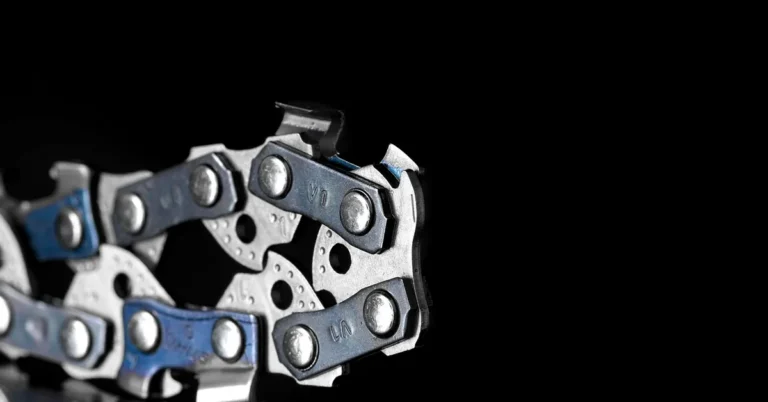
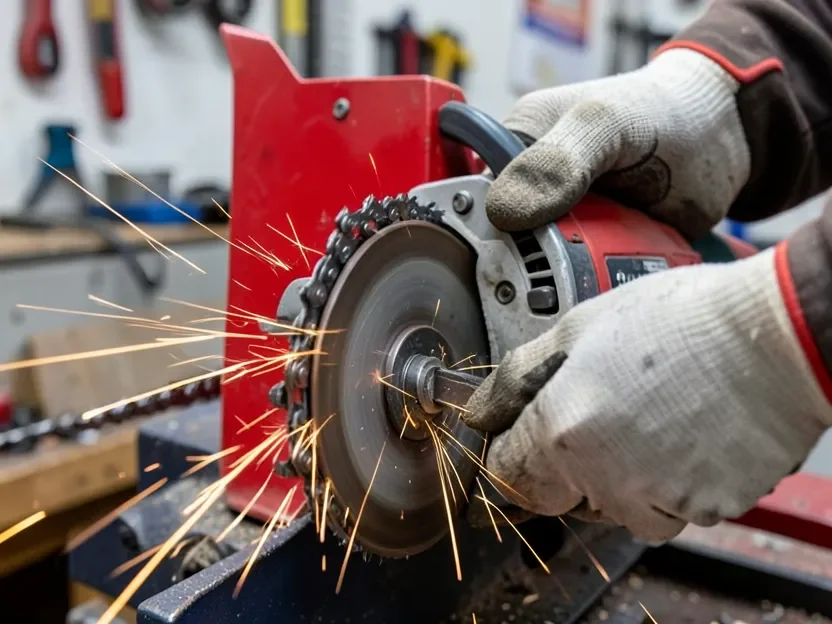
A professional chainsaw sharpener is a bench- or wall-mounted electric grinder that puts a consistent, factory-quality edge back on every tooth of a saw chain in a couple of minutes, instead of the 10-15 minutes a round file and guide take by hand.
The difference isn’t just speed. A hand file relies entirely on the user holding the same angle on all 30-40+ cutters in a loop, tooth after tooth. An electric grinder locks the chain in a vice and swings a fixed grinding wheel down at a pre-set angle, so every tooth comes out identical. For a homeowner who sharpens two or three times a season, that consistency barely matters. For anyone running a saw daily – tree crews, firewood processors, sawmill operators – it’s the difference between a chain that cuts straight and one that pulls to one side because a few teeth are ground shorter than the rest.
Handheld Files vs. Bench-Mount Electric Grinders
Best Bench-Mount Electric Pick
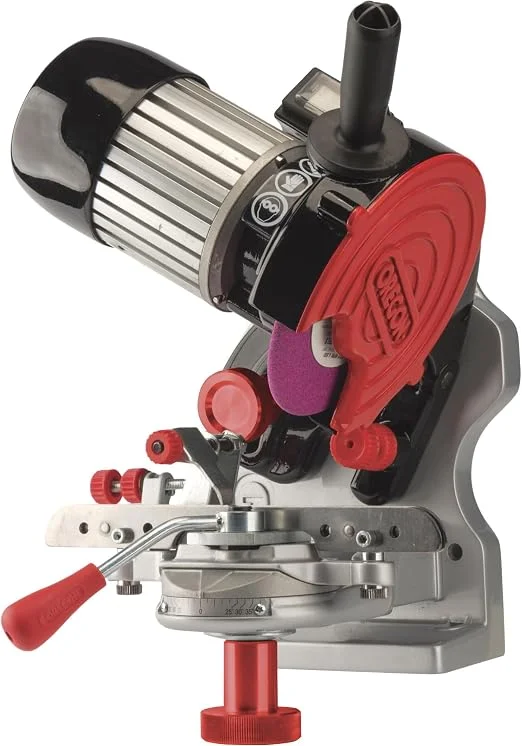 |
Oregon Professional Compact 120V Bench Chain Grinder – $286.98 The compact 120V grinder Oregon builds for regular home and semi-professional use – bolts to a bench or wall and sharpens any .404″-and-under pitch chain.
|
There are really three tiers of chainsaw sharpening tool, and which one makes sense depends on how often the saw actually runs:
- Round file and guide ($15-30): A file sized to the chain’s pitch, held in a plastic or metal guide that rests on the top plate and rakers. Cheap, portable, and fine for touch-ups in the field, but accuracy depends entirely on hand technique.
- Bar-mounted manual grinders ($40-90): Clamp onto the guide bar itself, similar in concept to a chainsaw chain sharpening jig, and use a small crank-turned or battery grinding head. Faster and more consistent than a bare file, still fully portable, but the grinding wheel is small and wears quickly.
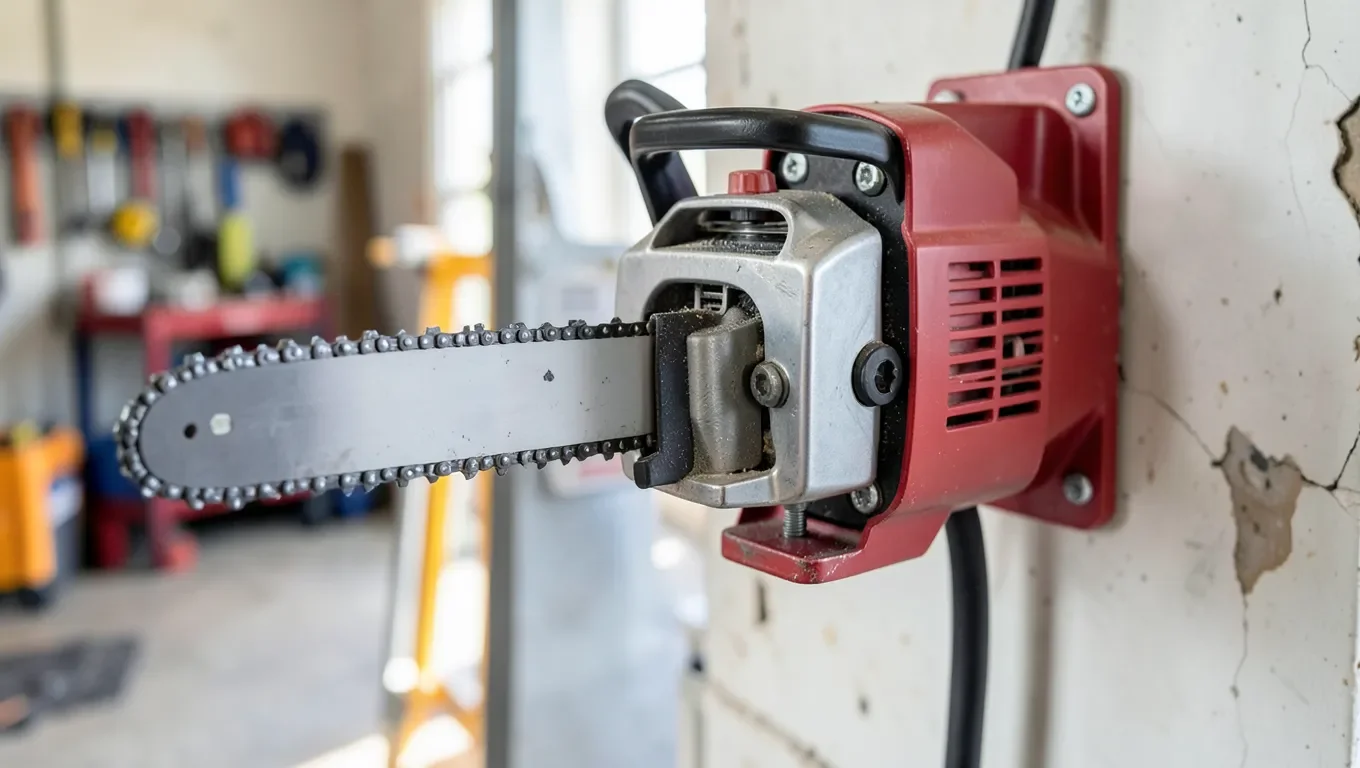
- Bench-mount electric grinders ($90-550+): Bolt to a wall or workbench and use a 120V motor spinning a 5-3/4″ abrasive wheel. This is the “professional” tier – the chain sits in a fixed vice, the operator sets the angle once on a graduated scale, and every tooth gets the same pass.
The entry point in the bench-mount category, Oregon’s own compact 120-volt grinder, runs about $287, with the same company’s occasional-use file-and-guide kit at around $91 and its full-size hydraulic-assist professional model closer to $540-550 – so “professional” bench grinders span a wide range depending on clamping method and duty cycle, not just brand name.
What Makes These Grinders “Professional”
The same core mechanism – a motor-driven abrasive wheel swung down at a fixed angle – shows up across power tool sharpening in general, including electric saw blade sharpeners built for circular and table saw blades. A typical compact bench grinder in this category draws about 2.1 amps at 120V (roughly 220 watts, a bit under 0.3 horsepower) and spins its wheel around 3,150 RPM. That’s not a lot of power by shop-tool standards – it doesn’t need to be, since the wheel is only removing a few thousandths of an inch of metal per pass, not cutting wood. What actually matters for chain quality is the mechanical setup around that motor:
- Top plate (grinding) angle: Adjustable on a graduated dial, typically in the 25°-35° range depending on chain type – this is the angle that determines how aggressively the chain bites into wood.
- Down angle: The angle of the wheel relative to the bar, usually fixed around 50°-60° on most grinders but adjustable on higher-end models for square-ground or specialty chains.
- Depth gauge (raker) setting: A separate step from tooth sharpening – a flat profile wheel or file plate knocks the depth gauges down to spec so the sharpened tooth can actually bite as deep as it’s supposed to.
- One-way motor rotation: A safety feature on most bench models – the wheel only spins toward the operator’s controlled feed direction, reducing kickback risk compared to a bidirectional bench grinder repurposed for chain work.
Choosing the Right Sharpener: Chain Pitch and Compatibility
Before buying any sharpener, check the chain’s pitch – stamped on the depth gauge of most chains or listed in the saw’s manual. The common pitches are 1/4″, .325″, 3/8″ low-profile, standard 3/8″, and .404″. Most bench-mount grinders, including the same round-file sizing used for hand sharpening, ship with two or three grinding wheels of different thicknesses (commonly 3.2mm and 4.7mm) to cover that whole range, plus a separate flat-profile disc for the depth gauges. A grinder that only covers 3/8″ and .404″ won’t help if the saw actually runs a 1/4″ pitch chain, which is common on smaller electric and battery saws – so match the wheel kit to the chain before assuming any “universal” sharpener actually is.
Brand compatibility is less of an issue than pitch: Oregon, Stihl, Husqvarna, and most other chain brands use standardized pitch and gauge measurements, so a universal bench grinder sharpens any of them as long as the pitch and gauge match.
How to Sharpen a Chain on a Bench-Mount Grinder
The process is the same across most bench models, even though the exact clamp and dial layout varies by brand:
- Clean the chain first. Wipe off bar oil and sawdust so the vice grips a clean link and the wheel isn’t grinding through debris.
- Set the pitch-matched wheel. Swap in the wheel thickness that matches the chain’s pitch, then true it against the included dressing brick if it’s been used before – a glazed or clogged wheel grinds unevenly and can overheat the tooth.
- Set the top plate and down angles on the graduated dials to match the chain manufacturer’s spec (usually printed on the chain’s packaging or the saw’s manual).
- Clamp one tooth at a time and lower the wheel with light, even pressure – let the wheel do the work rather than forcing it, which prevents burning the temper out of the tooth.
- Skip a tooth, sharpen every other cutter on one side of the chain, then flip the clamp and repeat for the opposite-facing cutters, so every cutter gets ground at the same angle from the same side.
- Set the depth gauges last with the flat profile wheel, after every cutter is sharp – sharpening cutters changes their height relative to the rakers, so this step always comes after, not before.
Maintenance Tips for Chainsaw Sharpeners
A bench grinder is a low-maintenance tool, but a few habits keep it accurate for years instead of months:
- Dress the wheel regularly. Metal debris embeds in the abrasive surface and throws off the grind – a quick pass with the included dressing brick restores a flat, true face.
- Store extra wheels dry. Abrasive wheels absorb moisture in a damp garage and can crack under the motor’s torque; keep spares in a sealed bag or box.
- Check the vice alignment periodically. A vice that’s drifted out of square will grind an inconsistent angle even if the dial reading looks correct – recalibrate against a known-sharp chain if cuts start pulling to one side.
- Don’t force a glazed wheel. If the motor bogs down or the wheel smokes, stop and dress or replace the wheel rather than pushing through – a glazed wheel generates heat that can soften and ruin the cutter’s temper.
Cost vs. Value: Is a Professional Sharpener Worth It?
A shop sharpening typically runs $10-20 per chain. Running two saws with three chains each, sharpened every couple of weeks through a cutting season, adds up to $200-400 a year in shop fees alone – on top of the drive time and the downtime waiting for the chain to come back. A $287 compact bench grinder pays for itself inside a single season at that pace, and keeps paying off every year after since the wheels cost $10-15 to replace. For someone who sharpens a chain two or three times a year, a $20-30 file and guide kit remains the better value – the bench grinder’s advantage is consistency at volume, not raw sharpness on a single chain.
Who Actually Needs a Bench-Mount Sharpener
The honest answer depends on how the saw gets used, not how enthusiastic the owner is about tools:
- Tree service and land-clearing crews: Running multiple saws daily makes consistency across dozens of chains the priority – a bench grinder earns its keep in weeks, not seasons.
- Firewood processors and sawmill operators: High cutting volume dulls chains fast, and a hand file can’t keep pace with the sharpening frequency needed – a bench grinder turns a 15-minute-per-chain job into a 3-4 minute one.
- Serious homeowners with multiple saws: Someone maintaining two or three saws across a property (firewood, storm cleanup, orchard pruning) will use a bench grinder often enough to justify it, even without commercial-scale volume.
- Occasional users: A homeowner sharpening one saw a handful of times a year is better served by a $20-30 file and guide – a bench grinder in that case is an expensive way to solve a problem a file already handles fine.
Frequently Asked Questions
Which Chainsaw Sharpener Is The Best?
For anyone sharpening chains regularly, a bench-mount electric grinder like the Oregon 410-120 series is the most consistent option – it locks the chain in place and grinds every tooth at the same pre-set angle. For occasional touch-ups, a pitch-matched round file and guide remains the simplest and cheapest choice.
What Is The Best Method To Sharpen A Chainsaw Chain?
Match the tool to the pitch (file diameter or grinding wheel thickness), set the top plate and down angles to the chain manufacturer’s spec, sharpen every other tooth from one side, then flip the chain and sharpen the rest. Set the depth gauges last, after all cutters are sharp, since sharpening changes their relative height.
What Chainsaw Chain Do Professionals Use?
Most professional crews run chains from Oregon, Stihl, or Husqvarna, chosen by the saw brand and the pitch/gauge the bar requires rather than one universal “pro” chain – all three brands make full-chisel and semi-chisel chains suited to daily commercial use.
Are Chainsaw Sharpeners Worth It?
For anyone sharpening more than a few chains a year, yes – a bench-mount grinder in the $90-290 range typically pays for itself within a season compared to $10-20-per-chain shop sharpening, and produces a more consistent edge than hand filing. For occasional single-saw use, a basic file and guide kit is the better value.
Conclusion
A professional chainsaw sharpener earns its price through consistency, not raw sharpness – a bench-mount electric grinder puts the same angle on every tooth, every time, which a hand file can only approximate with practice. Match the wheel kit to the chain’s actual pitch, set the top plate and down angles to spec, and always finish with the depth gauges. For daily or weekly use, that consistency saves real money over shop sharpening within a single season; for a few touch-ups a year, a simple file and guide still does the job.
Sponsored / affiliate links. As an Amazon Associate I earn from qualifying purchases. I may earn additional commission from eligible campaigns.