PVA Glue vs Polyurethane Glue for Woodworking Guide
Use PVA for most woodworking joints when the fit is tight and you want fast cleanup and quick clamp release; choose polyurethane only when moisture cure or true gap-filling matters, and even then expect more mess and less predictable results. A bad glue choice can leave starved joints, foam-out, weak bonds, or repairs that fail under load. This guide compares both glues for joinery, repairs, laminations, and outdoor work, with fit first as the rule.
This guide is part of our Wood glue essentials: types, uses, and cure times series.
PVA glue vs polyurethane glue for woodworking: the core trade-off


PVA glue is often the default choice for general wood adhesive work. It is the white or yellow glue most of us reach for, and the chemistry behind the name often gets mixed up with polyvinyl alcohol; polyvinyl alcohol is a water-soluble synthetic polymer, with the idealized formula [CH2CH(OH)]n, and it is used in coatings and as a thickener in PVAc adhesive formulations. Polyurethane glue cures with moisture and tends to expand as it sets, so it behaves differently from the start. (en.wikipedia.org)
| Decision factor | PVA Glue | Polyurethane Glue for Woodworking | Winner |
|---|---|---|---|
| Tight-fitting joints | Very strong on clean, close-fitting wood-to-wood joints | Works, but offers no real advantage | PVA Glue |
| Loose or irregular joints | Poor choice if the fit is open | Better tolerance for small voids and irregular surfaces | Polyurethane Glue for Woodworking |
| Cleanup and finishing | Water cleanup while wet; easier sanding and lower finish risk | Foam squeeze-out is messy and harder to remove | PVA Glue |
| Outdoor and wet exposure | Interior and exterior versions exist; choose the class for the exposure | Better for moisture cure and damp conditions | Polyurethane Glue for Woodworking |
| Reworkability | More forgiving when a joint must be opened or cleaned | Harder cleanup and more annoying repair work after cure | PVA Glue |
Tight-fitting joints
PVA wins the daily-use job because a well-fit joint gives it the contact it wants. On edge grain, laminations, casework, and most furniture joinery, the bond is strong, predictable, and quick to clean up. Polyurethane does not improve a good fit enough to justify the extra mess.
Loose, irregular, or repaired joints
Polyurethane earns its place when the joint is not perfect. It tolerates small voids better than PVA, and its moisture cure can help on repair seams, awkward patching, and parts that are hard to clamp evenly. It still is not a fix for bad woodworking; it simply gives more margin than PVA when fit is imperfect.
End grain, edge grain, and lamination seams
End grain needs special care because it drinks glue and can starve a joint if the fit is weak. PVA often performs well when the surfaces are prepared correctly and the joint is tight enough to support clamp pressure. Polyurethane can help on rough end grain repairs, but foaming can also push parts apart if the clamp setup is poor.
According to Polyvinyl alcohol – Wikipedia — PVA has a density of 1.19–1.31 g/cm3. (source)
Is PVA glue stronger than polyurethane glue for wood?
On well-fit woodworking joints, PVA is usually just as strong in practical terms as polyurethane, and often stronger in real use because the joint stays tight and the squeeze-out cleans up before it becomes a problem. When the fit is poor, polyurethane may hold better than PVA, but the joint is still weaker than a properly made one.
Bond strength on well-fit joints
Strength follows fit. On clean, tight joints, PVA bonds wood fibers efficiently and gives a reliable glue line. That is why cabinet shops, furniture builders, and trim work still depend on it for most assemblies.
What happens when the fit is poor
If the joint has gaps, PVA can starve because the adhesive layer is too thin in some spots and too thick in others. Polyurethane will tolerate a bit more slop, but the expanding foam can occupy space without creating a better structural joint everywhere. A loose joint is still a loose joint.
Why failure usually starts at the joint, not the label
Most failures come from movement, poor clamping, bad surface prep, or a mismatched adhesive choice. The label matters less than whether the glue matches the geometry, the wood species, and the assembly process.
When should I use polyurethane glue instead of PVA glue?
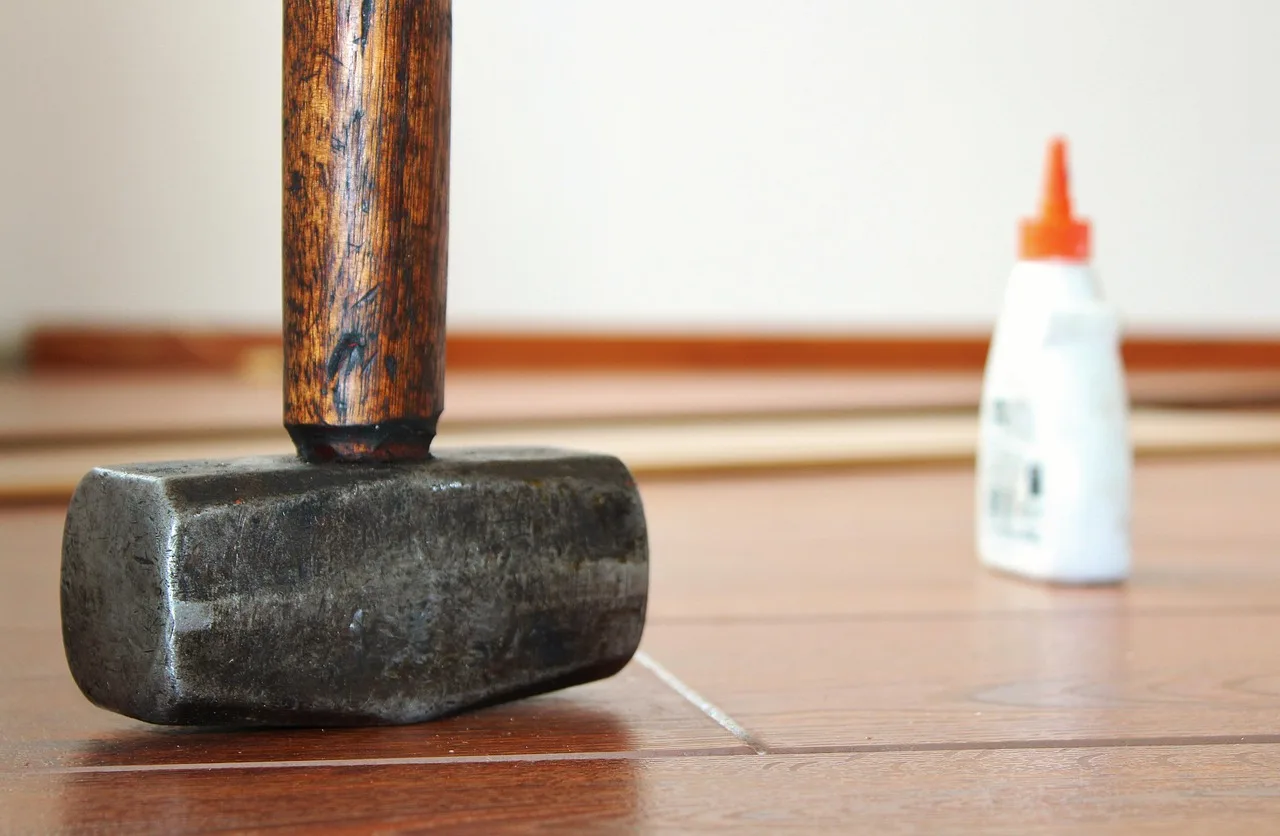
Use polyurethane when moisture curing or better gap tolerance is the main need. That means repaired edges, irregular stock, mixed materials, or jobs where a perfect clamp-up is unrealistic. If the joint is tight and ordinary, PVA is usually the cleaner and safer choice.
Moisture cure and small gaps
Polyurethane needs moisture to cure, which helps in damp shop conditions or on wood that is not perfectly dry at the surface. It also handles minor voids better than PVA, so it has a place in restoration work and odd-shaped assemblies. It is not a fix for sloppy joinery.
Non-ideal surfaces and repair work
Repair seams often have crushed fibers, old adhesive, or uneven mating surfaces. Polyurethane can bridge some of that better than PVA, especially where the alternative is a joint with too little contact area. The trade-off is cleanup, since cured foam is more annoying to remove from corners and pores.
Mixed-material jobs and awkward clamping
When wood meets metal, plastic, or other non-wood parts, polyurethane can sometimes be the more practical adhesive. It also helps when clamp pressure is awkward and you need a little tolerance for uneven parts. For ordinary wood-to-wood joinery, that tolerance is rarely worth the extra hassle.
Open time, clamp time, and shop workflow
Open time is the period you have to position parts before the glue starts to grab. Clamp time is the approximate minimum time a joint should stay under pressure before it can usually be handled safely. Those two numbers change how a glue behaves in small repairs, large panels, and batch assembly.
How working time changes assembly speed
PVA usually gives a familiar pace for routine furniture work. It is quick enough for small parts, but not so fast that setup turns frantic. Polyurethane can be less forgiving because moisture and expansion can make the assembly feel more urgent.
Minimum clamp time versus full cure
Clamp time is not the same as full cure. A joint may hold enough to move, yet still gain strength later. In practice, PVA’s predictable handling makes it easier to plan a day’s work, while polyurethane can require more care around squeeze-out and part movement during cure.
Batch size and large glue-ups
For tabletops, case sides, and multi-part assemblies, predictability matters. A glue that cleans with water and behaves the same from joint to joint is easier to manage across a large batch. That is where PVA usually saves time.
How do moisture resistance and outdoor use compare?
For outdoor use, the right answer depends on the exposure level. Interior PVA is for dry conditions, exterior PVA formulations are made for tougher moisture exposure, and polyurethane is often chosen when wet service or damp assembly conditions are part of the job. None of them excuses poor joinery.
Interior PVA and exterior PVA classes
PVA adhesives come in classes for different moisture resistance levels. That matters more than the brand name on the bottle. A proper exterior PVA is a better pick than interior PVA for projects that see weather, condensation, or periodic wetting.
Polyurethane for wet exposure and outdoor work
Polyurethane is moisture-curing and commonly used where water resistance matters. It can be a practical choice for garden furniture, exterior repairs, and damp environments. For a well-made outdoor joint, however, exterior PVA is often plenty and far easier to live with in the shop.
What to choose for garden furniture, doors, and exposed joinery
For outdoor furniture with tight joinery, exterior PVA is usually the first choice. For repairs, odd details, or mixed substrates that are hard to clamp, polyurethane makes more sense. On doors and exposed joinery, the best adhesive is the one that fits the joint and the exposure level together.
Can I sand and finish wood glued with polyurethane glue?
Yes, but polyurethane needs more cleanup discipline than PVA. Cured foam can leave residue that interferes with sanding and can contaminate stain, paint, or clear finish if it is not fully removed. PVA is usually easier to sand and less troublesome at the finish stage.
Water cleanup versus cured foam cleanup
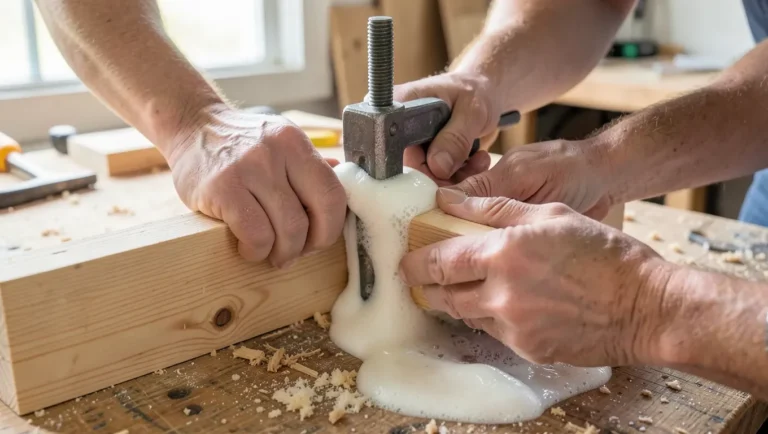
PVA wipes away with water while wet, which is a major shop advantage. Polyurethane’s squeeze-out becomes a stubborn foam that is harder to scrape and can hide in corners. That extra cleanup time is the price of its gap tolerance.
Sanding behavior after cure
Well-cleaned PVA sands normally. Cured polyurethane can sand, but the foam residue often behaves differently from the surrounding wood and may show up after finish is applied. That is why careful squeeze-out removal matters so much.
Stain, paint, and clear finish problems to watch for
Glue left on the surface can block stain or make a clear coat flash differently. Polyurethane foam is the bigger risk because it is easy to miss in pores and open grain. On visible work, especially stained furniture, PVA is the safer everyday choice.
Which glue is easier to clean up in the shop?
PVA is easier to clean up by a wide margin. Wet squeeze-out wipes away with water, tools stay cleaner, and there is less risk of cured residue in corners or on finished surfaces. Polyurethane demands more scraping, more attention, and more patience.
Cleanup speed in real workflow
Fast cleanup matters when a glue-up has many joints or when a project must move on to sanding and finish work the same day. PVA saves time at both stages. That time savings often matters more than small differences in adhesive behavior.
Why polyurethane creates extra work
Polyurethane’s foaming can push adhesive into spots that are hard to see. Once cured, that foam is not water-soluble and does not disappear neatly under a rag. A small cleanup problem can become a finish problem later.
Does PVA glue work on oily or dense hardwoods?
PVA can work on dense hardwoods if the joint is well prepared and the fit is tight, but oily woods are another matter. Dense, smooth stock needs fresh surfaces and good clamp pressure. Oily species often need surface prep that goes beyond a quick spread of adhesive.
Dense hardwoods
Dense hardwoods are not a problem for PVA by themselves. The issue is surface contact. If the joint is crisp and the mating faces are fresh, PVA is still the better everyday glue for most hardwood furniture work.
Oily woods
Oily species are more difficult. Surface oils can interfere with adhesion for both glues, and a quick cleanup of the face before glue-up becomes important. In those cases, polyurethane may help in some repairs, but it is not a blanket solution.
Softwoods and laminations
Softwoods and laminations usually favor PVA because the fit is often easier to control and the cleanup is simpler. On long laminations, predictable open time and clamp behavior matter a lot, and PVA is generally the less troublesome choice.
Shop decision matrix: pick the glue for the job
Use the joint fit first, then move to exposure, cleanup, and substrate. That sequence gives a practical answer faster than starting with brand loyalty or the promise of gap filling. The matrix below maps the common shop cases to the better fit.
| Scenario | Best glue | Why | Winner |
|---|---|---|---|
| Tight cabinet casework | PVA Glue | Fast cleanup, predictable clamp behavior, strong tight-joint bond | PVA Glue |
| Chair joints with clean mortises and tenons | PVA Glue | Reliable on close-fitting joinery and easier to finish around | PVA Glue |
| Tabletop edge glue-up | PVA Glue | Better workflow for long glue lines and less finish risk | PVA Glue |
| End grain repair on an uneven break | Polyurethane Glue for Woodworking | Better tolerance for voids and irregular surfaces | Polyurethane Glue for Woodworking |
| Outdoor furniture with good joinery | Exterior PVA or polyurethane | Exposure level decides; exterior PVA often wins on cleanup | Tie |
| Mixed-material repair | Polyurethane Glue for Woodworking | More forgiving on non-ideal substrates and awkward clamping | Polyurethane Glue for Woodworking |
| Dense hardwood with a tight fit | PVA Glue | No need for foam; easier handling and finishing | PVA Glue |
Choose PVA Glue if… / Choose Polyurethane Glue for Woodworking if…
Choose PVA Glue if the joint fits tightly and cleanup matters. It is the better default for casework, furniture joinery, laminations, and most interior work. It also makes finishing easier because wet squeeze-out is simple to remove and cured residue is less troublesome.
Choose Polyurethane Glue for Woodworking if moisture cure or true gap tolerance is the deciding factor. It has a place in repairs, irregular seams, mixed substrates, and damp or outdoor conditions where ordinary PVA is less suitable. Use it for the problem joint, not for every joint.
Frequently asked questions
Which glue is better for outdoor woodworking projects?
Outdoor work depends on the exposure level and the joint quality. Exterior PVA is often a strong choice for well-made outdoor furniture because it is easier to clean and finish around. Polyurethane is useful when moisture exposure, repairs, or irregular parts make PVA less practical.
Does polyurethane glue fill gaps better than PVA glue?
Yes, but only to a limited point. Polyurethane tolerates small voids better than PVA and can help on imperfect joints, but it does not turn a bad fit into a good one. If the gap is large, the joint design needs correction, not more foam.
How moisture-resistant is PVA glue compared with polyurethane glue?
PVA ranges from interior formulations to exterior versions made for wetter service. Polyurethane is moisture-curing and generally better suited to damp conditions and outdoor repairs. For ordinary indoor furniture, PVA is enough; for wet exposure or repair work, polyurethane may be the safer pick.
Sponsored / affiliate links. As an Amazon Associate I earn from qualifying purchases. I may earn additional commission from eligible campaigns.