Best Glue for Wooden Furniture Repair by Damage Type (2026): we compared
For most wooden furniture repairs, use PVA wood glue for tight joints, CA glue for hairline cracks, epoxy for broken or missing wood, and contact cement only for veneer. The wrong adhesive can leave a chair joint creeping loose, a drawer front peeling again, or a clean break turning into a bigger rebuild. This covers chair joints, table legs, drawers, veneer, cracks, and broken parts, with the glue and repair method for each.
This guide is part of our Wood glue essentials: types, uses, and cure times series.
Quick comparison
| Product | Badge | Best for | Price | ||
|---|---|---|---|---|---|
 |
Titebond III Ultimate Wood Glue, 16-Ounces #1414Titebond | Our pick | 16-ounce wood glue with strong initial tack | $9.58
Price as of 26 Sep 2026
|
View |
 |
Gorilla Wood Glue, 18 oz Bottle, Water Resistant PVAGORILLA | Budget pick | 18 oz water-resistant PVA adhesive | $5.99
Price as of 26 Sep 2026
|
View |
 |
J-B Weld Tan KwikWood Wood Repair Epoxy Putty, 1 oz. StickJ-B Weld | Also great | 1 oz wood repair epoxy putty stick | $6.19
Price as of 26 Sep 2026
|
View |
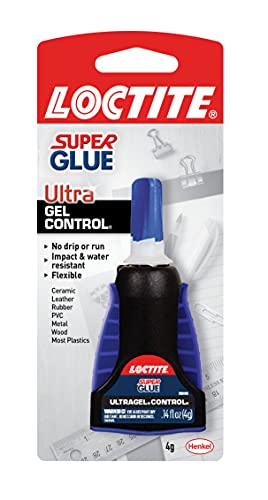 |
Loctite Super Glue Ultra Gel Control, Clear, 0.14 fl ozLoctite | Pair with it | 0.14 fl oz rubber toughened super glue gel | $4.49
Price as of 26 Sep 2026
|
View |
 |
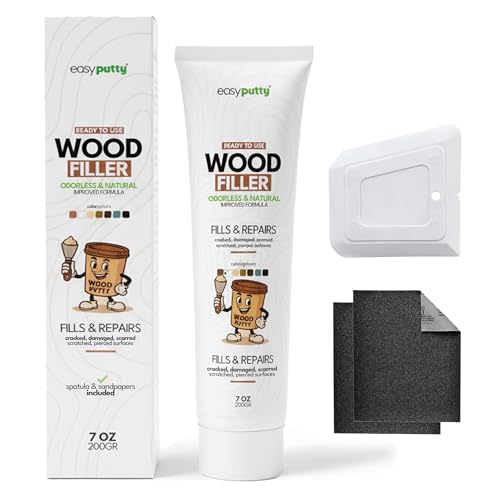
3M Bondo Wood Filler 30 oz (850.49 g) with Bondo Creambondo | Upgrade pick | 30 oz wood filler with cream hardener | $19.98
Price as of 26 Sep 2026
|
View |
For tight, porous joints, PVA is the default. For gaps, broken parts, and missing wood, epoxy usually wins because it bridges voids and keeps its shape during rebuilds.
How we chose
Match glue to the failure, not the brand
A loose chair rung, a cracked rail, and a chipped veneer edge fail in different ways. The glue has to fit the damage size, the load direction, and whether the joint still closes tightly.
Check load, gap size, and reversibility
Chair joints and rails often take shear stress. Restorations may need a glue that can be removed later with heat or moisture. Large gaps need a filler-style adhesive, not standard PVA.
Account for cleanup and clamp pressure
Some repairs can live with squeeze-out and rough cleanup. Others sit on finished faces, thin veneer, or painted edges where mess matters more. Clamp pressure also changes the choice, especially on thin or fragile parts.
Flag repairs that need reinforcement
When the wood is split, crushed, or missing, glue alone is often not enough. Dowels, splines, screws, or a shaped patch may be the safer fix.
Titebond III wood glue: best for tight-fitting furniture joints
Titebond III is a strong default for tight, porous wood joints such as chairs, table aprons, and casework that still fit well. Based on the spec sheet and owner feedback, its strong initial tack and 30-minute clamp time make it practical for everyday furniture repair.
It stands out because it sands easily and offers water resistance, so it suits indoor pieces that may see moisture or seasonal movement. The drawback is simple: it is still a PVA glue, so it is not the answer for large gaps, crushed fibers, or badly broken parts that no longer mate cleanly.
Gorilla wood glue: best for water-resistant PVA repairs
Gorilla Wood Glue fits the same tight-joint category as other PVA adhesives, but it is a solid pick when the repair needs water resistance and a shorter clamp window. Based on specs and reviews, it works well for indoor or outdoor furniture parts with clean, close-fitting faces.
The tan cure color can be helpful on raw wood, and the 20 to 30 minute clamp time is short enough for many quick fixes. The drawback is that it is still not a gap filler, and its brownish cure line can be visible if squeeze-out is left on a finished surface.
J-B Weld KwikWood epoxy putty: best for broken parts and rebuilds
KwikWood is the strongest fit when wood is missing, crushed, or split in a way that leaves a void to rebuild. Its hand-mixable two-part epoxy putty is better suited to broken rail corners, stripped leg ends, and structural patching than ordinary wood glue.
It sets fast, cures in about an hour, and can be stained, which helps on visible repairs. The drawback is that it is a putty, not a flowing glue, so it is less suited to fine joint lines where you need full penetration into a tight seam.
Loctite Super Glue Ultra Gel Control: best for tiny chips and hairline cracks
Loctite’s gel CA glue is the quick fix for tiny chips, edge nicks, and hairline cracks that need a fast set without clamps. Based on the product data, the gel form helps with vertical spots and narrow repairs where a thin runny adhesive would wander.
It dries transparent and resists water, shock, and vibration better than many basic super glues. The drawback is structural limits: CA is brittle if asked to carry real furniture loads, so it should not be the main adhesive for chair joints or broken legs.
3M Bondo Wood Filler: best for damaged surfaces and paint-grade repairs

3M Bondo Wood Filler is for rebuilding damaged, rotted, or missing surface material when the repair will be sanded and painted. Based on the listed properties, it bonds chemically, sands quickly, and works well where shape restoration matters more than hidden glue-line strength.
Its honest drawback is that it is a filler, not a structural joint adhesive. It can patch a corner or face, but it should not be used to hold a chair rung, a leg joint, or a rail that carries real load.
How to choose glue by damage type on wooden furniture?
Choose glue by the failure first. Tight joints usually want PVA, tiny chips want CA, broken parts and voids want epoxy, and traditional restorations often call for hide glue. If the wood no longer fits well, glue may need backup from dowels, splines, screws, or a patch.
Damage-type decision table
| Damage type | Safest adhesive | Required prep | Clamp approach | When reinforcement is needed | Do not use |
|---|---|---|---|---|---|
| Loose chair joint | PVA wood glue or hide glue | Disassemble if possible; remove old glue, dust, and finish; dry-fit first | Firm clamping on the joint faces until fully set | If the tenon is worn, split, or crushed, add a shim, dowel, or new joint part | Do not use CA as the main bond; do not rely on polyurethane to hide a bad fit |
| Broken leg or rail | Epoxy, often with reinforcement | Clean fracture faces; remove finish; open the break enough for adhesive penetration; align carefully | Clamp just enough to hold alignment without squeezing out all the epoxy | Often needs dowels, splines, screws, or a shaped patch for long-term strength | Do not use PVA for a gapped break; do not use CA for load-bearing repair |
| Veneer lift or chip | PVA for small lifts; contact-style repair for larger loose areas | Clean the substrate; remove dust and old adhesive; keep the veneer flat and clean | Low clamp pressure, cauls, or weight so the veneer does not telegraph through | If the veneer is missing or brittle, patch or replace the damaged section | Do not use thick epoxy under thin veneer; do not clamp so hard that the veneer buckles |
| Cracked solid wood | PVA for tight cracks; thickened epoxy for voids | Open the crack enough for glue penetration; clear dust from the split | Clamp evenly along the crack until cured | If the crack runs through a stressed joint or leaves a void, reinforce with a spline, dowel, or patch | Do not use CA for a structural crack; do not use PVA where there is a wide void |
PVA wood glue: best for tight-fitting chair and table joints
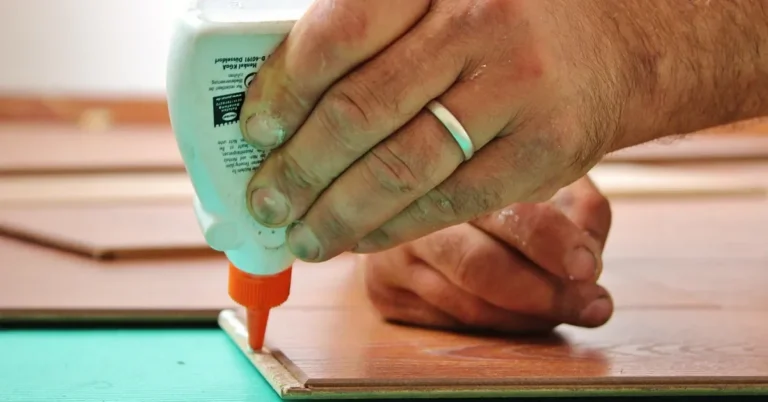
PVA is the default for clean, porous wood-on-wood joints that close fully under clamp pressure. It is water-based, easy to clean up, and usually the best fit for loose chair joints that can be disassembled and reglued properly.
Its weak point is gap filling. If the joint is open, oily, finished, or badly worn, PVA can starve or fail to hold because it needs good wood contact to work at full strength.
When PVA works well
Use PVA when the joint still fits tightly, the fibers are sound, and the repair can be clamped square. It is especially useful for chair rungs, table aprons, drawer fronts, and other porous wood joints with little missing material.
Prep, clamping, and cleanup
Remove old glue with a scraper or chisel, then dry-fit the part before adding adhesive. Clamp the joint firmly, wipe squeeze-out before it hardens, and wait the full cure time before putting the piece back into service.
When to skip PVA
Skip PVA on large gaps, broken corners, oily wood, or a finished surface that cannot be cleaned back to bare wood. It is also a poor choice when the joint must be reversible for future restoration.
Polyurethane glue: best for small gaps and awkward-fit repairs
Polyurethane glue can help where the joint is slightly open or the fit is awkward, because it expands as it cures and can bridge small gaps. It also needs moisture to cure, which matters on dry wood or in very dry shops.
The drawback is mess. The foam is hard to clean from pores and finish, and the expansion can push parts out of alignment if the clamp setup is weak.
Where expansion helps
It can be useful on uneven fracture faces or small voids where PVA would starve. That said, it is not a cure for a badly broken joint. Expansion helps only when the parts are already close together.
Moisture and clamp requirements
Light moisture on one face is usually needed for cure. Clamp the joint securely before the adhesive starts to foam, because the expansion can shift parts as it hardens.
Common cleanup mistakes
The most common error is waiting too long to remove squeeze-out. Once cured, polyurethane foam is stubborn and can smear into pores, finish, and carved detail.
Epoxy: best for broken legs, rails, and crack fills
Epoxy is the best all-around repair adhesive for broken or missing wood because it is a two-part system that fills gaps and cures into a rigid bond. It suits structural rebuilds where the part no longer fits tightly or where the wood fibers are missing.
Its tradeoff is working time. Many epoxies need longer to mix, set, and fully cure than PVA or CA, so the repair must stay aligned for longer and should not be rushed.
Structural rebuild use cases
Use epoxy for snapped chair legs, broken rails, corner rebuilds, and crushed tenons where a simple glue joint will not restore the shape. It also helps on cracked solid wood when the split contains voids.
When to thicken or reinforce
Thickened epoxy is useful when the gap is irregular or the adhesive would otherwise run out of the repair. Add reinforcement when the repair sits under repeated stress, especially in chair legs and rails that see shear load.
Working time and cure time
Epoxy gives more working time than CA, which makes alignment easier on complex repairs. The downside is patience: the joint should stay undisturbed until the cure is complete, not merely until it feels tacky.
Hide glue: best for traditional furniture repairs
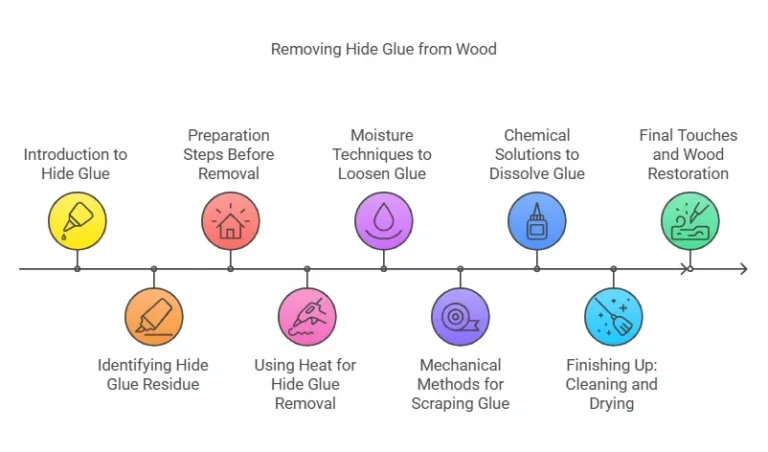
Hide glue is favored in antique and traditional furniture repair because it is reversible with heat and moisture. That reversibility matters when future repairs, veneer lifting, or accurate restoration are part of the plan.
It also has a shorter open time, so the parts need to be ready before the glue goes on. For modern shop work, that can feel limiting, but for period furniture it is often the correct choice.
Why restorers use it
Restorers use hide glue because later repairs can be made without destroying original wood fibers. It is especially useful when the goal is to preserve the structure while keeping future disassembly possible.
Reversibility and future repairs
If the piece may be repaired again, or if the joint belongs to heirloom furniture, hide glue offers a cleaner path for the next person. That matters on veneered casework, antique chairs, and period joinery.
Limits in modern shop repairs
Hide glue is less convenient for long assemblies, highly stressed outdoor parts, or repairs where the fit is poor and the open time runs out quickly. It also requires discipline in cleanup and clamping before it gels.
What is the best glue for loose chair joints?
PVA wood glue is usually the best first choice for loose chair joints because it bonds porous wood well, cleans up easily, and is strong in tight, clamped joints. If the chair is antique or likely to need future repairs, hide glue is often the better pick because it can be reversed with heat and moisture.
Loose chair joints need disassembly when possible
A wobbling chair rung or leg joint should usually be taken apart so old glue can be removed. Gluing over crusted glue or finish leaves the new adhesive bonded to weak debris instead of wood.
Why clamp pressure matters here
Chair joints carry repeated shear stress as the chair twists and rocks. The repair has to close tightly under clamp pressure; if the fit is loose, reinforcement such as a dowel or shim may be needed.
What glue should I use for broken wooden furniture?
Use epoxy for most broken wooden furniture parts, especially legs, rails, corners, and cracked sections with missing material. If the break is clean and the fit is perfect, PVA may work, but broken parts usually need epoxy plus reinforcement to handle load and alignment.
Broken parts often need more than glue
When wood is split, crushed, or missing, the repair should be treated like a rebuild. Dowels, splines, screws, or a shaped patch often do more for long-term strength than glue alone.
Alignment is the real challenge
A strong adhesive cannot fix a crooked assembly. Dry-fit the break, mark the alignment, and clamp only enough to hold position while the adhesive cures.
Is PVA, polyurethane, epoxy, or hide glue best for furniture repair?
There is no single best glue for every furniture repair. PVA is best for tight, clean wood joints; polyurethane can help on small gaps; epoxy is best for broken or missing wood; and hide glue is best when reversibility matters in restoration work.
Choose by stress type
Shear stress, like a chair leg racking sideways, usually exposes weak glue lines fast. Tensile stress, where the part is being pulled apart, can also fail if the joint has gaps or poor contact. Match the adhesive to the way the joint is loaded.
Choose by restoration goals
If the piece is antique, hide glue often makes sense. If the part is modern and structural, epoxy may be safer. If the joint is tight and clean, PVA remains the most straightforward choice.
What is the best glue for fixing a stripped wooden leg?
The best fix for a stripped wooden leg is usually epoxy combined with reinforcement, not glue alone. If the threads, tenon, or mounting area are worn out, epoxy can rebuild the shape, but dowels, screws, or a new insert may be needed for a durable repair.
Stripped areas rarely bond well with PVA
PVA needs solid wood fibers and close contact. A stripped leg end or worn mounting point usually lacks both, so a filler-style adhesive or mechanical repair is safer.
Use glue as part of the rebuild
For a leg end that has lost shape, rebuild the worn area first, then redrill, re-cut, or refit the joint. Glue helps, but the geometry has to be restored too.
Should I use wood glue for cracked furniture?
Yes, but only when the crack can be opened enough for glue penetration and the wood still fits tightly. PVA works for tight cracks in solid wood, while epoxy is better when the crack has voids, missing fibers, or irregular edges.
Open the crack before gluing
A closed split traps dust and limits adhesive penetration. A thin wedge or careful flexing can help open the crack just enough for the adhesive to reach the full depth.
Use epoxy for voids
If the crack has gaps, broken edges, or crushed fibers, epoxy fills better than ordinary wood glue. That is especially important on load-bearing parts such as chair arms, rails, and table aprons.
Which one should you buy?
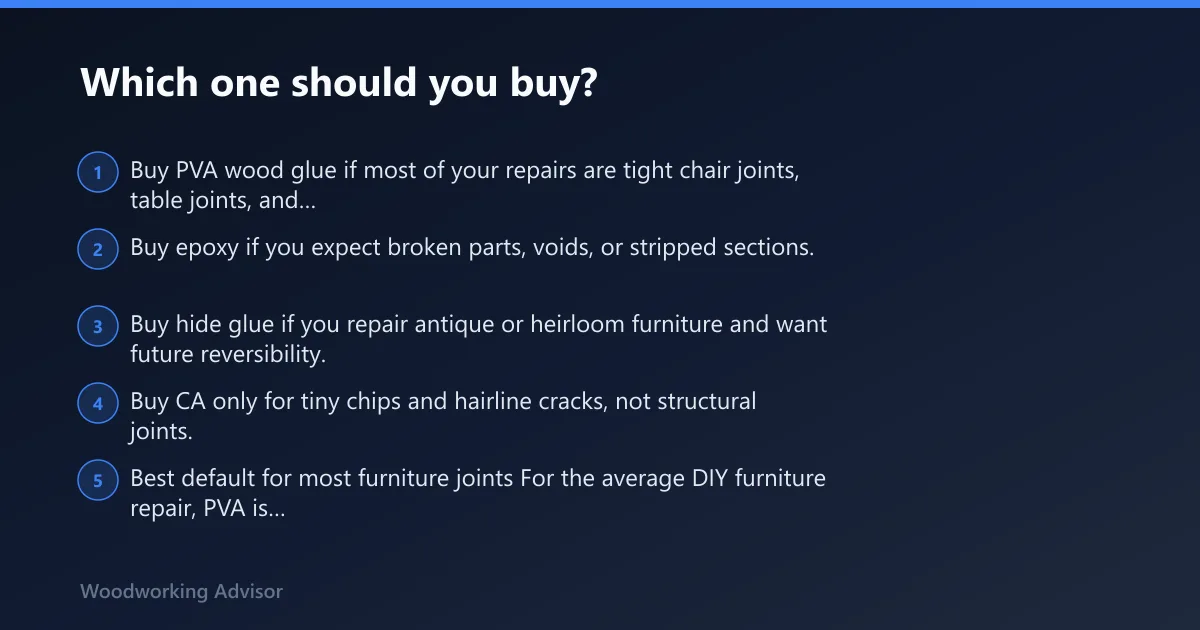
Buy PVA wood glue if most of your repairs are tight chair joints, table joints, and other clean porous wood-to-wood bonds. Buy epoxy if you expect broken parts, voids, or stripped sections. Buy hide glue if you repair antique or heirloom furniture and want future reversibility. Buy CA only for tiny chips and hairline cracks, not structural joints.
Best default for most furniture joints
For the average DIY furniture repair, PVA is still the default because it is easy to use, cleans up well, and is strong in properly fitted joints. Titebond III is the most balanced pick here if you want long-term strength and easy sanding.
Best for broken parts and gaps
If the damage has missing wood, broken corners, or irregular fracture faces, choose epoxy first. J-B Weld KwikWood is the type of product that belongs in that job, while PVA belongs only after the fit has been restored.
Best for antique or future-restoration work
If the piece may need to come apart again, hide glue deserves a serious look. It is the best match for traditional furniture repair, especially where reversibility and historic methods matter more than convenience.
When to stop and reinforce instead
If the joint is loose because wood is worn away, if the crack runs through a load-bearing section, or if the repair faces repeated rocking force, glue alone may not last. That is the point to add dowels, splines, screws, or a replacement part.
Sponsored / affiliate links. As an Amazon Associate I earn from qualifying purchases. I may earn additional commission from eligible campaigns.