Radial Saw Blade Guide: Hook Angle, Tooth Count & Sizing Explained
A radial saw blade is not just “a circular saw blade that happens to fit a radial arm saw.” Radial arm saws pull the blade down and toward the operator as it cuts, so the wrong blade can grab the wood and yank it (and the saw head) toward you. The right blade—matched to hook angle, tooth count, and material—fixes that risk while giving you cleaner crosscuts and miters.
Below is what actually separates a safe, accurate radial arm saw blade from a generic table-saw blade sold as a drop-in replacement, plus the specific blade we’d put on a radial arm saw ourselves, how tooth count changes your cut, and the maintenance habits that keep a blade cutting true for years instead of months.
Why Hook Angle Matters More Than Anything Else on a Radial Arm Saw
Best Blade for a Radial Arm Saw
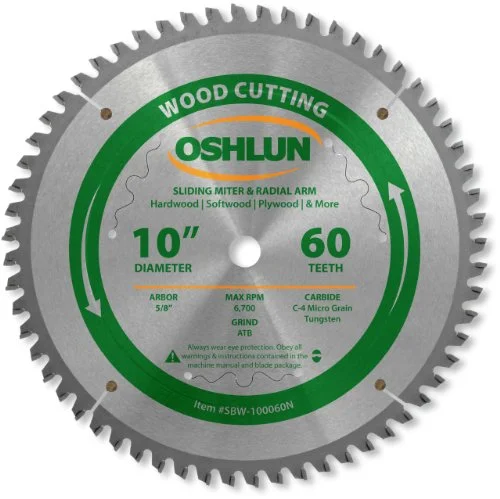 |
Oshlun SBW-100060N 10″ 60-Tooth Negative Hook Blade – $57.19 Purpose-built with a negative hook angle and rated specifically for sliding miter and radial arm saws—exactly the fix for the self-feeding risk explained above.
|
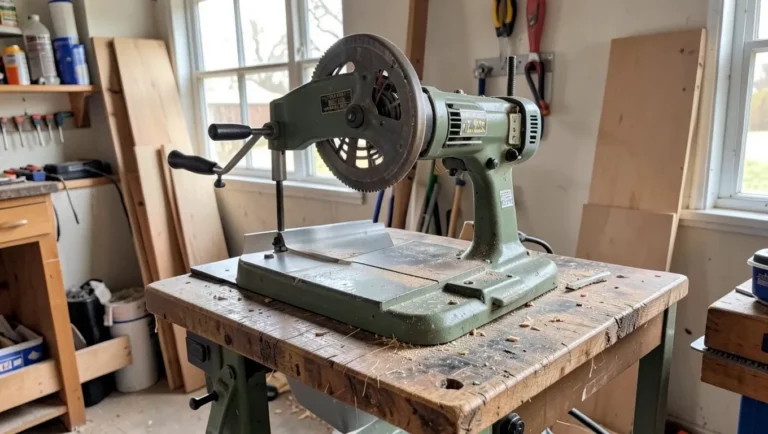
A table saw’s blade spins toward the operator from below the table, so the wood tends to push down and away from the blade as it feeds. A radial arm saw is the opposite: the blade rotates so that, at the bottom of its arc, the teeth are moving toward you and downward into the material. Pair that geometry with a standard positive hook angle blade—the kind built for table saws and most circular saws—and the teeth actively try to pull themselves (and the saw head) forward through the wood. Woodworkers call this self-feeding or “climbing,” and on a radial arm saw it’s the single biggest cause of a saw suddenly lurching toward the operator mid-cut.
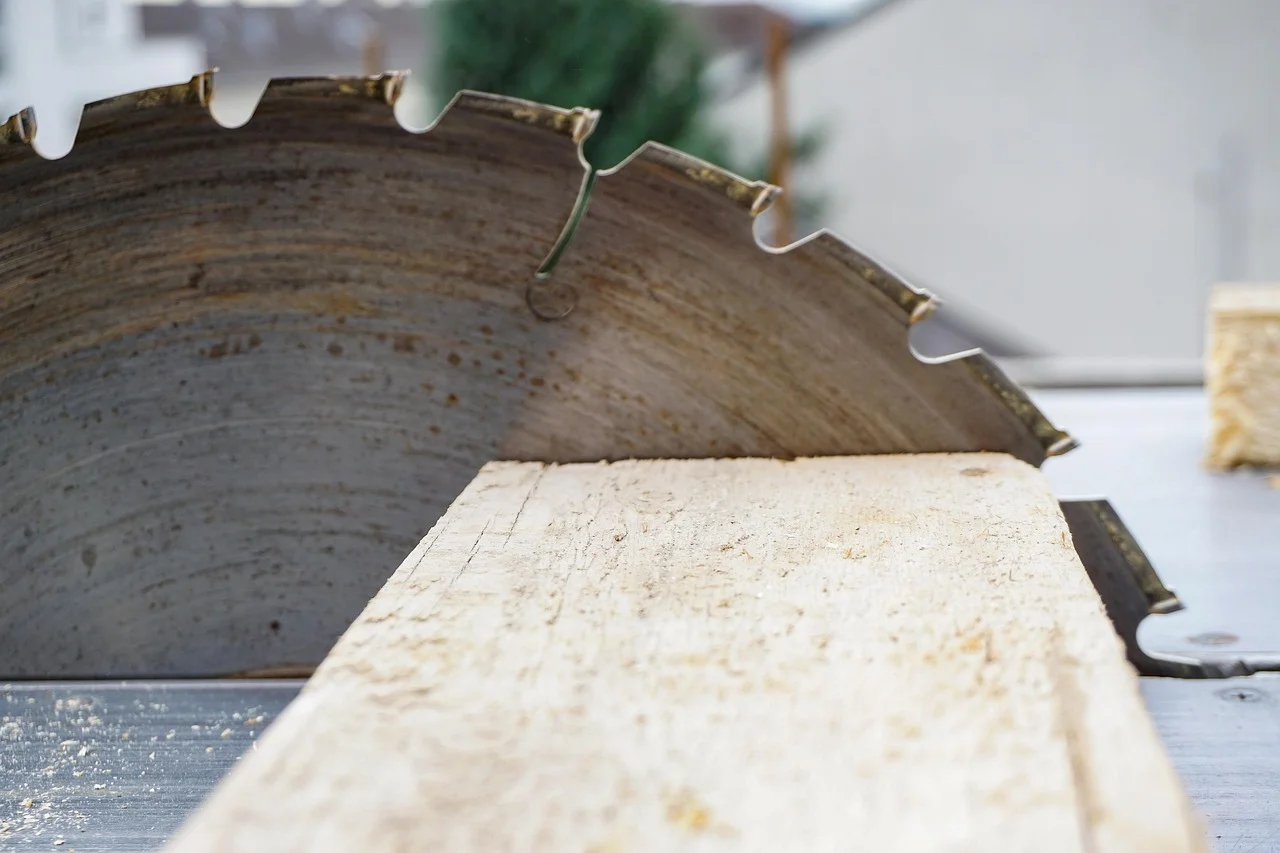
A negative hook angle (typically -5° to -7° on purpose-built radial arm saw blades) tilts the leading edge of each tooth backward instead of forward. The blade still cuts efficiently, but it no longer wants to drag itself through the stock—you control the feed rate, not the blade. This is why blade manufacturers like Oshlun, Freud, and Forrest sell blades explicitly labeled “for radial arm saws” or “for sliding miter saws” separately from their standard positive-hook ripping and crosscut blades, even at the same tooth count and diameter. If a blade’s box or listing doesn’t mention hook angle or radial arm/sliding miter compatibility, assume it’s a positive-hook blade and treat it as unsafe for a radial arm saw, regardless of what the seller’s generic “fits most saws” description implies.
Anatomy of a Radial Saw Blade
Every radial saw blade is built around three parts that determine how it performs: the plate (the flat steel body), the teeth (usually brazed carbide tips on modern blades), and the hook angle discussed above. The plate itself often has laser-cut expansion slots—thin gaps that stop the steel from warping as it heats up mid-cut, which is also what stops the blade from wobbling and leaving washboard marks in a cut.
Tooth grind matters as much as tooth count. Alternate Top Bevel (ATB) teeth alternate left-right bevels and slice through wood grain cleanly, which is why almost every radial arm saw crosscut blade uses ATB grind. Flat-top grind (FTG) teeth are chisel-shaped and remove material fast but leave a rougher edge, so they show up mostly on ripping blades, not crosscut blades. A Triple Chip Grind (TCG), which alternates a flat tooth with a chamfered one, resists wear best and is worth the extra cost if you’re cutting a lot of manufactured board like MDF or melamine, which dulls a standard ATB blade quickly.

Tooth Count and Diameter: Matching the Blade to the Cut
Tooth count trades speed for finish quality. A low tooth count clears sawdust fast and cuts quickly but leaves a rougher edge; a high tooth count removes less material per rotation, so it cuts slower but leaves a smoother, more splinter-free edge—important on radial arm saws since most cuts are crosscuts on finished stock where tear-out shows.
| Material / Cut | Recommended Tooth Count | Why |
|---|---|---|
| Rough framing lumber, rip cuts | 24–32 teeth | Fast material removal, tear-out doesn’t matter |
| General crosscuts, plywood | 40–50 teeth | Balance of speed and a clean edge |
| Fine crosscuts, miters, trim work | 60–80 teeth | Minimal tear-out on visible edges |
| Non-ferrous metal, plastic laminate | 80+ teeth, TCG grind | More teeth in contact at once, less chipping |
Diameter and arbor size are non-negotiable, not a preference. Most radial arm saws run a 10-inch blade with a 5/8-inch arbor, but always check your saw’s manual before buying—an undersized arbor hole with a bushing adapter is a common source of blade wobble, and a blade that’s too large for the saw’s guard and depth-of-cut range is a safety hazard, not just an inconvenience.
Blade Materials and Coatings
Nearly every quality radial saw blade sold today is carbide-tipped steel, not solid steel or solid carbide. The steel plate stays flexible enough to resist cracking, while brazed carbide tips hold an edge 10–25 times longer than steel teeth alone. Within carbide grades, a higher micro-grain C-content (like the C-4 grade used on many radial-arm-rated blades) resists chipping better on hardwoods and abrasive manufactured boards, which is worth paying for if you cut a lot of oak, maple, or MDF.
Coatings are a secondary upgrade, not a substitute for the right tooth geometry. A non-stick coating (often PTFE-based, sometimes marketed as a “Teflon-style” coating) reduces pitch and resin buildup on the plate, which cuts friction, heat, and the risk of the blade binding in resinous softwoods like pine. It won’t make a positive-hook blade safe on a radial arm saw, and it won’t turn a 24-tooth ripping blade into a clean crosscut blade—treat it as a nice-to-have on top of the right hook angle and tooth count, not a shortcut around them.
Maintenance for Longevity and Performance
Resin and pitch buildup are the most common reason a radial saw blade seems to “go dull” long before it actually does. A sticky plate increases friction, which raises cutting temperature and accelerates real wear on the carbide edge. Clean the blade after every few uses with a dedicated blade-and-bit cleaner or a mix of warm water and a mild degreaser, using a soft brush—never a wire brush or abrasive pad, which can scratch the plate and unbalance it.
Have the blade professionally sharpened once you notice burn marks, increased feed resistance, or visible chipping on the carbide tips—waiting until it’s fully dull means removing more material to restore the edge, which shortens the blade’s total lifespan. As a rough guide, a blade used a few hours a week in a home shop typically needs sharpening every 6–12 months; a blade run daily in a production setting may need it every few weeks. Store blades hanging or in individual sleeves, never stacked loose in a drawer where the teeth can chip against each other.
Safety First: Handling and Setup
Beyond choosing a negative-hook blade, confirm the blade’s marked maximum RPM is higher than your saw’s actual spindle speed—running a blade above its rating is a real failure risk, not just a warranty issue. Check that the blade guard and anti-kickback pawls (if your saw has them) move freely before cutting, keep hands well clear of the cut line, and use a push stick or hold-down for narrow stock. Unplug the saw before changing blades, and torque the arbor nut to the saw manufacturer’s spec—overtightening can crack the blade’s center, and undertightening lets it walk on the arbor.
Troubleshooting Common Cutting Problems
| Symptom | Likely Cause | Fix |
|---|---|---|
| Burn marks on the cut edge | Dull teeth or feeding too slowly | Sharpen or replace the blade; increase feed rate slightly |
| Saw pulls toward you mid-cut | Positive-hook blade on a radial arm saw | Switch to a negative-hook, radial-arm-rated blade |
| Rough, splintered edge | Tooth count too low for the material | Move up to a 60–80 tooth ATB blade for finish cuts |
| Vibration or wobble | Bent plate, loose arbor nut, or wrong arbor size | Inspect the plate for flatness; retorque or replace |
Frequently Asked Questions
What is a radial saw blade?
A radial saw blade is a circular carbide-tipped blade designed for a radial arm saw, where the blade pulls down and toward the operator as it cuts. Purpose-built radial saw blades use a negative hook angle to prevent the blade from self-feeding into the material, which is the key difference from a standard table-saw blade of the same size.
Can I use a regular table saw blade on a radial arm saw?
Not safely. Most table saw blades use a positive hook angle designed for a saw that pushes wood into the blade from below. On a radial arm saw’s cutting geometry, a positive-hook blade tends to self-feed and pull the saw head toward the operator. Use a blade specifically labeled for radial arm or sliding miter saws, which will have a negative hook angle.
How do I choose the right tooth count for a radial saw blade?
Match tooth count to the cut, not just the material: 24–32 teeth for fast rough rip cuts, 40–50 teeth for general crosscuts and plywood, and 60–80 teeth for fine crosscuts, miters, and trim where a clean, splinter-free edge matters.
How often should I replace or sharpen a radial saw blade?
Sharpen at the first sign of burn marks, increased feed resistance, or chipped carbide tips rather than waiting for the blade to feel fully dull. A home-shop blade used a few hours a week typically needs sharpening every 6–12 months; daily production use can mean every few weeks.
Conclusion
The single most important spec on a radial saw blade isn’t the tooth count or the coating—it’s the hook angle. A negative-hook blade rated for radial arm or sliding miter saws keeps the cut under your control; a positive-hook blade built for a table saw can fight you the entire way through the stock. Start there, then dial in tooth count for the finish you need, keep the plate clean, and have it sharpened before it’s fully dull to get years of accurate, safe cuts out of a single blade.
Sponsored / affiliate links. As an Amazon Associate I earn from qualifying purchases. I may earn additional commission from eligible campaigns.