Radial Arm Saw Attachments You Need For Better Woodworking
Radial arm saws are amazing tools for woodworkers. They offer a lot of versatility. But sometimes, you might feel like you’re not getting the most out of yours.
Maybe your cuts aren’t as clean as you’d like. Or perhaps certain tasks feel a bit tricky. You’re not alone!
Many woodworkers feel this way. It’s like having a powerful car but not knowing all the ways to upgrade it. The good news is, there are attachments.
These can totally change how your saw performs. They can make your work easier and better. Let’s dive into the accessories that can really boost your radial arm saw’s power.
Essential radial arm saw attachments can transform your woodworking. They improve cut quality, enable specialized cuts, enhance safety, and streamline dust management. Key accessories include dado blade sets for wide grooves, crosscut sleds for precise repeatable cuts, and dust collection systems for a cleaner shop.
Understanding these additions helps unlock the saw’s full potential for more accurate and efficient projects.
What are Radial Arm Saw Attachments?
Think of radial arm saw attachments as special tools that add new abilities to your saw. Your saw can already do basic cuts like crosscuts and rip cuts. Attachments let it do much more.
They help with tasks your saw might struggle with on its own. They can make repetitive cuts super easy. They also help you make very specific types of cuts.
Some attachments are for safety. Others are for keeping your workspace clean. They are designed to fit onto your saw.
This lets you use its powerful motor and sturdy arm for new jobs. They are like getting a whole new set of tools without buying a new saw.
The Attachment Worth Adding First
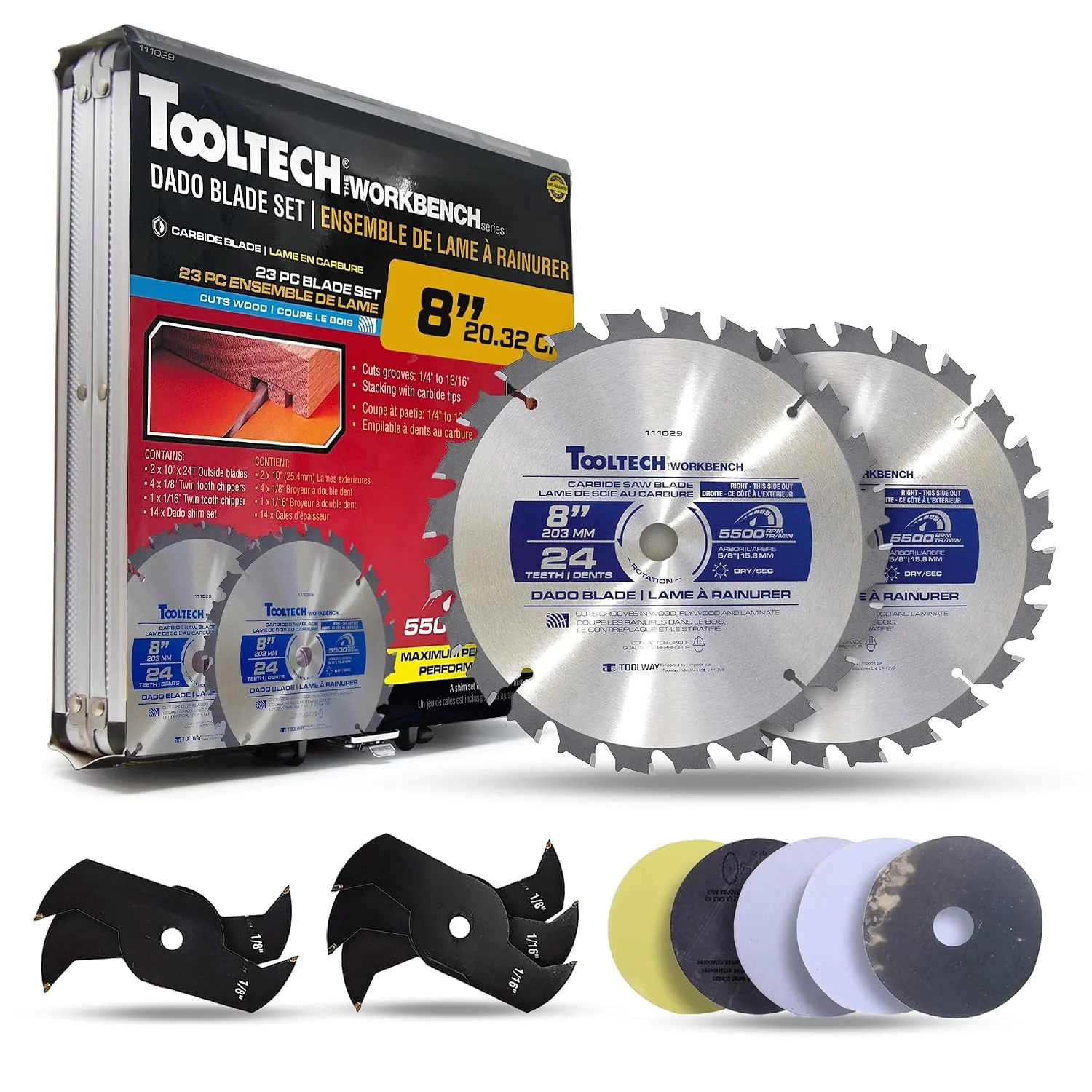 |
Tooltech 8″ Stacking Dado Blade Set (23-pc) – $54.99 Cuts 1/4″ to 13/16″ wide grooves in one setup instead of multiple risky passes with a standard blade.
|
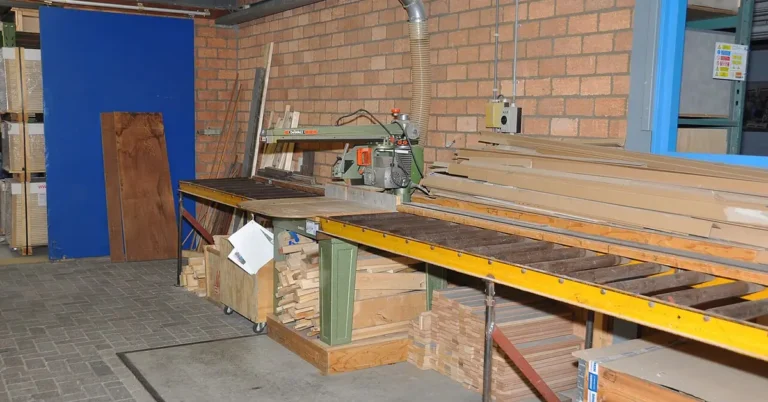
Why are these things important? Well, a radial arm saw is a powerful machine. Its strength lies in its overhead arm.
This arm moves in and out. It also swings and pivots. This gives you a lot of control.
Attachments build on this control. They give you more precision. They allow for different kinds of woodworking.
For example, you might want to cut a wide groove. Your standard blade can’t do that. But a special attachment can.
Or maybe you need to make many identical cuts. Doing this by hand takes time. An attachment makes it fast and accurate.
These accessories help you achieve professional results more easily. They make woodworking more enjoyable and less frustrating.
The core idea behind these attachments is to enhance the saw’s built-in capabilities. Your radial arm saw’s arm moves along a track. This means the blade stays at a fixed height once set.
This is great for consistency. Attachments leverage this. They provide stability or unique cutting actions.
Some attachments work with the blade itself. Others are separate jigs that attach to the saw’s table or arm. They help guide the wood or the blade.
The goal is always to make a cut better. This could mean straighter, cleaner, safer, or faster. It’s about getting more value from your existing tool.
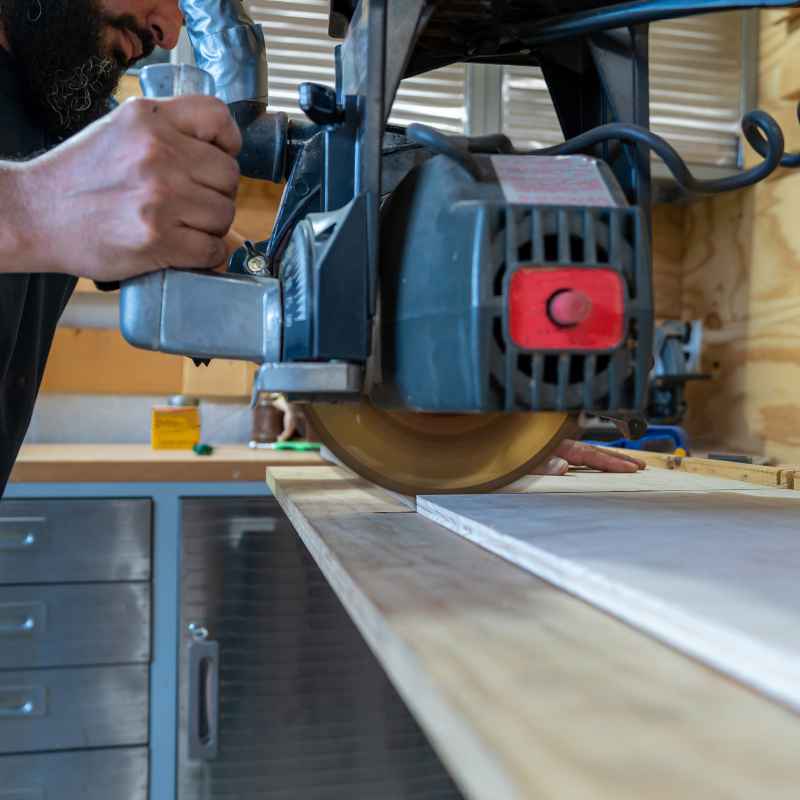
Two Attachments That Make the Biggest Difference
A stock radial arm saw handles crosscuts and rip cuts well, but a wide dado — the kind of groove a shelf sits into — is where a standard 1/8-inch blade runs out of options. Making several passes with a regular blade works in a pinch, but it’s slow, leaves rough edges, and raises the risk of the blade binding in the cut.
A dado blade set solves this directly: the blades and chippers stack on the arbor, and the width of the cut is adjusted by how many pieces are stacked together. Getting one set up safely matters as much as owning one — the arbor nut needs to be properly secured, and the arrow stamped on each dado blade has to point in the saw’s actual direction of rotation, not just however it happens to sit on the arbor.
The second attachment worth adding early is a crosscut sled: a fence that mounts to the saw’s table and guides the wood square to the blade on every pass. Once it’s set up and checked for square, crosscuts come out consistently straight without re-measuring or re-cutting a slightly off-angle piece. Neither attachment reinvents what the saw does — they just remove the two most common sources of frustration on a stock setup.
Accessory Spotlight: Dado Blade Sets
What they are: Special sets of blades that stack together. This lets you cut wide grooves or dados in wood.
How they work: You assemble multiple cutting blades and chippers on the saw’s arbor. The width is adjusted by how many pieces you stack.
Key benefit: Perfect for making shelves, rabbets, and other joinery cuts. Much faster and cleaner than multiple blade passes.
Safety tip: Always use a dado insert plate on your saw if available. It supports the blades better and reduces tear-out.
Essential Attachments for Better Cuts
Let’s talk about the attachments that directly impact the quality of your cuts. These are the ones that help you achieve that crisp, clean finish we all want. Accuracy is key in woodworking.
Even a tiny error can throw off an entire project. These accessories are designed to minimize those errors.
One of the most popular and useful attachments is the dado blade set, covered above, though it’s worth going into more depth here. A standard saw blade is about 1/8 inch thick.
A dado blade set can create cuts from 1/4 inch up to about 1 inch wide, sometimes more. This is crucial for making joinery. Think about cabinets.
The shelves often sit in dados cut into the side panels. Without a dado set, you’d have to make multiple passes with your regular blade. This is time-consuming and hard to keep perfectly aligned.
A dado set does it in one pass. It’s efficient and creates a strong, professional-looking joint.
When you get a dado set, you’ll find different types. There are “stacking” dado sets. These have two outer cutting blades and several “chippers” in between.
You can add or remove chippers to get the exact width you need. There are also “wobble” dado blades. These are simpler and cheaper.
They cut a slightly curved slot. They are okay for some tasks but not as precise as stacking sets. For most serious woodworking, stacking sets are the way to go.
Always check your saw’s manual. It will tell you the maximum dado width your saw can handle. Also, make sure you have enough power.
Cutting wide dados can really tax a motor.
Another critical accessory is a crosscut sled. This is a jig that sits on your saw’s table. It has a solid back fence.
Your wood slides against this fence. The sled itself has a slot for the blade. Because the wood is held firmly against a long, solid fence, the cut is always at a perfect 90-degree angle to the fence.
This is essential for making square cuts on the ends of boards. Imagine cutting multiple pieces for a picture frame. If one end is even slightly off, the frame won’t fit together nicely.
A good crosscut sled ensures all your pieces are perfectly square. This makes assembly much easier and the final product much better looking. Many woodworkers build their own crosscut sleds.
There are tons of plans online. It’s a rewarding project and the results are worth it.
For rip cuts, which are cuts made along the length of a board, a rip fence attachment can be very helpful. Your radial arm saw usually has a standard fence. But a wider, more robust rip fence can provide better support.
This is especially true when cutting long boards. It helps keep the wood stable. It prevents the wood from tilting.
This leads to safer and more accurate rip cuts. Some rip fences are adjustable. You can set them to a precise distance from the blade.
This is useful for cutting many identical width strips of wood.
Quick Scan: Cut Enhancers
- Dado Sets: For wide grooves and joinery.
- Crosscut Sleds: For perfectly square crosscuts.
- Rip Fences: For stable, accurate rip cuts.
- Jointer/Planer Attachments: Some older saws had these. They help straighten edges. (Less common now.)
Let’s not forget about specialty blades. While not strictly an “attachment” in the sense of a jig, different blades are essential for different cuts. For instance, a thin kerf blade cuts a narrower line.
This saves wood and is easier for the saw to push through. A fine-tooth blade is ideal for crosscuts. It leaves a smoother finish.
A high-tooth-count blade is great for hardwoods. A zero-clearance the wood fibers splinter on the way out of the cut. A zero-clearance insert supports the wood right up to the blade. This results in much cleaner edges.
Another thing to consider is a miter gauge. While your saw’s arm can pivot for miter cuts, a good miter gauge can add stability. It helps hold the wood securely.
It ensures consistent angles. Some advanced miter gauges have adjustable stops. This lets you make a series of identical angle cuts very quickly.
This is a real time-saver for projects that require many angled pieces, like frames or octagonal tabletops.
Finally, think about anti-kickback devices. Kickback is when the wood is violently thrown back at the operator. It’s one of the most dangerous things that can happen with a power saw.
Some radial arm saws come with basic anti-kickback pawls. These are small metal teeth that dig into the wood if it starts to move backward. You can also find aftermarket devices.
These add extra safety. They can prevent the wood from lifting or binding in a way that causes kickback. Safety should always be your top priority when using any power tool.
Improving Safety with Radial Arm Saw Attachments
Woodworking is fun, but safety is paramount. A radial arm saw, while powerful, requires respect. Certain attachments are specifically designed to make its operation safer.
These aren’t just about preventing accidents. They are about making you feel more confident and in control.
One of the most important safety attachments is a good dust collection system. While not directly preventing cuts, dust is a major hazard in a workshop. Fine wood dust can irritate your lungs and eyes.
It can also make surfaces slippery. A radial arm saw produces a lot of dust. Most saws have a dust port.
You can connect a shop vacuum or a dedicated dust collector to this port. This sucks up most of the sawdust as it’s created. This keeps your workspace cleaner.
It also makes breathing easier. A cleaner shop is generally a safer shop. Less dust means less chance of slipping.
It also means less mess to clean up later, which can be a hazard in itself.
The blade guard is a non-negotiable safety feature. Most radial arm saws come with a guard. It covers the blade when it’s not in use.
It also follows the blade down during a cut. This helps prevent accidental contact with the spinning blade. Ensure your blade guard is in good working order.
If it’s damaged or missing, get a
Safety First: Essential Guards & Devices
- Blade Guard: Covers the blade, protecting you from accidental contact.
- Anti-Kickback Pawls: Dig into wood if it moves backward, preventing kickback.
- Dust Collection: Improves air quality and workshop cleanliness, reducing slip hazards.
- Hold-Down Clamps: Secure smaller workpieces, preventing them from moving during cuts.
As mentioned before, anti-kickback pawls are critical for preventing kickback. These are often small, spring-loaded teeth. They are mounted on the saw’s arm or fence.
If the wood starts to move backward towards you, the pawls dig into it. This stops the wood and prevents it from being thrown violently. It’s important to understand how they work.
They are most effective when the wood is moving back. They might not prevent kickback entirely, but they can significantly reduce its severity.
For very small workpieces, hold-down clamps are a lifesaver. These clamps attach to the saw’s table. They press down on the wood.
This keeps it from shifting or lifting during the cut. Trying to cut small pieces without them can be very dangerous. Your fingers are too close to the blade.
Hold-down clamps allow you to safely guide the wood. They keep it firmly in place. This makes cuts more accurate too.
The wood doesn’t move. This means the blade cuts where you intended it to.
Some saws have a safety key or lockout switch. This prevents the saw from being accidentally started. It’s a simple but effective safety measure.
Always remove the safety key when the saw is not in use. Store it in a safe place. This is especially important if you have children or pets.
You don’t want anyone to accidentally turn on the saw. This key ensures only you can start the machine.
Also consider non-slip mats for your shop floor. While not directly an attachment to the saw, they contribute to overall safety. They provide better footing.
This is important when moving heavy lumber or operating heavy machinery. A stable stance is crucial for safe operation. If you’re standing on a slippery surface, you’re more likely to lose your balance.
This could lead to a dangerous situation.
Specialized Cuts and Jigs
Radial arm saws excel at specialized cuts. With the right attachments, you can perform tasks that would be difficult or impossible on other saws. These jigs and accessories expand your creative options.
A tenoning jig is fantastic for making tenons. Tenons are projections on the end of a piece of wood. They fit into mortises (holes) to create strong joints.
Think of traditional furniture making. A tenoning jig holds your wood securely. It guides it past the blade at a set distance.
This allows you to cut shoulders and cheeks of the tenon. It makes consistent, repeatable tenons much easier. You can also use it for cutting tenons on different angles by tilting the saw arm or the jig.
Jigs for Precision Work
Tenoning Jig: For cutting tenons accurately. Essential for strong, traditional joinery.
Mortising Attachment: Some older saws had these. They turn the saw into a chisel for cutting mortises.
Dovetail Jig: For cutting dovetail joints, common in drawers and fine boxes.
Circle Cutting Jig: Allows you to cut perfect circles or arcs.
Similarly, a dovetail jig can be used with a radial arm saw. This is for creating dovetail joints, which are known for their beauty and strength. They are often seen in high-quality drawers and boxes.
Dovetail jigs guide the blade to cut the interlocking “pins” and “tails” of the joint. This can be a complex operation. A jig makes it much more manageable.
It ensures the angles and spacing are correct.
For creating perfectly round objects or arcs, a circle cutting jig is invaluable. You can mount your wood to the jig. The jig then pivots around the saw blade.
This allows you to cut a perfect circle. You can adjust the radius of the circle. This is great for making table bases, clocks, or decorative elements.
It’s a specialized jig, but for the right project, it’s a must-have.
Some radial arm saws can also be fitted with outfeed support systems. When you are cutting long boards, the end of the board can fall off the table as you finish the cut. This can lead to the board binding or the cut being inaccurate.
Outfeed supports provide a stable surface for the wood to rest on as it exits the blade. These can be simple roller stands or more elaborate extensions that attach to the saw’s table.
You might also find shop-made jigs. Many creative woodworkers design their own jigs. These are tailored to specific tasks they perform frequently.
For example, a jig to cut precise angles for roof rafters. Or a jig to make repeated dado cuts at specific intervals. The radial arm saw’s versatility makes it a great platform for custom jig creation.
If you find yourself doing a particular task often, consider if a custom jig could make it easier and more accurate.
When using specialized jigs, always read the instructions carefully. Understand how the jig interacts with the saw. Ensure it’s securely attached.
And always prioritize safety. These jigs are designed to help, but they require proper use. They extend what your radial arm saw can do.
They allow you to tackle more complex and beautiful projects with confidence.
Maintaining Your Radial Arm Saw and Attachments
Just like any tool, your radial arm saw and its attachments need care. Proper maintenance ensures they work well. It also keeps them safe to use.
Neglecting them can lead to poor performance and potential hazards.
First, keep your saw clean. Sawdust can build up. This can interfere with moving parts.
It can make adjustments harder. Regularly sweep or vacuum the saw’s arm, tracks, and table. Pay attention to the mechanisms that allow the arm to move in, out, up, and down.
Clean these areas often. A buildup of dust and grime can cause resistance. It can make the saw harder to control.
Next, lubricate moving parts. Your saw has bearings and slides that need lubrication. Check your owner’s manual.
It will tell you what type of lubricant to use. It will also tell you where to apply it. For instance, the tracks the arm slides on might need a light coat of wax or a specific grease.
Lubrication ensures smooth operation. This is crucial for accurate cuts. It also reduces wear and tear on the saw.
Care & Feeding: Keeping Your Saw Sharp
Cleanliness: Remove sawdust regularly from all parts of the saw.
Lubrication: Keep moving parts well-oiled or waxed as per manual.
Blade Sharpness: Dull blades cause poor cuts and increase risk.
Attachment Checks: Ensure jigs are secure and free of damage.
Storage: Protect your saw and attachments from dust and moisture.
Your blades are the business end of the saw. They need to be sharp. A dull blade won’t cut cleanly.
It will require more force to push through the wood. This increases the risk of kickback. It can also lead to burned wood.
For standard blades, you can have them professionally sharpened. For dado sets, the individual blades can also be sharpened. If blades are damaged or nicked, it might be time to replace them.
A sharp blade is a safe blade and a high-quality cut blade.
When it comes to attachments, inspect them regularly. Check jigs for any cracks, chips, or warping. Ensure all hardware (screws, bolts, knobs) is tight.
Loose parts on a jig can lead to inaccurate cuts or even dangerous situations. For instance, a loose fence on a crosscut sled would make your cuts anything but square.
Storage is also important. When you’re not using your saw or attachments, store them properly. Cover your saw to protect it from dust.
Store smaller attachments in a toolbox or on a dedicated shelf. This prevents them from getting lost or damaged. Keeping them organized also means they are ready when you need them.
You won’t waste time searching for a specific jig.
For dado blades specifically, make sure you clean them after use. Sawdust and resin can build up on the blades. This can affect their cutting performance.
A quick wipe-down with a solvent designed for saw blades can help. Also, check the set for any signs of rust. Store them in their original case or a protective box.
Finally, read your manuals. Every saw and every attachment comes with instructions. These manuals contain vital information about operation and maintenance.
They are there for a reason. They are a trusted source of information. They often include safety warnings.
Following the manufacturer’s guidelines is the best way to ensure your equipment lasts and performs as it should. Investing a little time in maintenance pays off in better woodworking and a safer shop.
Real-World Use Cases and Scenarios
Let’s look at some practical examples of how these attachments make a difference in real woodworking projects. These are scenarios you’ll likely encounter in your own shop.
Imagine you’re building a simple bookshelf. You need to cut dadoes into the side panels to hold the shelves. Without a dado blade set, you’d have to make multiple passes with a standard blade.
This is tedious and prone to error. You might end up with uneven grooves. The shelves might not fit snugly.
With a dado set, you can make a perfect groove in one pass. The shelf fits perfectly. The finished bookshelf looks professional and sturdy.
This saves you time and frustration. It directly impacts the quality of your finished piece.
Consider building a picture frame. You need to cut four pieces of molding. Each piece needs to have its ends cut at a precise angle (usually 45 degrees for a rectangular frame).
If your radial arm saw arm isn’t perfectly calibrated, or if you try to eyeball the angle, your frame won’t come together cleanly. A good crosscut sled, or a precise miter gauge setting on the saw’s arm, ensures that each cut is identical and perfectly angled. This means your frame pieces will join up seamlessly.
You get tight corners with no gaps. The finished frame looks sharp and well-made.
Scenario Showcase
- Project: Building a cabinet. Need: Dados for shelves. Solution: Dado blade set for clean, strong joinery.
- Project: Making a picture frame. Need: Perfectly angled crosscuts. Solution: Crosscut sled for repeatable, square angles.
- Project: Crafting a small box. Need: Tight-fitting corners. Solution: Sharp blade and precise fence for clean miters or rabbets.
- Project: Creating furniture with legs. Need: Notches or tenons. Solution: Tenoning jig for accurate joinery.
What about building a simple set of drawers? You need to cut rabbets on the front and back panels. These are grooves along the edge where the drawer bottom slides in.
A rabbet is like a dado but along the edge. You can use a dado blade set set to a narrower width for this. Or some saws have a specific rabbeting set.
This creates a strong interlocking joint for the drawer bottom. It’s much more durable than just screwing or gluing the bottom on.
Think about a woodworking class you might take. Often, the instructor will demonstrate using a particular jig. They might show how to use a jig to cut identical spacing for dowels.
Or how to use a jig for precise angle cuts on trim work. These are examples of specialized attachments that solve specific problems. They allow beginners to achieve results that might otherwise require years of practice and skill.
Even small projects can benefit. If you need to cut multiple identical pieces of trim for a room, a crosscut sled with an adjustable stop can be invaluable. You set the stop to the desired length.
Then, you just slide the trim against the stop and make the cut. Repeat this for every piece. You get perfectly matched lengths every time.
This saves time and ensures a professional finish. It makes a tedious task much more manageable. These examples show how attachments aren’t just for advanced users.
They can simplify many common woodworking tasks for woodworkers of all levels.
What This Means for You: Making the Right Choices
So, you’ve learned about all these different attachments. The big question is: which ones are right for you? It really depends on what kind of woodworking you do.
Or what kind of woodworking you want to do.
If you build a lot of furniture, cabinets, or anything with joinery, a dado blade set is probably your top priority. It unlocks a whole new level of joinery options. It makes strong, attractive joints much easier to create.
This is probably the most universally recommended attachment for serious woodworkers.
If you find yourself struggling to make perfectly square cuts, especially on multiple pieces, a crosscut sled is a fantastic investment. Many woodworkers build their own. It’s a great DIY project.
The accuracy it provides is truly impressive. It can save you a lot of headaches and wasted material. You’ll be amazed at how much better your projects look when all your crosscuts are dead square.
Your Tooling Checklist
- For Furniture/Cabinets: Start with a dado blade set.
- For Repeatable Square Cuts: A crosscut sled is invaluable.
- For Safety: Ensure your blade guard and anti-kickback devices are top-notch.
- For Dust Control: A dust collection system is a must for health and shop cleanliness.
- For Specific Joinery: Look into tenoning or dovetail jigs if those are your focus.
Safety attachments like a good blade guard and anti-kickback pawls are not optional. They are essential. Make sure yours are in good working order.
If your saw is older, check for upgrades. A solid dust collection system is also incredibly important. It’s not just about cleanliness.
It’s about your health. Breathing in fine wood dust is dangerous over time. Investing in a good dust collector will pay dividends in the long run.
If you plan on doing a lot of fine detail work or specific types of joinery, then specialized jigs like tenoning jigs or dovetail jigs might be worth considering. These are more advanced. They are for specific applications.
But if your projects demand them, they are indispensable. Think about the projects you dream of making. Do they require these specific types of joints?
Don’t forget about the basics. A good set of sharp blades is more important than many people realize. A dull blade can ruin a project and be dangerous.
If your current blades are worn, getting them sharpened or buying new ones is a great first step. It’s a simple upgrade that makes a huge difference.
When you’re choosing attachments, think about quality. Cheaper attachments might seem appealing. But they often don’t perform as well.
They might not be as durable. They might not offer the same level of precision. Look for reputable brands.
Read reviews from other woodworkers. Consider buying used from trusted sources. Sometimes you can find great deals on high-quality attachments.
Ultimately, the best attachments for you are the ones that help you achieve your woodworking goals. They should make your work easier, safer, and more enjoyable. They should help you create the beautiful, functional pieces you envision.
Start with the most critical ones for your needs. Then, as your skills and projects evolve, you can add more.
Quick Fixes & Tips for Using Attachments
Once you have your attachments, using them correctly is key. Here are some quick tips to help you get the most out of them.
For Dado Sets: Always use the correct dado insert plate for your saw. This provides better support for the blades and helps prevent tear-out. Make sure the arrow on the blades points in the direction of rotation.
Never force the wood through. Let the saw do the work. Make sure your saw’s arbor nut is very tight after stacking blades.
For Crosscut Sleds: Ensure the sled’s fence is perfectly square to the blade. You can check this with a good quality square. If it’s not square, you can often adjust it.
Always keep the wood firmly against the fence when cutting. Don’t try to cut pieces that are too small to safely hold against the fence.
Usage Hacks
Dadoes: Use insert plates; check blade direction; don’t force.
Sleds: Ensure squareness; hold wood firm; secure small pieces.
Dust Collection: Connect vacuum before starting; clean hose regularly.
Blade Guards: Ensure they are properly adjusted and functional.
For Dust Collection: Connect your vacuum or dust collector before you start cutting. Turn it on first. This way, it’s already pulling air and dust when the saw starts.
Clean out your vacuum bag or canister frequently. A full collector reduces airflow. Check the hose for blockages.
For Blade Guards: Adjust the guard so it covers the blade as much as possible while still allowing the cut. Make sure it moves freely. It should “float” with the blade during the cut.
If it’s stiff or sticks, it’s not doing its job effectively.
For Tenoning Jigs: Set the depth of cut carefully. Make multiple shallow passes rather than one deep cut for cleaner results. Ensure the wood is held very securely in the jig.
General Tip: Always read the manual for each attachment. They are designed to work in a specific way. Understanding that way is crucial for safety and effectiveness.
Don’t assume you know how it works. Take a few minutes to read the instructions.
Another tip: Practice on scrap wood. Before you make a critical cut on your project, try it out on a piece of scrap wood. This is especially important when using a new attachment or trying a new technique.
It lets you get a feel for how the saw and attachment work together. You can also check your settings. You can make adjustments as needed.
This practice run can save you from ruining a valuable piece of lumber.
Finally, keep your workspace organized. When attachments are not in use, put them away properly. A cluttered shop is a dangerous shop.
Knowing where everything is will save you time. It will also make your work area much safer. Clear benches and clear floors mean fewer tripping hazards.
Frequently Asked Questions
Is a radial arm saw still worth it in 2024?
Yes, a radial arm saw can still be a valuable tool, especially with the right attachments. Its ability to swing, pivot, and move the blade over the workpiece offers unique advantages for certain cuts like tenons or dadoes that other saws may not handle as easily. Modern alternatives like sliding miter saws and table saws are popular, but the radial arm saw’s versatility remains strong for those who understand its capabilities and limitations.
What is the most essential radial arm saw attachment?
Many woodworkers would agree that a dado blade set is the most essential attachment. It allows for cutting wide grooves and dadoes, which are crucial for cabinet making, shelving, and various joinery techniques that standard saw blades cannot perform effectively.
Can I use a standard blade for dado cuts?
You can make a wide groove by making multiple passes with a standard blade, but it’s not recommended. It’s slow, the cut quality is usually poor, and there’s a much higher risk of the wood binding or kicking back, which is very dangerous. A dedicated dado blade set is designed for this task and is far safer and more effective.
How do I ensure my crosscut sled makes perfectly square cuts?
To ensure square cuts, your crosscut sled’s fence must be perfectly perpendicular (at a 90-degree angle) to the saw blade. Use a high-quality framing square to check this. If it’s off, most sled designs allow for adjustment by loosening the fence, tweaking its position, and then re-tightening it.
Always test on scrap wood after adjustments.
Are there safety risks associated with using dado blades?
Yes, dado blades can be more dangerous than standard blades if not used correctly. They require more power, create larger chip loads, and can increase the risk of kickback if the wood binds. Always use a dado insert plate, ensure the blades are properly stacked and tightened, wear safety glasses and hearing protection, and use anti-kickback pawls.
Never force the wood; let the saw do the work.
How often should I sharpen my saw blades and check attachments?
It’s best to sharpen your blades when you notice a decrease in cut quality, burning wood, or excessive force needed to make a cut. For most home woodworkers, this might be every few months to once a year, depending on usage. Attachments should be inspected before each use for damage or loose parts.
Regular cleaning and lubrication of the saw itself are also key.
Can I use my radial arm saw for making tenons?
Yes, with a tenoning jig, your radial arm saw can be excellent for cutting tenons. The jig holds the wood securely and guides it against the blade to create the shoulders and cheeks of the tenon. This allows for consistent and accurate tenon cuts, which are vital for strong furniture joinery.
Conclusion
Your radial arm saw is a powerful tool. With the right attachments, it becomes incredibly versatile. From precise joinery with dado sets to perfect squares with crosscut sleds, these accessories unlock new potential.
They enhance safety, improve cut quality, and make complex tasks manageable. Choosing the right attachments for your projects will elevate your woodworking. It transforms frustration into satisfaction.
Sponsored / affiliate links. As an Amazon Associate I earn from qualifying purchases. I may earn additional commission from eligible campaigns.