How to Clean a Painted Wood Deck Without Stripping the Paint
You can clean a painted wood deck without stripping the paint, as long as you match the cleaner and the water pressure to the condition of the coating. Start with a soft-to-medium brush, plain water, and either dish soap or an oxygen bleach cleaner, work board by board, and rinse well. The mistakes that ruin painted decks are almost always the same two: blasting the surface with a pressure washer, and cleaning over paint that was already failing. This guide covers how to check which situation you are in, which cleaners are safe, and the exact order of work. If you are cleaning because you plan to repaint, our guide to cleaning a painted deck before repainting it covers that prep in more depth.
What You Need to Clean a Painted Wood Deck
Best Deck Scrub Brush Pick
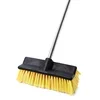 |
Yocada Deck Brush with 4-Section Extendable Handle – $17.99 A soft-to-medium bristle head lets you scrub a painted deck from a standing position without scratching the paint film.
|
The tool list is short, and none of it is expensive. The one item worth paying attention to is the brush: bristles that are too stiff scratch the paint film and leave fine lines where dirt collects again.
- Deck brush with a long handle: soft-to-medium synthetic bristles, so you can scrub standing up without grinding grit into the paint.
- Garden hose with a spray nozzle: a fan setting is enough for rinsing.
- Two buckets: one for cleaner and one for rinse water, so you are not spreading grime back onto clean boards.
- Cleaner: dish soap, an oxygen bleach deck cleaner, or a commercial deck cleaner whose label says it is safe on painted surfaces (see the cleaner section below).
- Gloves and eye protection: cleaning solutions splash, and deck boards are slippery when wet.
- Plastic sheeting: to cover nearby plants and to keep runoff off siding.
Check the Paint First: Clean, Touch Up, or Repaint?
Cleaning is only the right job if the paint is still bonded to the wood. Water and scrubbing will pull up paint that is already letting go, and you will end up with a patchy deck and a bigger repair. Two quick checks take about five minutes.
- Scrape test: drag a putty knife or your thumbnail across a few board ends and the areas that get the most foot traffic. Paint that flakes off in chips is not bonded.
- Tape test: press a strip of painter’s tape firmly onto a clean, dry patch, then pull it off in one quick motion. If a lot of paint comes away on the tape, the adhesion is failing.
| What you see | What it means | What to do |
|---|---|---|
| Dirt, pollen, green film, gray-black spots; paint is intact | Surface grime and mildew on sound paint | Clean as described below |
| A few small chips at board ends or screw heads | Localized failure where water gets in | Clean, let dry, then scrape, spot-prime bare wood and touch up |
| Tape lifts paint, or paint peels in sheets | Coating has lost adhesion | Scrape and repaint instead of cleaning; see our guide to painting a treated deck |
| Paint is worn through to bare gray wood in traffic lanes | Coating is thin and the wood is exposed | Clean, then recoat those lanes or the whole deck |
One safety point before you scrape or sand anything: if your house was built before 1978, the paint on it may contain lead. The EPA advises testing old paint (home lead test kits exist for this) before you dry-scrape, sand, or blast it, because the dust and chips are the hazard. If the test is positive, follow EPA guidance or hire a lead-safe certified contractor rather than pressure washing or sanding it yourself.
Choose a Cleaner That Will Not Damage the Paint
Start with the gentlest option that works and step up only if it does not. Always read the label on whatever you buy, since concentrations, dwell times and surface warnings differ between brands, and test on a small hidden spot before you do the whole deck.
| Cleaner | Good for | Watch out for |
|---|---|---|
| Dish soap and warm water | Routine dirt, pollen, light film | Too much soap leaves residue that attracts dirt; rinse thoroughly |
| Oxygen bleach (sodium percarbonate) deck cleaner | Mildew, algae, gray-green film on sound paint | Follow the label mix; it is generally milder on paint and plants than chlorine bleach, but rinse plants before and after |
| Diluted household bleach (sodium hypochlorite) | Stubborn black mildew when nothing else works | Can fade or chalk some paint colors, harms plants and corrodes metal fasteners; never mix with ammonia, vinegar or other cleaners, because that can release toxic gas |
| TSP or heavy degreasers | Grease from a grill area | Harsh on skin and eyes and may dull paint; rinse very well and check local rules on phosphate runoff |
| Oxalic acid cleaners | Rust rings from furniture feet or metal planters | Acid: test on paint first, wear gloves and eye protection, keep off plants |
Myth: a pressure washer is the fastest safe way to clean a painted deck
A pressure washer is fast, and that is exactly the risk. Paint on a deck is thin at the board edges and around fasteners, and a narrow, close jet can push water under those edges and lift the film in strips. It also raises the grain of softwood such as pine, cedar and treated lumber, which leaves fuzzy, splintery boards under the paint. If you do use one, the commonly recommended approach is a low pressure setting, roughly 500 to 1,200 psi on softwood, a wide fan tip (25 to 40 degrees), the nozzle held a foot or more away, and a moving wand rather than a fixed spot. Never use it on paint that is already flaking. A scrub brush and a hose take longer but almost never make things worse. If you would rather skip the machine entirely, see our guide to cleaning a wood deck without a pressure washer.
How to Clean a Painted Wood Deck, Step by Step
- Clear and protect. Move furniture, grills and planters off the deck. Wet nearby plants with plain water and cover the delicate ones with plastic sheeting.
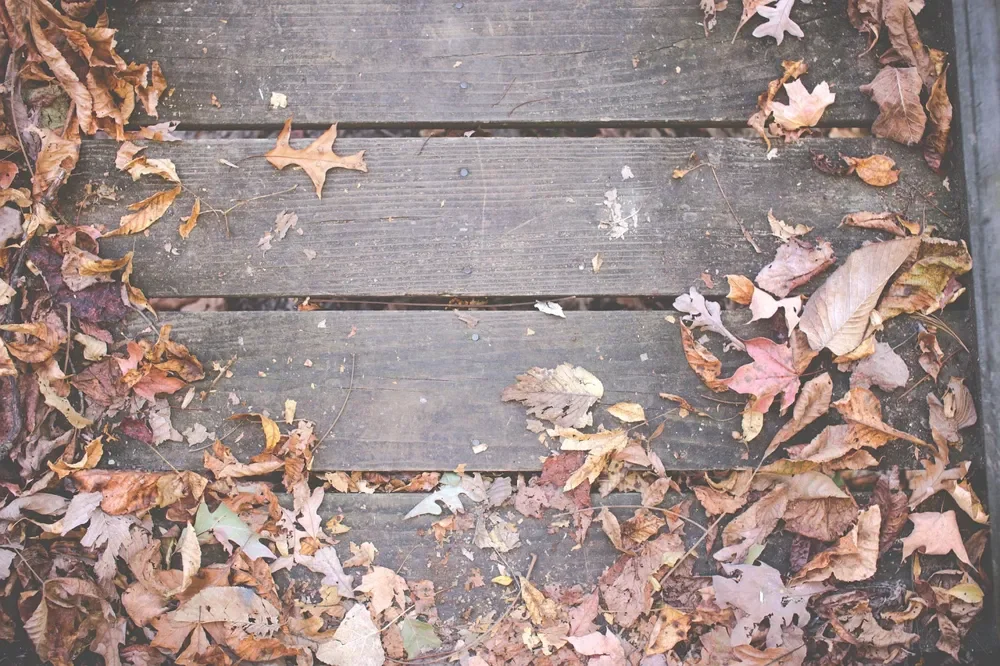
- Sweep. Get leaves, grit and debris out of the gaps between boards with a stiff broom or a putty knife. Grit left behind acts like sandpaper under your brush.
- Wet the deck. A light rinse keeps the cleaner from soaking in unevenly, and it is a chance to spot any loose paint.
- Apply the cleaner. Work in a section of about 4 to 6 feet across so it does not dry on the surface, and stay in the shade if you can. Give it the dwell time on the label, usually a matter of minutes, and do not let it dry.
- Scrub with the grain. Use the brush along the length of the boards, with extra attention to board ends, stair treads and shaded corners where mildew collects.
- Rinse thoroughly. Rinse each section before moving on, working from the top of the deck toward the edges so dirty water does not run over clean boards. Rinse the plants again.
- Let it dry. Wait for the boards to dry fully before you put furniture back or do any paint repair.
The drying time depends on the weather more than the clock. Plan on at least a full dry day, and longer for a shaded deck in humid weather. Paint touch-ups applied over damp wood tend to blister, so if you are planning repairs, let the deck dry until it is clearly dry rather than just dry on top.
Removing Stubborn Stains From Painted Boards
| Problem | What usually works | Notes |
|---|---|---|
| Black or green mildew and algae | Oxygen bleach cleaner and a brush; diluted chlorine bleach as a last resort | Shaded, damp spots come back first; trimming back overhanging branches helps |
| Rust rings under furniture or planters | Oxalic acid cleaner, applied only to the stain | Test on a hidden patch; rinse thoroughly |
| Grease and grill drippings | Degreaser or dish soap, scrubbed while the stain is fresh | Old grease may need two passes |
| Tannin bleed-through (brown stains on light paint) | Clean first, then spot-prime with a stain-blocking primer before touching up | Cleaning alone will not stop tannins in the wood from bleeding through thin paint |
| Leaf stains | Soap, water and time | Sweep leaves off promptly, since they hold moisture against the paint |
Keep a Painted Deck Clean Longer
Most painted decks fail at the board ends, at the gaps between boards, and around screw heads, and those are also where dirt and moisture linger. Sweep the deck every few weeks, and clear leaves out of the gaps so the boards can dry. A wash once or twice a year, typically in spring and again in fall, is enough for most decks, and shaded decks may need more. Touch up small chips as soon as you see them, since a tiny failure lets water in and the film lifts from there. If the whole deck is chalky or worn, an occasional recoat is cheaper than a full repair later.
If your deck is stained rather than painted, the rules change. An oxygen bleach wash is common there, and our guide to cleaning a wood deck with OxiClean covers that approach.
Frequently Asked Questions
How often should I clean a painted wood deck?
Once or twice a year is typical, usually spring and fall. Shaded decks and decks under trees collect mildew faster, so they may need it more often. Sweeping every few weeks and clearing the gaps between boards reduces how much scrubbing you need.
Can I use a pressure washer on a painted wood deck?
It is possible, but it is not the safest default. Use a low pressure setting, a wide fan tip, and keep the nozzle a foot or more from the surface. Do not use it on flaking paint, and test in a hidden spot first. A brush and hose are safer.
Is it safe to use bleach on a painted deck?
Oxygen bleach is generally the gentler choice for paint and plants. Diluted chlorine bleach can work on stubborn mildew, but it can fade some paint, harm plants and corrode metal fasteners. Never mix bleach with ammonia, vinegar or other cleaners, and follow the product label.
Should I clean the deck before or after touching up peeling paint?
Clean first and let the deck dry completely. Then scrape loose paint, sand the edges smooth, spot-prime bare wood and touch up. If the house is older than 1978, test the paint for lead before scraping or sanding.
How long should a painted deck dry after cleaning?
Give it at least a full day of dry weather, and longer in shade or humidity. Paint touch-ups over damp wood tend to blister, so wait until the boards are dry all the way through, and follow the paint label.
Sponsored / affiliate links. As an Amazon Associate I earn from qualifying purchases. I may earn additional commission from eligible campaigns.
 SVLING #10 x 3-1/8" Multi-Purpose Wood Deck Screw for Interior and Exterior,Bugle Head Golden Coated with T25 Bit Star Drive Torx Furniture Building/Fence/Decking(325Pcs,5LBS)
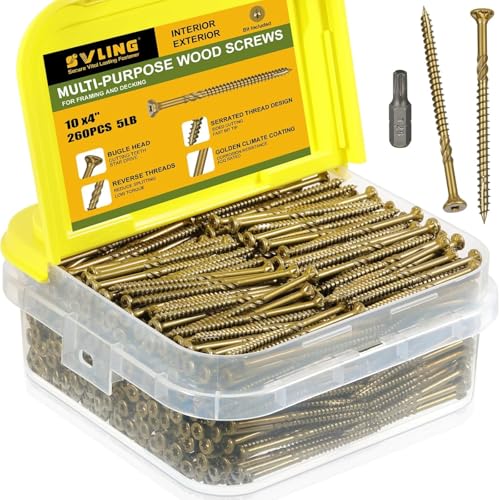 SVLING #10 x 4 Multi-Purpose Wood Deck Screw for Interior and Exterior,Bugle Head Golden Coated with T25 Bit Star Drive Torx Furniture Building/Fence/Decking(260Pcs,5LBS)