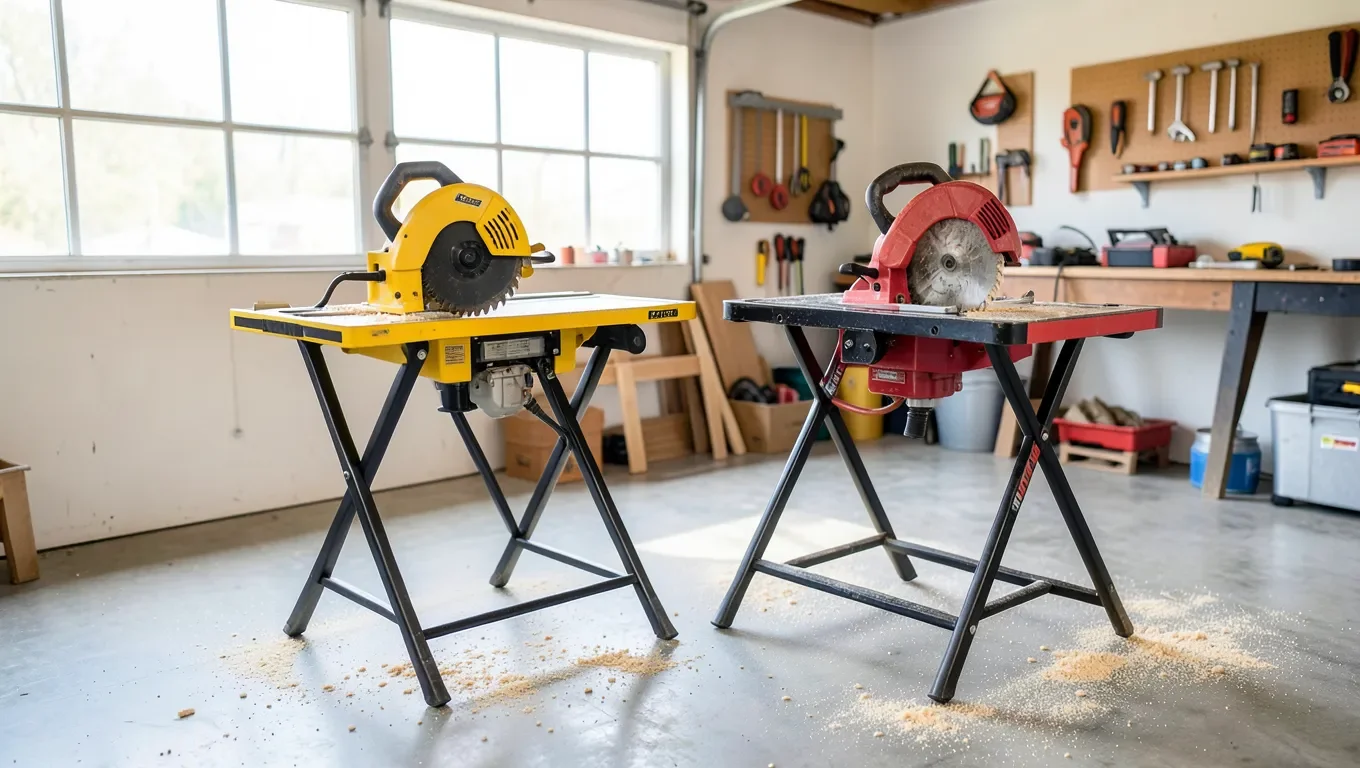
SKIL vs DEWALT Table Saw: TS6307-00 vs DWE7491RS Specs Compared
SKIL and DEWALT both sell a 10-inch, 15-amp jobsite table saw with a folding stand, and those two specific saws — the SKIL TS6307-00 and the DEWALT DWE7491RS — are what most people actually mean by “SKIL vs. DEWALT table saw.” Checked live on Amazon today, the SKIL runs $302.68 and the DEWALT runs $599.00 — almost exactly double. Below is what that extra money actually buys, spec by spec, plus one thing a lot of comparison articles get wrong: both saws use a rack-and-pinion fence, not just the DEWALT.
SKIL TS6307-00 vs. DEWALT DWE7491RS: The Two Saws This Comparison Covers
Insert your Affiliate Disclosure reusable block here.
If You Can Spend More: Extra Rip Capacity
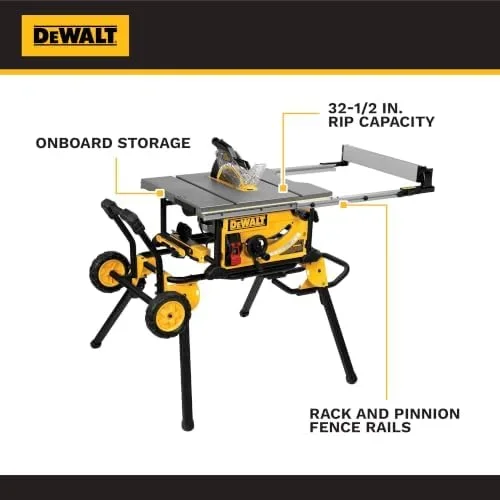 |
DEWALT DWE7491RS 10" Table Saw with Rolling Stand – $599 The step-up pick from this comparison if you regularly need more than the SKIL TS6307-00’s 25-1/2in rip capacity or roll the saw on and off a job site.
|
Both saws share the same basic formula — 15-amp motor, 10-inch blade, folding stand for jobsite portability — but they land at different price tiers for real reasons. Here’s the full spec-by-spec breakdown before we get into what each number means in practice.
| Spec | SKIL TS6307-00 | DEWALT DWE7491RS |
|---|---|---|
| Motor | 15 amp | 15 amp |
| No-load speed | 4,600 RPM | 4,800 RPM |
| Blade size / arbor | 10 in / 5/8 in | 10 in / 5/8 in |
| Rip capacity | 25-1/2 in | 32-1/2 in |
| Fence system | Rack-and-pinion | Rack-and-pinion telescoping |
| Stand | Integrated folding legs (fixed to saw) | Separate rolling stand with wheels |
| Price (checked live) | $302.68 | $599.00 |
| Amazon rating | 4.7 stars (2,928 ratings), #1 Best Seller in Table Saws | 4.7 stars (5,791 ratings) |
Motor and Cutting Speed: How Much Does 200 RPM Actually Matter
Both saws use a 15-amp motor, which is the maximum a standard 120V, 15-amp household circuit can supply — neither saw is under-powered relative to the other on paper. The gap shows up in no-load speed: the SKIL spins to 4,600 RPM and the DEWALT to 4,800 RPM, a 200-RPM difference that’s smaller than it sounds. In practice, how cleanly either saw rips hardwood depends more on blade quality, tooth count, and feed rate than on that RPM gap — a dull or low-quality blade will bog down a DEWALT just as easily as a SKIL. Where the DEWALT’s motor does show an edge is sustained heavy use: reviewers doing all-day ripping on job sites report it holding speed under load slightly better, which tracks with DEWALT’s construction-market focus versus SKIL’s DIY/prosumer positioning.
Neither saw ships with a premium blade. The SKIL includes a 24-tooth combination blade in the box, which is fine for general ripping and crosscuts but will leave a rougher edge on plywood veneer than a 40-60 tooth finish blade. The DEWALT ships with DEWALT’s own DW3112 10-inch combination blade, similar in intent. If cut quality on finished plywood or hardwood matters to your projects, budget for a better blade on either saw — it will move the needle more than the RPM difference between these two models.
Rip Capacity and Fence System: The Real Gap
This is where the two saws actually separate. The SKIL TS6307-00 rips up to 25-1/2 inches to the right of the blade; the DEWALT DWE7491RS rips up to 32-1/2 inches — a real 7-inch advantage. Both capacities are enough to rip a 4×8 sheet of plywood down the middle (each half is 24 inches), so that specific task doesn’t separate them. The DEWALT’s extra capacity matters when you need a rip wider than 24 inches in one pass — full-width cabinet sides, wide shelving, or stock that isn’t a clean half-sheet.
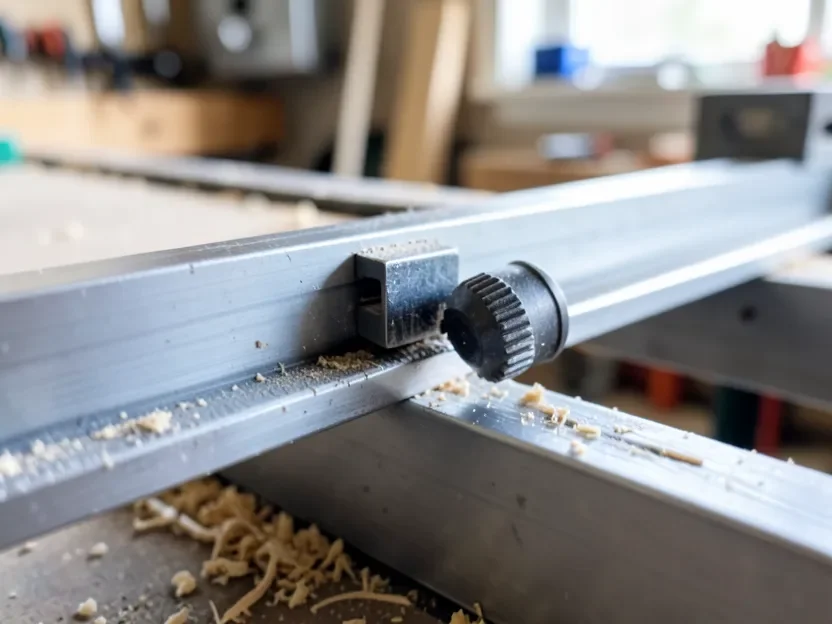
The fence system is where most SKIL-vs-DEWALT comparisons get something wrong: they assume the budget SKIL uses a cheaper cam-lock or friction fence and only the DEWALT gets a rack-and-pinion system. That’s not accurate — the SKIL TS6307-00 also uses a rack-and-pinion rip fence, meaning the front knob turns a pinion gear along a geared rail instead of just clamping the fence wherever you stopped pushing it. That’s the main reason the SKIL holds its adjustment as well as it does for a saw in its price range. The real fence difference is that the DEWALT’s rails telescope to shrink the saw’s footprint for storage and transport, while the SKIL’s fence rails are fixed-length. Both fence systems lock down parallel to the blade reliably when properly calibrated; neither is the “cheap” option here.
Stand and Portability: Integrated vs. Rolling
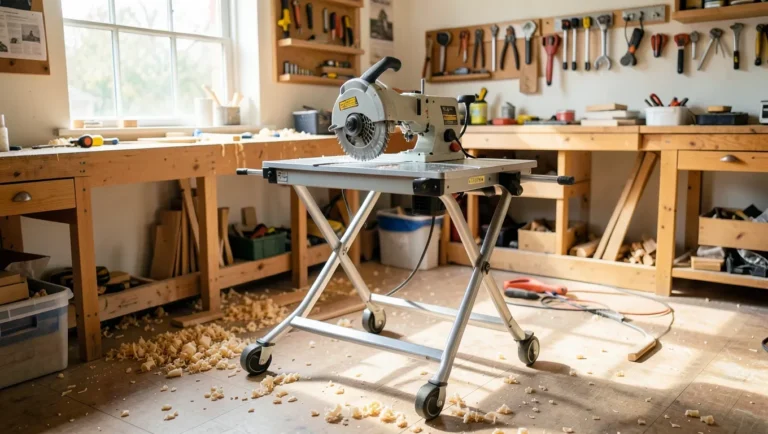
The SKIL’s folding stand is permanently attached to the saw — you unfold the legs and it’s ready to cut, and folding it back up turns the whole unit into one carryable package. That makes it genuinely a one-person, one-trip saw for a smaller shop or occasional jobsite use. The DEWALT’s stand is a separate rolling unit (the DWE74911) that the saw bolts onto; it has two wheels, so instead of carrying the saw you tip it back and roll it, which matters more on a real job site where the saw gets loaded in and out of a truck daily. The tradeoff is that the DEWALT’s combined saw-plus-stand package is heavier to lift up stairs or over a curb when rolling isn’t an option, since the wheels only help on flat, rollable ground.
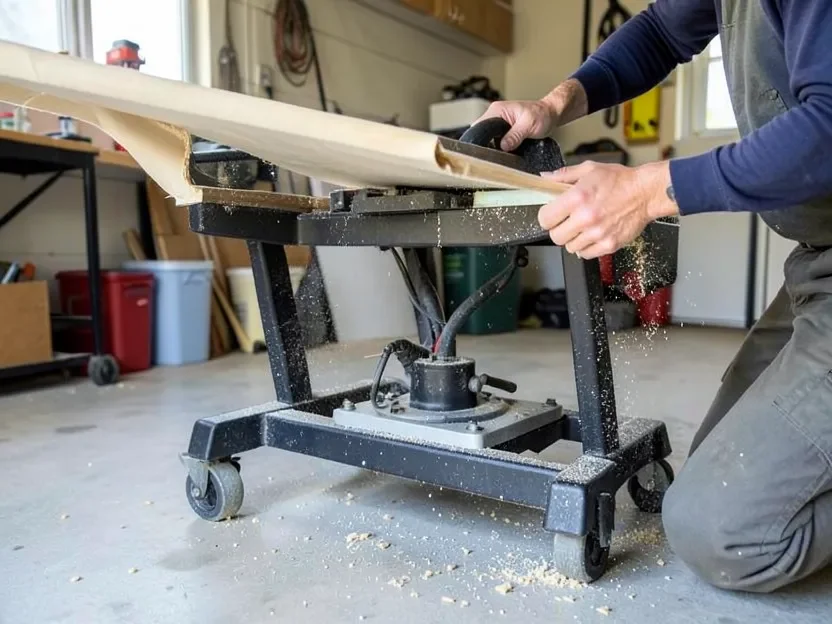
For a garage or basement shop where the saw mostly stays folded against a wall between uses, the SKIL’s integrated stand is the simpler system. For a contractor moving a saw between job sites multiple times a week, the DEWALT’s rolling stand saves real wear on your back over months of use.
What’s in the Box
The SKIL TS6307-00 ships with a 24-tooth blade, blade guard, riving knife, anti-kickback pawl, the rip fence, a miter gauge, a push stick, two wrenches, a dust port elbow, and the integrated folding stand — it does not include a zero-clearance insert or a dado insert, both sold separately (see our SKILSAW/SKIL TS6307-00 accessories guide for exact part numbers that fit). The DEWALT DWE7491RS ships with its DW3112 combination blade, the DWE74911 rolling stand, a miter gauge, a push stick, and blade-change wrenches, with onboard storage built into the base for the blade guard assembly, miter gauge, and wrenches — it also skips a dado throat plate, so dado work requires a separate purchase (DEWALT sells one bundled as the DWE7491RS w/ DWE7402DI package) on either saw.
Price, Ratings, and Value
Checked live today, the SKIL TS6307-00 is $302.68 (list $329.99) and the DEWALT DWE7491RS is $599.00 — the DEWALT costs essentially double. Both are rated 4.7 out of 5 stars, but the DEWALT has nearly double the review count (5,791 vs. 2,928), which reflects its longer track record in professional/contractor channels rather than a quality gap; the SKIL is currently the #1 best seller in Amazon’s Table Saws category, so it’s not lacking for buyers either. If you want the single-saw deep dive instead of this brand-level comparison, see our full DEWALT DWE7491RS review.
Which Should You Buy?
Buy the SKIL TS6307-00 if your rip cuts rarely exceed 24 inches, you want a true one-piece carry saw for a home shop or occasional jobsite trip, and you’d rather put the $300 you save toward a better blade or a dust collector. Buy the DEWALT DWE7491RS if you regularly need more than 24 inches of rip capacity, you’re rolling the saw on and off a truck several times a week, or you want the slightly larger installed base and longer track record that comes with nearly 6,000 ratings. Neither saw is the wrong choice — they’re built for different frequencies of use, not different quality tiers. If you’re actually comparing the worm-drive Skilsaw SPT99-12 rather than the SKIL TS6307-00, that’s a different saw entirely — see our Skilsaw worm drive vs. DeWalt spec comparison for that specific matchup.
Frequently Asked Questions
Is the SKIL TS6307-00 as good as a DEWALT table saw?
For cuts under 24 inches wide, yes — the SKIL TS6307-00 matches the DEWALT DWE7491RS on motor size (15 amp), blade size (10 in), and fence type (both rack-and-pinion), and it’s rated the same 4.7 stars on Amazon. The DEWALT pulls ahead only on rip capacity (32-1/2 in vs. 25-1/2 in) and stand style (rolling vs. integrated), not on build quality or cut accuracy.
What’s the difference between SKIL and DEWALT table saws?
The main differences on the TS6307-00 vs. DWE7491RS specifically are rip capacity (25-1/2 in vs. 32-1/2 in), stand type (integrated folding legs vs. a separate rolling stand), and price (roughly $300 vs. $600). Motor size, blade size, and fence type (rack-and-pinion) are the same on both.
Does the SKIL TS6307-00 have a rack-and-pinion fence?
Yes. The SKIL TS6307-00 uses a rack-and-pinion rip fence, the same fence mechanism as the DEWALT DWE7491RS — turning the front knob moves the fence along a geared rail rather than just clamping it in place. The DEWALT’s rails telescope for storage and the SKIL’s don’t, but the locking mechanism itself is the same type on both saws.
Is the DEWALT DWE7491RS worth twice the price of the SKIL?
It depends on how often you need to rip wider than 24 inches and how often the saw travels. If you regularly cut full-width cabinet sides or wide shelving, or you’re rolling the saw on and off a job site multiple times a week, the extra rip capacity and wheeled stand justify the $300 gap. For a home shop mostly cutting half-sheets and narrower stock, the SKIL TS6307-00 delivers the same motor, blade size, and fence type for about half the cost.
Sponsored / affiliate links. As an Amazon Associate I earn from qualifying purchases. I may earn additional commission from eligible campaigns.