Ryobi Table Saw With Stand: Full Review And Buyer’S Guide
This guide aims to make that choice clearer. We will dive deep into Ryobi’s table saw options. We’ll look at how they work with their stands.
This way, you can feel confident in your decision. You’ll learn what makes them a good fit. You’ll also see if they fit your needs.
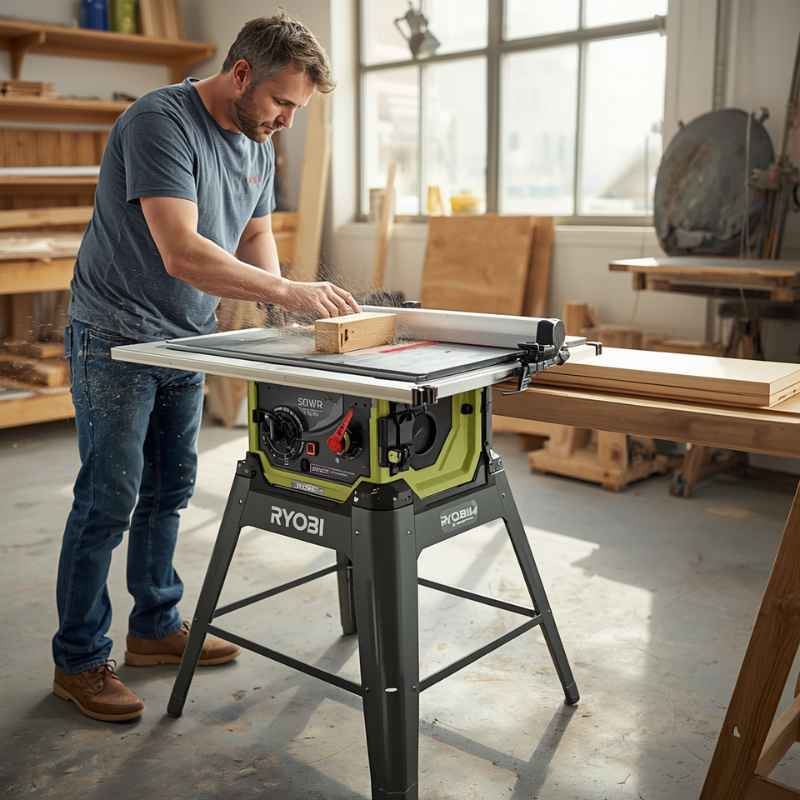
A Ryobi table saw with a stand is often a good choice for DIYers and hobbyists. It offers a balance of features, portability, and affordability. The stand makes it easier to use and store.
It’s designed for smaller shops or users who need to move their saw.
What Is a Ryobi Table Saw With Stand?
Best Blade Upgrade For A Ryobi Table Saw
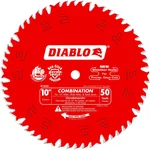 |
Diablo D1050X 10-Inch 50-Tooth Combination Blade – $42.97 The stock blade that ships with most Ryobi table saws is a low-tooth-count blade built for fast, rough rips — this is the upgrade for smoother cuts on both rips and crosscuts.
|
A Ryobi table saw is a tool for cutting wood. It has a blade that spins up from a flat table. You push wood across the blade.
This cuts the wood. It’s great for making straight cuts. It can also cut wood to specific sizes.
Many Ryobi table saws are designed to be portable. They are not huge, heavy machines.
A stand is an extra piece of equipment. It lifts the table saw off the ground. This makes it taller.
It’s easier to reach and use the saw. It also helps keep the saw stable. Many Ryobi stands are foldable.
This makes them easy to store. It also makes them easy to move around.
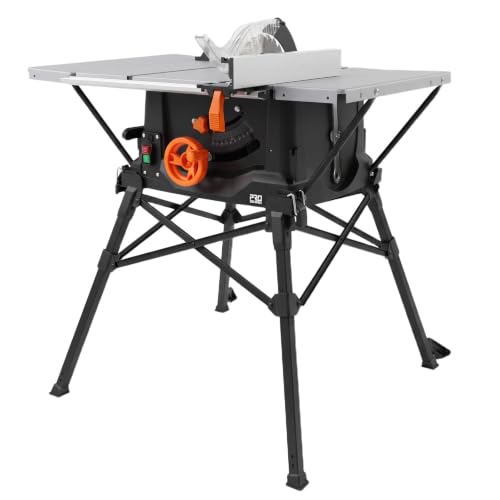
So, a Ryobi table saw with a stand is a wood cutting tool. It sits on a frame that lifts it up. The stand makes it more comfortable to work with.
It also helps keep it out of the way when not in use.

Why Ryobi Table Saws Are Popular
Ryobi is known for making tools that most people can afford. They make good tools for home use. You don’t need to be a pro to use them.
Many folks start with Ryobi tools. They are easy to find too. Most big hardware stores have them.
Their table saws are no different. They offer useful features. They are made for people who work on projects at home.
Things like building shelves, fixing furniture, or starting a new craft. The saws are not overly complicated. They get the job done for these kinds of tasks.
The added stand is a big plus. For many, a table saw is a big tool. It takes up space.
A stand can make a difference. It can make the saw usable without a full workshop. It also means you can put it away neatly.
This is key for garages or smaller work areas.
The Ryobi Table Saw Lineup
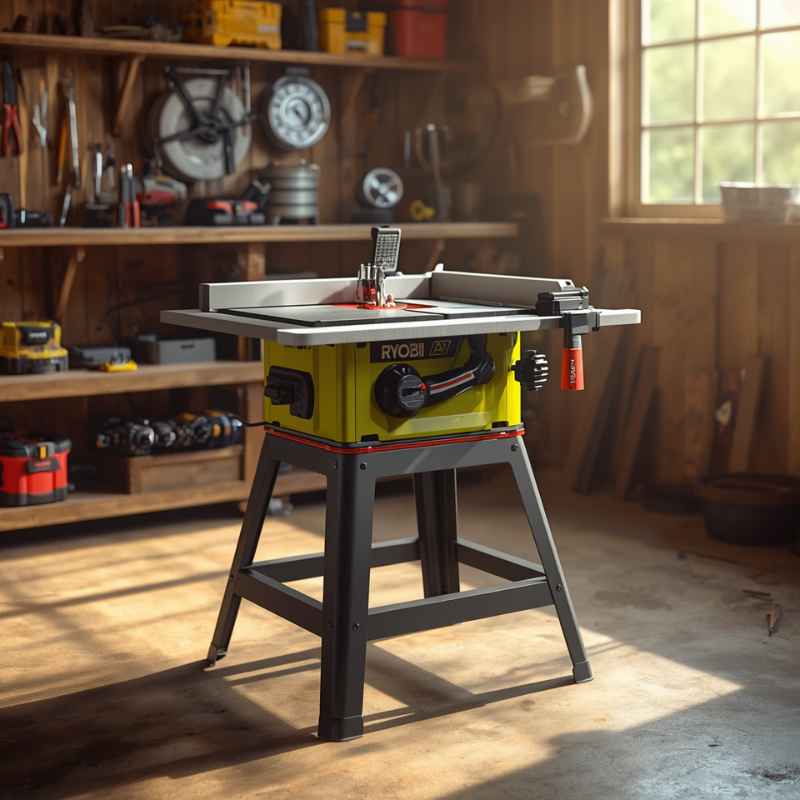
The specific model most people mean by “Ryobi table saw with stand” is the Ryobi RTS10, a 10-inch, 15-amp table saw sold with a folding stand as one unit. Ryobi’s power tool lineup (the tools with the RTS/BTS model numbers, not the outdoor lawn/garden HP or ONE+ battery tools) is sold as a Home Depot exclusive in the US, which is why you generally will not find it new, direct from the manufacturer, on Amazon — only used or third-party listings turn up there. If you want the actual saw new, Home Depot (in-store or online) is the source; Amazon is still useful for accessories and blade upgrades for the saw once you have it, like the one below.
One is a compact or “jobsite” style saw. These are built to be light and easy to move. They often have a built-in carry handle.
Another type might be a bit larger. It might have more power. But it’s still designed for home use.
It’s not like the giant saws you see in professional shops. These saws are meant for cutting wood, not metal or stone.
What’s great is that many of these saws are designed to work with Ryobi stands. This means you can buy the saw. Then, you can buy a stand that fits it perfectly.
It’s like a system designed to work together.
Ryobi Table Saw Stands: Types and Features
Ryobi offers different stands. Some are simple legs. Others are more elaborate rolling stands.
The rolling stands are very popular. They often have wheels. This means you can easily roll your saw around your garage or yard.
It makes moving it much easier than carrying it.
Many of these stands also fold up. This is a huge space saver. You can fold it down.
Then you can stand it against a wall. Or slide it under a workbench. It keeps your workspace tidy.
It also protects the saw when it’s not in use.
The stands are built to hold the saw securely. This is very important for safety. When a saw is stable, it’s less likely to move.
This helps you make accurate cuts. It also prevents accidents. The stands usually attach to the saw with a few bolts.
It’s a pretty straightforward process.
Common Stand Features to Look For
When you look at Ryobi stands, check a few things. Does it have wheels? This is great for mobility.
Can it fold easily? This helps with storage. Is it sturdy?
It should feel solid when the saw is on it.
Some stands have extra features. Like a place to store accessories. Or a foot pedal to help lift it.
These are nice touches. But the main job is to hold the saw steady and at a good height. The height is key for comfort.
Too low and you bend over a lot. Too high and it can be awkward.
Think about where you will use your saw. If you move it a lot, wheels are a must. If space is really tight, a stand that folds very flat is best.
Ryobi Stand Quick Scan
Wheels: Yes/No – Great for moving
Folding: Yes/No – Saves space
Height: Check specs – For comfort
Load Capacity: Check specs – Ensure it holds the saw
Assembly: Easy/Moderate – How long to set up
Using a Ryobi Table Saw: First Impressions
I remember getting my first Ryobi table saw. It was a compact model. I was excited to try it.
But I didn’t have a dedicated workbench. I put it on top of some old crates. It was wobbly.
Every cut felt a little risky. I also had to bend over a lot. My back started to hurt pretty fast.
Then I saw they had a rolling stand for it. I was a bit hesitant to spend more money. But I decided to get it.
The day it arrived, I put it together. It wasn’t too hard. I bolted the saw onto the stand.
It clicked into place. It felt so much more secure.
The first cut I made was amazing. The saw was at a good height. It didn’t wobble at all.
I could stand up straight. It felt like a totally different tool. It made me want to work on projects.
Before, it felt like a struggle.
That experience showed me the power of a stand. It’s not just an accessory. For many people, it’s essential.
It makes the saw usable. It makes it safer. And it makes the whole experience better.
It was a turning point for my DIY projects.
Key Features of Ryobi Table Saws (And What They Mean)
Ryobi table saws usually have a few main parts. The motor is what spins the blade. More power means it can cut thicker wood or harder wood more easily.
But for most home projects, Ryobi’s motors are fine.
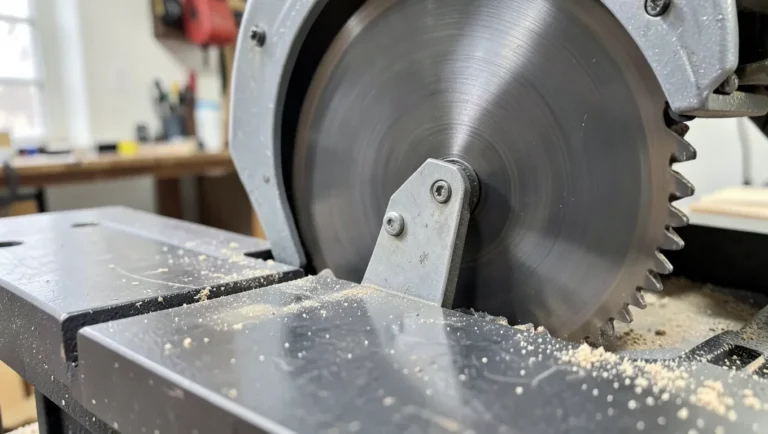
The blade guard is a safety feature. It covers the blade when you’re not cutting. It’s important to always use it.
There’s also usually a riving knife. This is a thin piece of metal behind the blade. It helps prevent the wood from pinching the blade.
This can kick the wood back at you. Safety first!
The fence is a guide that runs parallel to the blade. You set it to a certain width. Then you slide the wood against it.
This makes sure your cuts are straight and the same width. A good fence is really important for accurate work.
The miter gauge is another guide. It sits in a slot on the table. You can set it at an angle.
This lets you cut wood at an angle. It’s good for making frames or other angled pieces.
The depth of cut is how thick of a piece of wood the saw can cut through. Check this if you plan to cut thicker lumber. Most Ryobi saws are good for 2x4s and thinner.
Understanding Table Saw Specs
When you look at Ryobi table saws, you’ll see numbers. The blade size is usually 10 inches. This is standard for many table saws.
The amperage tells you about the motor’s power. A higher amp number usually means more power.
The depth of cut is often stated. For example, a saw might say “2 1/4 inch depth of cut at 90 degrees.” This means it can cut wood up to 2 1/4 inches thick straight up and down. At a 45-degree angle, the depth of cut will be less, maybe around 1 3/4 inches.
The rip capacity is how wide a piece of wood you can cut. This is measured from the blade to the end of the fence. A bigger rip capacity means you can cut wider boards.
For many projects, a 24-inch rip capacity is plenty.
These numbers help you match the saw to your projects. If you plan to rip down large plywood sheets, you’ll need a larger saw. But for smaller projects, a compact Ryobi is often perfect.
Ryobi Table Saw: Key Specs Explained
Blade Size: Usually 10 inches. Standard size.
Amperage: Shows motor strength. Higher is more powerful.
Depth of Cut: How thick wood it can cut. Check 90° and 45° specs.
Rip Capacity: How wide a board you can cut. Measured to the fence.
Weight: Important for portability. Heavier means more stable, but harder to move.
Comparing Ryobi Table Saw Models
Ryobi often has a few popular models. One might be their “15 Amp 10-Inch Portable Jobsite Table Saw.” This is a common type. It’s built for moving.
It usually works well with their folding stands.
They might also have a “13 Amp 10-Inch Table Saw.” This one could be a bit simpler. It might not be as focused on jobsite portability. But it could still be used with a stand.
The key is to check the model number. Then look up its exact specs.
Sometimes, the biggest difference is the motor. A 15-amp motor is more powerful than a 13-amp one. This means it can handle tough jobs better.
It will be less likely to bog down.
Another thing to check is the build quality. Ryobi uses plastic parts on some of their tools. This keeps them light.
But sometimes metal parts are more durable. For a table saw, you want it to feel solid.
Read reviews. See what other people say about a specific model. Are they happy with the power?
Is the fence accurate? How easy is it to use? This real-world feedback is very helpful.
Which Ryobi Saw is Right for You?
To choose the right Ryobi table saw, think about your projects. Do you mostly cut thin wood for crafts? Or do you cut thicker lumber for furniture?
If you cut thicker wood, aim for a higher amp motor.
How often will you move the saw? If you move it a lot, a lighter saw with a good stand is key. If it stays in one place, you might not need the most portable option.
What is your budget? Ryobi is known for being affordable. But even within Ryobi, prices can vary.
Decide how much you want to spend. Then find the best saw in that range.
Don’t forget the stand! Make sure the saw you choose can work with a stand. Or that it comes with one.
A saw without a stand can be a pain to use. It’s worth investing in both if you can.
Ryobi Saw Model Quick Guide
For Light Projects & Portability: Look for compact models with lower amp motors. They are easy to move.
For Medium Projects & Power: Choose models with higher amp motors (15+ amps). These handle thicker wood better.
For Ease of Use & Storage: Always pair with a compatible Ryobi rolling or folding stand. This is a game-changer.
The Critical Role of the Stand
I’ve said it before, but it bears repeating: the stand is vital. Imagine trying to use a kitchen knife to chop wood. It’s the wrong tool.
A table saw on the floor is almost as awkward. It’s hard to see. It’s hard to control.
And it’s definitely not safe.
A good stand gives you proper working height. This means you don’t have to hunch over. Your posture will thank you.
It also provides a stable base. This is where accuracy comes from. A wobbling saw makes for crooked cuts.
A stable saw makes for straight cuts.
Think about dust collection too. Many stands have a place to connect a shop vac. This helps suck up sawdust as you cut.
This keeps your workspace cleaner. It also makes it easier to see your cut line.
When I finally got a good rolling stand for my Ryobi saw, it felt like I leveled up as a woodworker. Suddenly, I could do more. I could do it better.
And I didn’t dread setting up my tools.
Stand Benefits Breakdown
Ergonomics: Proper height reduces back strain. Work longer and more comfortably.
Stability: A solid base prevents wobbling. This leads to precise, safe cuts.
Portability: Rolling stands make moving the saw easy. Ideal for tight spaces.
Storage: Folding stands save space. Keep your workshop tidy.
Dust Control: Some stands help with vacuum attachment for cleaner air.
Setting Up Your Ryobi Table Saw and Stand
Most Ryobi table saws and stands are designed for easy assembly. You’ll usually get an instruction manual. Read it carefully before you start.
For the stand, it might involve attaching legs or wheels. For the saw, it might be about bolting it onto the stand.
Take your time. Make sure all the bolts are tight. A loose bolt can cause big problems.
Use the right tools. Often, basic tools like a wrench or screwdriver are all you need.
Once the saw is on the stand, test it. Gently push the wood through. Make sure the fence moves smoothly.
Check that the blade guard is working properly. You don’t want any surprises when you’re cutting for real.
Calibration is also important. This means making sure the fence is perfectly parallel to the blade. And that the blade is perfectly perpendicular (90 degrees) to the table.
Most saws have adjustment screws for this. It’s worth taking the time to get this right. It makes a big difference in the accuracy of your cuts.
Safety First When Using Table Saws
Table saws are powerful tools. Safety is the number one priority. Always wear safety glasses.
Even for small cuts. Sawdust can fly up. It can hurt your eyes.
Use hearing protection. The sound of a table saw can be loud. It can damage your hearing over time.
Earplugs or earmuffs work well.
Never reach over the blade. Keep your hands away from the spinning blade. Use a push stick.
This is a small piece of wood or plastic. It helps you push the wood through the saw. It keeps your fingers safe.
Always use the blade guard and riving knife. These are there for a reason. They help prevent kickback.
Kickback is when the wood is thrown back at you. It’s very dangerous.
Understand how your saw works. Know where the power switch is. Be able to turn it off quickly if needed.
Make sure your workspace is clear. Don’t have clutter around the saw. This can trip you or get caught in the blade.
If you are unsure about anything, stop. Look up a video. Ask someone who knows.
It’s better to be safe than sorry. Safety is not something to rush.
Table Saw Safety Checklist
Eye Protection: Always wear safety glasses.
Hearing Protection: Use earplugs or earmuffs.
Push Sticks: Use them for all cuts, especially short pieces.
Blade Guard & Riving Knife: Never remove them unless absolutely necessary for a specific task, and replace immediately.
Clear Workspace: Keep the area around the saw free of clutter.
Know Your Saw: Understand its controls and emergency shut-off.
No Distractions: Focus fully on the task at hand.
Real-World Usage: What to Expect
Using a Ryobi table saw with a stand is great for many tasks. You can rip boards to size. For example, if you buy a wider board and need a narrower one.
You can cut dadoes. These are grooves in wood. They are useful for shelves or drawers.
You can also cut dados with a special blade. Many Ryobi saws can handle this. You can cut bevels.
This means cutting the edge of the wood at an angle. This is needed for many projects. Like building boxes or frames.
The portability of Ryobi saws is a big plus. You can set it up in your driveway on a nice day. Or move it from your garage to your patio.
If you live in an apartment or have a small home, this is a huge advantage. You can use the saw when you need it. Then put it away when you’re done.
However, these saws have limits. They are not meant for heavy-duty construction. You can’t cut thick hardwoods all day.
The motors can overheat. The blades might not be the best quality out of the box. For very fine woodworking, you might want to upgrade the blade.
But for the average DIYer, a Ryobi table saw with a stand is a workhorse. It’s reliable. It’s easy to use.
And it makes projects much more manageable.
Typical Projects for a Ryobi Table Saw
Making Shelves: Cut wood to the exact size needed.
Building Cabinets: Accurate cuts for cabinet boxes and doors.
DIY Furniture: Create custom pieces for your home.
Repairs: Cut replacement parts for furniture or other items.
Crafts: Precise cuts for hobby projects.
When a Ryobi Table Saw with Stand is a Good Fit
This setup is perfect for homeowners. People who do weekend projects. Hobbyists who have a passion for making things.
If you have a small garage or workshop, it’s a great option. The ability to fold and roll the saw is a lifesaver.
It’s also a good choice if you are new to woodworking. Ryobi tools are user-friendly. They won’t overwhelm you.
You can learn the basics of table saw operation. And build your skills.
If you need to cut materials like plywood, MDF, or dimensional lumber (like 2x4s), this saw will handle it. For lighter woods and thinner cuts, it’s excellent.
Consider this setup if you value:
- Affordability: Ryobi offers good value for the money.
- Portability: Easy to move around your workspace or home.
- Space-Saving: Folding stands are perfect for small areas.
- Ease of Use: Simple controls and straightforward operation.
If you’re looking for a professional-grade saw for daily, heavy-duty use, you might need to look at more robust, expensive brands. But for most home users, Ryobi hits a sweet spot.
When You Might Need Something Else
If your projects involve cutting very hard or very thick woods regularly, you might find a Ryobi saw struggles. Woods like oak or maple, if they are very thick, can bog down a smaller motor. You might need a saw with more power.
If you plan to make thousands of cuts, a more heavy-duty saw might be more durable. Ryobi tools are built for home use, not industrial production. The motors and components might wear out faster with constant, heavy use.
Also, if you need extreme precision for fine furniture making, you might need a saw with a more robust fence system. Some higher-end saws have fences that lock more securely. They offer micro-adjustments for perfect accuracy. If yours doesn’t, a Ryobi table saw fence upgrade is often far cheaper than buying a new saw.
Finally, if you have a large, dedicated workshop and don’t need portability, you might consider a larger contractor saw or a hybrid saw. These offer more power, a larger table surface, and often more precise features. But they also cost significantly more and take up much more space.
Consider Other Options If:
Heavy Duty Cutting: You regularly cut thick hardwoods or very large lumber.
Production Work: You make items for sale in large quantities.
Fine Woodworking: You need the highest level of precision and advanced features.
Dedicated Space: You have ample room and don’t need to move your saw.
Maintenance and Care
Keeping your Ryobi table saw and stand in good shape is important. After each use, clean off sawdust. A brush or a shop vac works well.
This keeps the moving parts free of gunk.
Check the blade regularly. If it looks dull or dirty, it won’t cut well. A dull blade can also be more dangerous.
It makes you push harder. It can lead to kickback.
The fence needs to stay clean and smooth. Make sure it glides easily. Lubricate it if needed.
Check the alignment of the fence and blade often. Especially after moving the saw.
For the stand, check the wheels. Make sure they spin freely. If it’s a folding stand, check the hinges.
Keep them free of dust and debris.
Store your saw and stand properly. If it’s a folding stand, fold it up. Keep it in a dry place.
Avoid extreme temperatures if possible. This helps all tools last longer.
A little bit of care goes a long way. It ensures your tools work well for years. And they stay safe to use.
Frequently Asked Questions About Ryobi Table Saws and Stands
Can I use a Ryobi table saw without a stand?
Yes, you can. However, it’s highly recommended to use a stand. A stand provides a stable work surface and brings the saw to a comfortable working height.
Using it on the floor or on an unstable surface can be awkward, less accurate, and much less safe.
Are Ryobi table saws good for beginners?
Yes, Ryobi table saws are generally considered good for beginners. They are relatively affordable, user-friendly, and offer essential features without being overly complicated. The portability and ease of use are also great for those learning the ropes.
How do I ensure my Ryobi table saw fence is aligned?
You can check fence alignment by measuring the distance from the blade to the fence at the front and back of the blade. For a 90-degree cut, these measurements should be identical. Most Ryobi saws have adjustment screws to fine-tune the fence position.
Always consult your saw’s manual for specific instructions.
What kind of blades work with Ryobi table saws?
Most Ryobi table saws use standard 10-inch blades. You can find various types of blades for different tasks, such as general purpose, ripping, crosscutting, or fine finishing. Always ensure the blade’s arbor size matches your saw’s spindle.
How often should I replace the blade on my Ryobi table saw?
Blade replacement depends on usage. If you notice cuts becoming rough, requiring more force, or if the blade is visibly damaged, it’s time for a new one. For general DIY use, a blade might last many months or even a year or two before needing replacement.
For heavier use, it will be sooner.
Are Ryobi table saw stands universal?
No, Ryobi table saw stands are generally designed to fit specific Ryobi table saw models. While some stands might be compatible with a couple of similar saws, it’s crucial to check the compatibility list provided by Ryobi for both the saw and the stand to ensure a proper fit.
Conclusion
Choosing the right Ryobi table saw with a stand is about matching the tool to your needs. For many DIYers and hobbyists, this combination offers fantastic value. It brings together usability, affordability, and good performance.
The stand is not just an add-on; it’s essential for safety and comfort.
You get a capable tool for home projects. It’s easy to set up, use, and store. With a little care, your Ryobi saw and stand will serve you well for many projects to come.
Making smart choices now means better results later.
Sponsored / affiliate links. As an Amazon Associate I earn from qualifying purchases. I may earn additional commission from eligible campaigns.