Rubberwood vs Solid Wood: Real Specs vs Oak, Maple, Pine (2026)
Rubberwood is solid wood. It is real hardwood from Hevea brasiliensis, rated 960 lbf on the Janka scale, which is about 21% softer than red oak. The trap is the word “solid” on a furniture tag, which can mean full boards, glued-up panels or a solid frame wrapped in veneer. This guide gives you a label decoder, a specs table against oak, maple and pine, and the real limits of rubberwood.
Is Rubberwood Solid Wood? How to Read the Label
Best Finished Wood Care Pick
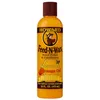 |
Howard Feed-N-Wax Wood Polish and Conditioner, 16 oz: $10.98 Whether you land on rubberwood, oak or maple, the finish on an indoor piece does most of the daily work. A wax and conditioning polish is the low-effort upkeep step for any finished solid wood surface covered in this guide.
|
As an Amazon Associate we earn from qualifying purchases.
The question behind most searches for rubberwood vs solid wood is a category mix-up. Solid wood is not a species. It is a construction term meaning the part is made of wood boards rather than wood fibers, chips or a thin slice glued to something else. Rubberwood qualifies, the same way oak, maple and pine do. The real contrast to draw is between solid wood of any species and engineered materials.
Where shoppers get burned is the tag wording. The decoder below reflects how manufacturers commonly word labels. It is a reading guide, not a legal definition, and retailers differ, so ask for the full material breakdown when it matters.
| Label wording | What it usually means | What to check |
|---|---|---|
| Solid rubberwood | Boards or glued-up solid panels throughout | Whether the top is a glued-up panel (normal) and what the drawer bottoms and back panel are made of |
| Rubberwood solids and veneers | Solid rubberwood legs and frame, veneered flat panels | What sits under the veneer; a manufactured core cannot be sanded back much |
| Finger-jointed or edge-glued | Short solid pieces glued end to end and side to side into one board | Joint quality and finish; it is still all wood |
| Rubberwood veneer or finish | A thin wood slice or a stain color over another material | Whether any part of it is solid; often none |
| Engineered wood, MDF, particleboard | Wood fibers or particles bonded with resin | It is not solid wood in any form |
One detail that surprises people: a glue line across a rubberwood tabletop is normal, not a defect. Manufacturer guides explain that rubberwood trees are generally not wide enough to yield a single broad slab, so wide panels are made by gluing narrower solid boards together. That is still solid wood. A top that is solid wood but badly glued up is a workmanship issue, not a species issue.
Rubberwood vs Oak, Maple and Pine: The Real Numbers
Most comparison pages stay vague and say rubberwood is a bit softer than oak. Here are the actual published figures, taken from the Wood Database species pages for each wood.
| Wood | Janka hardness (lbf) | Dried weight (lb/ft3) | Bending strength, MOR (psi) | Tangential shrinkage | Rot resistance |
|---|---|---|---|---|---|
| Rubberwood | 960 | 37 | 10,420 | 5.1% | Perishable |
| Red oak | 1,220 | 43.8 | 14,380 | 8.6% | Non-durable to perishable |
| Hard maple | 1,450 | 44.0 | 15,800 | 9.9% | Non-durable to perishable |
| Eastern white pine | 380 | 25 | 8,600 | Not compared here | Not compared here |
Data check: Wood Database figures for Janka hardness, weight, modulus of rupture and shrinkage. Sources: rubberwood, red oak, hard maple and eastern white pine.
Run the arithmetic and the picture is more useful than “a bit softer.” Rubberwood is about 21% softer than red oak (960 vs 1,220 lbf) and about 34% softer than hard maple (960 vs 1,450 lbf). Against pine it is roughly 2.5 times harder (960 vs 380 lbf). In bending, rubberwood reaches about 72% of red oak’s modulus of rupture and about 66% of hard maple’s. It is a mid-weight hardwood, not a weak one.
Three myths the numbers correct
- “Rubberwood is as hard as cherry or oak.” Not quite. At 960 lbf it sits clearly below red oak’s 1,220. Some older pages, including earlier versions of this one, quoted a slightly higher figure; the Wood Database value is 960.
- “Rubberwood rots, oak does not.” Both are weak here. The Wood Database rates rubberwood perishable and red oak non-durable to perishable. Neither belongs outdoors unprotected.
- “Rubberwood always warps.” Its tangential shrinkage (5.1%) is well under red oak (8.6%) and hard maple (9.9%), which points to less seasonal movement once dry. The Wood Database does note it tends to warp and twist during drying, so the quality of the kiln-drying at the factory matters more than the species.
Where Rubberwood Holds Up and Where It Does Not
These are judgment calls drawn from the numbers above, not test results. Hardness decides how a surface handles dents, and rubberwood’s 960 lbf puts it in the middle.
- Chairs, bed frames, bookcases and side tables: a good fit. Bending strength is adequate for these loads when the joinery is sound.
- Dining tabletops and kitchen islands: workable, but it will dent more readily than maple, which is about 51% harder (1,450 vs 960 lbf). If you want the least denting, pay for maple or oak.
- Painted furniture and cabinet doors: a strong use, since the Wood Database says it finishes, stains and glues well. See our guide to staining rubberwood.
- Anything that sees water: avoid unless sealed. Our pages on whether rubberwood is waterproof and how to seal it cover the finish side.
- Countertops: possible with the right finish, but read the rubberwood countertop pros and cons first.
Cost, Value and What You Are Actually Paying For
Rubberwood is generally priced below oak and maple. It is a plantation wood harvested after the tree finishes its latex-producing years, so the supply comes as a by-product of the rubber industry rather than from old-growth hardwood forests. That is why it tends to cost less without being a lesser category of material. The sustainability picture has one real catch, covered on its own page.
Because exact prices swing by retailer and region, compare construction rather than species when you shop. Ask four things: is the top solid or veneered, what are the drawer bottoms and back panel made of, are the joints dovetail, dowel or mortise-and-tenon rather than staples, and how thick is the top. A well-built rubberwood table beats a poorly built oak one, and a veneered oak look-alike on a manufactured core beats neither.
Latex Allergy and Finishing Notes
The Wood Database notes that people with natural latex allergies may react to rubberwood. If anyone in your home has a latex allergy, treat that as a real consideration, speak with a doctor before buying large amounts of it, and read our page on rubberwood allergy and dust safety. Standard dust precautions apply when sanding, as with any hardwood.
For finishing, the same source says rubberwood stains and glues well, but it also describes it as susceptible to fungal staining, which is another reason to keep it dry. A film finish plus regular wax upkeep is a sensible plan for indoor pieces.
Which One Should You Choose?
- Choose rubberwood for budget-conscious indoor furniture, painted pieces, chairs, beds and cabinetry, as long as the label confirms solid construction.
- Choose oak or maple for dining tabletops, kitchen islands and anything that will take daily abuse, where the extra hardness shows up as fewer dents.
- Choose pine only if price is everything. At 380 lbf it dents easily; see rubberwood vs pine for the full comparison.
- Comparing similar-looking woods? Read Hevea wood vs birch and what parawood is, since parawood is another name for the same tree. For a wider overview, see the types of wood guide.
Frequently Asked Questions
Is rubberwood solid wood?
Yes. Rubberwood is real hardwood from the Hevea brasiliensis tree, sawn into boards like oak or maple. What varies is the product: a tabletop may be glued up from narrower solid boards, and some pieces pair solid rubberwood parts with veneered panels. Read the full material line on the tag, not just the word solid.
Is rubberwood better than engineered wood?
For a surface you will sand, dent or repair, usually yes, because solid rubberwood can be refinished and engineered panels cannot be sanded deeply. Engineered wood such as MDF or veneered particleboard is stable and cheap, but it swells when wet and a deep gouge cannot be sanded out.
Is rubberwood as strong as oak?
No. The Wood Database lists rubberwood at 960 lbf Janka and 10,420 psi modulus of rupture, against 1,220 lbf and 14,380 psi for red oak. That makes it about 21% softer and about 28% lower in bending strength, still plenty for chairs, tables and bed frames indoors.
Can you use rubberwood outdoors?
Not unprotected. The Wood Database calls rubberwood perishable with very little natural decay resistance, and it is prone to fungal staining and insects. Red oak and hard maple are also rated non-durable to perishable, so none of these three is an outdoor wood without a sealed finish and shelter from standing water.
How long does rubberwood furniture last?
There is no reliable published lifespan, so be wary of any exact number. Indoors, in a stable room, with a sound finish and decent joinery, solid hardwood furniture can last for decades. Moisture, direct heat and loose glue joints end rubberwood pieces far sooner than the species itself does.
Bottom Line
Rubberwood is genuine solid hardwood with mid-range numbers: softer and lighter than oak and maple, far harder than pine, and no better outdoors than the oaks it is compared with. The word to scrutinize is not rubberwood but solid. Read the material line for veneers and manufactured cores, then pick the species by how much denting the surface will take.
Sponsored / affiliate links. As an Amazon Associate I earn from qualifying purchases. I may earn additional commission from eligible campaigns.