Spiral vs Straight Planer: Pros and Cons Guide
Choosing the right planer can feel tricky when you’re new to woodworking. You might wonder about the Spiral vs Straight Planer Pros and Cons Guide. This decision affects how smooth your wood turns out.
But don’t worry, it’s not as complicated as it seems. We will walk through everything step-by-step so you can pick the best planer for your projects. We’ll break down the differences simply.
Understanding Planer Types: Spiral vs Straight
Planers are essential tools for woodworkers. They flatten and smooth wood surfaces. This makes wood easier to work with and gives projects a professional finish.
The main types differ in how their cutting blades are arranged. This difference impacts performance, noise, and the type of finish you get.
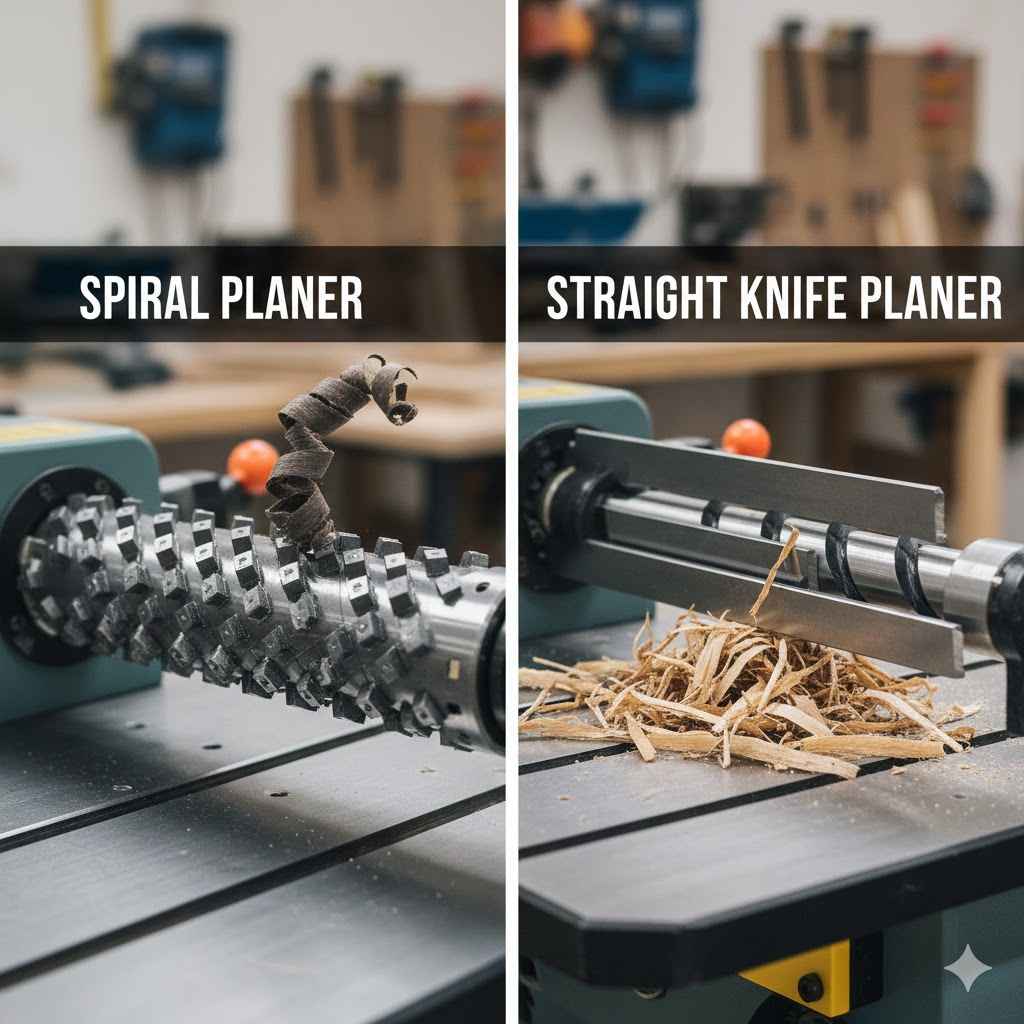
A straight knife planer uses long, straight blades. These spin around a cutter head. They take a shaving off the wood in a clean cut.
This is like a sharp knife slicing through butter. It’s a classic design many woodworkers are familiar with. These are often found in older or simpler planer models.
They are good for general woodworking tasks.
A spiral cutterhead planer uses many small, staggered inserts. These inserts are like tiny knives. They are arranged in a spiral pattern around a cylinder.
As the cylinder spins, each insert takes a small bite of wood. This creates a shearing action. It’s like cutting with scissors.
This design offers a smoother cut and can handle tougher woods.
How Straight Knife Planers Work
Straight knife planers use a set of two or three long, straight blades mounted on a cutter head. This cutter head rotates at high speed. When wood passes under the cutter head, the blades slice off a thin layer of material.
The depth of cut is adjustable. This is how the planer removes imperfections and flattens the wood.
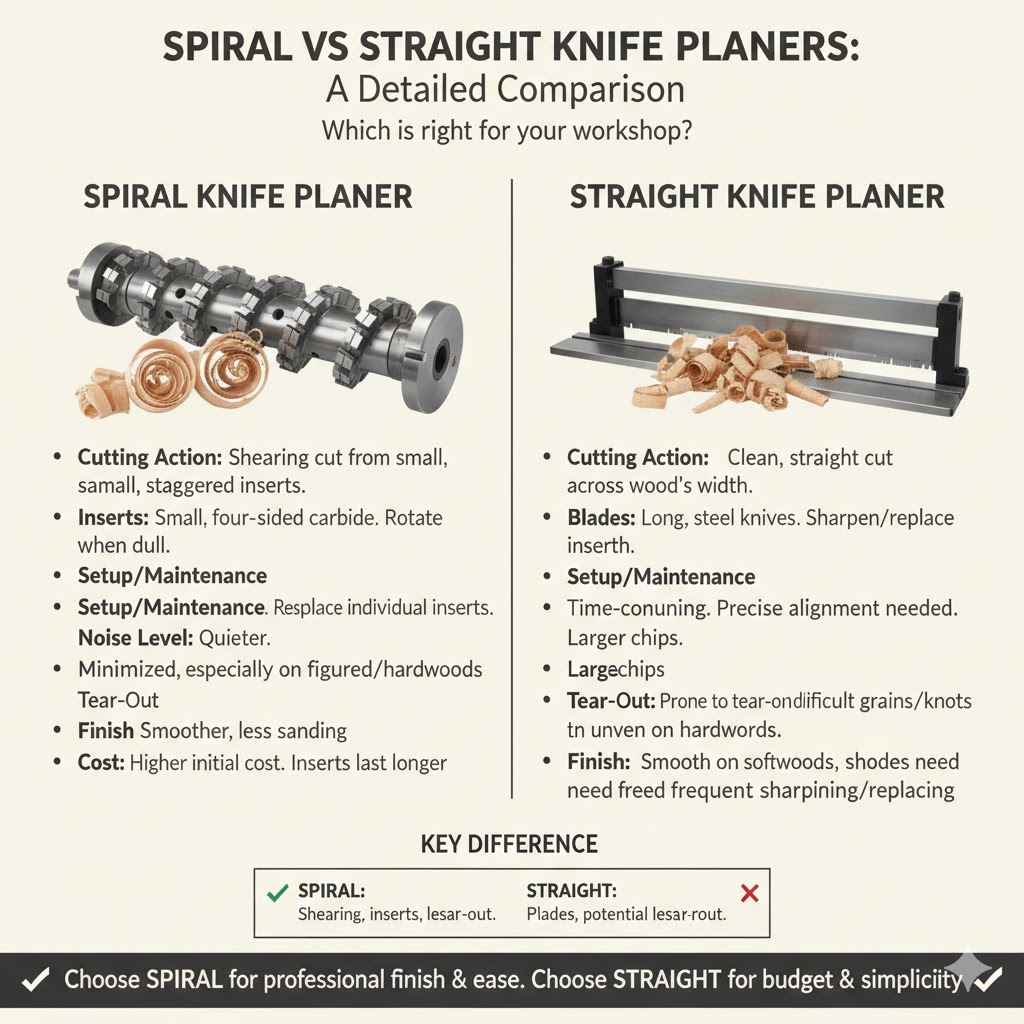
- Cutting Action: The sharp edges of the straight knives make a clean cut across the wood’s surface. This removes material in shavings.
- Setup: Blades need to be set very precisely. They must be perfectly aligned with each other and the bed. This ensures an even cut.
- Maintenance: Blades can become dull over time. They need to be sharpened or replaced. This can be a bit of a fiddly process for some.
- Noise Level: Straight knife planers can be quite noisy. The impact of the blades hitting the wood creates significant sound.
The precision required for setting straight blades is key. If they aren’t aligned correctly, you can get uneven surfaces. This might even cause ridges or scallops on the wood.
Many woodworkers learn to set them carefully to get good results. It’s a skill that comes with practice and patience. The sound of a straight knife planer is often very loud.
This means using hearing protection is a must.
Pros of Straight Knife Planers
- Cost: Generally, straight knife planers are less expensive to buy initially. This makes them a good entry-level option for hobbyists.
- Simplicity: The design is straightforward. There are fewer parts to worry about. This can make them easier to understand and operate for beginners.
- Blade Availability: Replacement blades for straight knife planers are widely available and relatively cheap.
- Smooth Finish on Softwoods: When sharp and properly set, they can provide a very smooth finish, especially on softer woods.
The lower initial cost is a big draw for many. Woodworkers starting out might not have a large budget. Straight knife planers fit this need.
Their simple operation means less time spent figuring out complex controls. This lets users focus on their woodworking projects. Finding replacement blades is also easy.
They are common in woodworking supply stores. For jobs involving softer woods like pine or poplar, a well-maintained straight knife planer can produce beautiful results.
Cons of Straight Knife Planers
- Blade Sharpening/Replacement: Sharpening or replacing straight blades can be time-consuming and requires precision.
- Noise and Dust: They tend to be louder than spiral planers and can produce larger chips.
- Tearing on Hardwoods and Knots: They are more prone to tear-out and chipping, especially on figured woods, hardwoods, and areas with knots.
- Vibration: Can produce more vibration, leading to a less refined finish on some materials.
The process of sharpening straight blades needs accuracy. If the blades aren’t perfectly balanced, the planer will vibrate more. This can ruin the finish.
Replacing them also means buying new blades, which adds to the running cost over time. The loud noise is a significant drawback for many home workshops. The risk of tear-out on hardwoods means you might spend more time sanding.
This negates some of the planer’s efficiency. Dealing with knots can be particularly frustrating as the blades can chip around them.
Exploring Spiral Cutterhead Planers
Spiral cutterhead planers are a more modern approach to planing wood. They feature a cutter head covered in small, sharp inserts arranged in a helix. This design offers several advantages over traditional straight knives.
It cuts wood more efficiently and can produce a superior finish.
The spiral arrangement of the inserts allows for a shearing cut. Each insert takes a small chip as it rotates. This is different from the scraping or slicing action of straight knives.
This shearing action is gentler on the wood. It reduces the likelihood of tear-out, especially in difficult grain patterns or hardwoods. The smaller chips produced are also easier to manage and remove.
A key feature of spiral cutterheads is that the inserts are usually square and have four cutting edges. When one edge becomes dull, you can rotate the insert to a new edge. This makes maintenance simpler than resharpening or replacing long, straight blades.
This means less downtime and a more consistent cutting performance over time.
How Spiral Cutterhead Planers Work
A spiral cutterhead has a cylinder with multiple slots. Into these slots, small, carbide inserts are placed in a spiral pattern. Each insert is typically square and has four sharp edges.
As the cutterhead spins, each insert engages the wood. It shaves off a small amount of material with a slicing action.
- Shearing Action: The spiral arrangement creates a continuous shearing cut. This is much more efficient and gentler on the wood fibers.
- Insert Design: The carbide inserts are very hard and durable. They can last much longer than steel blades.
- Rotational Inserts: When an edge of an insert dulls, you can simply rotate it to a fresh, sharp edge. This is a major convenience.
- Lower Noise and Vibration: The shearing action results in less noise and vibration compared to straight knife planers.
The carbide inserts are a significant advantage. They are much harder than steel. This means they stay sharp for a very long time.
When an edge does get dull, it’s a simple matter of unscrewing the insert and rotating it. This saves a lot of time and effort. The continuous cut also means less strain on the motor and the wood.
This leads to a smoother operation overall. Many woodworkers find that the reduced noise is a welcome change in their workshop environment.
Pros of Spiral Cutterhead Planers
- Superior Finish Quality: They produce an exceptionally smooth finish with minimal tear-out, even on difficult woods.
- Reduced Noise and Vibration: Significantly quieter and smoother operation compared to straight knife planers.
- Longer Lasting Inserts: Carbide inserts last much longer than steel blades and are easy to replace or rotate.
- Handles Difficult Woods Better: Excellent for figured woods, hardwoods, and knotty lumber due to the shearing cut.
- Smaller Chip Production: Generates smaller, finer chips which are easier to collect and manage.
The finish quality is often the biggest selling point. Many woodworkers report spending less time sanding after using a spiral planer. This is because the cut is so clean.
The reduced noise is a significant benefit for people working in residential areas or shared workshops. The longevity of the carbide inserts means fewer
Cons of Spiral Cutterhead Planers
- Higher Initial Cost: Spiral planer models are typically more expensive than straight knife planers.
- Cost of Replacement Inserts: While durable, individual carbide inserts are more expensive to replace than straight blades.
- Shearing vs. True Slicing: Some purists argue that the shearing action is not as clean as a perfectly set straight blade for certain tasks.
- Complexity of Cutterhead: The cutterhead is more complex, though maintenance is usually simpler overall.
The upfront investment is a barrier for some. However, many users find that the long-term benefits outweigh the initial cost. The cost per insert can be higher, but the lifespan of these inserts is considerably longer.
This often evens out or even reduces the total cost of ownership over many years. For most woodworking applications, the finish quality is excellent. The slight difference in cutting action is rarely noticeable to the end user.
The cutterhead’s complexity is mainly in its construction, not its daily operation.
Key Differences and When to Choose Which
Understanding the core differences between spiral and straight knife planers is key to making the right choice for your workshop. The main distinctions lie in their cutting mechanisms, which lead to variations in performance, cost, and maintenance.
A straight knife planer uses long, sharp blades that shave wood. This method is effective but can be unforgiving with certain wood types. A spiral planer uses many small, carbide inserts arranged in a spiral pattern.
These inserts shear the wood, resulting in a smoother cut and less tear-out.
The decision often comes down to your budget, the types of wood you work with, and your tolerance for noise and maintenance. If you are on a tight budget and mostly work with softwoods, a straight knife planer might suffice. If you work with a variety of woods, including hardwoods and figured lumber, and value a superior finish with less sanding, a spiral planer is likely the better investment.
Comparing Performance and Finish Quality
The finish quality is a major differentiator. Straight knife planers, when perfectly set and sharp, can produce a good finish. However, they are prone to tear-out, especially on woods with challenging grain patterns or knots.
This means more time spent sanding to achieve a perfectly smooth surface.
Spiral cutterhead planers excel in producing a superior finish with significantly less tear-out. The shearing action of the numerous small a flawless finish is paramount, a spiral planer is often preferred.
| Feature | Straight Knife Planer | Spiral Cutterhead Planer |
|---|---|---|
| Finish Quality | Good, but prone to tear-out | Excellent, minimal tear-out |
| Handling Hardwoods | Can be challenging, risk of tear-out | Excellent, handles well |
| Noise Level | High | Lower |
| Maintenance | Blade sharpening/replacement | Insert rotation/replacement |
This table highlights the key performance differences. A straight knife planer requires more effort to achieve a high-quality finish on difficult woods. The spiral planer offers a more forgiving and efficient path to a smooth surface.
The noise difference is also substantial, impacting the workshop experience. Maintenance, while different in approach, is generally simpler and less frequent with spiral heads in the long run, especially considering the insert lifespan.
Budget Considerations for Planers
Budget is a critical factor for most woodworkers. Straight knife planers are typically more affordable upfront. This makes them an accessible entry point for those just starting out or with limited funds.
A new, good-quality straight knife planer can range from a few hundred dollars to over a thousand for larger benchtop models. Larger floor standing models can cost several thousand dollars. The cost of replacement blades is relatively low, usually under $50 for a set.
Spiral cutterhead planers, on the other hand, represent a larger initial investment. Small benchtop models with spiral heads can start around $500 and go up. Larger cabinet or floor-standing models with spiral heads can easily cost $2,000 to $5,000 or more.
While the initial purchase price is higher, the cost of maintaining the cutterhead over time can be lower.
Carbide from $5 to $20 per insert. However, each insert has four cutting edges and lasts much longer than steel blades. The total cost of ownership over many years can often favor the spiral planer, especially for frequent users.
Maintenance and Longevity
Maintenance needs differ significantly between the two types. Straight knife planers require regular sharpening of the blades. This can be done with a sharpening jig or by sending the blades out to be professionally sharpened.
Sharpening blades requires precision to ensure they are perfectly flat and parallel. Improperly sharpened blades can lead to uneven planing and increased vibration.
Spiral cutterhead planers simplify maintenance. The carbide inserts are extremely hard and retain their sharpness for a long time. When an edge dulls, the insert can be rotated to a new sharp edge.
This is a simple process that takes minutes. Once all four edges are dulled, the insert is replaced. This makes the overall maintenance process much less time-consuming and less demanding in terms of skill compared to sharpening straight blades.
The longevity of spiral cutterheads is also a key benefit. Carbide inserts are much more durable than steel blades. They are resistant to chipping and wear.
This means a spiral cutterhead can last for many years with proper care. The cutterhead itself is also robust. While initial cost is higher, the extended lifespan and reduced maintenance can make spiral planers a more economical choice in the long run for serious woodworkers.
Examples of Planer Use
Consider a hobbyist woodworker who primarily builds simple furniture from pine. A straight knife planer would likely be a good fit. It’s budget-friendly, and pine is a soft wood that doesn’t typically cause much tear-out.
The noise might be managed with ear protection and careful workshop hours.
Now, imagine a professional furniture maker who works with exotic hardwoods like mahogany, walnut, and figured maple. For this user, a spiral cutterhead planer is almost essential. The ability to plane these difficult woods smoothly without extensive sanding saves valuable time and labor costs.
The consistent finish quality is also critical for high-end custom furniture.
Another scenario is a beginner who wants to get into cabinetry. They might start with a smaller benchtop straight knife planer. As their skills grow and they tackle more complex projects, they might upgrade to a spiral model for better results and efficiency.
The learning curve for setting straight blades can be steeper than using a spiral head.
Choosing the Right Planer for Your Needs
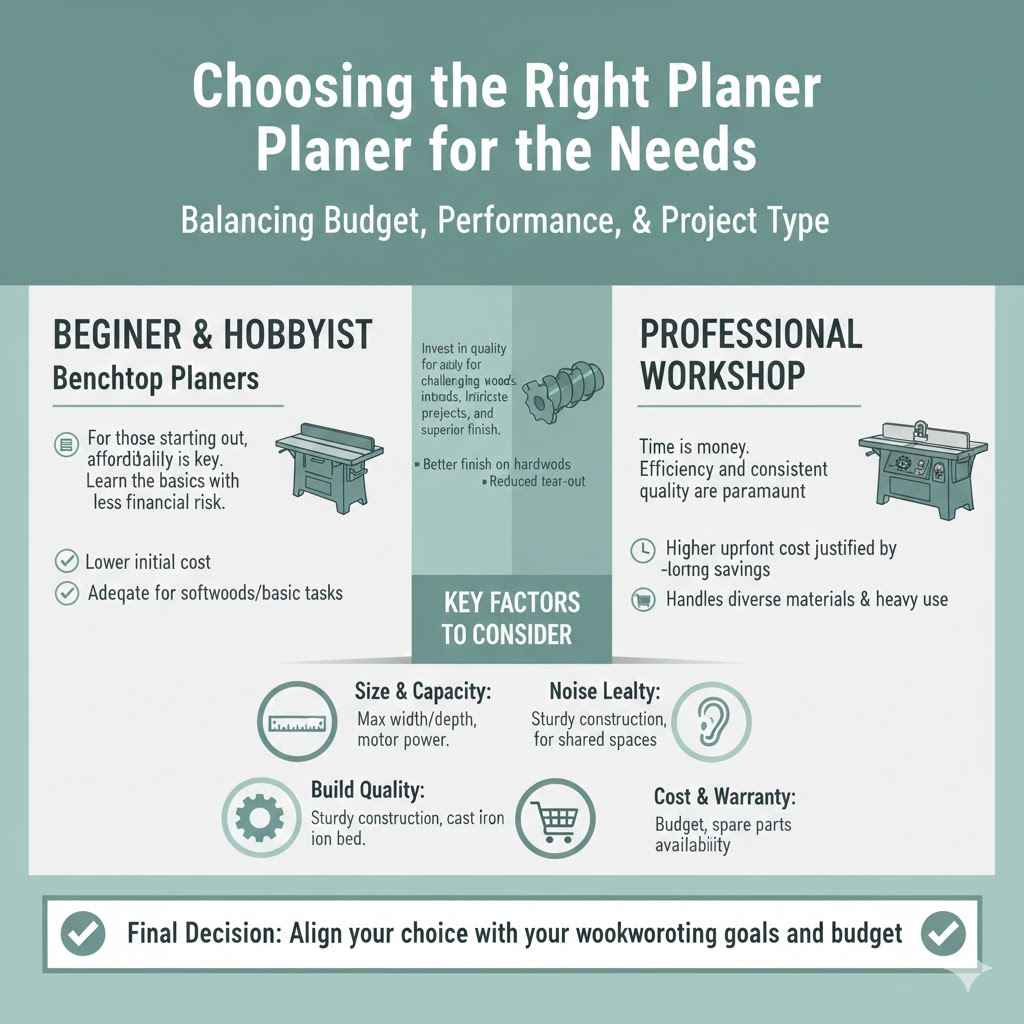
Deciding between a spiral and a straight knife planer comes down to a few core questions. Your answers will guide you to the best tool for your specific situation. Think about what you plan to build and what your workshop environment is like.
If you are just starting woodworking and your budget is limited, a straight knife planer can be a great way to get your feet wet. They are generally more affordable and can handle basic tasks well. You will learn the fundamentals of planing with this type of tool.
However, if you are working with harder woods, figured lumber, or you want to minimize sanding time, a spiral cutterhead planer is a worthwhile investment. The superior finish quality and reduced tear-out save time and effort, making your woodworking projects more enjoyable and efficient. It’s about balancing cost with performance and desired outcome.
Beginner Woodworkers and Planer Choices
For those new to woodworking, the Spiral vs Straight Planer Pros and Cons Guide can seem a bit overwhelming. A common starting point is a benchtop planer. These are smaller, more affordable, and easier to set up.
Many entry-level benchtop planers come with straight knives.
The main advantage of a straight knife planer for a beginner is its lower cost. It allows you to learn how to plane wood without a huge financial commitment. You will learn about blade setting, sharpening, and the impact of grain direction.
These are fundamental skills for any woodworker.
However, some modern benchtop planers now offer spiral cutterheads. These provide a better finish from the start. They are more forgiving with different wood types.
While they cost more initially, they can save time on sanding and frustration from tear-out. The choice depends on your budget and how seriously you plan to pursue woodworking.
A good compromise for a beginner might be a straight knife planer that is known for its good build quality and ease of blade adjustment. Alternatively, a slightly more expensive spiral benchtop planer can offer a smoother learning curve regarding finish quality. Either way, understanding how to properly feed wood through the planer and make small, incremental cuts is crucial.
Hobbyist vs. Professional Use Cases
For the hobbyist woodworker, the choice often hinges on budget versus desired outcome. Many hobbyists find that a straight knife planer is perfectly adequate for their projects. They may only work with softer woods or have more time for sanding.
The noise may be less of an issue in a dedicated home shop.
A more advanced hobbyist or someone doing specialized projects might opt for a spiral planer. This could be if they are building fine furniture, musical instruments, or working with a variety of challenging woods. The improved finish and efficiency become more valuable as projects become more intricate and time is a greater constraint.
For professional woodworkers, the decision is often clearer. Time is money. The efficiency gains from a spiral planer, especially regarding reduced sanding, often justify the higher upfront cost.
Professional shops need tools that can handle a wide range of materials and produce consistent, high-quality results day in and day out. Tear-out on a client’s expensive hardwood piece can be a costly mistake.
Professional use also demands durability and ease of maintenance. Spiral cutterheads, with their long-lasting carbide inserts and simpler maintenance, are well-suited for continuous, heavy use. While a straight knife planer can be a workhorse, the consistent performance and lower downtime of a spiral planer often make it the preferred choice in demanding professional environments.
The ability to quickly rotate inserts means less time waiting for blades to be sharpened.
Factors Beyond Type to Consider
When selecting a planer, don’t just focus on spiral vs. straight. Other factors are equally important.
The size of the planer matters. How wide and deep can it take wood? Consider the motor power.
A more powerful motor handles tougher woods and removes material faster.
Build quality is crucial. Look for sturdy construction, solid cast iron beds, and reliable feed mechanisms. The ease of adjusting the cutting depth and the stability of the depth mechanism are also key.
Many planers have dust collection ports; ensure yours works well with your dust collection system.
Consider the noise level. Even spiral planers make noise, but some are quieter than others. If you work in a shared space or have neighbors close by, noise reduction might be a priority.
Also, look at the feed rate settings. A variable feed rate can offer more control over the cut.
Finally, think about the availability of spare parts and customer support. A good warranty can provide peace of mind. Researching brands and reading reviews from other woodworkers can offer valuable insights into the real-world performance and reliability of different planer models.
Frequently Asked Questions
Question: What is the biggest advantage of a spiral planer
Answer: The biggest advantage of a spiral planer is its ability to produce a superior finish with significantly less tear-out, especially on difficult woods like hardwoods and figured lumber.
Question: Are straight knife planers easier to maintain
Answer: Straight knife planers require more frequent blade sharpening or replacement, which can be time-consuming and requires precision. Spiral planers have inserts that can be rotated to fresh edges, making maintenance simpler and less frequent over time.
Question: Which type of planer is better for beginners
Answer: For beginners on a tight budget, a straight knife planer is often a good starting point to learn the basics. However, a spiral benchtop planer can offer an easier learning experience with better finish quality from the start.
Question: Can a straight knife planer handle hardwoods well
Answer: A straight knife planer can handle hardwoods, but it is more prone to tear-out and chipping compared to a spiral planer. This often results in more sanding being required.
Question: How often do you need to replace planer blades or inserts
Answer: Straight knife blades may need sharpening every few months or sooner depending on usage and wood type. Spiral cutter inserts can last for years, and each insert has four usable edges, meaning they are rotated before replacement is needed.
Summary
Choosing between a spiral vs straight planer depends on your budget, the types of wood you use, and how much sanding you want to do. Straight knife planers are cheaper to buy and good for beginners using softwoods. Spiral planers cost more upfront but give a smoother finish with less tear-out.
They are better for hardwoods and save sanding time. Consider power, build quality, and noise too. The right choice makes your woodworking easier and better.