DeWalt Track Saw Blade: Size, Arbor & Best Tooth Count Guide
The DeWalt track saw in the DWS520 series takes a 6-1/2-inch (165mm) blade with a 20mm arbor, not a full replacement kit; the OEM DW5258 is a 48-tooth fine-finish blade built for plywood and hardwood crosscuts. Installing the wrong tooth count is the most common mistake: a 24-tooth ripping blade tears clean veneer, while a 48T+ blade bogs down on thick rip cuts. This guide covers blade size and arbor specs, tooth-count selection by material, and a safe blade swap.
Insert your Affiliate Disclosure reusable block here.
DeWalt Track Saw Blade Size and Arbor Specs
Every DWS520-series track saw (including the 20V MAX XR and 60V FlexVolt versions) is built around the same blade footprint: a 165mm outer diameter with a 20mm arbor bore. That bore size matters more than the brand name on the box: several Festool and Makita track-saw blades share the same 20mm arbor and fit a DeWalt saw without modification, as long as the outer diameter is within the saw’s guard clearance. If you’re weighing a DeWalt against a Festool system before buying, see our DeWalt vs. Festool track saw comparison for how the two platforms differ beyond just the blade.
| Spec | DeWalt DWS520 Spec | Why It Matters |
|---|---|---|
| Blade diameter | 165mm (6-1/2 in.) | Maximum size the guard and riving knife allow; a larger blade won’t clear the housing. |
| Arbor bore | 20mm | Shared with most Festool and Makita track saws; the main cross-compatibility point. |
| Kerf width | 1.5mm to 2.2mm depending on blade | Thinner kerf removes less material and extends battery runtime on cordless models. |
| Max RPM rating | Typically 8,800 RPM (check the blade’s own rating) | Running a blade above its rated speed is a safety hazard, not just a performance issue. |
|
Best OEM Blade Pick |
|
|
DEWALT DW5258 Tracksaw Blade – $51.00 The OEM 48-tooth fine-finish blade DeWalt actually designed for the TrackSaw System, with a flex-resistant laser-cut plate and re-sharpenable carbide.
|
As an Amazon Associate we earn from qualifying purchases.
Which Tooth Count Should You Use?
Tooth count, not brand, is what actually decides how a track saw blade cuts. More teeth mean a slower, cleaner cut with less tear-out; fewer teeth mean faster material removal with a rougher edge.
| Tooth Count | Best For | Trade-Off |
|---|---|---|
| 24T | Ripping dimensional lumber and rough construction cuts | Fast feed rate, but visible splintering on plywood face veneer |
| 48T | General plywood, MDF, and hardwood crosscuts (DeWalt’s OEM DW5258 spec) | Slower feed rate than 24T, but the standard choice for most shop work |
| 60T+ | Melamine, laminate, and veneered panels where chip-out ruins the finish | Slowest cut and needs a steady feed to avoid burning the wood |
A track saw blade is a fine-tooth circular saw blade engineered for a plunge-style guide-rail saw rather than a handheld circular saw. It typically runs a thinner kerf and a laser-cut, flex-resistant plate to hold a straighter line along the rail. Standard circular saw blades can physically bolt onto a track saw if the arbor matches, but they’re ground for speed over finish and will show more tear-out on an edge meant to be glued or laminated. If you’re deciding between a handheld saw and a track saw for a project, our best circular saw guide covers how the two tools’ blades and cut quality actually compare.
“Precision ground woodworking blade for TrackSaw System” is DeWalt’s own product description for the DW5258, distinguishing it from a general-purpose circular saw blade bundled in a kit box.
How to Install a Track Saw Blade Safely
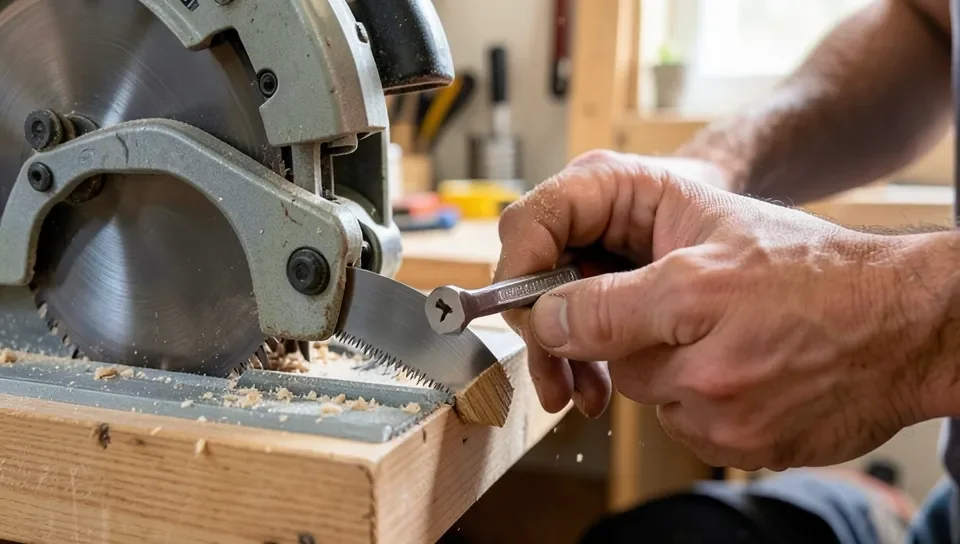
Swapping a track saw blade takes about five minutes once the saw is unplugged and the battery (or cord) is removed. Follow these steps in order:
- Disconnect power: Remove the battery pack or unplug the saw completely before touching the blade guard.
- Retract the guard: Press the spindle-lock button and rotate the guard back to expose the arbor bolt.
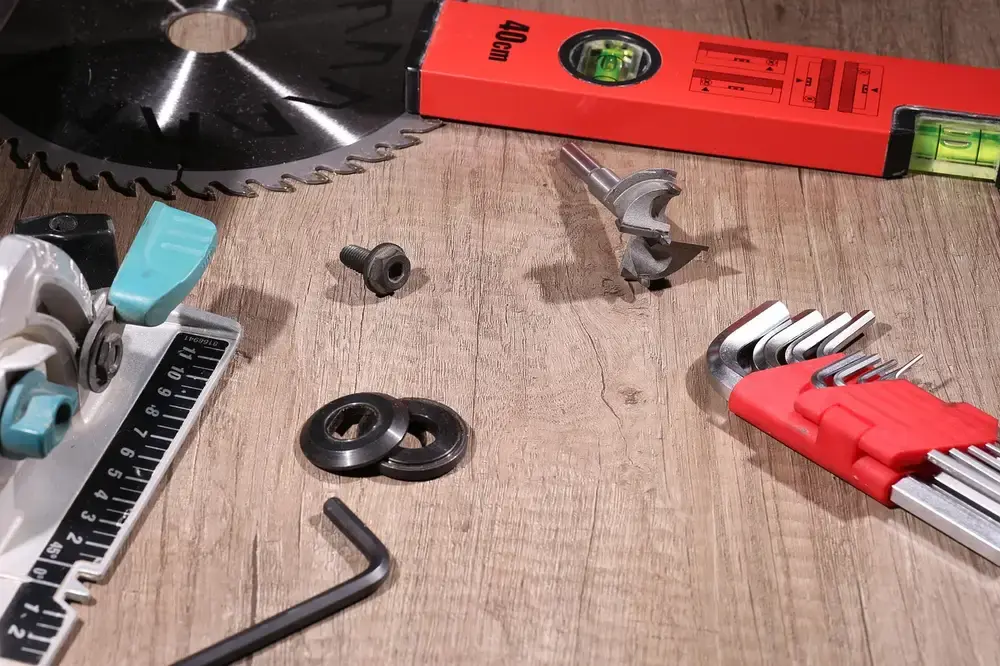
- Remove the old blade: Hold the spindle lock, loosen the arbor bolt counter-clockwise with the included hex wrench, and lift the old blade off the arbor, noting which way the teeth pointed.
- Mount the new blade: Slide the replacement blade onto the 20mm arbor with the teeth pointing in the saw’s direction of rotation (an arrow is stamped on the blade body).
- Torque the arbor bolt: Hold the spindle lock again and tighten the bolt clockwise until snug; avoid over-torquing, which can warp the flange washer.
- Check for wobble: Spin the blade by hand before powering on; any visible wobble means the blade or washer isn’t seated flush against the arbor flange.
Maintaining and Sharpening the Blade
A track saw blade’s carbide teeth dull gradually with use, and the first sign is usually burn marks on the cut edge rather than a visibly damaged tooth. Clean pitch and resin buildup off the plate after every few uses with a dedicated blade cleaner or mineral spirits: a resin-coated blade runs hotter and dulls faster than a clean one.
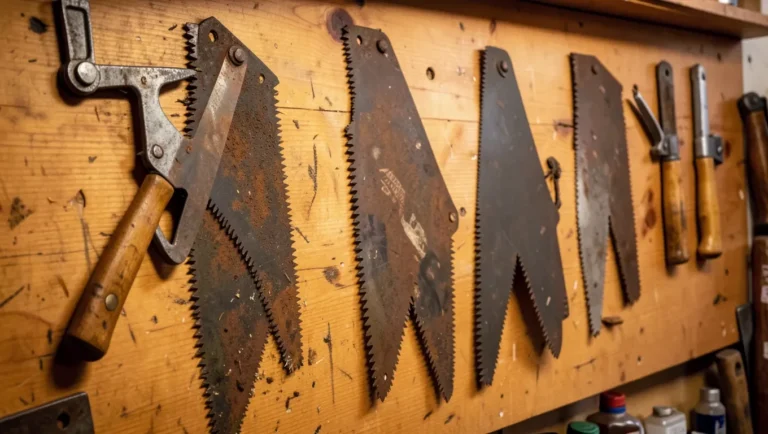
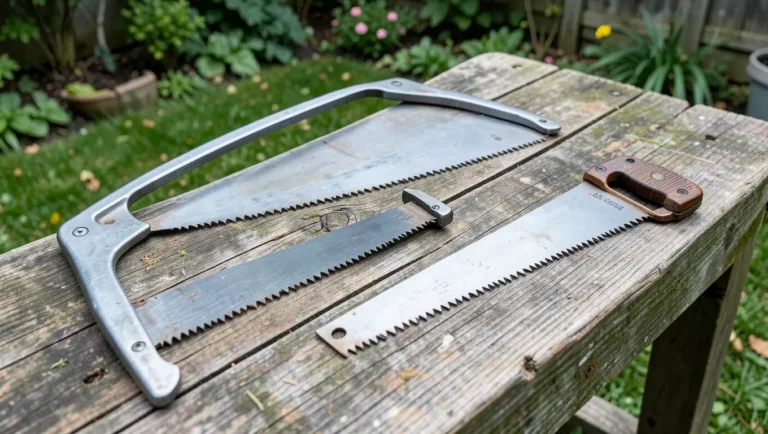
Most 48-tooth carbide blades can be professionally re-sharpened two to four times before the carbide is ground too thin to hold an edge; a sharpening service typically costs less than a third of a new blade’s price, which is why DeWalt’s OEM blades ship with “large carbide” specifically to allow multiple re-sharpenings. Store spare blades flat or hung by the arbor hole, never stacked loose in a drawer where the teeth can chip against each other. The same clean-and-inspect habit applies to any edge tool in the shop; see our guide on choosing a fine-cut hand saw if you’re rounding out a crosscut kit beyond the track saw itself.
Common Blade Problems (Wobble, Tear-Out, Dull Cuts)
Blade Wobble and Misalignment
Wobble almost always traces back to the arbor flange, not the blade. Check that the inner and outer washers are seated flat against the blade plate with no sawdust trapped between them, and confirm the arbor bolt is torqued to snug (not just finger-tight). If wobble persists with a known-good blade, inspect the track itself for debris or a bent rail; a warped guide rail transmits vibration straight into the cut line.
Tear-Out on the Cut Edge
Tear-out on the top face is usually a tooth-count problem (see the table above); tear-out on the underside is usually a missing or worn anti-splinter strip on the track itself. Replace the strip before blaming the blade: a fresh strip supports the wood fibers right up to the cut line and prevents the bottom veneer from chipping as the blade exits.
Dull or Underperforming Blades
If cuts start requiring more feed pressure, or you notice burning at the cut line, the blade is dull long before it looks damaged. Keep a spare blade of the same tooth count on hand so a dull blade doesn’t stall a project mid-cut, and rotate between two blades on high-volume jobs so one is always at the sharpener while the other is in use.
Frequently Asked Questions
What Blade Does a DeWalt Track Saw Use?
A DeWalt DWS520-series track saw uses a 6-1/2-inch (165mm) blade with a 20mm arbor bore. DeWalt’s own OEM option is the DW5258, a 48-tooth fine-finish blade, alongside the newer FLEXVOLT TrackSaw Blade. This is a specific blade, not the DWS520CK saw kit itself; the kit is the whole saw-and-track package, while the blade is the individual cutting disc it takes.
Do Track Saws Need Special Blades?
Track saws don’t strictly require a track-specific blade, but they perform best with one. Track-saw blades typically use a thinner kerf, a laser-cut, flex-resistant plate, and a tooth grind tuned for clean cross-grain cuts, all of which reduce tear-out along a guide rail compared to a general-purpose circular saw blade of the same size.
Is a Track Saw Blade the Same as a Circular Saw Blade?
Not quite. A track saw blade will often physically fit a standard circular saw if the arbor and diameter match, but it’s ground differently: thinner kerf, a flatter plate to resist flex, and usually a higher tooth count for finish work. A standard circular saw blade will bolt onto a track saw the same way, but tends to leave a rougher edge.
Do Diablo Blades Fit DeWalt Track Saws?
Yes. Diablo makes a 6-1/2-inch, 48-tooth track saw blade sized specifically for DWS520-series saws, and it’s a common budget-friendly alternative to DeWalt’s own DW5258.
Can I Use a Festool Blade on a DeWalt Track Saw?
Often, yes, because most Festool TS 55 blades share the same 20mm arbor bore as the DeWalt DWS520. The catch is diameter: Festool’s own blades typically run 160mm versus DeWalt’s 165mm, so check the listing’s stated compatibility before buying; many aftermarket blades are made to fit both, but not every Festool blade is rated for a DeWalt guard.
Conclusion
A DeWalt track saw blade comes down to two numbers that matter more than the brand on the label: a 165mm diameter and a 20mm arbor. Match those, then pick tooth count for the material, 24T for rough ripping, 48T for general plywood and hardwood work, 60T+ for melamine and laminate, and the saw will perform the way it’s designed to. Keep a spare blade of your usual tooth count on hand, and re-sharpen rather than replace as long as the carbide has life left. For more on saw types, sharpening, and cutting technique across the shop, browse our full woodworking saws guide.
Sponsored / affiliate links. As an Amazon Associate I earn from qualifying purchases. I may earn additional commission from eligible campaigns.