What Is a Coping Saw Used For? Curves & Trim Joints
A coping saw is a small bow saw with a thin, replaceable blade that cuts tight curves and coped inside-corner joints in wood, plastic, and thin metal. Its blade turns in the frame so it can follow a curve a miter saw cannot, but it cuts slowly and cannot reach far from a board edge. This guide covers its seven main jobs, blade choice, its real reach limit, and safe use.
What Is a Coping Saw Used For?
Best All-Round Coping Saw Pick | |
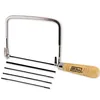 |
IVY Classic 11110 6-1/2 Inch Coping Saw with 5 Assorted Blades, $11.74 The assorted blades cover the jobs in this guide: fine blades for veneers and thin wood, a medium blade for hardwood, a coarse blade for fast cuts, and a hacksaw blade for metal.
|
As an Amazon Associate we earn from qualifying purchases.
A coping saw is used for work where the cut has to turn. Its 6-1/2 inch blade is held under tension by a U-shaped frame, and the blade rotates in its pin handles, so you can point the teeth in any direction and steer through a curve. According to Wikipedia, it is a type of bow saw, which explains why it looks like a scaled-down version of the frame saws used for logs.
The most common use in a house is coping trim: cutting the end of a baseboard or molding to match the profile of the piece it meets, so the joint closes tightly even when the corner is not square. If you want the step-by-step version of that job, our guide on how to use a coping saw for trim walks through it. This page covers everything else the saw does, and where it stops being the right tool.
7 Jobs a Coping Saw Does Well
| Job | Why a coping saw fits | Blade to reach for |
|---|---|---|
| Cope an inside corner on baseboard or crown | Follows the profile line that a straight blade cannot | Finer, 14 to 20 TPI |
| Cut curves in thin stock | Blade turns to follow the line without moving the work | Fine to medium |
| Clear waste between dovetails | Thin blade fits in a narrow kerf and reaches the baseline | Fine |
| Cut interior openings | Blade can be unhooked and threaded through a drilled hole | Fine |
| Trim plastic or PVC molding | Slow, controlled cut leaves less chipping than a coarse saw | Fine wood or plastic blade |
| Cut thin aluminum, brass, or rod | Hacksaw-style blade fits the same frame | Metal-cutting blade |
| Shape craft and pattern pieces | Steers around small radii by hand with no power | Fine |
1. Coping Inside Corners on Trim
This is the job the saw is known for. You first cut the end of the molding at a 45 degree miter, which exposes the profile as a line on the face. Then you saw along that line, tilting the blade slightly back so only the front edge touches the other piece. The result hugs the neighboring molding instead of relying on a precise 90 degree wall. For a deeper comparison of the two methods, see our guide to cutting baseboard inside corners and the crown version in cutting crown molding without a miter saw.
2. Cutting Curves in Thin Stock
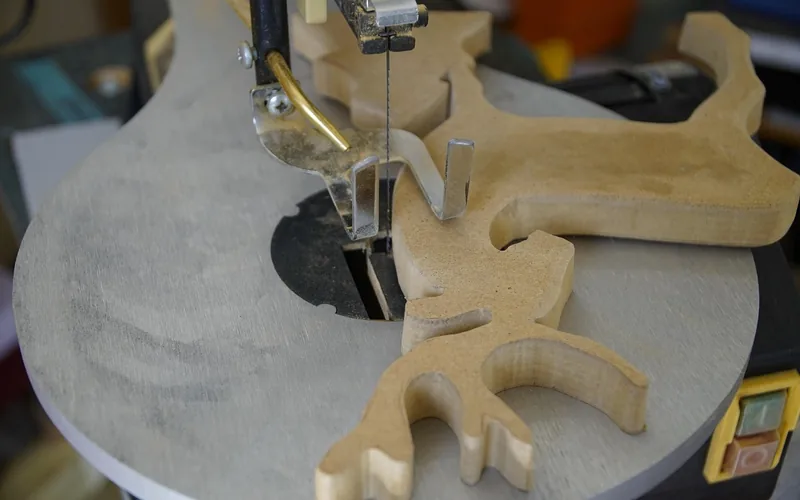
Scrolled brackets, rounded corners on small panels, and template shapes are all reasonable coping saw work in thin wood. Because the blade is narrow, you can steer it around a tight radius by turning the frame slowly while keeping the stroke straight. The practical limit is stock thickness: thick boards tire your arm quickly and let the blade wander, so a power scroll saw or a bandsaw is a better fit once the wood is much thicker than a half inch.
3. Clearing Waste in Joinery
In hand-cut dovetails, the saw cuts the sides of the tails and pins, and the waste between them has to be removed down to the baseline. A coping saw can saw most of that waste out before a chisel pares the last bit to the line. The thin blade fits the narrow space, and it saves a lot of chopping. The saw is not precise enough to cut the baseline itself, so leave a hair of wood for the chisel.
4. Interior Cutouts
A coping saw can make an enclosed opening, such as a handle slot or a decorative cutout, because the blade can be removed from one end of the frame. Drill a hole in the waste area, thread the blade through it, rehook it, tension the frame, and cut to your line. This is the main reason the saw survives next to jigsaws: it needs no power and no setup, so a small opening in a nearly finished piece takes minutes.
5. Plastic and PVC Trim
Plastic molding and thin PVC cut cleanly with a fine blade and a slow stroke. Fast, aggressive strokes heat the plastic and can melt it, which leaves a gummy edge. Support the work close to the cut and let the teeth do the work.
6. Thin Metal and Rod
Frames accept a metal-cutting blade, so the same saw can trim thin aluminum, brass, or small-diameter rod. The IVY kit in our box above, for example, includes a hacksaw blade intended for metals. Clamp the piece, use light pressure, and expect slow progress: this is a convenience, not a replacement for a hacksaw.
7. Craft and Pattern Work
Small wooden toys, ornaments, and puzzle-style cutouts are all comfortable coping saw projects in thin stock, because you control speed and direction with no noise. For heavier fretwork, where patterns have many small interior cuts, a fret saw or scroll saw is quicker. Our scroll saw comparison covers the powered option.
What a Coping Saw Cannot Do: The Throat Depth Limit
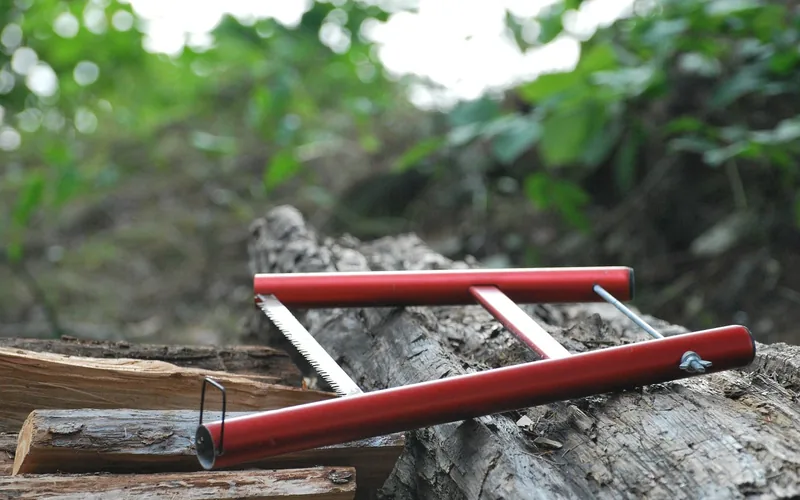
Every competing guide says a coping saw cuts curves. Few say how far from the edge it can reach, which is the question that decides whether it will work on your piece. The throat is the distance between the blade and the back of the frame. A UK tool guide at Buildwiz lists a budget throat of about 125 mm (roughly 4.9 inches) and 165 mm (about 6.5 inches) on specialist saws. The Amazon listing for the KAKURI model in our price list gives a 6.3 inch (160 mm) frame depth.
That number is your reach. A saw with a 6.3 inch throat can start a cut roughly 6 inches in from an edge, no further, before the back of the frame hits the board. A 24 inch wide panel therefore cannot be cut out from the middle with a coping saw, however patient you are. Sweeping curves that begin at an edge and finish at an edge are fine; shapes in the center of a wide board are not.
Here is how the reach limit compares to the other saws people confuse with it:
| Saw | Blade length | Frame depth or reach | Best at |
|---|---|---|---|
| Coping saw | 6-1/2 inch pin-end (typical) | About 4.9 to 6.5 inch throat | Trim coping, curves near an edge |
| Fret saw | About 5 inch | Frame commonly 10 to 20 inch | Tight radii, piercing in thin stock |
| Jigsaw | Machine blade | No frame limit, cuts anywhere on a panel | Fast curves in sheet goods |
| Hacksaw | Frame-mounted blade | Frame limits depth | Metal, with fine teeth |
The fret saw figures come from the Wikipedia entry on the fretsaw, which describes a frame depth of 10 to 20 inches with a short blade of about five inches. If you are choosing between a coping saw and a jeweler’s saw for fine detail, our jeweler’s saw versus coping saw comparison goes deeper, and woodworking saws for beginners helps with the rest of a starter kit.
Choosing a Blade by Job
Blades are the part you will replace most often, and they are also what changes the saw’s behavior. A coarse blade is faster and rougher; a fine blade is slower and smoother. The Wikipedia entry linked above notes that blades are about 6 to 6-1/2 inches long with pins at each end, and typical tooth counts run roughly 5 to 20 teeth per inch. The saws in our price list ship with 14 TPI (Bahco BAH301) and 17 TPI (IRWIN ProTouch) blades per their Amazon listings, which are on the finer side and suit trim work.
| Material | Blade style | Why |
|---|---|---|
| Painted or stained trim | Finer teeth, about 14 to 20 TPI | Less tear-out on the visible face |
| Thin hardwood | Medium teeth | Balances speed and smoothness |
| Soft pine or thick stock | Coarser teeth | Clears sawdust faster |
| Plastic or PVC | Fine teeth | Less melting and chipping |
| Aluminum or brass | Metal-cutting blade | Tooth form made for metal |
The blade only cuts well when it is straight and tight. Our guide to changing a coping saw blade shows how to seat the pins, and it covers which direction the teeth should face. Many trim carpenters set the teeth toward the handle so the saw cuts on the pull stroke, which keeps the thin blade in tension, but the right choice depends on your saw and your technique.
Prices to Expect
Coping saws are cheap tools, which is part of their appeal. On the day this page was updated, the in-stock models in our product list were:
| Model | Price | Notable detail from the listing |
|---|---|---|
| IRWIN ProTouch Coping Saw | $8.99 | Flat-bar frame, ergonomic handle, 17 tooth count |
| IVY Classic 11110 | $11.74 | 6-1/2 inch blades, five assorted blades included |
| Bahco BAH301 (beech handle) | $16.84 | 14 TPI blade, blade rotates 360 degrees |
| KAKURI coping saw set | $18.80 | 6.3 inch frame depth, five replacement blades |
Prices change, so treat these as a snapshot rather than a promise. For general use a $9 to $12 saw with a few spare blades does the job; the extra money buys frame stiffness and a larger throat, not a different kind of cut.
Marking the Line and Holding the Work
A coping saw is only as accurate as the line you give it. A pencil line is fine for trim, but for tight work a scribed line gives the blade something to follow. If you do not own a scratch awl yet, our guide to what an awl is used for explains how to scribe a line and prick a start point.
Hold the work in a vise or clamp it to the bench so the free end can be sawn. Moldings are awkward to clamp; support them on a bench hook or a scrap block and keep your guide hand back from the blade path.
Coping Saw Safety
- Wear eye protection. A thin blade under tension can snap, and a broken piece can fly.
- Keep your guide hand behind the blade path, not in front of it, and never hold a small piece in your palm while you cut.
- Clamp or brace the work. A piece that moves lets the blade bind and bend, which is how most blades break.
- Do not twist or force the blade. If it binds, back it out and let the teeth cut at their own pace.
- Release the tension and cover the blade when you store the saw, so the teeth cannot catch a hand reaching into a drawer.
Frequently Asked Questions About Coping Saws
What is a coping saw used for?
A coping saw is used to cut tight curves, scrolls, and interior cutouts in wood, and to cope the end of a molding so it fits snugly against the face of another piece at an inside corner. It also clears waste in joinery such as dovetails and can cut plastic or thin metal with the right blade.
Can a coping saw cut metal?
Yes, with a metal-cutting blade. Aluminum, brass, and thin steel rod or strip can be cut slowly with a fine-tooth hacksaw-style blade in the frame. Do not use a wood blade on metal, because the teeth are too coarse and dull quickly, and clamp the work so it cannot twist.
Is a coping saw the same as a fret saw?
No. Both are bow saws, but a fret saw has a much deeper frame, commonly 10 to 20 inches, and a shorter, finer blade, so it reaches farther into a board and turns tighter radii. A coping saw has a shallow frame and a sturdier 6-1/2 inch blade, which makes it better for trim work.
Can a coping saw cut a straight line?
It can, but poorly. The narrow blade twists easily and wanders along the grain, so a long straight cut ends up wavy. Use a handsaw or a back saw for straight cuts, and keep the coping saw for curves, coped ends, and cutouts.
How do you cut an inside hole with a coping saw?
Drill a hole inside the waste area, unhook one end of the blade from the frame, thread it through the hole, and hook it back in. Tension it, cut to your line, then repeat the unhook step to remove the saw. The hole only needs to be large enough to pass the blade.
Conclusion
A coping saw is the right tool when a cut has to turn and the line sits near a board edge: coped trim joints, curves in thin stock, clearing waste in joinery, and small interior cutouts. Know its reach limit before you plan the job, match the blade to the material, and pair it with a power saw when the shape lives in the middle of a wide panel or the stock is thick. For the trim technique itself, start with our coping saw trim guide.
Sponsored / affiliate links. As an Amazon Associate I earn from qualifying purchases. I may earn additional commission from eligible campaigns.