Water Putty vs Bondo: Best Filler for Each Repair Job
Durham’s Water Putty is the better pick for small interior wood repairs you plan to stain, while Bondo wood filler wins for larger gaps, exterior exposure, or repairs that need to flex slightly with the wood. Using Bondo on a hole you intend to stain leaves a visible gray patch, since Bondo only accepts paint – and using water putty outdoors risks it reabsorbing moisture and crumbling within a season. This guide covers real working and cure times, current cost per repair, which product tolerates wood movement, and the specific jobs each one is actually built for.
What Is Durham’s Water Putty?
Durham’s Rock Hard Water Putty is a gypsum-based powder filler that you mix with plain water to form a paste. It has been made by the Donald Durham Company since 1911. Once mixed, it sets up within a few minutes and continues hardening into a dense, stone-hard material over the next hour or two, depending on layer thickness.
Because it starts as a dry powder, an unmixed can has a very long shelf life – you only mix what you need for each job. It sands easily, takes stain and paint well, and has no strong solvent odor, which makes it comfortable to use indoors. The tradeoff: it is rigid once cured and is not rated for exterior or wet-location use, since sustained moisture exposure can soften or crumble it over time.
What Is Bondo Wood Filler?
Bondo is a two-part polyester resin filler – you knead a cream hardener into the base filler, and a chemical reaction cures it in minutes rather than by air-drying. The wood-specific version (3M Bondo Wood Filler) is rated for both interior and exterior use on wood trim, siding, window sills, decks, doors, and furniture, and 3M lists it as sandable in about 15 minutes and paintable, stainable, and water resistant once cured.
Bondo bonds chemically to the surface rather than just drying in place, so it holds up better where the wood flexes slightly or sees repeated moisture. The tradeoffs: it has a noticeable chemical odor while curing, you have to mix small batches since working time is short before it starts to kick, and once it fully cures it takes stain unevenly compared to raw wood – most repairs done with Bondo end up painted rather than stained to match.
Which One Should You Use for Your Repair?
The right choice depends on where the repair sits and what happens to it afterward, not just which product is “stronger.” Match the job to the filler below:
- Small interior nail or screw holes before staining: use Durham’s Water Putty. It sands flush easily and takes stain close to raw wood.
- Interior trim or furniture that will be painted, not stained: either product works; Durham’s is cheaper per repair for small holes.
- Exterior trim, window sills, deck boards, or door bottoms: use Bondo, or see our roundup of exterior paintable wood fillers for other moisture-rated options. Water putty is not rated for sustained moisture exposure and can soften.
- A repair on wood that flexes or sees seasonal movement (a door edge, a sill, a joint under load): use Bondo – its resin bond tolerates slight movement better than a rigid gypsum fill, which can crack loose over time.
- Rotted or soft wood that needs to be consolidated first: neither product alone is the right tool – treat it with an epoxy wood consolidant first, then fill.
If the damage turns out to be an active rotted post or sill rather than a simple hole or crack, filling over it with either product just hides the problem – see our guide on repairing a rotting wood post without full replacement for when to consolidate versus replace.
Best Bondo Wood Filler Pick
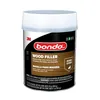 |
3M Bondo Wood Filler 30 oz Kit – $20.50 The exterior-rated, two-part filler this guide recommends for anything outdoors or exposed to repeated moisture – includes the cream hardener, rated sandable in about 15 minutes.
|
As an Amazon Associate we earn from qualifying purchases.
Water Putty vs Bondo: Full Comparison
| Factor | Durham’s Water Putty | Bondo Wood Filler |
|---|---|---|
| Base material | Gypsum powder + water | Two-part polyester resin + cream hardener |
| Working time | A few minutes before it starts to set | About 3–5 minutes before it starts to kick |
| Sandable | Once fully hardened (roughly 1–3 hours, layer dependent) | About 15 minutes after mixing (3M spec) |
| Indoor / outdoor use | Indoor only – not moisture rated | Interior or exterior |
| Takes stain | Yes, close to raw wood | Unevenly – usually painted instead |
| Odor | Minimal | Noticeable chemical smell while curing |
| Typical cost | About $10 for a 1 lb can | About $20.50 for a 30 oz kit with hardener |
| Best for | Small interior holes and cracks before staining | Larger, exterior, or flex-prone repairs |
Prices above are current live Amazon listings pulled at the time of writing and will drift over time – check the live price before buying rather than treating either figure as fixed.
How to Apply Each Filler
Applying Durham’s Water Putty
- Clean the area: remove loose debris and dust from the hole or crack.
- Mix a small batch: combine powder with water to a peanut-butter consistency – only mix what you can use in a few minutes.
- Pack it in: press the paste into the gap with a putty knife, slightly overfilling since it can shrink minutely as it dries.
- Let it cure: allow 1–3 hours depending on depth before sanding; a small fan speeds drying in humid rooms.
- Sand and finish: sand flush, then stain or paint as needed.
Applying Bondo Wood Filler
- Clean and rough up the surface: remove debris; light sanding helps the resin grip.
- Mix a golf-ball-sized batch: knead the cream hardener into the filler on a scrap surface until the color is uniform.
- Work fast: apply within 3–5 minutes with a spreader before it starts to harden.
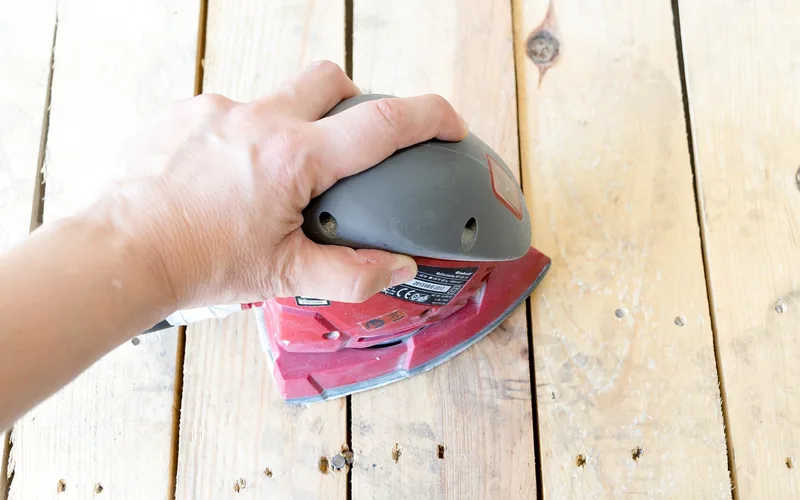
- Wait the full cure window: sand only after the full time on the label, even if the surface feels hard sooner – sanding too early gums up sandpaper instantly and can pull the patch loose.
- Sand, then paint: sand smooth and prime/paint; do not expect an even stain result.
“Permanent, non-shrinking repairs… sandable in 15 minutes… paintable, stainable and water resistant.”
Does Either One Shrink or Crack Over Time?
Both manufacturers describe their product as non-shrinking, and for a fresh repair that holds true. The longer-term difference shows up in how each material handles the wood around it. Durham’s cures into a rigid, glass-hard mass with essentially no flex – fine on stable interior trim, but a hairline crack can form at the edge of the repair if the surrounding wood expands and contracts with humidity. Bondo’s resin bond has a bit more give and chemically keys into the wood fibers, which is part of why it is the one rated for exterior use, but woodworking forums do report older Bondo repairs becoming slightly brittle and shrinking hairline-thin at the edges after several years of sun and temperature cycling outdoors.
📊 3M rates its Bondo Wood Filler as sandable roughly 15 minutes after mixing – Source: 3M Bondo Wood Filler product specifications (verified on the current Amazon product listing).
Wood Movement: Why It Matters for Which Filler You Pick
Solid wood expands and contracts across the grain as humidity changes through the year – this is why a tight-fitting drawer can stick in summer and rattle in winter. A rigid filler like Durham’s works well on a repair that sits still, such as a nail hole in baseboard or a gouge in a tabletop away from the edge. It is a poor match for a repair that spans a glue joint, a mitered corner, or the edge of a board where seasonal movement concentrates stress – those locations are better served by Bondo’s slightly more forgiving resin bond, or in some cases by re-gluing the joint instead of filling it at all.
Cost Per Repair: Which Is Actually Cheaper?
Per container, Durham’s costs less – a 1 lb can runs about $10 on Amazon at the time of writing, versus about $20.50 for a 30 oz Bondo wood filler kit with hardener. But container price is not the same as cost per repair. Because Durham’s is a dry powder, an unmixed can lasts for years and you only pay for the water you add, so the effective cost of filling a handful of small nail holes is only a few cents worth of powder. Bondo is sold pre-measured with its hardener, and once a tube or can is opened it has a limited working life, so for a single small repair you are effectively paying for the whole kit. For one or two small interior holes, Durham’s wins on cost by a wide margin; for a larger exterior repair, the calculus flips because Durham’s is not a safe option there regardless of price.
Frequently Asked Questions
Can You Use Bondo on Wood?
Yes. 3M makes a wood-specific Bondo Wood Filler formulated for wood trim, siding, sills, decks, doors, and furniture, distinct from the automotive body filler version. It bonds chemically to wood fibers and is rated for both interior and exterior use, unlike Durham’s Water Putty, which is indoor-only.
Is Durham’s Water Putty Waterproof?
No. Durham’s Water Putty is not rated for exterior or wet-location use. It is a gypsum-based material that can reabsorb moisture and soften or crumble with sustained water exposure, so it should be limited to indoor repairs on trim, furniture, walls, and other dry surfaces.
Can You Stain Over Bondo?
Bondo accepts stain unevenly compared to raw wood, since it is a resin filler rather than wood fiber. Most repairs done with Bondo are primed and painted instead of stained. If a stained match matters, Durham’s Water Putty sands and stains much closer to the surrounding wood.
Does Bondo Shrink or Crack Over Time?
3M lists Bondo Wood Filler as a permanent, non-shrinking repair, and that holds true for a properly mixed and cured patch. Some woodworkers report older exterior Bondo repairs becoming slightly brittle at the edges after several years of sun and temperature cycling, though this is far less common than it would be with a rigid, non-flexing filler in the same spot.
What’s a Good Substitute for Water Putty?
Standard wood filler or spackle can substitute for Durham’s Water Putty on small interior gaps, though neither sands quite as hard. For exterior or flex-prone repairs, Bondo wood filler or a two-part epoxy wood consolidant are better substitutes than either water putty or standard spackle.
Conclusion
Choosing between water putty and Bondo comes down to location and finish, not which product is objectively stronger. Durham’s Water Putty is the cheaper, easier-to-stain option for small interior repairs that will not see moisture or much movement. Bondo costs more per kit but is the only one of the two rated for exterior use, repairs that flex, or spots headed for rot down the road. Match the product to the job using the breakdown above, and always test sanding and finish on a scrap piece first.
Sponsored / affiliate links. As an Amazon Associate I earn from qualifying purchases. I may earn additional commission from eligible campaigns.