How Many Cubic Feet Are in a Board Foot? (Exact Math)
A board foot always equals exactly 1/12 cubic foot (0.0833 ft³) — a fixed ratio that never changes with a board’s actual thickness, width, or length. Get the direction of that math backwards and a 1,200-board-foot delivery looks like 14,400 cubic feet instead of 100. This guide covers the exact formula, a quick-reference chart for common board-footage totals, and the one thickness myth that trips up even experienced woodworkers. For the rest of the lumber-math toolkit, see our woodworking calculators guide.
How Do You Convert Board Feet to Cubic Feet?
Best Folding Rule Pick
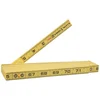
Klein Tools 910-6 Folding Ruler, 6-Foot Fiberglass
A rigid fiberglass folding rule for measuring actual board thickness and width before you tally board feet.
- Best for: checking actual (not nominal) board dimensions at the yard or in the shop
- Why we picked it: inside-reading fiberglass blade stays rigid and accurate over 6 ft, unlike a tape measure that sags on long boards
- Main drawback: bulkier to carry than a tape measure
Compare more lumber-measuring rules
 Option 1 Crescent Lufkin 6′ Red End Engineer’s Scale Wood Rule
|
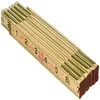 Option 2 Crescent Lufkin Wood Rule, 6′ Brass Extension
|
 Option 3 Perfect Measuring Tape Co. FR-72 Folding Rule
|
As an Amazon Associate we earn from qualifying purchases.
Divide the total board feet by 12. That’s the entire formula: cubic feet = board feet ÷ 12. So 24 board feet is 2 cubic feet, and 600 board feet is 50 cubic feet. Going the other direction, multiply cubic feet by 12 to get board feet.
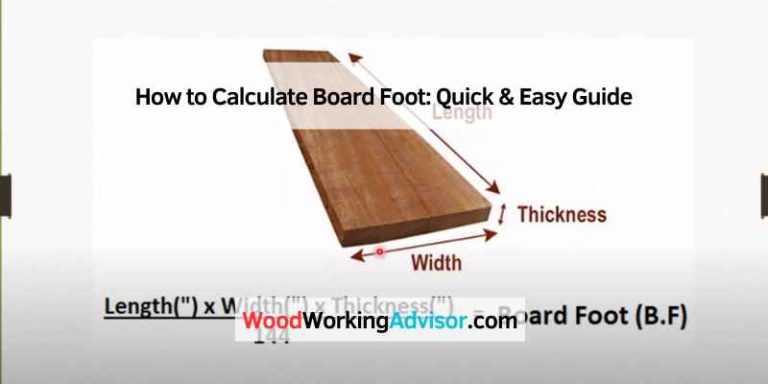
Why 12? A board foot is defined as 144 cubic inches (a piece 12 in. long, 12 in. wide, and 1 in. thick). A cubic foot is 1,728 cubic inches (12 in. × 12 in. × 12 in.). Divide 1,728 by 144 and you get 12 — so twelve board feet always fills exactly one cubic foot of actual space, and one board foot always fills exactly 1/12 of it.
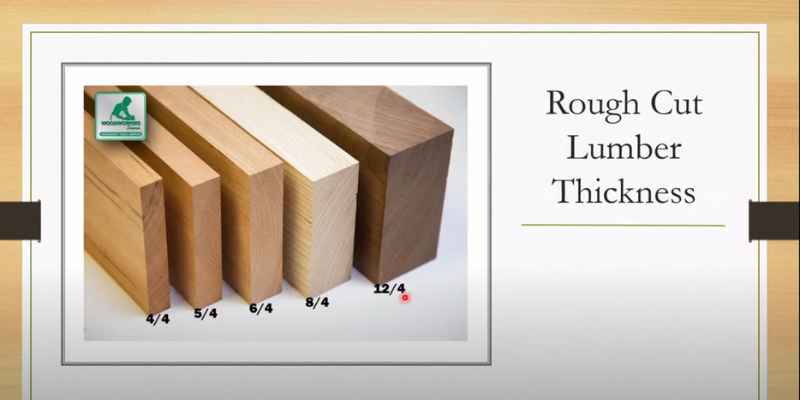
This ratio does not change based on how thick your boards are. A stack of thin 4/4 (1-inch) boards and a stack of thick 12/4 (3-inch) boards that both total 240 board feet occupy the exact same 20 cubic feet of physical space. That surprises a lot of people, because it seems like thickness should matter — it doesn’t, because board footage is already a volume measurement, not a dimension. The thickness is baked into the board-foot count before you ever convert it.
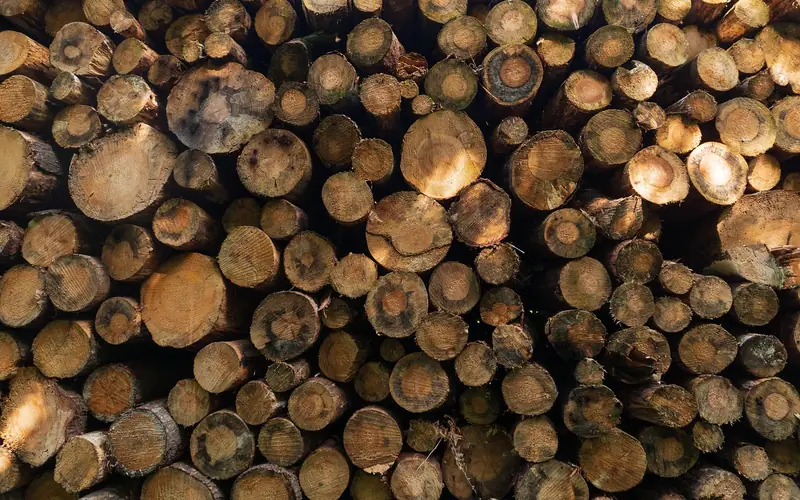
What Is a Board Foot, and How Is It Different From a Cubic Foot?
A board foot is a unit of lumber volume equal to a piece of wood 12 inches long, 12 inches wide, and 1 inch thick — 144 cubic inches. It’s the standard unit lumber yards and hardwood dealers use to price rough and surfaced lumber, because it accounts for length, width, and thickness in a single number. A cubic foot, by contrast, is a general-purpose volume unit (12 in. × 12 in. × 12 in. = 1,728 cubic inches) used for almost anything — concrete, soil, kiln capacity, shipping containers — not just lumber.
Board feet are calculated per board using: (length in inches × width in inches × thickness in inches) ÷ 144. True cubic feet of that same single board is simply length in feet × width in feet × thickness in feet. Both formulas describe the same physical volume — they just use different units, which is exactly why the 1/12 conversion factor between the two totals is always exact, never approximate.
Quick-Reference Chart: Board Feet to Cubic Feet
Use this chart to skip the math for common order sizes. Every value is the board-footage total divided by 12.
| Board Feet | Cubic Feet |
|---|---|
| 10 bf | 0.83 ft³ |
| 25 bf | 2.08 ft³ |
| 50 bf | 4.17 ft³ |
| 100 bf | 8.33 ft³ |
| 250 bf | 20.83 ft³ |
| 500 bf | 41.67 ft³ |
| 1,000 bf | 83.33 ft³ |
| 5,000 bf | 416.67 ft³ |
📊 A board foot is fixed at exactly 144 cubic inches (1 in. × 12 in. × 12 in.) — the standard lumber-industry definition behind the 1:12 board-foot-to-cubic-foot ratio used at every hardwood dealer and sawmill. — Source: NHLA / USDA Forest Products Laboratory lumber measurement standard
How to Measure Lumber for an Accurate Board-Foot Count
Before you can convert anything to cubic feet, your board-foot total has to be right. Most errors happen at the measuring stage, not the math stage — especially on rough-sawn stock where the actual thickness rarely matches the nominal size stamped on the tally sheet.
- Measure actual thickness, not nominal: a board sold as “4/4” is often planed to 13/16 in. or 7/8 in., not a true 1 in. — measure it with a rule or caliper at both ends.
- Measure width at the narrowest point: hardwood boards are often sold random-width with a slight taper; use the narrowest measurement to avoid over-counting.
- Record length to the nearest foot (round down): most yards round board length down to the nearest foot for board-foot tallies, not up.
- Total the board feet for every board before converting: convert the full order to cubic feet once at the end, not board-by-board — it’s faster and avoids compounding rounding errors.
Board Foot vs. Cubic Foot vs. Square Foot vs. Linear Foot
Lumber gets priced and ordered in four different units depending on the product, and mixing them up is a common source of ordering mistakes.
| Unit | What It Measures | Best For |
|---|---|---|
| Board Foot | Volume (L × W × T, standardized to 144 cu. in.) | Pricing rough & surfaced hardwood lumber |
| Cubic Foot | Volume (any shape, 1,728 cu. in.) | Kiln capacity, shipping/freight volume, storage space |
| Square Foot | Area only (L × W, no thickness) | Flooring, plywood/sheet goods, siding |
| Linear Foot | Length only (no width or thickness) | Trim, molding, dimensional studs sold by the foot |
Worked Example: Converting a Full Lumber Order to Cubic Feet
Say a furniture maker orders 500 board feet of 4/4 kiln-dried walnut for a batch of tables and needs the cubic footage for a freight quote. The math is one step: 500 ÷ 12 = 41.67 cubic feet. That number tells the freight company or kiln operator how much physical space the order takes up — it doesn’t matter that the boards are random-width, or that a few are 5/4 instead of 4/4, because the total board footage already captures every board’s individual volume before you convert.
Compare that to a mixed order: 300 board feet of 4/4 maple plus 200 board feet of 8/4 maple for table legs. Total board feet is still 500, so cubic feet is still 500 ÷ 12 = 41.67 ft³ — the same answer as the single-species order above, even though one order is all thin stock and the other is half thick stock. The board-foot total already did the work of accounting for thickness.
Common Mistakes When Converting Board Feet to Cubic Feet
Mistake 1 — multiplying instead of dividing. Going from board feet to cubic feet means dividing by 12, not multiplying. A 1,200-board-foot delivery is 100 cubic feet, not 14,400.
Mistake 2 — assuming the ratio changes with thickness. It doesn’t. Whether you’re working in 4/4, 8/4, or 16/4 stock, the same board-foot total always converts to the same cubic footage, because board feet is already a volume unit, not a raw dimension.
“The easiest way to avoid a math error here: convert the order’s total board footage to cubic feet first — divide by 12 — before you ever start comparing individual board dimensions. Trying to do both conversions in the same step is where most of the mixed-up numbers I see come from.”
For related conversions, see our board foot calculation guide for the full length-width-thickness formula, or the cubic inch calculator if you need the volume of a single piece before tallying board feet. If you’re pricing out a whole project, the lumber calculator for framing handles stud and plate counts directly.
Frequently Asked Questions
What Is the Difference Between a Board Foot and a Cubic Foot?
A board foot is a volume unit used specifically for lumber, fixed at 144 cubic inches (12 in. × 12 in. × 1 in.). A cubic foot is a general-purpose volume unit equal to 1,728 cubic inches (12 in. on each side), used for any material or space, not just wood.
How Many Board Feet Are in One Cubic Foot?
Always 12, regardless of the actual thickness of the boards being measured. This is a fixed ratio (1,728 ÷ 144 = 12), not something that changes with board dimensions.
Does the Board-Foot-to-Cubic-Foot Ratio Change With a Board’s Thickness?
No. It’s always 12 board feet per cubic foot, whether you’re measuring 4/4 boards or 12/4 boards. Thickness already factors into the board-foot count itself, so it doesn’t need to factor into the conversion a second time.
What Is the Volume of One Board Foot?
One board foot equals 144 cubic inches, which is 1/12 cubic foot (0.0833 ft³) or approximately 0.00236 cubic meters.
How Many Cubic Feet Are in 1,000 Board Feet?
1,000 board feet ÷ 12 = 83.33 cubic feet. This is the figure sawmills and kilns typically use to estimate the physical volume of a full unit or bunk of lumber.
How Do You Convert Cubic Feet to Board Feet?
Multiply the cubic feet by 12. For example, 10 cubic feet of lumber equals 120 board feet, regardless of how that volume is split across individual boards.
Conclusion
One board foot equals exactly 1/12 cubic foot — a constant, not an estimate, and not something that shifts with board thickness. Divide board feet by 12 to get cubic feet; multiply cubic feet by 12 to go back. Get your board-foot total right first (actual thickness, narrowest width, length rounded down), and the cubic-foot conversion takes one step.
Sponsored / affiliate links. As an Amazon Associate I earn from qualifying purchases. I may earn additional commission from eligible campaigns.