What Is Polyurethane Dispersion (PUD)? Properties & Uses
A polyurethane dispersion (PUD) is a polyurethane polymer distributed as fine particles in water. As water leaves an applied coating or adhesive, the particles come together and form a continuous film. PUDs help formulators build lower-VOC systems, but they are industrial ingredients—not one universal retail wood finish.
Performance varies widely with polymer design, solids, particle size, co-solvent, additives, substrate, drying conditions, and whether a crosslinker is used. A PUD can be soft and flexible, hard and abrasion-resistant, or designed mainly for adhesion.
Polyurethane Dispersion in Plain English
Think of PUD as a waterborne delivery form for polyurethane resin. The water is the carrier; after application, evaporation and particle coalescence create the film. Some one-component systems cure without mixing, while two-component versions add a crosslinker for higher chemical or mechanical resistance.
How a PUD Film Forms
- Water and any permitted co-solvent begin evaporating.
- Dispersed polymer particles pack closer together.
- Particles deform and coalesce into a continuous film.
- Optional crosslinking increases final resistance as the film cures.
Dry-to-touch and full property development are different stages. Cold, humid, thick, or poorly ventilated conditions can slow coalescence and leave a weak or cloudy film.
Properties and Common Uses
| Design goal | Typical application |
|---|---|
| Abrasion and chemical resistance | Wood, floor, plastic, and metal coatings |
| Flexibility and adhesion | Textiles, leather, flexible substrates |
| Bond strength | Laminating and specialty adhesives |
| Printability and toughness | Ink and overprint binders |
UBE describes PUDs for low-VOC paints, coatings, adhesives, and ink binders, with grades engineered for different heat, water, chemical, and weather resistance. See the manufacturer’s PUD overview.
PUD vs Water-Based Polyurethane Finish
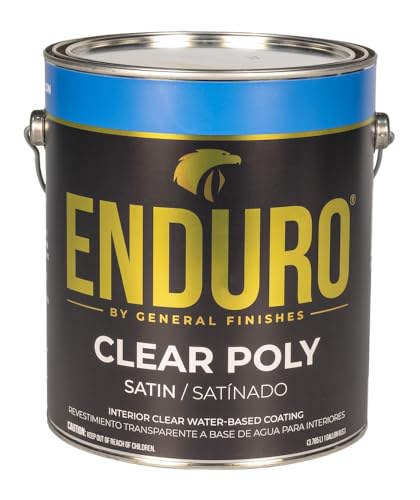
A can labeled water-based polyurethane is a finished consumer formulation containing resin plus additives and instructions. A PUD is commonly one resin component selected by a formulator. The terms overlap in chemistry but are not interchangeable product specifications.
For related coating additives, see our guide to polyurethane beads and microspheres.
Aliphatic vs Aromatic PUD
| Type | UV/color stability | Typical use |
|---|---|---|
| Aliphatic PUD | Resists yellowing outdoors and under UV light | Clear topcoats, exterior coatings, light-colored finishes |
| Aromatic PUD | Yellows faster with UV/light exposure | Interior or hidden-layer coatings, primers, adhesives where color stability matters less |
This distinction explains a common complaint: a water-based wood finish that looked clear on application but ambered within a year. That is almost always an aromatic resin choice, not a defect — always check whether a clear topcoat is specified as aliphatic before using it over light-colored wood.
One-Component vs Two-Component PUD Systems
- 1K (one-component): Ready to use as supplied; cures by simple water evaporation and particle coalescence. Easier to apply but generally lower chemical and heat resistance.
- 2K (two-component): Mixed with a crosslinker shortly before use; forms a denser, harder film with better solvent, water, and abrasion resistance, but has a limited working pot life once mixed.
Selection and Safety
- Request the technical data sheet and safety data sheet.
- Confirm substrate, minimum film-formation temperature, cure schedule, and crosslinker pot life.
- Test adhesion, blocking, abrasion, water, and chemical resistance on the real substrate.
- Do not assume waterborne means hazard-free; preservatives, co-solvents, and crosslinkers still require controls.
Common Myths About Water-Based Polyurethane
- Myth: “Water-based means weak.” A well-formulated 2K PUD floor finish can equal or exceed the abrasion resistance of oil-based polyurethane; hardness comes from the resin design and crosslinking, not the carrier.
- Myth: “All water-based finishes dry crystal clear.” Clarity depends on the specific resin and whether it is aliphatic; some PUDs are formulated with intentional tint or slight haze for specific looks.
- Myth: “PUD and ‘water-based poly’ are interchangeable terms.” As covered above, a PUD is typically one ingredient in a finished can of water-based polyurethane, not the retail product itself.
- Myth: “Low VOC always means zero odor.” Coalescing solvents, amines, and biocides can still produce a noticeable smell even in a compliant low-VOC formulation.
Choosing a PUD-Based Wood Finish as a Consumer
Most woodworkers will never buy raw PUD resin directly — they buy a finished water-based polyurethane product that was formulated using one. When comparing cans on a shelf, focus on the finished-product specs rather than trying to reverse-engineer the resin chemistry:
- Check whether the label specifies interior or exterior use — this signals aliphatic vs aromatic resin selection.
- Compare stated recoat times and cure times; 2K systems cure faster to full hardness than most 1K products.
- Look for abrasion or scratch-resistance ratings on floor-rated products if durability is the priority.
- Test on scrap first — application temperature and humidity affect clarity and leveling more with waterborne finishes than with oil-based ones.
Bottom Line
PUD is a versatile waterborne polyurethane platform, not a single material with fixed performance. Select by the final property target, processing window, substrate, and validated test data. For most home shop use, that simply means reading the can’s recommended surface, recoat window, and cure time rather than assuming every water-based polyurethane behaves identically.
Frequently Asked Questions
What does PUD stand for?
PUD stands for polyurethane dispersion, usually polyurethane particles dispersed in water.
Is PUD the same as polyurethane paint?
No. It is often a resin platform used to formulate a finished coating or adhesive.
Is polyurethane dispersion low VOC?
It can support lower-VOC formulation, but the finished product’s actual VOC depends on all ingredients.
How does PUD dry?
Water evaporates, particles coalesce, and some systems also crosslink during cure.
Where is PUD used?
Common uses include wood and industrial coatings, adhesives, textiles, leather, plastics, and inks.
Is PUD safe to use indoors?
Waterborne PUD systems generally emit far less solvent vapor than solvent-based polyurethanes, which is why they are popular for indoor floor and cabinet finishing. Always check the specific product’s data sheet and ventilate as directed, since additives and crosslinkers can still carry their own handling requirements.
Why did my water-based finish turn cloudy or milky?
Cloudiness usually means the particles did not fully coalesce into a clear film — commonly from applying below the minimum film-formation temperature, applying too thick a coat, or working in high humidity that slowed evaporation. Warming the room and applying thinner coats typically resolves it on the next coat.
Sponsored / affiliate links. As an Amazon Associate I earn from qualifying purchases. I may earn additional commission from eligible campaigns.