What Is The Meaning Of Cedar Water: Essential Guide
Cedar water isn’t a literal liquid from a cedar tree; it’s a term used metaphorically in woodworking to describe the rich, reddish-brown hue and natural protective oils found in genuine red cedar wood, prized for its aroma and insect-repelling qualities. This guide demystifies cedar water’s meaning and its importance for your projects.
Hey there, woodworking friends! Ever heard someone talk about the “cedar water” in a piece of wood and wondered what on earth they meant? It can sound a bit mysterious, especially when you’re just starting out. You might picturing water dripping from cedar branches! But don’t worry, it’s not as complicated as it sounds. Cedar water is actually a way to describe something really special about cedar wood itself.
We’re going to break down what this phrase really means, why it’s so valued in woodworking, and how you can spot and utilize this beautiful quality in your own projects. By the end of this guide, you’ll understand cedar water like a pro and appreciate this fantastic wood even more.
What Does “Cedar Water” Really Mean in Woodworking?
When experienced woodworkers mention “cedar water,” they are not talking about a liquid extract or a type of sap. Instead, they are using a descriptive term to refer to the unique characteristics of aromatic red cedar (Juniperus virginiana). These characteristics include:
- The Deep, Rich Color: Cedar wood, especially older, heartwood, often has a striking reddish-brown hue. This vibrant color is often likened to the depth and richness found in water, hence the term “cedar water.” It’s this beautiful coloration that many woodworkers aim for.
- Natural Oils and Aroma: Cedar is famous for its distinct, pleasant, slightly spicy scent. This aroma comes from natural oils present within the wood. These oils not only contribute to the smell but also to the wood’s natural resistance to insects and decay. The term “cedar water” can sometimes refer to the presence and impact of these oils, almost as if the wood is “saturated” with them.
- Durability and Protection: The natural oils in cedar act as a form of preservation. They make the wood naturally resistant to moths, mildew, and other pests. When we talk about the “cedar water” quality, we’re often implying this inherent protective nature of the wood.
So, in essence, “cedar water” is a poetic way to describe the visual appeal, the aromatic fragrance, and the natural protective properties that make cedar wood so desirable for various applications.
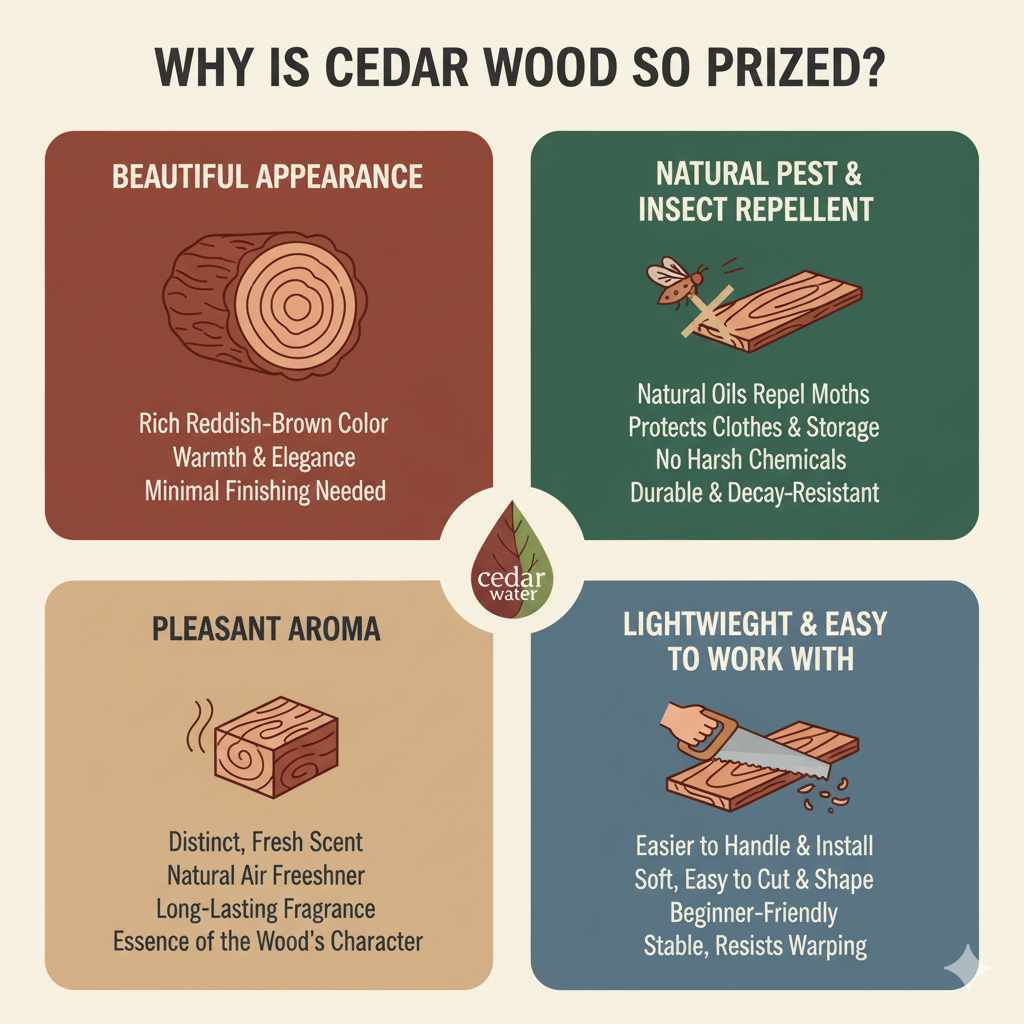
Why is Cedar Wood So Prized?
Beautiful Appearance
The natural color of cedar is a significant part of its appeal. The rich reddish-brown heartwood, often contrasted with lighter sapwood, creates a visually stunning material. This natural beauty means that cedar projects often require minimal finishing, allowing the inherent character of the wood to shine through. When you hear about “cedar water,” a big part of that refers to this gorgeous, deep color that adds warmth and elegance to any project.
Natural Pest and Insect Repellent
This is one of cedar’s most famous qualities! The natural oils, often alluded to by the term “cedar water,” contain compounds that insects, particularly moths, find repellent. This makes aromatic red cedar an excellent choice for lining closets, chests, and drawers. It helps protect your clothes and stored items naturally, without the need for harsh chemicals. This inherent protection is a key reason why “cedar water” is seen as a sign of quality.
According to the United States Forest Service, cedar’s natural oils contribute to its durability and resistance to decay and insects, making it a long-lasting material for various uses.
Pleasant Aroma
Let’s be honest, who doesn’t love that distinct, fresh, slightly sweet scent of cedar? It’s a natural air freshener! This aroma is a direct result of those protective oils. While the scent is strongest in new wood, it can last for years, especially in enclosed spaces like cedar chests. This aromatic quality is almost always a part of what people mean when they talk about “cedar water” – the very essence of the wood’s character.
Lightweight and Easy to Work With
Compared to many hardwoods, cedar is relatively lightweight. This makes it easier to handle, transport, and install, which is a big plus for DIY projects. It’s also soft enough that it’s easy to cut, shape, and join with basic woodworking tools, making it very beginner-friendly. Despite being soft, it’s still stable and doesn’t warp or twist much once dried properly.
Durability and Stability
While it’s soft, cedar wood is also quite durable and resistant to rot and decay, especially the heartwood. This natural resistance, thanks to those oils, means cedar projects can last a very long time, both indoors and in some outdoor applications (though dedicated outdoor woods like redwood or cedar are often treated for extreme environments). Its stability means less worry about shrinking, swelling, or warping.
Common Uses for Cedar Wood
Because of its wonderful traits, cedar wood is used in a variety of projects. Understanding these uses can help you appreciate why the “cedar water” quality is so important to different applications.
Closet and Drawer Linings
This is perhaps the most classic use of cedar. Lining closets, chests, and drawers with cedar planks or panels provides a natural barrier against moths and other fabric-damaging insects. The aroma also helps keep those areas smelling fresh. When buying cedar for this purpose, you’re specifically looking for that strong scent; the “cedar water” quality means you’re getting wood rich in those protective oils.
Outdoor Furniture and Decor
Certain types of cedar, like Western Red Cedar, are incredibly resistant to moisture, rot, and insects, making them ideal for outdoor use. This includes things like Adirondack chairs, picnic tables, planters, and even small outdoor sheds. The natural oils provide long-term protection. The rich color, often like deep water, is also a major draw for outdoor projects.
Siding and Shingles
The natural beauty and durability of cedar make it a popular choice for home exteriors. Cedar shingles and siding offer a rustic, natural look that ages gracefully. Its resistance to weather and pests helps protect your home for years. The “cedar water” aesthetic adds an undeniable charm to a house’s exterior.
Decorative Woodworking Projects
Many crafters use cedar for smaller, decorative items. Think of small boxes, picture frames, birdhouses, or even decorative accents on furniture. The beautiful grain patterns, the rich color, and the pleasant scent make cedar a joy to work with and a delightful material for gifts or home decor.
Solid Wood Furniture
While not as strong as hardwoods like oak or maple for structural pieces that bear heavy weight, cedar is sometimes used for aromatic chests, keepsake boxes, or even lighter-weight furniture where its natural properties are a key selling point. The “cedar water” look is often a design feature here.
Identifying Genuine Cedar Wood with “Cedar Water” Qualities
Knowing how to identify quality cedar wood, especially wood that exhibits that desirable “cedar water” characteristic, is key. Here’s what to look for:
Look at the Color
Genuine aromatic red cedar typically displays a distinct reddish-brown heartwood. The intensity and depth of this color can vary. When people speak of “cedar water,” they’re often referring to wood with a deep, rich, and consistent reddish-brown color that seems almost liquid in its depth. The sapwood is usually a pale yellowish or whitish color, which can create an attractive contrast.
Smell the Wood
This is your best indicator! Take a sniff. If it’s fresh, unsealed cedar, you should notice that unmistakable, pleasant, aromatic scent. The stronger the aroma, the more of those natural oils are present, and the more likely it is to have that desirable “cedar water” quality that repels insects. If it smells bland or like pine, it might not be aromatic red cedar.
Check for Knots
Cedar often has knots, which are a natural characteristic. While some prefer knot-free wood, knots in cedar can add to its rustic charm. The presence of knots doesn’t diminish the “cedar water” quality, and sometimes the color around the knots can be particularly rich.
Consider the Source and Type
There are different types of cedar. Aromatic Red Cedar (Juniperus virginiana) is the most common for moth repellent applications in North America. Western Red Cedar is another popular type, known for its outdoor durability and distinct aroma, though it can be lighter in color. Knowing what type of cedar you are looking at will help you understand its properties.
For more on wood identification, you can consult resources from organizations like the National Hardwood Lumber Association (NHLA), which provide detailed information on various wood species.
Working with Cedar: Tips for Beginners
Cedar is a fantastic wood for beginners. It’s forgiving, easy to work with, and the results are often beautiful. Here are some tips to make your cedar projects even more successful:
Tools You’ll Need
You don’t need a workshop full of expensive tools to work with cedar. Here’s a basic setup that will get you started:
- Measuring Tape & Pencil: For accurate marking.
- Hand Saw or Jigsaw: For cutting pieces to size. A power miter saw or table saw will make straight cuts easier and faster for larger projects.
- Drill/Driver: For pre-drilling holes and driving screws.
- Sandpaper: Various grits (e.g., 80, 120, 220) for smoothing surfaces. A random orbital sander can speed up the process.
- Clamps: To hold pieces together while glue dries.
- Wood Glue: A good quality PVA wood glue for strong joints.
- Safety Gear: Safety glasses are a must! Hearing protection and a dust mask are also recommended when cutting or sanding.
Cutting and Shaping
Cedar cuts cleanly. When cutting, always measure twice and cut once! If using a hand saw, ensure you have a sharp blade. Power saws make straighter cuts more efficiently. For curves, a jigsaw is your best friend.
Joining Cedar
Cedar holds nails and screws well, but it’s a good idea to pre-drill pilot holes, especially near the edges, to prevent the wood from splitting. This is especially important with thinner pieces. Wood glue also forms strong bonds with cedar for many projects, such as boxes or small furniture.
Sanding and Finishing
Cedar sands beautifully. Start with a coarser grit to remove any saw marks or unevenness, then move to finer grits (like 120 and then 220) for a smooth finish. Since cedar has natural beauty and a pleasant scent, many people prefer to leave it unfinished or use a clear, protective finish like a polyurethane, varnish, or natural oil finish. This preserves the color and aroma while adding a layer of protection.
Important Note: If you’re lining a closet or cedar chest, avoid applying any finishes directly to those surfaces. You want the natural oils and scent to be released to do their pest-repelling work.
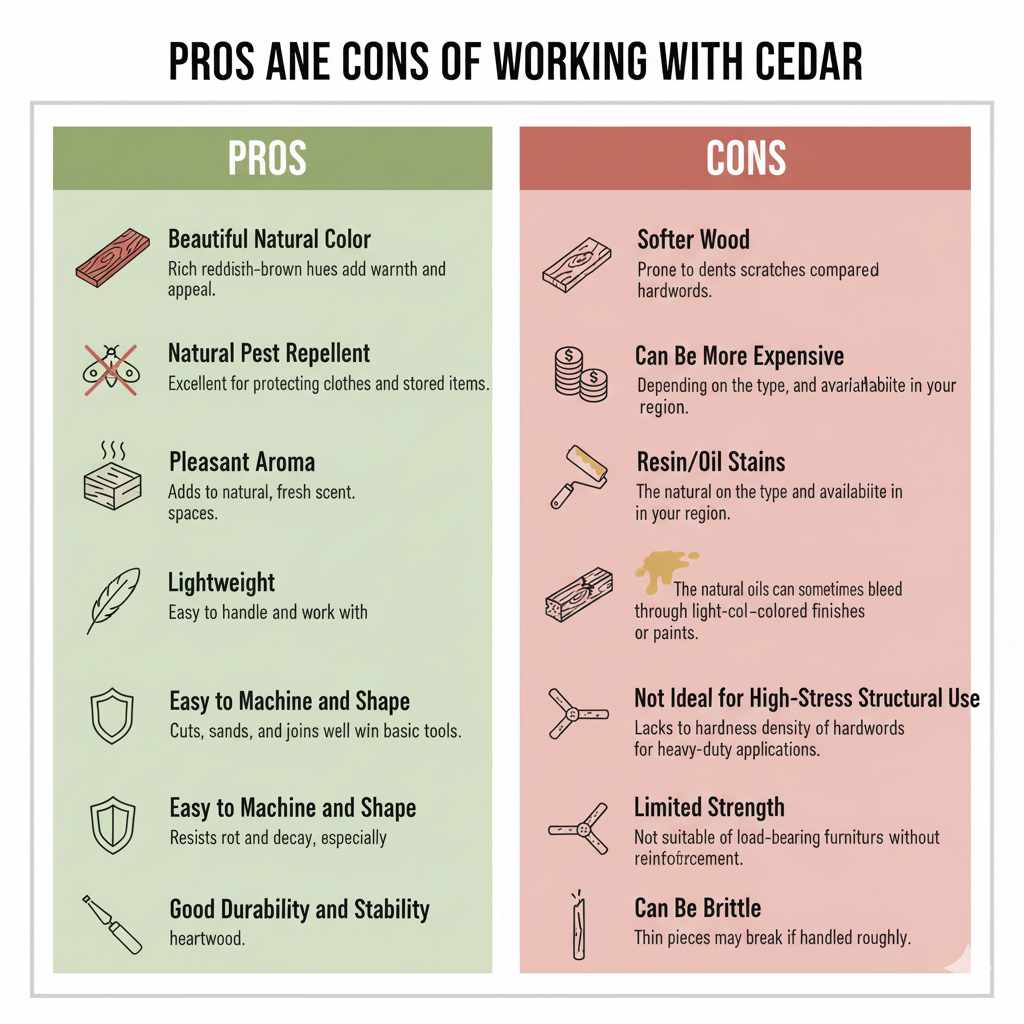
Pros and Cons of Working with Cedar
Like any material, cedar has its advantages and disadvantages. Understanding these will help you decide if it’s the right wood for your next project.
| Pros | Cons |
|---|---|
| Beautiful Natural Color: Rich reddish-brown hues add warmth and appeal. | Softer Wood: Prone to dents and scratches compared to hardwoods. |
| Natural Pest Repellent: Excellent for protecting clothes and stored items. | Can Be More Expensive: Depending on the type and availability in your region. |
| Pleasant Aroma: Adds a natural, fresh scent to spaces. | Resin/Oil Stains: The natural oils can sometimes bleed through light-colored finishes or paints. |
| Lightweight: Easy to handle and work with. | Not Ideal for High-Stress Structural Use: Lacks the hardness and density of hardwoods for heavy-duty applications. |
| Easy to Machine and Shape: Cuts, sands, and joins well with basic tools. | Limited Strength: Not suitable for load-bearing furniture components without reinforcement. |
| Good Durability and Stability: Resists rot and decay, especially heartwood. | Can Be Brittle: Thin pieces may break if handled roughly. |
Frequently Asked Questions About Cedar Water
Q1: Is “cedar water” a real thing you can buy or extract?
A1: No, “cedar water” is not a literal product. It’s a descriptive term used by woodworkers to describe the rich color, natural oils, and pleasing aroma of cedar wood, which contribute to its insect-repelling qualities.
Q2: Why does cedar smell so good?
A2: The distinctive aroma comes from natural oils within the wood. These oils are aromatic and also serve as a natural defense against insects and decay, giving cedar its unique, pleasant scent and protective properties.
Q3: Can I use any type of cedar for closet lining?
A3: For closet lining and moth repellency, aromatic red cedar (Juniperus virginiana) is the most effective and recommended type due to its high concentration of insect-repelling oils. Other cedars, like Western Red Cedar, have different properties and may not be as effective for this specific purpose.
Q4: Will the “cedar water” scent wear off?
A4: The scent will fade over time, especially if the wood is exposed to open air for long periods. However, you can often refresh the aroma by lightly sanding the surface (which releases more oils) or by simply exposing the wood to air after a period of closure. For cedar chests, the scent can last for many years.
Q5: Can I paint or stain cedar wood?
A5: Yes, you can paint or stain cedar. However, be aware that the natural oils in cedar can sometimes bleed through lighter-colored paints or stains. For best results, use a high-quality primer, especially one designed for resins or oils, before applying your topcoat. Alternatively, a clear finish will showcase the natural “cedar water” beauty.
Q6: Is cedar wood good for outdoor projects if it has “cedar water” qualities?
A6: Yes, especially types like Western Red Cedar or Alaskan Yellow Cedar. These are naturally resistant to rot and insects due to their oils. Aromatic Red Cedar is also somewhat resistant but is generally preferred for indoor applications related to its scent and pest repellency. For very harsh outdoor conditions, even cedar benefits from a protective finish, though its natural properties offer good baseline protection.
Q7: How do I clean cedar wood projects that I want to keep the “cedar water” effect?
A7: For unfinished cedar that you want to maintain its scent and protective qualities (like in closets or chests), a light dusting is usually sufficient. If you need to clean it, use a slightly damp cloth and avoid harsh chemicals or excessive moisture. If the scent fades, a light sanding can help re-expose the aromatic oils.