What Is Tung Oil Made From? (Real Cure Time + FDA Food-Safety Facts)
Tung oil is pressed from the seeds of the tung tree (Vernicia fordii), native to China and now grown in the U.S. Gulf Coast — but unlike what many sites claim, it’s actually one of the slowest-drying wood finishes available, needing 30–45 days to fully cure. Skip that cure time and a “food-safe” claim doesn’t hold. This guide covers where the oil really comes from, how it’s pressed, and what the FDA actually requires before it’s safe on a cutting board.
Quick Answer
Tung oil is made by cold- or hot-pressing the seeds inside the fruit of the tung tree (Vernicia fordii, formerly classified as Aleurites fordii). It’s a drying oil rich in eleostearic acid, which is what makes it cure into a hard, water-resistant film — slowly, over several weeks, not “quickly” as some sources claim.
Where Tung Oil Actually Comes From
Best Food-Safe Tung Oil Pick
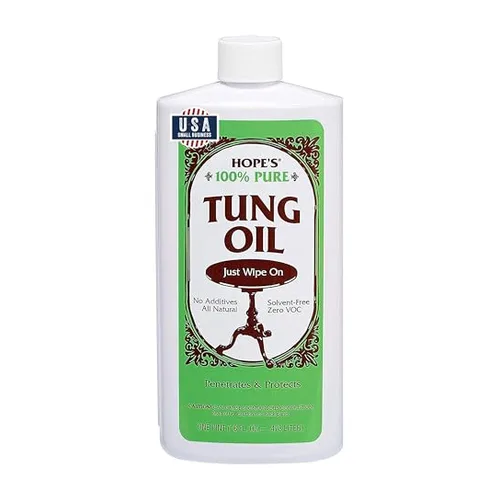
Hope’s 100% Pure Tung Oil (Food Safe)
Labeled and sold specifically as 100% pure — the exact purity standard the FDA’s food-contact allowance requires.
- Best for: cutting boards, butcher block, and indoor furniture
- Why we picked it: explicitly labeled 100% pure and food-safe, not a blended “tung oil finish”
- Main drawback: still needs the full 30+ day cure before food contact, regardless of label
Compare more pure tung oil options
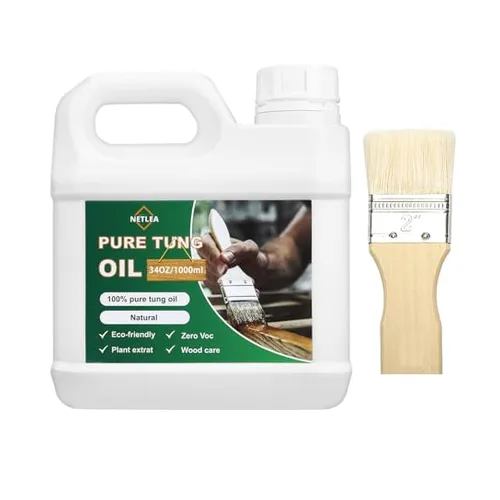 Option 1 NetLea 34oz Pure Tung Oil
|
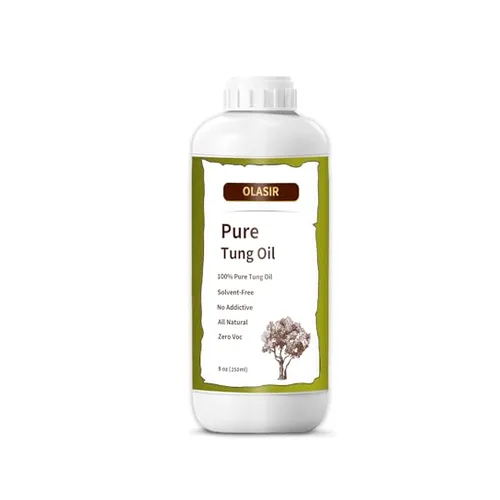 Option 2 OLASIR 8oz Food-Grade Tung Oil
|
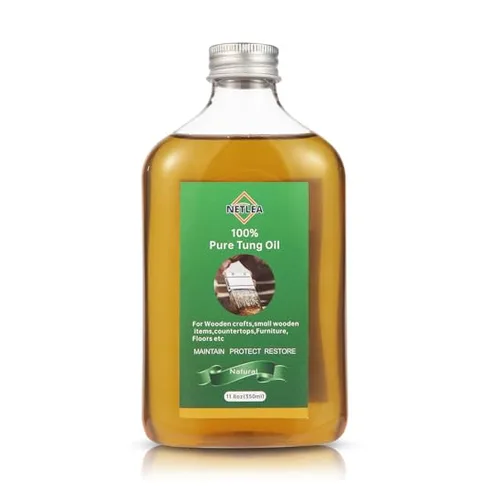 Option 3 NetLea 11.8oz Small-Project Tung Oil
|
As an Amazon Associate we earn from qualifying purchases.
Tung oil is pressed from the seeds inside the fruit of the tung tree, botanically Vernicia fordii (the tree was formerly classified as Aleurites fordii; you’ll still see both names used). It’s a member of the spurge family, Euphorbiaceae, and it’s native to China, where it has been used to waterproof ships and wooden tools for centuries. Commercial tung trees are also grown in the southeastern United States, particularly Florida, Mississippi, and Louisiana, along with parts of South America, India, and Japan.
The tree produces a fruit similar in size to a small peach. Inside each fruit are several seeds — often called tung nuts — and it’s these seeds, not the fruit’s flesh, that are pressed for oil. A mature tree can reach up to 40 feet tall and begins producing usable seed within a few years of planting.
How Tung Oil Is Extracted and Refined
After harvest, the seeds are cleaned and dried, then pressed using one of two methods. Cold pressing uses no added heat and preserves the oil in its most natural state. Hot pressing extracts a higher yield but can alter the oil’s properties slightly. Either way, the raw pressed oil is then filtered to remove solids, and often heat-treated briefly to drive off residual moisture before bottling.
What’s Actually In Tung Oil
Tung oil is mostly eleostearic acid (typically 75–80% of the oil), with smaller amounts of linoleic and oleic acid. Eleostearic acid has three conjugated double bonds, which is exactly what makes tung oil a “drying oil” — it reacts with oxygen in the air and cross-links into a solid, flexible film rather than staying a liquid indefinitely. That chemistry is also why it takes real time: the cross-linking reaction happens gradually, not instantly.
📊 Pure tung oil typically takes 7–14 days to dry to the touch and 30–45 days to fully cure under normal shop conditions — making it one of the slowest-curing wood finishes, not a fast-drying one. Cold or humid weather slows this further. Source: multiple manufacturer application guides (Waterlox, RMP Finishes) and woodworking-forum consensus (Woodworking Talk, American Association of Woodturners).
How Long Does Tung Oil Actually Take to Dry?
Slower than almost any other wood finish — and that’s worth stating plainly, because it’s a common source of confusion. Between coats, pure tung oil needs roughly 1 to 3 days to dry to the touch depending on temperature and humidity, though some sources put full surface dry time at up to a week. Full cure, meaning the finish has hardened enough for daily use and heavy contact, takes 30 to 45 days under good conditions. Light use is generally safe after 7 to 10 days, but anything touching food shouldn’t be used until the finish is fully cured.
| Finish | Dry time (between coats) | Full cure |
|---|---|---|
| Pure tung oil | 1–3 days (up to 7) | 30–45 days |
| Boiled linseed oil | 12–24 hours | 2–4 weeks |
| Danish oil (oil/varnish blend) | 4–8 hours | 1–2 weeks |
This is why Danish oil — a blend of oil, varnish, and thinner — feels like a faster, more convenient finish for furniture: it dries to handling in hours instead of days. Pure tung oil trades that convenience for a harder, more water-resistant film once it’s fully cured.

“For any project where safety is a concern, such as children’s toys or kitchen items, it is necessary to confirm the product label explicitly states ‘100% Pure Tung Oil.'”
Is Tung Oil Really Food Safe?
100% pure, fully-cured tung oil is recognized by the U.S. FDA as safe for food-contact surfaces under 21 CFR § 175.300, the regulation covering resinous and polymeric coatings. Two conditions matter here: the product must be genuinely 100% pure with no added solvents, metallic driers, or other additives, and it must be given its full 30-plus days to cure before it touches food. A blended “tung oil finish” product — common on hardware store shelves — is not the same thing and is not covered by this food-safety status, regardless of what the label implies.
Applications in Woodworking
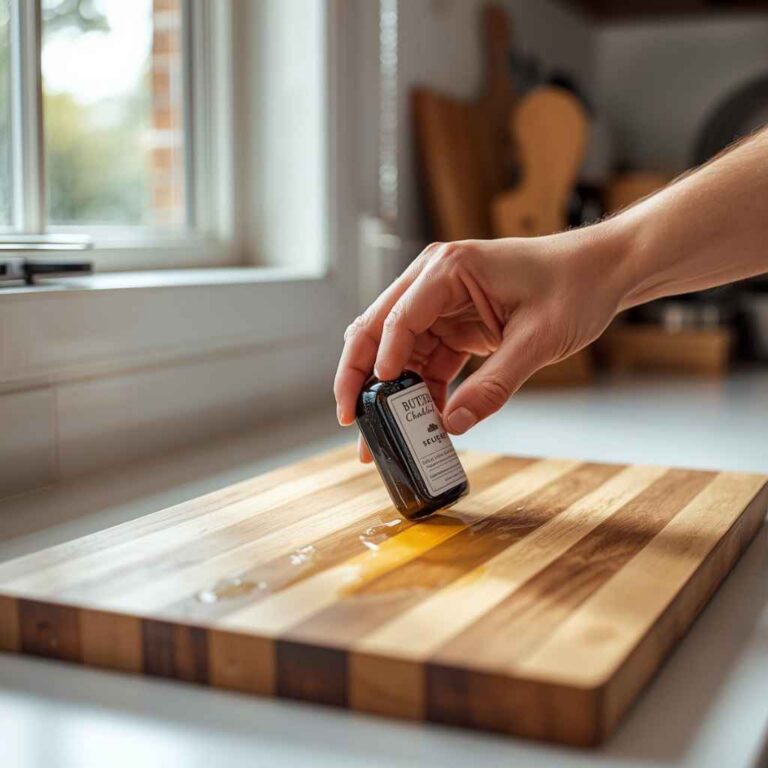
Tung oil penetrates deeply into wood fiber rather than sitting on the surface like a film-forming varnish, which is why it’s a common choice for cutting boards, butcher block, and utensils where a thick surface coating isn’t wanted — similar in that respect to boiled linseed oil, though the two oils cure very differently. It’s also used on furniture and turned woodwork, where multiple thin coats build a warm, slightly amber sheen and darken the wood modestly over time. Because it needs no solvents in its pure form, it’s a frequent pick for indoor projects where off-gassing is a concern — provided the full cure time is respected before use. If you need to strip an old coat before refinishing, see our guide on how to remove tung oil.
Frequently Asked Questions
What are the disadvantages of tung oil?
It’s slow — expect 1–3 days between coats and 30–45 days to fully cure, plus 3 or more coats for good protection. It’s also pricier than boiled linseed oil or Danish oil, and it darkens wood slightly over time.
Is tung oil really food safe?
Only if it’s 100% pure with no additives, and only once it has fully cured (30-plus days). The FDA recognizes pure, cured tung oil as safe for food-contact surfaces under 21 CFR § 175.300. Blended “tung oil finish” products with solvents or driers are not covered.
Does tung oil waterproof wood?
Yes. Once cured, it forms a water-resistant film that penetrates the wood fiber rather than just coating the surface, which is why it has historically been used to seal wooden boats.
What tree does tung oil come from?
The tung tree, Vernicia fordii (formerly Aleurites fordii), a member of the spurge family native to China and now grown commercially in the U.S. Gulf Coast.
Tung oil comes from pressing the seeds of the tung tree — a real, centuries-old process, not a synthetic substitute. What most pages get wrong is the drying speed: it’s genuinely one of the slowest-curing finishes available, and that’s exactly what makes it durable once it sets. Give it the full 30-plus days before putting it to work, confirm the label says 100% pure for any food-contact project, and it remains one of the most natural, effective wood finishes available.
Sponsored / affiliate links. As an Amazon Associate I earn from qualifying purchases. I may earn additional commission from eligible campaigns.