What Size Chainsaw File Do You Need? (Pitch-to-File Chart)
Chainsaw file size is set by chain pitch, not bar length or brand — a 3/8″ pitch chain needs a 7/32″ (5.5mm) round file, .325″ pitch needs 3/16″ (4.8mm), and 1/4″ pitch needs 5/32″ (4.0mm). Using a file that’s even one size off rounds the cutting edge instead of sharpening it, so the chain gets progressively duller with every pass. This guide covers reading your chain’s pitch stamp, matching it to the right file diameter, and the depth-gauge step most home users skip.
Chainsaw File Size Chart by Chain Pitch
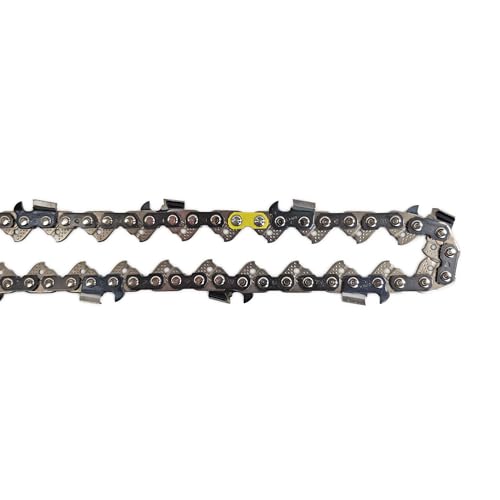
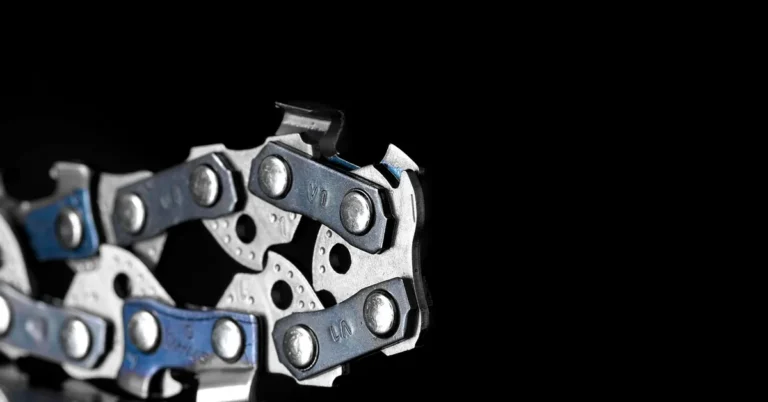
Chain pitch is the distance between any three consecutive rivets on the chain, divided by two — it’s the single number that determines which file diameter fits your cutter’s gullet. Pitch is stamped directly on the chain’s drive links and on the guide bar itself, so you rarely need to measure it by hand.
| Chain Pitch | Round File Diameter | Metric Size | Common Oregon Chain Stamp |
|---|---|---|---|
| 1/4″ | 5/32″ | 4.0mm | 25, 33 |
| .325″ | 3/16″ | 4.8mm | 20, 21, 22 |
| 3/8″ Low Profile | 5/32″ | 4.0mm | 91 |
| 3/8″ (standard) | 7/32″ | 5.5mm | 72, 73, 75 |
| .404″ | 13/64″ | 5.2mm | 404 |
Standard 3/8″ pitch and 3/8″ Low Profile are easy to mix up because they share a pitch number but not a file size — Low Profile (stamped “91” on most Oregon and Echo chains) uses the smaller 5/32″ file, while standard 3/8″ needs 7/32″. Check the stamp before ordering a file, not just the fraction printed on the box.
📊 A round file undersized by even one increment (e.g. 5/32″ on a 3/8″ standard chain) will hook the cutting edge instead of rounding it evenly, and an oversized file strips the top plate down faster than normal wear — Source: Oregon Products Sharpening Guide, 2026
Round vs. Square Chainsaw Files
Round files match round-tooth (chipper) chains — the type on nearly every consumer chainsaw sold today. Square files are for square-ground chisel chains used mostly by professional loggers and rarely sold pre-sharpened. If your chain came on a homeowner-grade saw, it’s almost certainly round-tooth and needs a round file.
Chainsaw Bar Length vs. File Diameter
Bar length has no direct effect on file size — pitch does, and a short bar and a long bar can share the same pitch and same file. The table below is a rough field reference for the most common consumer pairings, but always confirm against the pitch stamp first:
| Typical Bar Length | Typical Pitch | File Diameter |
|---|---|---|
| Up to 14″ | 1/4″ or .325″ | 5/32″ – 3/16″ |
| 14″–18″ | .325″ or 3/8″ LP | 3/16″ – 5/32″ |
| 18″–20″ | 3/8″ (standard) | 7/32″ |
| Above 20″ | .404″ | 13/64″ |
How to Sharpen a Chainsaw Chain With the Right File
Once you have the correct file diameter, technique matters as much as size. Clamp the bar, then work each tooth with the same number of strokes and the same angle.
- Clean the chain first: brush off sawdust and pitch so the file doesn’t skate on debris.
- Set the file guide at 25–30 degrees: most round-tooth chains sharpen best in this range — check your manual for the exact spec.
- File from the inside of the tooth outward: use 2–3 forward strokes only, lifting the file on the return stroke.
- Count strokes per tooth and repeat evenly: the same stroke count on every tooth keeps the chain balanced and prevents it from pulling to one side while cutting.
- Check the depth gauge (rakers) every 3–4 sharpenings: file the rakers down slightly with a flat file and depth gauge tool once the round-file sharpening no longer restores a clean bite.
The depth gauge (also called the raker) sits just ahead of each cutting tooth and controls how deep that tooth bites into the wood. Filing the cutter without ever checking the depth gauge is one of the most common home-sharpening mistakes — the chain will feel sharp on your finger but cut slower and slower over successive sharpenings.
Best Chainsaw Sharpening Kit Pick
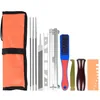 |
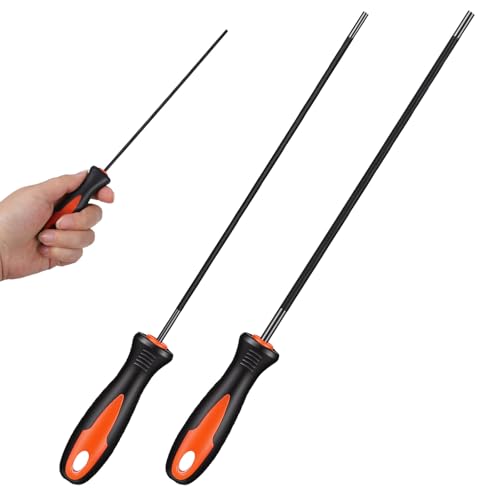
10-Piece Chainsaw Sharpening Kit – $9.99 Covers all three round file sizes from the pitch chart above (5/32″, 3/16″, 7/32″) plus the depth-gauge tool this guide recommends checking every 3–4 sharpenings.
|
Chain Maintenance and Servicing Schedule
A chain that gets touched up with the correct file every 3–5 tank refills rarely needs a shop visit. Once cutters have been filed back repeatedly and the depth gauges can no longer be adjusted safely, the chain is due for replacement rather than another sharpening.
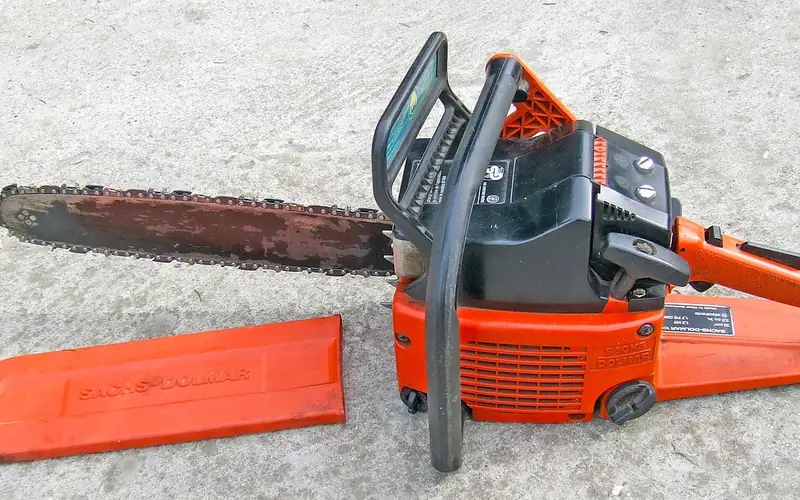
A chain that’s been filed correctly but never had its depth gauges checked will still feel sharp to the touch while cutting noticeably slower over time — raker height, not the cutter edge, is usually the first thing to drift out of spec on a home-sharpened chain.
If you’d rather not sharpen by hand at all, see our bench-mount electric sharpener guide for a faster alternative, or compare full file sets in our best chainsaw files roundup if you want options beyond the pick above.
Common Sharpening Mistakes
- Guessing the file size from bar length instead of pitch: two saws with the same bar length can have different pitch chains — always confirm the pitch stamp.
- Skipping the depth gauge: cutters stay sharp to the touch but the chain cuts slower with every pass because the rakers are now too tall relative to the filed-back teeth.
- Uneven stroke counts per tooth: this throws the chain out of balance, causing it to pull to one side and cut a curved kerf.
- Filing a chain that’s actually worn out: once the cutters have been sharpened back several times and there isn’t enough tooth left to safely lower the depth gauge, replace the chain instead of continuing to file it.
Frequently Asked Questions
How do I know what size file to get for my chainsaw?
Check the pitch stamped on the chain’s drive links or on the guide bar. A 1/4″ pitch chain takes a 5/32″ file, .325″ pitch takes 3/16″, and 3/8″ standard pitch takes 7/32″. If no stamp is visible, measure the distance across three rivets and divide by two to get the pitch, then match it to the chart above.
What size file do you use on a 3/8″ chain?
Standard 3/8″ pitch chains use a 7/32″ (5.5mm) round file. 3/8″ Low Profile chains — usually stamped “91” on Oregon and Echo chains — use the smaller 5/32″ (4.0mm) file instead, so check which 3/8″ variant you actually have before buying a file.
What size chain uses a 5/32″ file?
A 5/32″ (4.0mm) file fits 1/4″ pitch chains and 3/8″ Low Profile chains (Oregon stamp “91”). These are the pitches most common on smaller homeowner saws with bars under 16 inches.
What size file do I need to sharpen my Stihl chainsaw?
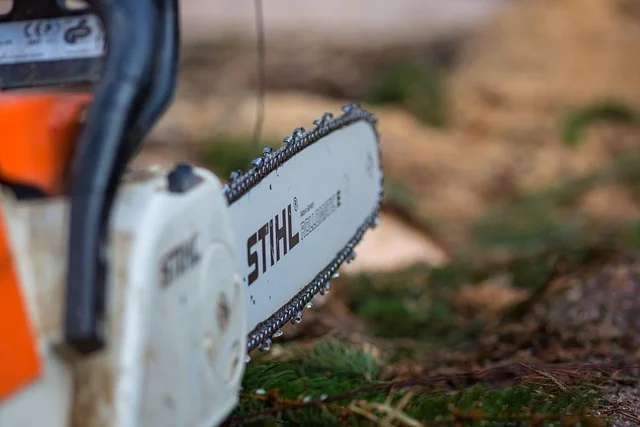
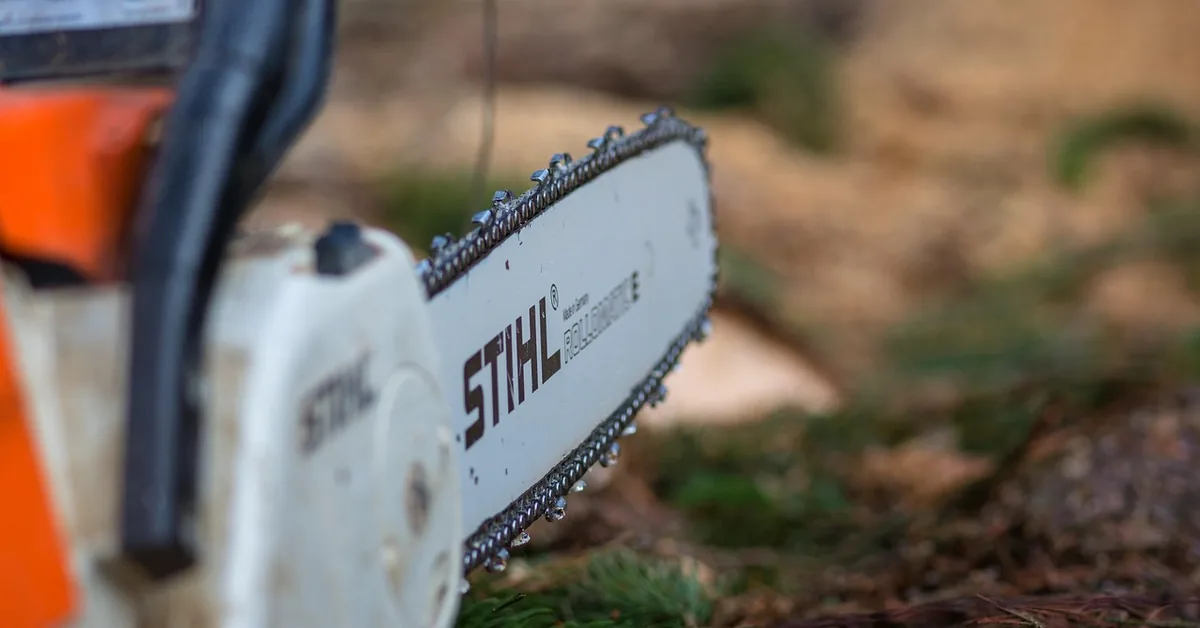
It depends on the chain’s pitch, not the Stihl model itself — Stihl saws ship with 1/4″, .325″, 3/8″, or .404″ pitch chains depending on the bar length. Check the pitch stamp on the chain or bar and match it to the chart above; Stihl’s own oilomatic chain packaging also lists the pitch directly.
Does bar length determine chainsaw file size?
No. Bar length only loosely correlates with file size because longer bars are often paired with larger-pitch chains — but the file size is set by the chain’s actual pitch, not the bar. Two saws with identical bar lengths can require different files if they run different pitch chains.
Conclusion
Match the file to your chain’s pitch stamp, not its bar length or brand — 5/32″ for 1/4″ pitch and 3/8″ Low Profile, 3/16″ for .325″, and 7/32″ for standard 3/8″ pitch. Check the depth gauges every 3–4 sharpenings so cutting speed doesn’t quietly drop even while the teeth still look sharp.
Sponsored / affiliate links. As an Amazon Associate I earn from qualifying purchases. I may earn additional commission from eligible campaigns.