What Size Drill Press Do I Need? A Swing & Chuck Size Guide
The right drill press size comes down to four numbers: swing, chuck capacity, spindle travel, and motor power – not just “big” or “small.” Get those four right for your actual projects and any drill press in that range will serve you well for years.
Most buying guides stop at “benchtop for small jobs, floor model for big ones.” That’s true as far as it goes, but it skips the two specs that actually cause buyer’s remorse: chuck capacity (which bits you can even mount) and spindle travel (how deep you can drill in one stroke before you have to reposition the workpiece). This guide walks through all four, then maps them to real project types so you can match a size to what you actually build.
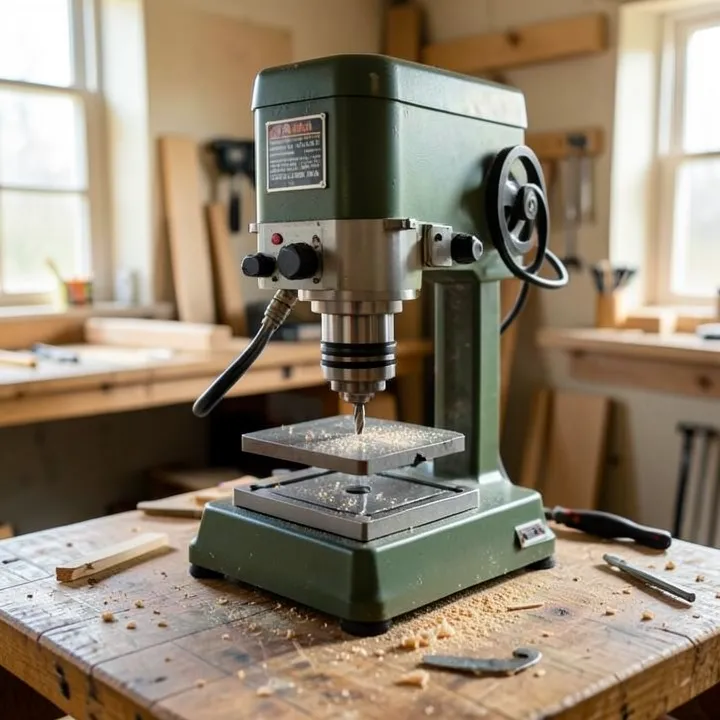
If you just want a starting point before reading the rest, here’s how swing size typically lines up with common shop work:
| Project type | Swing | Chuck | Notes |
|---|---|---|---|
| Small crafts, jewelry, model-making | 8–9 inch | 3/8 inch | A cheap benchtop drill press is often plenty; precision matters more than power. |
| General hobby woodworking | 10–12 inch | 1/2 inch | Covers Forstner bits, doweling jigs, and most furniture-scale joinery. |
| Cabinetry, furniture building | 12–15 inch | 1/2–5/8 inch | Longer spindle travel matters here for deep mortises and shelf-pin rows. |
| Light metalworking, mixed shop | 12–17 inch (floor) | 1/2–5/8 inch | Look for a low-speed range down to around 250 RPM for metal. |
| Production/heavy metal work | 17+ inch floor model | 5/8 inch+ | Beyond most home shops – this is where a mill starts making sense instead. |
The rest of this guide explains why those numbers matter, so you’re not just trusting a chart.
Swing And Throat Distance: What “10-Inch” Actually Means
Best All-Around Benchtop Pick
 |
WEN DP1050 10-Inch Benchtop Drill Press – $239 A 10-inch swing and 1/2-inch chuck cover most home-shop woodworking, from jig-guided joinery to Forstner-bit work, without the footprint or cost of a floor model.
|
When a drill press is advertised as “10-inch” or “12-inch,” that number is the swing – twice the throat distance, which is the space between the center of the chuck and the face of the column. A 10-inch drill press has a 5-inch throat, meaning you can center the bit anywhere within 5 inches of the edge of a workpiece, or drill dead-center on a disc up to 10 inches across.
This matters most when you’re drilling toward the middle of something wide – a round tabletop, a long shelf, a door panel. If your throat distance is too short, the column physically stops the workpiece before the bit reaches where you need the hole. Measure the widest piece you expect to center a hole in, halve it, and that’s your minimum throat distance.
Chuck Capacity: The Spec Most Buyers Skip
Chuck capacity is the maximum shank diameter the chuck can grip, and it’s the spec that most often surprises new owners. A 3/8-inch chuck – common on the smallest benchtop presses – can’t hold a standard 1/2-inch or 5/8-inch Forstner bit shank, no matter how much throat and swing the machine has. If you plan to use Forstner bits, hole saws, or larger twist bits for hinge mortises and dowel work, confirm the chuck is rated for at least 1/2 inch before anything else on the spec sheet.
Spindle (Quill) Travel: How Deep You Can Drill In One Stroke
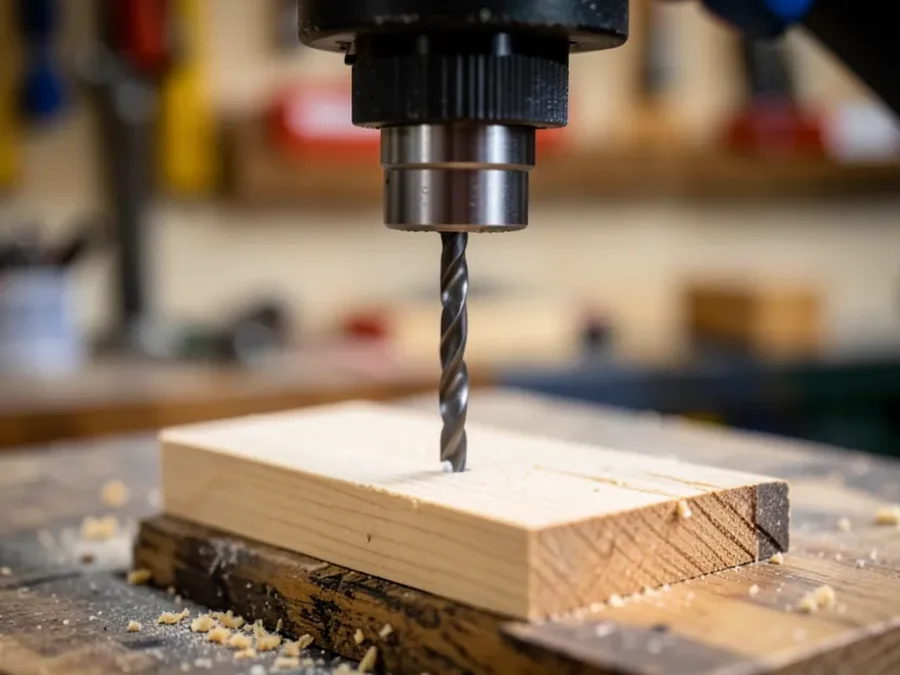
Spindle travel, also called quill stroke, is how far the chuck can plunge downward in a single pull of the handle – typically 2 to 2.5 inches on small benchtop models and 3 to 4.5 inches on larger benchtop and floor presses. This is easy to ignore on a spec sheet and expensive to ignore in practice: if you’re drilling a 3-inch-deep mortise or boring through thick stock, a short-travel machine forces you to plunge, raise the table, and plunge again to finish the hole – which makes it much harder to keep the hole straight and exactly the depth you wanted. For any project involving deep holes (leg mortises, lamp bodies, deep dowel holes), check quill travel before swing.
Benchtop Vs. Floor-Standing: Power, Footprint, And Headroom
Benchtop drill presses bolt to a workbench, run on 1/3 to 3/4 horsepower motors, and typically cover an 8 to 12-inch swing – enough for the overwhelming majority of hobby woodworking. Floor-standing models add their own base, run larger motors (often 3/4 to 1.5 horsepower), and extend swing up to 17 inches or more, which is where you land if you regularly work with metal stock or oversized panels.
The detail that catches people off guard is headroom, not floor space: a drill press needs clearance above the table equal to the workpiece height plus the full quill travel plus room to swap bits, and a floor model with its column fully extended can easily need 6 to 6.5 feet of ceiling clearance. Measure your actual ceiling height with the table at its lowest working position before assuming a floor model will fit a garage or basement shop.
Motor Power And Speed Range
Wood and metal want different speed ranges. Softer woods and larger-diameter bits (Forstner bits, hole saws) cut cleaner at lower speeds, often 250 to 700 RPM, while small twist bits in hardwood run better at 1,500 to 3,000 RPM. Most step-pulley benchtop presses offer 5 fixed speeds across roughly that range, which covers wood-only shops fine. If you’ll ever drill metal, look for a low end closer to 250 RPM specifically – a machine that only goes down to 600 or 700 RPM will burn twist bits and work-harden the metal surface instead of cutting it.
Matching Size To Your Actual Projects
If you build small boxes, jewelry, or model projects, an 8-inch benchtop press with a 3/8-inch chuck is genuinely enough – spending more buys precision you won’t use. General hobby woodworking – cutting boards, small furniture, shop jigs – is the sweet spot for a 10 to 12-inch benchtop press with a 1/2-inch chuck and at least 2.5 inches of quill travel, which is the class the WEN DP1050 above sits in.
Cabinet and furniture builders doing deep mortises, shelf-pin rows, or wide panel work benefit from stepping up to a 12 to 15-inch machine with longer quill travel, even if it means going to a floor-standing model. And if metalworking is a regular part of your shop – not just the occasional bolt hole – a drill press alone starts to show its limits; that’s the point where it’s worth reading how a drill press and a milling machine actually differ before you buy either one.
Space And Budget
A benchtop press needs roughly 2 square feet of bench space plus the headroom discussed above, and typically costs $120 to $300 for a quality 8 to 12-inch model. Floor models start around $300 for entry-level 12-inch machines and climb past $600 for cast-iron, variable-speed units with larger swings. Buying one size larger than you think you need is rarely a mistake – buying one size smaller usually means an upgrade within a year once you hit a chuck, swing, or travel limit on a real project.
Frequently Asked Questions
What size drill press should I buy?
For most hobby woodworking, a 10 to 12-inch benchtop drill press with a 1/2-inch chuck and at least 2.5 inches of spindle travel covers the widest range of projects without overspending.
How do I choose a drill press size?
Check four specs against your projects: swing (throat distance x2) for how far from an edge you can drill, chuck capacity for which bit shanks it accepts, spindle travel for how deep you can plunge in one stroke, and motor power/speed range for the materials you cut.
What is the ideal drill press size for woodworking?
A 10 to 12-inch swing with a 1/2-inch chuck is ideal for most woodworking, since it accepts standard Forstner bits and hole saws while still fitting on a workbench.
Is a benchtop drill press enough?
A benchtop drill press is enough for the vast majority of home workshops. Only step up to a floor model if you need more than about 4 inches of spindle travel, a swing beyond 12 inches, or a low speed under 600 RPM for metalworking.
Conclusion
Skip the “small vs. big” framing and check swing, chuck capacity, spindle travel, and motor power against what you actually build. Get those four right and a mid-size benchtop press – or a floor model, if your projects call for it – will handle your shop’s drilling needs for years without a mid-project surprise.
Sponsored / affiliate links. As an Amazon Associate I earn from qualifying purchases. I may earn additional commission from eligible campaigns.