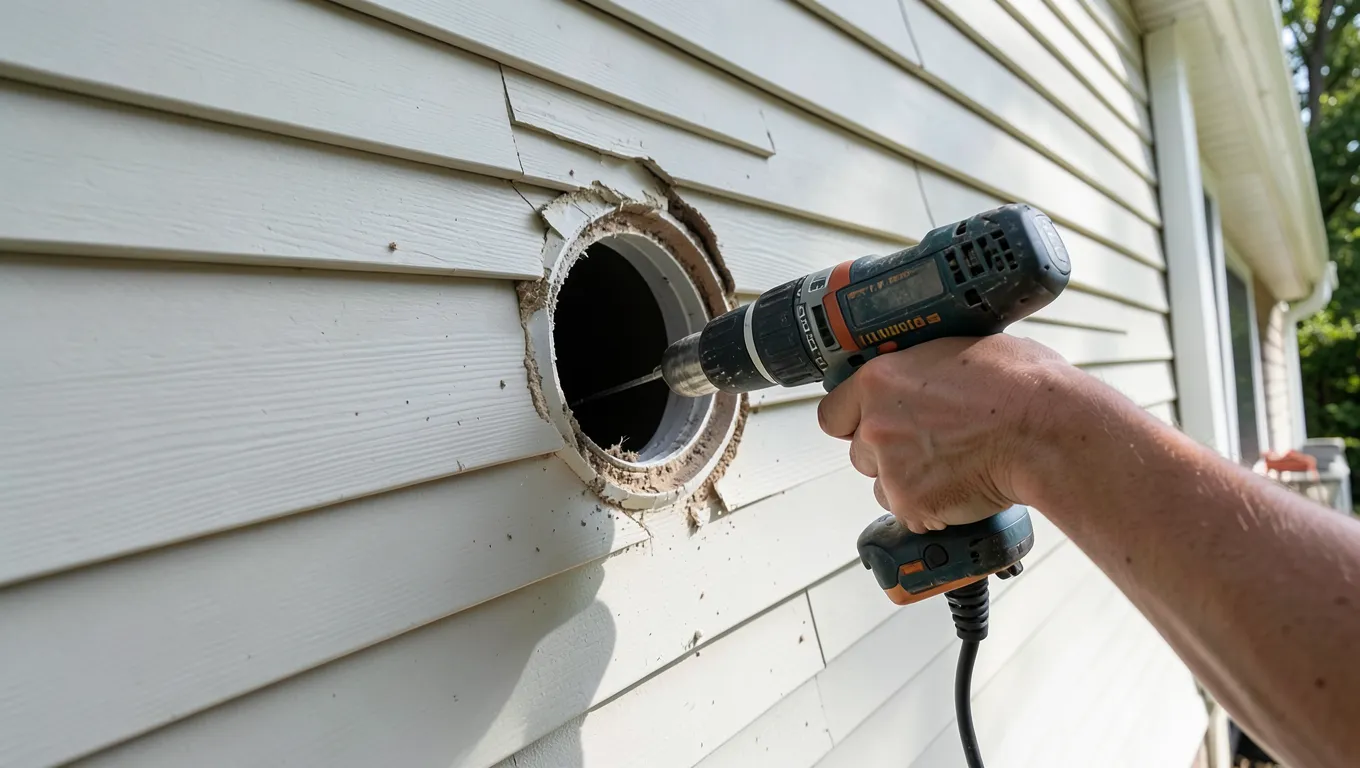
What Size Hole Saw for a Dryer Vent? (4-1/4″, Not 4″)
For a standard 4-inch dryer vent, use a 4-1/4 inch hole saw, not an exact 4-inch one. A dryer vent’s duct and exterior hood collar measure 4 inches on the outside, so a hole cut with a true 4-inch saw is often too tight to slide the pipe or hood through cleanly. The extra 1/4 inch gives clearance for the duct, any insulation around it, and the exterior vent hood’s collar.
Getting this cut right matters for more than convenience. An undersized or poorly sealed hole, or the wrong kind of duct on the other side of it, is a real contributor to the roughly 2,900 home clothes dryer fires the U.S. Fire Administration reports each year, most of which trace back to lint building up in a restricted or poorly maintained vent path. Here’s how to size, cut, and finish the hole correctly, plus what type of duct to run through it.
Hole Saw Size by Vent Diameter
The Exact Size for a Standard 4″ Vent
 |
LENOX Bi-Metal Speed Slot Hole Saw, 4-1/4″ – $8.99 The exact size for cutting a standard 4-inch dryer vent hole through siding, sheathing, and interior drywall in one clean pass.
|
| Dryer Vent Diameter | Recommended Hole Saw | Notes |
|---|---|---|
| 4 inches (standard, nearly all residential dryers) | 4-1/4 inch | Check your specific vent hood’s install sheet — some flanged hoods call for up to 4-3/8 inch |
| 6 inches (some high-capacity or commercial dryers) | 6-1/4 inch | Uncommon in homes; confirm your dryer’s actual exhaust size before buying a saw |
Don’t assume your dryer needs the 6-inch size just because your dryer is large — the vast majority of residential clothes dryers, including large-capacity models, exhaust through a 4-inch duct. Check the exhaust port on the back of the dryer itself if you’re unsure, and check the exterior vent hood’s own packaging or install sheet, since hood collar sizes vary slightly by manufacturer.
How to Cut the Vent Hole
- Find the exhaust port location on the back of the dryer and pick a wall spot that lines up with the shortest, straightest possible run to the exterior.
- Check the other side of the wall for wiring, plumbing, or framing before you drill, especially on exterior walls with electrical runs.
- Mark the center point and drill a small pilot hole through from the inside, then confirm the same spot is clear on the exterior.
- Cut from the exterior side with your 4-1/4 inch hole saw at a slow, steady speed, letting the pilot bit guide it and backing off periodically to clear debris.
- Finish the cut from the interior side if the hole saw’s depth doesn’t reach all the way through the wall in one pass, using the pilot hole to line it back up.
Duct and Fire-Safety Details Most Guides Skip
- Use rigid or semi-rigid metal duct only. White vinyl or foil “accordion” flex duct is not rated for dryer exhaust in most fire and building codes, since its ridges catch lint and it can sag and trap moisture. Smooth rigid metal duct moves lint through instead of snagging it.
- Connect sections with clamps or foil tape, not screws. Screws that poke into the inside of the duct catch lint over time and become a starting point for a clog. Foil (not cloth duct) tape or metal clamps keep the interior smooth.
- Keep the total run as short as possible. Most manufacturers cap an unassisted run around 35 feet, with several feet subtracted for every 90-degree elbow — check your dryer’s manual for its exact limit, and consider a inline booster fan if your layout can’t avoid a long run.
- Slope the duct slightly downward toward the exterior termination so any condensation drains out instead of pooling inside the duct.
- Finish with a vent hood that has a damper flap that closes when the dryer isn’t running, to keep pests and outside air out, and caulk or seal around the exterior hood where it meets the siding.
- Clean the full vent run at least once a year (more often for long runs or heavy use), not just the lint trap inside the dryer — the trap only catches a fraction of what a full-length duct accumulates over months of use.
Frequently Asked Questions
What size hole saw do I need for a 4-inch dryer vent?
Use a 4-1/4 inch hole saw. A true 4-inch hole is often too tight to fit the duct and exterior hood collar through cleanly, since both measure close to 4 inches on the outside.
What size cut out do I need for a dryer vent hood?
4-1/4 inches works for most standard hoods, but check your specific hood’s install instructions — some flanged models call for up to 4-3/8 inches. When in doubt, size up slightly rather than forcing a tight fit.
Can I use flexible foil duct instead of rigid metal?
It’s not recommended and is against code in many areas. Foil and vinyl flex duct have ridges that catch lint and can sag, both of which increase fire risk. Smooth rigid or semi-rigid metal duct is the safer, code-compliant choice.
How often should I clean my dryer vent?
At least once a year for most households, and more often if you have a long duct run, use the dryer heavily, or notice clothes taking longer than usual to dry — that’s a common early sign of a restricted vent.
Sponsored / affiliate links. As an Amazon Associate I earn from qualifying purchases. I may earn additional commission from eligible campaigns.