What Size Nails for Trim and Baseboard? (Gauge & Length Chart)
Use 16-gauge finish nails, 2 inches long, for most baseboard over drywall; step up to 15-gauge and 2½ inches for thick or tall trim, and use 18-gauge brads only for trim ½ inch or thinner. The nail has to clear the trim and the drywall and still bite ¾ to 1 inch into the stud. This guide gives the gauge chart, a length table by baseboard thickness, door casing counts and how many nails to buy.
Quick Answer
Standard baseboard (½” to ¾” thick): 16-gauge finish nails, 2 inches long. Thick or tall baseboard and large casing: 15-gauge finish nails, 2 to 2½ inches. Thin trim, shoe molding or base cap: 18-gauge brad nails, 1½ to 2 inches. Always count the drywall: the nail must reach about ¾ to 1 inch into the stud, not just through the trim.
Nail Gauge And Length Chart By Trim Type
Best 16-Gauge Finish Nails Pick
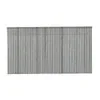 |
Metabo HPT 2-Inch x 16-Gauge Galvanized Finish Nails, 1,000 Count, $14.57 This is the 2-inch, 16-gauge nail the chart below lists for ½-inch to ¾-inch baseboard over drywall, in a 1,000-count box that covers several rooms.
|
As an Amazon Associate we earn from qualifying purchases.
Nail gauge measures thickness, and the bigger the gauge number, the thinner the nail. That is backwards from what most people expect, so it trips up a lot of first-time DIYers in the fastener aisle.
| Trim Type | Recommended Gauge | Nail Length |
|---|---|---|
| Standard baseboard (½"-¾" thick) | 16-gauge finish nail | 1½-2 inches (2 inches over drywall) |
| Thick or tall baseboard, crown molding | 15-gauge finish nail | 2-2½ inches |
| Door and window casing | 15 or 16-gauge finish nail (18-gauge for thin jamb casing and stops) | 2-2½ inches for 15/16-gauge, 1½-2 inches for 18-gauge |
| Shoe molding, base cap, quarter round | 18-gauge brad nail | 1½-2 inches |
| Delicate trim, mitered returns, thin beads | 23-gauge pin nail | Short pins sized to the trim |
Gauge ranges here follow This Old House, which matches 18-gauge to base shoes, cove moldings and jamb casing and 15-gauge to large casing, baseboards and crown. If you are deciding which physical tool to buy for baseboard, see our guide to picking a finish nailer by baseboard thickness. If you only need the baseboard answer, our baseboard nail size guide covers that single job, and the 15 gauge vs 16 gauge finish nails comparison goes deeper on those two.
Nail Length By Baseboard Thickness: The Drywall And Stud Math
Chart lengths assume a standard wall, so check yours with this formula: trim thickness + drywall thickness + stud penetration = minimum nail length. This table runs it for common baseboard thicknesses over ½-inch drywall, using ¾ inch as the bare minimum bite and 1 inch as the safer target.
| Baseboard thickness | Through trim + ½" drywall | Minimum nail (¾" into stud) | Safer nail (1" into stud) | Nail to buy |
|---|---|---|---|---|
| ½ inch | 1 inch | 1¾ inches | 2 inches | 2-inch, 16-gauge |
| ⅝ inch | 1⅛ inches | 1⅞ inches | 2⅛ inches | 2-inch minimum; 2¼-inch if your nailer takes it |
| ¾ inch | 1¼ inches | 2 inches | 2¼ inches | 2-inch minimum; 2¼-inch is better |
| 1 inch | 1½ inches | 2¼ inches | 2½ inches | 2½-inch, 15-gauge |
Two things fall out of the numbers. First, a 2-inch nail is the practical minimum for most baseboard, which matches what nailer maker Senco says, but that is 2 inches of total nail, not 2 inches of stud. Through ¾-inch baseboard and ½-inch drywall, a 2-inch nail leaves only ¾ inch in the framing. Second, 2½ inches is the top of what 15 and 16-gauge nailers fire, so trim thicker than about 1 inch cannot reach a full 1-inch bite over drywall with a finish nail.
📊 Per This Old House, a 15-gauge finish nailer fires nails from 1¼ to 2½ inches, a 16-gauge nailer from ¾ to 2½ inches, and an 18-gauge brad nailer from ⅜ to 2 inches. Source: This Old House, How To Choose a Finish Nailer
A second check is the general rule of thumb that nail length should be about three times the thickness of the board you are fastening. For ¾-inch baseboard that gives 2¼ inches, which agrees with the 2¼-inch, 16-gauge example on the Fastener USA trim nail guide. Over drywall, trust the through-the-wall formula first, because the three-times rule ignores the drywall layer. Our DA vs FN finish nails guide explains the strip-angle labels you will see on nail boxes.
16-Gauge Vs. 18-Gauge: Which Should You Use For Baseboard?
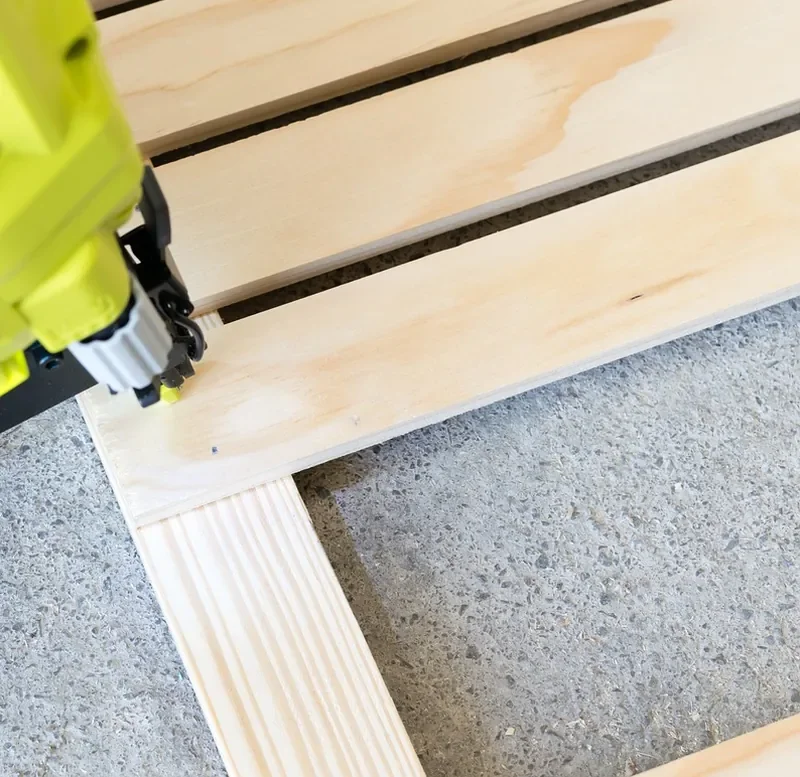
This is the most common point of confusion. A 16-gauge nail is thicker than an 18-gauge brad, and that extra mass is why it holds heavier, thicker baseboard better and resists pull-out from door slams and foot traffic. Fastener USA says the same from the other side: for smaller trim up to ½ inch, use 18-gauge brads only, because they are narrower with less holding power. Reserve the 18-gauge nailer for baseboard ½ inch thick or less and for delicate profiles like shoe molding and base cap, where a smaller hole and lower splitting risk matter more than raw holding power. For a side-by-side breakdown of the two tools, see our 16-gauge vs. 18-gauge nailer comparison.
“If you try to drive them flush, you’ll scar the wood. Drive them to head level, then sink them with a nailset.”
What Size Nails For Door And Window Casing?
Casing follows the same gauge logic as baseboard: 15 or 16-gauge finish nails, 2 to 2½ inches, for the outer edge that goes into the wall framing, and 18-gauge brads, 1½ to 2 inches, for thin jamb casing and stops. Spacing is about the same too. Senco advises nailing every 12 to 16 inches and making sure to hit the studs at corners and end joints. A standard 36 by 80 inch door set runs roughly 196 inches of casing (two sides plus the head, my own arithmetic), so at 12 to 16 inch spacing expect about 13 to 17 nails per row.
How Many Nails Do You Need For A Trim Job?
Space finish nails every 12 to 16 inches along each run, which lines up with 16-inch stud spacing, and add a nail near each end of every board and near miter joints. For a quick estimate, multiply your linear footage by 0.75 (one nail per 16 inches) to get nails per row, then add 10-15% for ends, miters and mistakes. A 12 by 12 room has about 48 feet of baseboard: that is 36 nails per row, or about 41 with the extra. Baseboard is normally nailed near both the top and bottom edge, so double it to roughly 72 nails, or about 83 with waste. Either way, a single 1,000-count box covers the whole room several times over, which is why finish nails are sold in bulk.
Installation Tips For A Clean Finish
- Locate studs first. A stud finder beats guessing, because a nail that only grabs drywall will eventually work loose.
- Drive nails at a slight downward angle near the top and bottom edges of the board, as This Old House recommends for baseboard, and keep them about ⅝ inch from the edge of the trim to avoid splitting.
- Pre-drill hardwood trim near ends and miters, where splitting risk is highest.
- Set nails with a nail set rather than driving them flush with the gun. This avoids the surface scarring Tom Silva warns about above and leaves a clean hole for putty.
- No stud available? Use construction adhesive where there is no solid backing, with nails everywhere a stud allows. Our guide on gluing baseboards instead of nailing covers when adhesive alone is enough.
Dealing With Nail Pops And Gaps
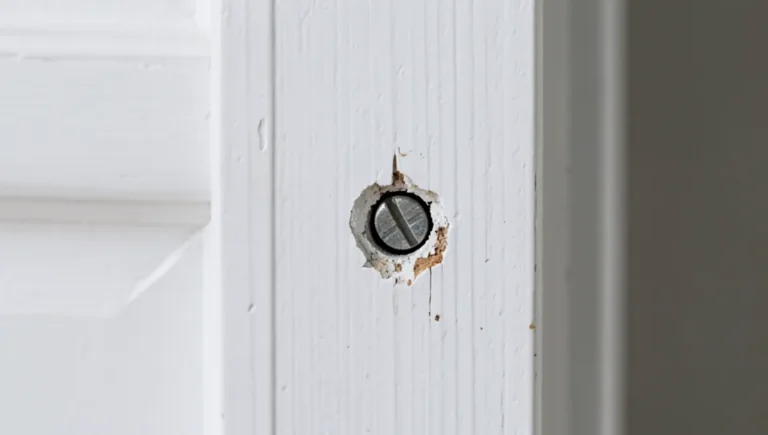
Nail pops happen when wood shrinks or expands with seasonal humidity changes and pushes the nail head back out. Tap the popped nail back in, then add a fresh nail an inch or two away for extra hold. Gaps between trim and wall are usually the same culprit: fill them with paintable caulk (for wall-to-trim seams) or wood filler (for nail holes and trim-to-trim joints), sand smooth once dry, then touch up paint or stain to match.
Frequently Asked Questions
What Size Nails Are Best For Trim?
For most trim, 15- or 16-gauge finish nails between 1½ and 2½ inches long give a secure hold without splitting the wood. Switch to 18-gauge brads only for thin, delicate trim profiles.
Can I Use Brad Nails For Baseboards?
Yes, but only for baseboard ½ inch thick or less. For standard or thick baseboard, 16- or 15-gauge finish nails hold significantly better over time.
What Length Nails Do You Need To Go Through Baseboard And 1/2-Inch Drywall?
Add your baseboard thickness + ½ inch (drywall) + ¾ to 1 inch of stud penetration. For ½-inch baseboard, that is 1¾ to 2 inches, so a 2-inch nail is the practical choice.
Should I Use 16-Gauge Or 18-Gauge For Baseboard?
Use 16-gauge for standard-to-thick baseboard (½ inch or more) since the thicker nail resists pull-out from door slams and foot traffic. Reserve 18-gauge for thin baseboard or delicate trim profiles.
What Nail Length Is Suitable For Baseboards?
1½ to 2 inches covers most standard baseboard installations, and 2 inches is the practical length over drywall. Thicker or taller baseboard over ¾ inch may need up to 2½ inches to reach solid stud.
What Size Nails For Door Trim?
Use 15- or 16-gauge finish nails, 2 to 2½ inches long, where the casing is nailed into the wall framing, and 18-gauge brads, 1½ to 2 inches, for thin jamb casing and stops. Space nails every 12 to 16 inches.
Conclusion
Match the nail to the trim, not the other way around: 16-gauge for standard baseboard, 15-gauge for thick or tall profiles, and 18-gauge brads for anything thin or delicate. Then check the length with trim thickness plus drywall plus ¾ to 1 inch of stud, and you will land on the right nail every time.
Sponsored / affiliate links. As an Amazon Associate I earn from qualifying purchases. I may earn additional commission from eligible campaigns.
 meite 18 Gauge Brad Nails 1-Inch Length F25, Galvanized Finish Ideal for Upholstery, Trims, Woodworking 5,000 PCS/Box (1 Box)
 PINOZE 15 Gauge DA Angled Finish Nails, 34-Degree, 1200-Pack (2-1/2", 2", 1-1/2", 1-1/4" 300 Per Sizes), Galvanized Assorted Size Project Pack, for Pneumatic, Electric Angled Finish Nailer Gun