What Size Screws to Attach Cabinets Together? (Plus Wall Studs)
Join face-frame cabinets with #8 x 2-1/2 in. screws driven through the face frames, and hang them on the wall with #10 x 3 in. screws that reach the studs. Frameless boxes are different: they join through the side panels with much shorter screws. The number most guides skip is how far the wall screw actually bites into the stud, which depends on your back rail and drywall. This guide gives the sizes, the stud-bite math, and the pilot holes.
Short Answer: Cabinet Screw Sizes by Connection
Best Stud-Mount Screw Pick | |
 |
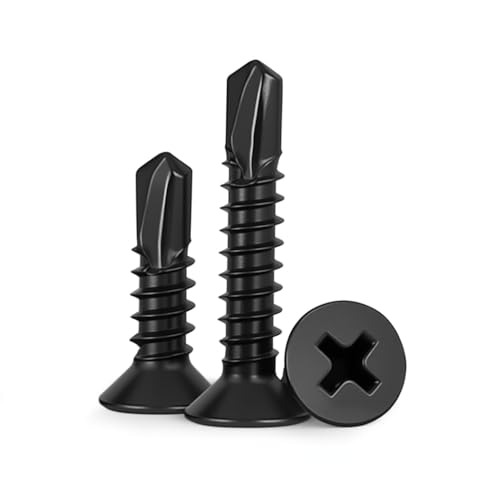
HighPoint #10 x 3 in. Cabinet Installation Screws, Washer Head, Zinc, 100 pc, $45.98 Matches the #10 x 3 in. wall-mount size used in the cabinet maker’s instructions below, and the wide washer head is what the stud-bite table in this guide assumes.
|
As an Amazon Associate we earn from qualifying purchases. | |
Most advice on this topic gives one size for everything. In practice a kitchen uses four or five different screws, and the best source for each is the instruction sheet of the cabinet maker. The sizes below come from the installation instructions of RSI Home Products (cabinet installation sheet U180003), cross-checked against Kreg and an installer guide where noted. Your own cabinet maker’s sheet overrides all of this.
| Connection | Screw | Pilot hole | Where it goes |
|---|---|---|---|
| Wall cabinet or base cabinet to wall stud | #10 x 3 in., pan or round head with seat washer | 3/16 in., through the back panel and into the stud | At stud locations, through the back rail |
| Cabinet to adjacent cabinet (face frame) | #8 x 2-1/2 in., countersunk | 1/8 in., drilled above or below each hinge location | Through the face frames, never through the side panel |
| Wall cabinet to tall pantry unit | #8 x 1-5/8 in. | 1/8 in., 7/8 in. deep, through the wall cabinet face frame | Face frame of the wall cabinet into the pantry |
| Wall with no stud behind the cabinet | Toggle bolts in drilled holes | Per the bolt | Only where a stud cannot be reached, and the cabinet must also be joined to its neighbor |
| Frameless box to frameless box | Short connecting screws, about 1-1/4 in. at most through the side panels | Per the screw maker | Through the side panels from inside the box |
Two details in that table are easy to miss. The manufacturer says to attach cabinets together at the face frame and not through the side panel, which is the opposite of the habit many people bring over from frameless boxes. And the wall screw is a #10 x 3 in., not the #8 x 2-1/2 in. that gets repeated in forum answers. The next section shows why that matters.
How Far a Cabinet Screw Reaches Into the Stud
A wall screw has to pass through the cabinet’s back rail, then the drywall, and only what is left is holding the cabinet. Simple subtraction gives that number: screw length, minus back rail thickness, minus drywall thickness. The table assumes a 3/4 in. back rail and no shims, which is a common construction but not universal, so measure yours.
| Screw length | With 1/2 in. drywall | With 5/8 in. drywall |
|---|---|---|
| 2-1/2 in. | 1-1/4 in. into the stud | 1-1/8 in. into the stud |
| 3 in. | 1-3/4 in. into the stud | 1-5/8 in. into the stud |
| 3-1/2 in. | 2-1/4 in. into the stud | 2-1/8 in. into the stud |
This is the myth worth correcting. A #8 x 2-1/2 in. screw is the standard size for joining face frames, so people assume it also works on the wall. Through a 3/4 in. back and 1/2 in. drywall it leaves only 1-1/4 in. in the stud, and every shim you add behind the cabinet takes more. Many installers aim for roughly 1-1/2 in. of stud engagement, a figure I found repeated in cabinet installation guides but did not find on a maker’s sheet, so treat it as a rule of thumb. The #10 x 3 in. screw in RSI’s instructions clears that bar with room for a shim or two.
The maker also warns against bottoming the head into the back rail. Seat the screw tightly against the rail without driving it into the rail material, and use pan or round head screws with seat washers, which is why a wide washer head is the safer choice than a countersunk flat head on a thin back rail.
How to Attach Cabinets Together With the Right Screws
For framed cabinets the order of work matters as much as the screw size. This sequence follows the RSI sheet, with the clamping and pilot details confirmed by Kreg and an installer’s guide.
- Start in a corner. Locate and mark the studs, set the corner cabinet, check it level and plumb, and shim it flat to the wall so there is no gap behind the mounting area.
- Drill and mount the first cabinet. Use a 3/16 in. pilot hole through the back panel into each stud and the #10 x 3 in. screws.
- Clamp the next cabinet to the first. Align the face frames flush and level. Doors come off first so the frames can be checked and the hinges do not get in the way.
- Drill 1/8 in. pilot holes through the face frame above or below each hinge location, and countersink them so the heads sit flush.
- Drive the #8 x 2-1/2 in. screws through the first face frame into the second.
- Leave the wall screws slightly loose until every cabinet is joined. Then tighten them all and re-check level.
Kreg’s Cabinet Face Frame Clamp answers its own screw question with “a #8 screw” and a 1/8 in. drill bit through its built-in guide, which agrees with the pilot size on the RSI sheet. Ask the Builder adds a spacing rule: at least two screws about 1-1/2 in. from the top and bottom of the face frame opening, and a third on frames 24 in. or taller, with a pilot hole slightly smaller than the screw (how to connect cabinets). That advice comes from an installer, not a manufacturer, so it is a good habit rather than a code. If the cabinets are glued as well as screwed, see our notes on gluing cabinet face frames so the frames do not slip while the clamps tighten.
Pilot Holes and Heads: Matching the Drill Bit to the Screw
Pilot holes are not optional on cabinets. RSI states plainly that you must drill pilot holes to attach cabinets together, and the reason is practical: a face frame is narrow hardwood, and a screw driven without a pilot can split the stile or leave the two frames pulled apart instead of tight.
- Stud, #10 x 3 in.: 3/16 in. pilot, per the RSI sheet.
- Face frame, #8 x 2-1/2 in.: 1/8 in. pilot, per RSI and Kreg.
- Wall cabinet to pantry, #8 x 1-5/8 in.: 1/8 in. pilot drilled 7/8 in. deep, so the bit does not go through the pantry face frame.
- Countersink: use a countersink that matches the screw head so it ends flush with the inside edge of the face frame.
Screw choice also depends on the head style and thread. The differences between cabinet screws and general wood screws, including washer heads and thread types, are covered in our guide to cabinet screws vs. wood screws. This page sticks to sizes and placement.

Frameless Cabinets and Walls Without Studs
Frameless cabinets have no face frame to screw through, so the connection is made through the side panels from the inside of the box. The reported limit from installer sources is about 1-1/4 in. screws through the side panels, because a longer screw simply pokes through into the neighboring cabinet. I found that figure in a search summary, not on a manufacturer page, so use the connecting screws the cabinet maker supplies when they are included.
When a stud is not available behind a cabinet, the RSI sheet allows toggle bolts in drilled holes, but only for places where a stud cannot be reached, and it still requires the cabinet to be attached to the adjacent cabinet with face-frame screws. In other words, toggle bolts supplement a cabinet run that is already anchored at studs somewhere; they are not a replacement for stud screws. Our butterfly screw anchor weight limits show how widely those ratings vary by size. For hanging light wall units by a rail rather than screws through the back, a wood french cleat spreads the load along the stud line.
Frameless and framed runs both end at the same place: a cabinet that is level, flush to its neighbor and fixed to something solid. If the cabinets carry a heavy load, check the stud spacing first. Our guide to shelves between wall studs explains stud layout and the depth and load limits that come with it.
Common Mistakes With Cabinet Screws
- Using #8 x 2-1/2 in. screws on the wall and counting on them for full stud bite.
- Screwing through the side panel of a framed cabinet when the maker says to attach at the face frame.
- Driving every wall screw tight before the cabinets are joined and level, which locks in any misalignment.
- Skipping pilot holes in the face frame and splitting a stile.
- Driving a washer-head screw so far that it bottoms into the back rail.
- Using bright zinc screws in a damp garage or basement. For wet locations see our guide to screw coatings for outdoor wood, which explains corrosion rules that also apply to cabinets in damp spaces.
Frequently Asked Questions
What size screws do I use to attach cabinets together?
For framed cabinets, one maker specifies #8 x 2-1/2 in. screws through the face frames, with a 1/8 in. pilot hole above or below each hinge location and a countersink. Frameless boxes use short connecting screws of about 1-1/4 in. through the side panels.
What size screws mount cabinets to the wall?
RSI specifies #10 x 3 in. screws with a 3/16 in. pilot hole through the back panel and into the stud. Use pan or round head screws with seat washers, and seat them without driving into the back rail.
How long should a cabinet screw be to reach the stud?
Subtract the back rail and drywall thickness from the screw length. A 3 in. screw through a 3/4 in. back and 1/2 in. drywall leaves 1-3/4 in. in the stud, while a 2-1/2 in. screw leaves 1-1/4 in.
Do I need pilot holes for cabinet screws?
Yes. RSI states that pilot holes are required to attach cabinets together. Use 1/8 in. for face-frame screws and 3/16 in. for the #10 wall screws, and countersink the face-frame holes.
Can I hang cabinets with drywall anchors instead of studs?
Only where a stud cannot be reached. RSI allows toggle bolts in that case, but the cabinet must also be attached to the adjacent cabinet, and the run should be anchored to studs somewhere.
Sources Read for This Article
RSI Home Products, cabinet installation instructions U180003, for the screw sizes, pilot holes, sequence and toggle bolt rule. Kreg Cabinet Face Frame Clamp product Q&A for the #8 screw and 1/8 in. drill bit. Ask the Builder for the screw count and spacing on face frames. The 1-1/4 in. frameless limit and the roughly 1-1/2 in. stud engagement figure came from search summaries of installer guides rather than a page I could open in full, so confirm them against your cabinet maker’s sheet. The stud-bite table is arithmetic from the stated thicknesses, not a tested load rating. Wall construction and cabinet weight vary, so follow your cabinet maker’s instructions and local code.
Sponsored / affiliate links. As an Amazon Associate I earn from qualifying purchases. I may earn additional commission from eligible campaigns.