Wheels for a Table Saw: The Complete Mobile Base & Caster Guide
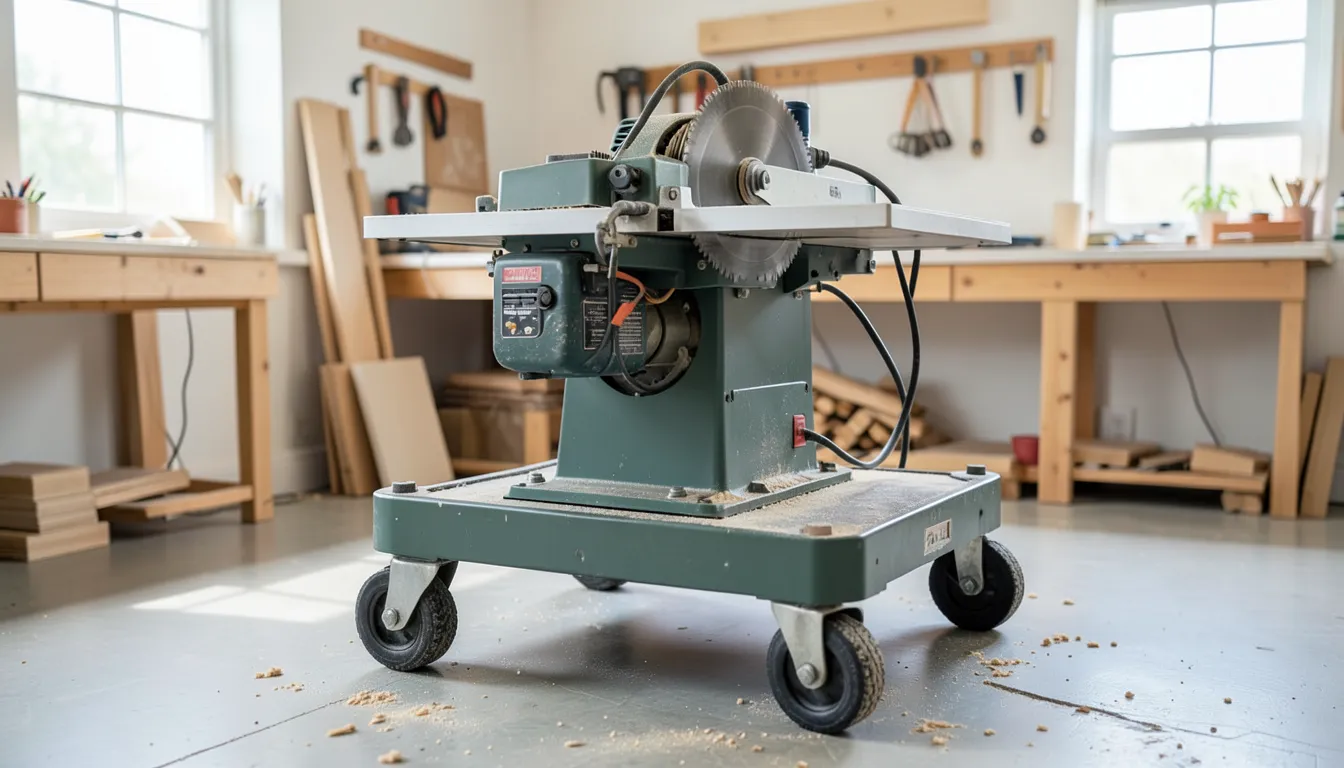
Wheels for a table saw usually mean one of two things: a dedicated mobile base with a lever or foot pedal that lifts the saw onto casters, or caster wheels bolted straight onto the saw’s legs. The base kit is the safer, more common choice for anything heavier than a benchtop saw, because it lets you roll the saw when you need to and lock it rock-solid the rest of the time.
A table saw that never moves from one spot is a problem the first time you need to clear floor space, feed long stock from a different angle, or roll the saw outside for a dusty rip cut. Below is how the two approaches actually work, which caster type and material to buy for your shop floor, how to size wheels to your saw’s weight, and the setup and locking steps that keep the saw from becoming a rolling hazard mid-cut.
How Table Saw Wheels Actually Work: Mobile Base vs. Bolt-On Casters
Best Table Saw Mobile Base
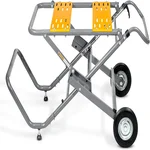 |
POWERTEC MT4009V Table Saw Stand with 8-Inch Jobsite Wheels – $159.99 A folding stand built specifically for jobsite/contractor table saws, with large 8-inch wheels sized for rolling over gravel, thresholds, and uneven garage floors, not just smooth concrete.
|
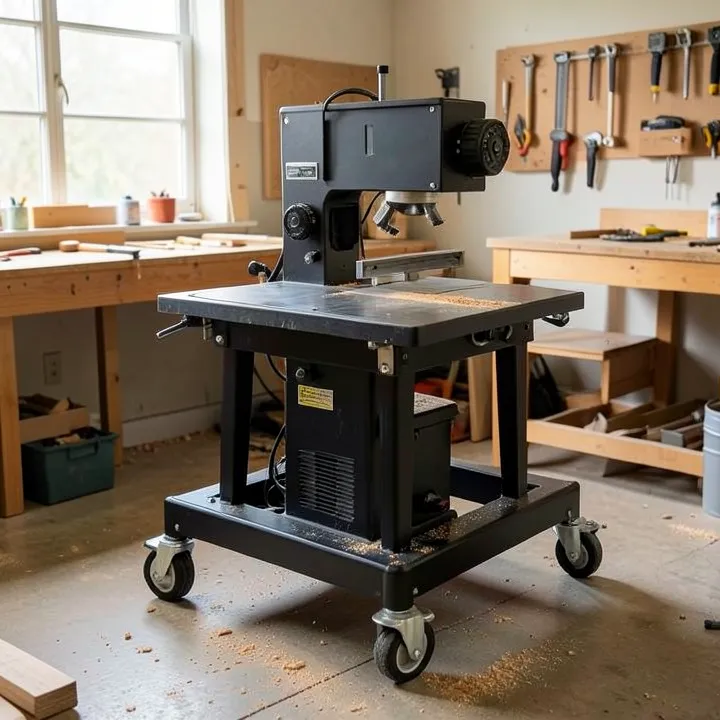
There are two real ways to put a table saw on wheels, and they aren’t interchangeable. A universal mobile base (the kind sold by Bora, POWERTEC, Rockler, Shop Fox, and Grizzly) uses a foot pedal or hand lever connected to a cam or linkage. Step on the pedal and the linkage lifts the entire saw a fraction of an inch onto a set of wheels so you can roll it. Release the pedal and the saw drops back down onto rubber feet or fixed pads, completely off the wheels, so it sits as rigid as it would with no wheels at all. That drop-down step is the part cheaper DIY setups skip.
Bolt-on casters skip the lift mechanism entirely: four caster wheels go straight onto the saw’s leg stand or a plywood platform underneath it, and the saw sits on those wheels permanently. It’s cheaper and simpler, but unless every caster has a working lock, the saw is technically still “on wheels” while you’re cutting, which is exactly the vibration and drift risk a mobile base is built to avoid.
Fixed, Swivel, and Locking Casters Explained
Whether you buy a mobile base or bolt on your own casters, the wheels themselves fall into three categories:
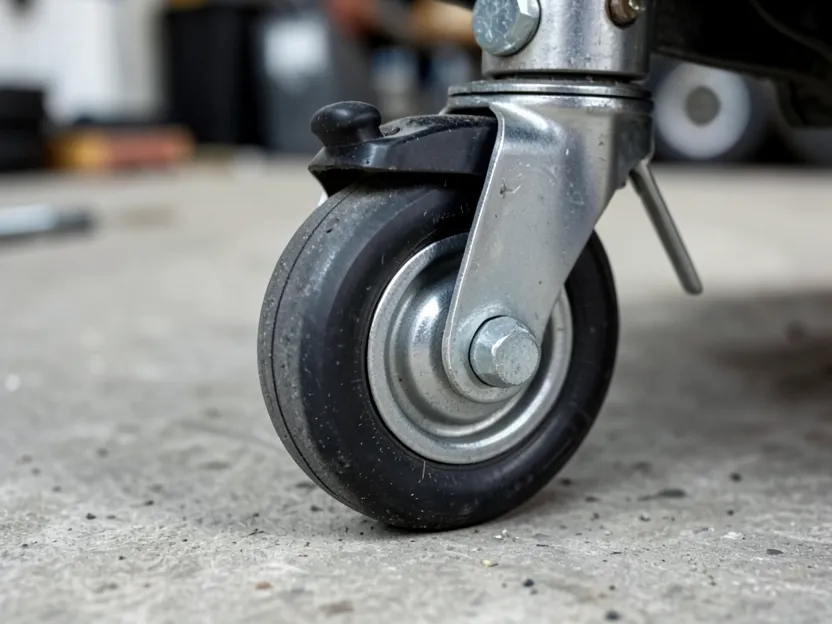
- Fixed (rigid) casters – the wheel fork is bolted so it can only roll in a straight line, it cannot swivel. Most mobile bases put two fixed casters on one side for a stable, predictable rolling direction.
- Swivel casters – the wheel fork sits on a rotating plate, so the wheel can point in any direction. These usually go on the opposite side or corner from the fixed casters, which is what lets you steer the saw around a corner instead of just pushing it in a straight line.
- Locking casters – a foot-operated brake pad presses against the wheel tread (and on some models, a second pin locks the swivel plate too) to stop the wheel from turning or rotating. At least one caster on any bolt-on setup should lock; on a proper mobile base, the lift mechanism itself does this job by taking the wheels off the floor.
Wheel and Caster Materials: Matching Wheels to Your Shop Floor
The wheel material matters more than most buyers expect, because the wrong one either damages your floor or wears out fast under a heavy tool.
- Cast iron or steel wheels handle the most weight and hold up under a cabinet saw, but they’re noisy on concrete and can leave marks or dent softer flooring.
- Rubber wheels roll quietly and absorb small bumps and cracks in an old concrete floor well, which matters if your shop floor isn’t perfectly flat.
- Polyurethane wheels are the common middle ground on mid-priced mobile bases: quieter than steel, more load-tolerant and longer-wearing than plain rubber, and they don’t leave black marks on light-colored flooring the way some rubber compounds do.
Weight Capacity: Sizing Wheels to Your Table Saw
Table saws span a wide weight range, and that range is exactly why “just buy the cheapest 4-pack of casters” backfires. A benchtop or jobsite saw usually weighs somewhere in the 40 to 90 lb range. A contractor-style saw with a stamped-steel base typically runs 100 to 300 lbs. A hybrid or cabinet saw, especially with cast-iron wings and an extension table, commonly lands between 300 and 600+ lbs.
Caster wheels are rated per wheel, not per set, and a typical tool-stand caster is rated anywhere from 50 lbs to 300+ lbs depending on its size and wheel material. To size a base correctly, add up the rated capacity of every wheel that actually bears weight (a 4-caster base with two fixed and two swivel wheels is usually rated for all four touching the floor), then make sure that total comfortably clears your saw’s actual weight, not just matches it. A base rated right at the saw’s weight with no margin will wear out its wheels and bearings faster than one with headroom to spare.
How to Install a Mobile Base or Bolt-On Casters
For a universal mobile base kit:
- Unfold the base on a flat section of floor and check its adjustable rails against your saw’s actual footprint before attaching anything.
- Set the saw on top of the base and slide the rails in until they sit under the saw’s mounting points or feet.
- Bolt the rails to the saw’s base using the hardware included with the kit (or your saw’s existing leveling-foot holes, if it has them).
- Test the pedal or lever through a full cycle with the saw on top: it should lift cleanly onto the wheels and drop back down onto its feet without binding.
- With the saw down on its feet (not on the wheels), check that it sits flat with no rocking before you make a first test cut.
For bolt-on casters without a lift mechanism, the process is more basic but the stakes are the same: measure and mark the leg positions, drill pilot holes sized for the caster’s mounting bolts, attach each caster with washers and lock nuts (not just nuts, which back off under vibration), and put at least one locking caster on. Snug every bolt, then load the saw and check for wobble before you trust it with a cut.
Locking Wheels Before You Cut Is Not Optional
A table saw that can shift, even slightly, while you’re feeding a board changes how the workpiece meets the blade and the fence. That’s a real setup for a bind, and a bind against the blade or fence is the direct cause of kickback, the most common serious table saw injury. Locking every wheel, or fully engaging a mobile base’s drop-down feet, before you ever pull the trigger is a one-second habit that removes that variable entirely. Get in the routine of checking it the same way you’d check that the blade guard is on and the riving knife is in place. A locking mobile base belongs on the same table saw safety accessories checklist as your blade guard, push sticks, and featherboards, not treated as a separate mobility upgrade.
Maintenance
Sawdust is the main enemy of caster wheels. It packs into the wheel bearings and the swivel raceway, which makes the saw harder to steer and can jam a locking pedal so it doesn’t fully engage. Blow out or wipe down the wheels and swivel plates every few months, more often if your saw lives near the blade and collects a lot of dust at floor level. Check the mounting bolts for looseness at the same time, since vibration from normal cutting works fasteners loose over time, and replace a wheel the moment its tread cracks or its bearing starts to wobble rather than waiting for it to fail while the saw is loaded.
Cost Guide
A basic 4-pack of bolt-on casters runs roughly $20 to $40, with locking casters and larger wheel diameters near the top of that range. Universal mobile bases with a foot-pedal lift mechanism generally run from about $60 for a lightweight benchtop-saw base up to $150 to $200+ for a heavy-duty base rated for a cabinet saw with a large footprint. The mobile base costs more, but it’s doing a different job than a bare caster kit: it’s giving you a saw that rolls on demand and then sits as still as if it had no wheels at all, which a set of bolt-on casters alone can’t fully match unless every one of them locks.
Frequently Asked Questions
How Much Weight Can Caster Wheels Take?
Caster wheels are rated individually, and ratings for wheels sized for tool stands typically run from about 50 lbs up to 300+ lbs per wheel. Always check the manufacturer’s per-wheel rating and multiply it by the number of load-bearing wheels, then compare that total to your table saw’s actual weight, not the other way around.
What Are Table Wheels Called?
The wheels used to make a table saw mobile are called casters. A caster is a wheel mounted in a fork that attaches to the tool’s base, either rigidly (fixed caster) or on a rotating plate (swivel caster).
What Is The Most Common Accident Caused By Table Saws?
The most common serious table saw accident is kickback, where a workpiece binds against the blade or rip fence and is thrown back toward the operator at high speed. A table saw that is not locked down on its mobile base adds a second risk: the saw itself can shift or roll during a cut, which increases the chance of a bind and kickback.
Can You Put A Mobile Base On Any Table Saw?
Most universal mobile bases adjust to fit a range of footprints and work with most contractor, hybrid, and cabinet table saws, but you still need to check the base’s weight rating and footprint range against your specific saw before buying, since benchtop and jobsite saws often need a different, lighter-duty stand instead.
Should I Bolt Caster Wheels Directly To My Table Saw’s Legs Instead Of Buying A Mobile Base?
You can, but fixed non-retracting casters bolted straight to the legs mean the saw is always sitting on its wheels, including during a cut, which invites vibration and drift. A lever or foot-pedal mobile base solves this by lifting the saw onto its wheels only when you need to roll it, then lowering it back onto solid, non-rolling feet for the actual cut.
Conclusion
Wheels turn a table saw from a tool you plan your whole shop layout around into one you can roll out of the way, angle for a long rip, or take out to the driveway for a dusty cut. Pick a mobile base with a real lift-and-lock mechanism if your saw is anything heavier than a benchtop model, match the wheel material to your floor, size the weight rating with real margin, and treat locking the wheels before a cut as part of your normal safety routine, not an afterthought.
Sponsored / affiliate links. As an Amazon Associate I earn from qualifying purchases. I may earn additional commission from eligible campaigns.