Wheels That Screw Into Wood: Plate-Mount vs. Bolt-Through
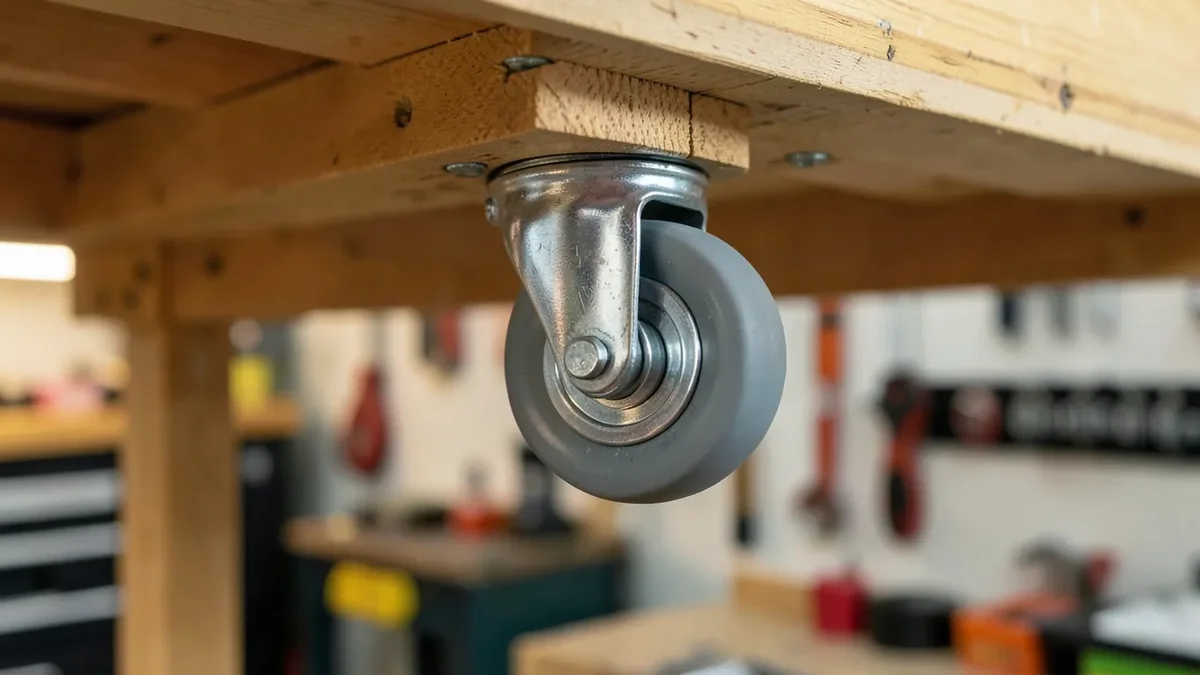
Most “wheels that screw into wood” are plate-mount casters — a small flat metal plate with four screw holes that you fasten directly to a wood surface, not a single bolt that runs all the way through the board. That distinction matters more than most buying guides let on, because it also sets the real weight limit for whatever you’re building.
If you’re building a mobile base for a table saw or workbench, see our full guide to building your own cart for the frame and bed steps — this article focuses specifically on the wheels themselves: which type actually screws into wood, how much weight each mounting style can safely carry, and how to install them so they don’t work loose.
Plate-Mount vs. Bolt-Through: The Real Difference
Casters that “screw into wood” almost always fall into one of two mounting styles, and they are not interchangeable:
- Plate-mount (stem-free) casters — a flat square or rectangular plate with four small holes. You drive a wood screw into each hole and into the wood itself. No pre-drilled socket or threaded insert is required, which is why these are the ones most people mean when they say “screws into wood.”
- Bolt-through casters — the mounting hole runs completely through the wood, and a bolt is secured on the far side with a nut and washer. This spreads the load across a captured fastener instead of relying on screw threads biting into the wood fibers alone.
Plate-mount is faster to install, works on furniture legs and cart decks where you can’t get to the back side of the wood, and is what’s included with nearly every caster multi-pack sold for furniture and shop carts — including the set below.
Best Screw-In Plate Caster Set
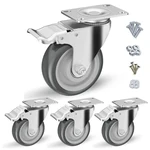 |
CLOATFET 4″ Swivel Plate Casters with Brake – $26.99 A true plate-mount set — four small screws per wheel, no socket or bolt-through needed, with a published per-set weight rating instead of a guess.
|
Types of Wheels That Screw Into Wood
Within plate-mount casters, you’ll still choose between a few real variables that affect how the wheel behaves once it’s on your project:
- Swivel vs. rigid — swivel casters rotate 360° for maneuvering in tight shop aisles; rigid casters only roll in a straight line but track better on a long cart pushed in one direction.
- Locking vs. non-locking — a locking (dual-lock) caster stops both the wheel and the swivel at once, which matters for anything you’ll stand on or work at, like a mobile miter saw stand.
- Wheel material — rubber and TPR (thermoplastic rubber) wheels roll quietly and won’t mark hardwood or tile floors; hard plastic and nylon wheels last longer under heavy loads but can leave scuff marks and are noisier on concrete.
Weight Limits: Why “It’s a Caster, It’ll Hold Anything” Is Wrong
This is the part most wheel guides skip. A plate-mount caster’s weight rating isn’t really about the wheel — it’s about how well four small wood screws can grip the wood they’re driven into. Screwed into end grain (the cut end of a board, where the wood fibers run parallel to the screw), the same screw holds dramatically less than it would in face grain, because there’s less fiber for the threads to bite across.
That’s why manufacturers publish a load rating per set, not per wheel that can theoretically spin under any weight. As one concrete example: a common 4-inch plate-mount caster 4-pack is rated for 1,200 lbs total across the set of four — roughly 300 lbs per caster — and that number assumes the screws are seated in solid wood, not particleboard or a thin edge of plywood. Push a heavy tool cabinet, loaded workbench, or shop cart meaningfully past that rating and the failure point is almost never the wheel itself; it’s the screws pulling out of the wood.
Two practical takeaways:
- Check the manufacturer’s actual per-set weight rating before assuming a caster will hold your project — don’t estimate it from the wheel’s size alone.
- For anything near or over a plate-mount set’s rated capacity — a loaded tool chest, a heavy outfeed table, a cart meant to carry lumber — a bolt-through mount (or a caster rated specifically for industrial/heavy-duty use with a larger plate and more screw holes) holds more securely than a standard 4-hole plate screwed into a thin apron or leg.
Choosing the Right Screws
Most plate-mount caster sets include mounting screws sized for the plate’s holes, and it’s worth using those first rather than substituting whatever is in your screw bin. If you do need to replace them:
Length should be long enough to fully engage the wood beneath the plate without poking through the other side — on a 3/4-inch table saw base or cart deck, that typically means a screw no longer than about 5/8 inch under the plate. Diameter matters more than length for holding power in shallow material: a slightly thicker (#8 vs. #6) screw resists pull-out better, provided your pilot hole is sized correctly. Material is the last variable — steel screws are stronger, while stainless or brass resist corrosion in a damp garage or outdoor cart at some cost to raw strength.
| Screw Material | Holding Strength | Corrosion Resistance |
|---|---|---|
| Steel | Highest | Low (rusts without coating) |
| Zinc-plated steel | High | Moderate |
| Stainless steel | Moderate-high | High |
Tools You’ll Need
Installing plate-mount casters is a short job with basic shop tools: a drill/driver for pilot holes and driving screws, a tape measure and pencil for marking plate positions, a square to keep the plate aligned with the edge of the board, and safety glasses since you’re drilling overhead into the underside of a bench or cart.
Step-by-Step: Installing Plate-Mount Casters on Wood
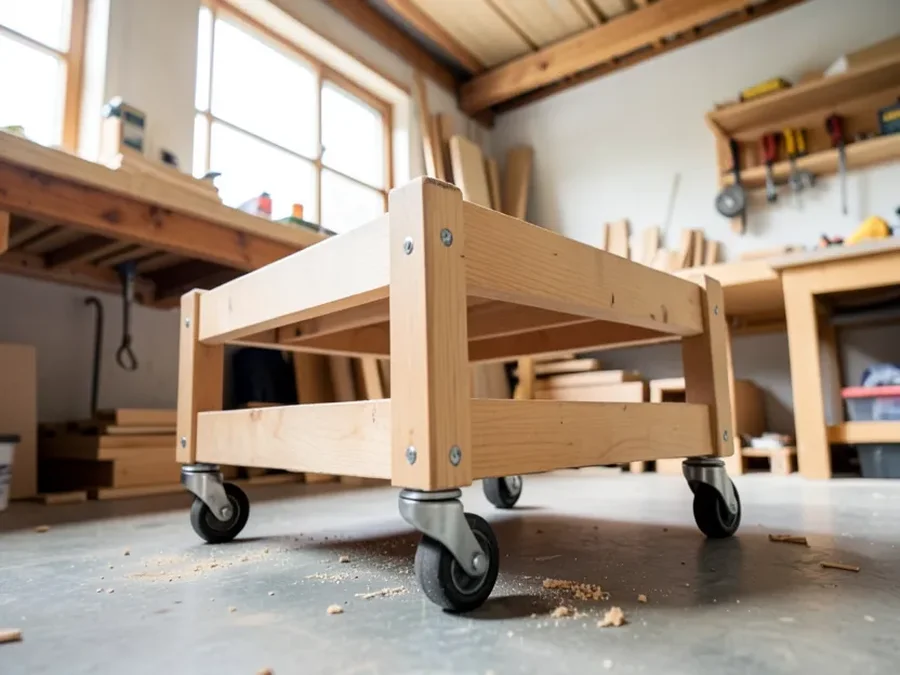
- Flip the cart, bench, or furniture piece upside down and set it on a padded surface to avoid scratching the top.
- Measure in from each corner and mark the plate position — keep casters as close to the corners as the leg or apron allows for stability, and use locking casters on at least two of the four positions.
- Hold the plate square to the edge and mark the four screw holes with a pencil or awl.
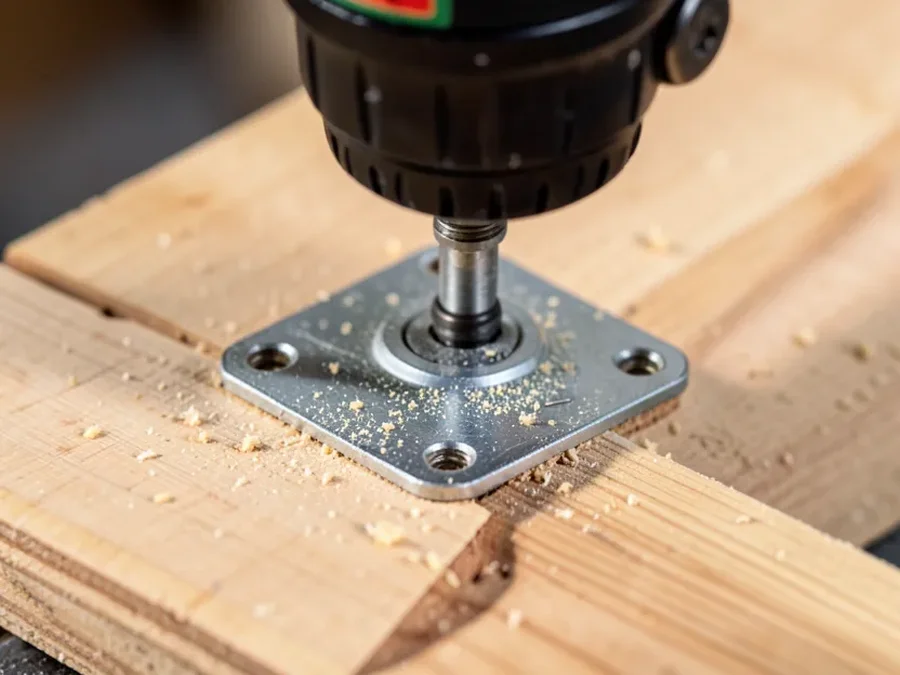
- Drill a small pilot hole at each mark (slightly smaller than the screw’s shank) to prevent splitting, especially near the edge of a board.
- Drive the included screws through the plate and into the pilot holes, seating them snugly without stripping the wood.
- Repeat for all four casters, then flip the piece over and check that it sits level and rolls smoothly before loading it.
Maintenance and Troubleshooting
Recheck screws after the first few weeks of use — wood compresses slightly under the plate as it settles, which can leave screws a touch loose even if they were driven in tight. After that, a quick inspection every few months is enough: wipe debris out of swivel housings and wheel treads, confirm locking casters still engage fully, and re-tighten any screw that’s backed out before it wallows out the pilot hole. If a hole does strip, switch to a slightly longer or thicker screw, or fill it with a glued wood plug and re-drill, rather than continuing to load a loose connection.
Frequently Asked Questions
What’s the difference between plate-mount and stem-mount casters?
Plate-mount casters have a flat plate with screw holes and fasten directly to a wood surface with wood screws — no pre-drilled socket needed, which is why these are the “screw into wood” option. Stem-mount (threaded stem) casters instead have a metal post that screws into a matching threaded socket or insert, which has to be installed in the wood first; they’re common on office chairs and metal-frame equipment, less common for DIY wood carts and furniture.
How much weight can casters that screw into wood support?
It depends on the specific set’s published rating, not the wheel size alone — a common 4-inch plate-mount 4-pack is rated around 1,200 lbs total (about 300 lbs per caster), assuming the screws are seated in solid wood. Because the limit comes mostly from how well four small screws grip the wood, don’t assume a caster “will hold anything”; check the manufacturer’s per-set rating before loading a heavy cart, cabinet, or workbench.
Do I need pilot holes before screwing in caster plates?
Yes, especially near the edge of a board or in hardwood. A pilot hole slightly smaller than the screw’s shank keeps the wood from splitting and makes the screw easier to drive straight, which also helps the plate sit flush instead of tilted.
Should heavy carts use bolt-through casters instead?
For loads near or above a standard plate-mount set’s rated capacity, yes — a bolt-through mount, where the fastener passes completely through the wood and is secured with a nut on the other side, holds more reliably than four small wood screws in a thin apron or leg. It requires access to both sides of the wood and a drilled-through hole, which plate-mount doesn’t.
Conclusion
Most casters marketed as wheels that screw into wood are plate-mount, and their real limit comes from how well four screws hold in the wood underneath, not the wheel itself. Match the mounting style and weight rating to what you’re actually building, drill proper pilot holes, and recheck the screws once the piece has been in use for a few weeks.
Sponsored / affiliate links. As an Amazon Associate I earn from qualifying purchases. I may earn additional commission from eligible campaigns.