Where Does MDF Come From? Sawmill Leftovers, Not Whole Trees
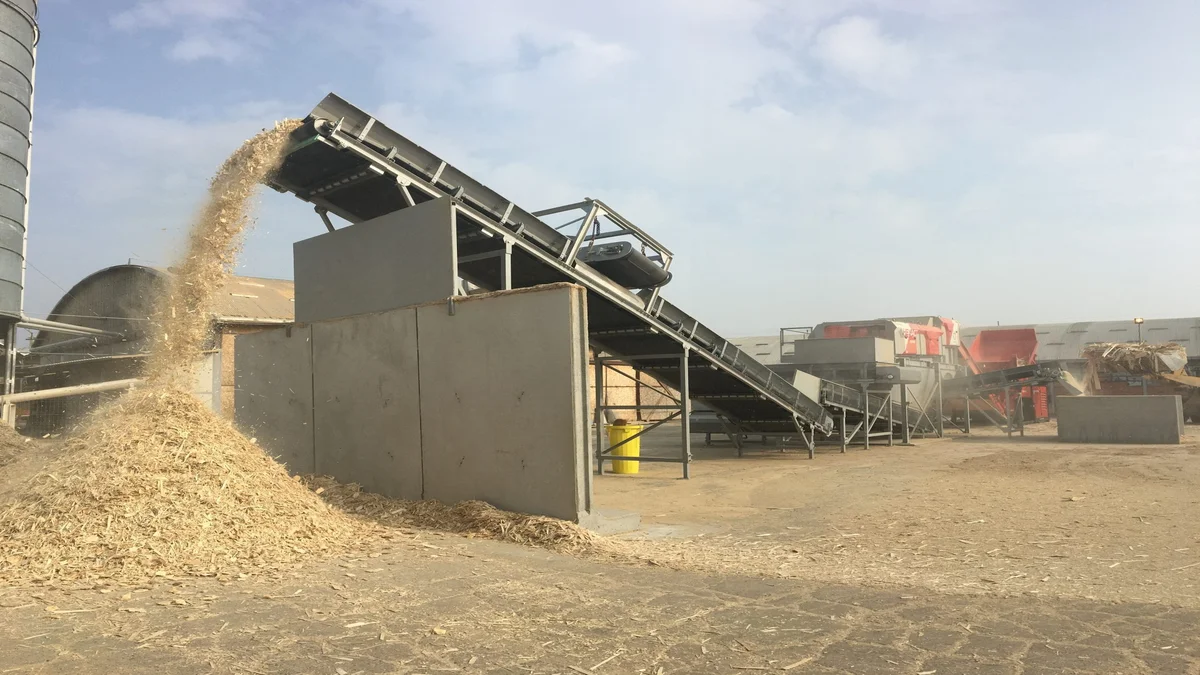
MDF is made primarily from wood residuals — sawmill shavings, planer chips, and other leftover softwood material — not whole harvested trees. Those residuals get chipped, steamed, and mechanically refined into fine wood fiber, blended with resin, and pressed under heat into the dense, uniform panels sold as MDF. It is, in that sense, one of the more efficient uses of wood in the lumber industry: material that used to be waste or burned as mill fuel becomes a usable building product.
The Raw Material: Mostly Leftovers, Not Fresh-Cut Logs
For Finishing Cut MDF Edges
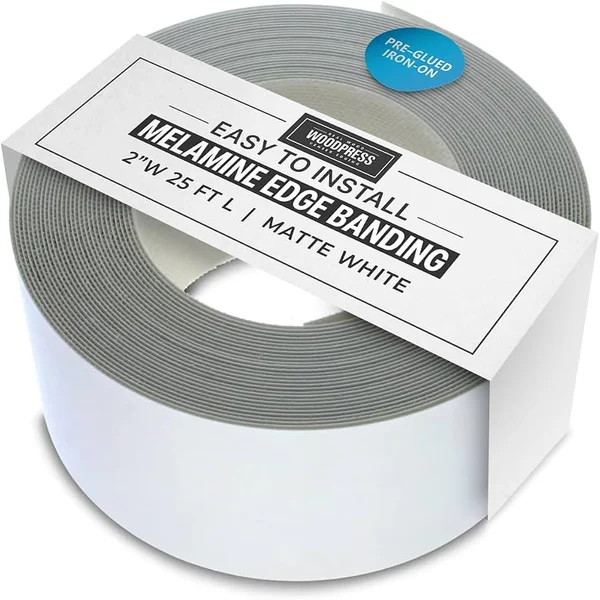 |
WoodPress Melamine Edge Banding – $26.95 A raw MDF edge shows the fiber texture and absorbs paint unevenly unless it’s sealed or banded — this covers a standard 4×8 sheet’s worth of cut edges.
|
Sawmills produce enormous volumes of byproduct in the course of cutting lumber — edge trimmings, planer shavings, sawdust, and off-cuts that are too small or irregular for solid-wood products. MDF manufacturing was largely built around using that byproduct rather than competing with sawmills for prime logs. Some virgin softwood fiber (typically pine or similar fast-growing species) is added when residual supply runs short or a specific fiber quality is needed, but the majority of MDF’s furnish comes from what would otherwise be waste wood.
How Wood Chips Become MDF
- Chipping and cleaning: Residual wood is chipped to a uniform size and screened to remove bark, dirt, and metal.
- Steaming and refining: Chips are steamed to soften the lignin holding wood fibers together, then passed through a mechanical refiner that grinds them down into individual wood fibers — this is the step that turns chunky wood chips into the fine, cotton-like fiber MDF is actually made from.
- Resin blending: The fiber is blended with a resin binder (typically urea-formaldehyde) at roughly 8 to 10 percent of the panel’s weight, along with a small amount of wax for moisture resistance.
- Mat forming: The resin-coated fiber is spread into a loose, even mat — thicker and fluffier than the final board, since it still has to be compressed.
- Hot pressing: The mat is pressed under heat (roughly 300 to 390°F) and high pressure for several minutes, which cures the resin and compresses the fiber into a dense, solid panel.
- Cooling, trimming, and sanding: Panels are cooled, trimmed to size, and sanded on both faces to final thickness and a smooth finish.
Myth: Is MDF Illegal in the US?
No — MDF is not illegal anywhere in the United States, and this claim appears to be a mix-up with unrelated regulations (such as formaldehyde emission limits under the EPA’s TSCA Title VI rule, which set maximum allowable formaldehyde emissions for composite wood products sold in the US, but do not ban MDF itself). MDF that meets those emission standards — which is effectively all MDF sold at US retailers today — is fully legal to buy, sell, and use. If you see this claim repeated elsewhere, it is not accurate.
Frequently Asked Questions
Is MDF Made From Real Wood?
Yes. MDF is made from real wood fiber — mostly sawmill residuals like shavings and off-cuts, refined down into fine fiber and bonded with resin. It is a genuine wood product, just not solid lumber.
Is MDF Illegal in America?
No. MDF is legal throughout the US. This myth likely stems from confusion with EPA formaldehyde emission standards for composite wood products, which regulate emissions rather than banning the material.
What Resin Is Used to Make MDF?
Most MDF uses a urea-formaldehyde resin binder, typically making up about 8 to 10 percent of the panel’s total weight, along with a small amount of wax for moisture resistance.
Why Doesn’t MDF Have a Grain Like Wood?
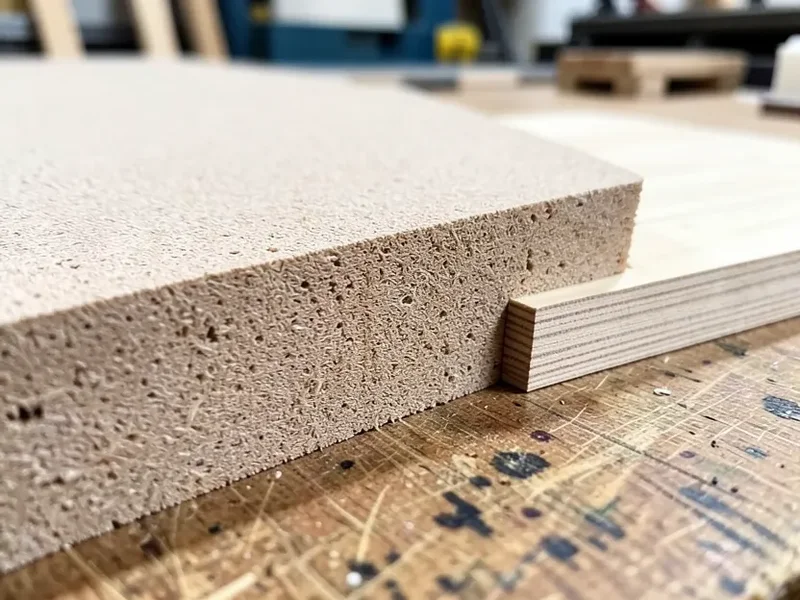
Because it’s made from fiber pressed to a uniform density throughout the panel, rather than grown wood cells running in a single direction. That’s also why it cuts and machines the same in every direction.
Bottom Line
MDF comes from wood — specifically the sawmill residuals that would otherwise go to waste — refined into fiber, bonded with resin, and pressed into dense, grain-free panels. It is a genuine wood product with real engineering tradeoffs, not the mystery material (or illegal one) it is sometimes made out to be.
Sponsored / affiliate links. As an Amazon Associate I earn from qualifying purchases. I may earn additional commission from eligible campaigns.