Ash Wood Near Me: Where to Actually Find and Buy It
Ash wood typically isn’t stocked at big-box stores — you’ll find it at local hardwood lumber yards, specialty sawmills, or ordered online by the board foot, usually $3.75 to $6+ for 4/4 stock. Buying “kiln-dried” boards without checking moisture yourself can leave you with cupped or cracked panels later. This guide covers where ash is actually sold, real current prices, what to check before you buy, and how to search for a dealer near you.
Where Ash Wood Is Actually Sold
Best Lumber Moisture Meter Pick
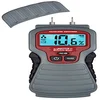
Calculated Industries AccuMASTER XT Digital Moisture Meter
A pin-type meter you can use right at the lumber yard before you pay for boards.
- Best for: one reliable meter for both lumber and firewood checks
- Why we picked it: pin sensors read accurately through rough-sawn ash, and the backlit display works in dim lumber-shed lighting
- Main drawback: pins leave two small holes, so test on an edge or offcut, not a show face
Compare more moisture meter options
 Option 1 MD-812 Digital Wood Moisture Meter
|
 Option 2 HT73 Digital Wood Moisture Meter
|
 Option 3 EINCORN Wood Moisture Meter
|
As an Amazon Associate we earn from qualifying purchases.
There’s no single “ash wood store” — it’s sold through four different kinds of sellers, each with a different price, selection, and reason to use it. This site doesn’t have a live local-store directory, so instead of guessing at businesses that may or may not still be open near you, here’s how each source type actually compares:
| Source Type | Typical Price (4/4 ash) | Selection | Best For |
|---|---|---|---|
| Big-box store (Home Depot / Lowe’s) | No fixed board-foot price; sold per board | Limited widths and lengths, inconsistent by location | A small project if your local store happens to have it in stock |
| Local hardwood lumber yard | Roughly $4–$8/bf, varies by region — call for current pricing | Best in person — you hand-pick boards and see grain and color yourself | Furniture-grade work where matching grain matters |
| Specialty sawmill | Often below retail; cash or local pickup only | Inconsistent stock — call ahead before driving out | Bulk buys, rough-sawn or green (unseasoned) stock |
| Online hardwood dealer | $3.75–$5.60+/bf for 4/4, higher for 6/4–8/4 | Widest selection, ships nationwide, no in-person pick | When nothing local actually has ash in stock |
How to Find an Ash Wood Supplier Near You
Since no directory can guarantee what’s in stock at a store today, the fastest real path is to search and call, not just search. Here’s the order that actually works:
- Search Google Maps for “hardwood lumber near me,” not just “lumber near me” — general lumber yards mostly stock construction-grade pine and fir, not specialty species like ash.
- Call before you drive. Ask specifically whether they have ash in stock right now, not whether they “can order it” — many yards special-order it, and that can take one to three weeks to arrive.
- Try national specialty retailers as a backup. Chains like Woodcraft and Rockler carry ash in some store locations even when independent yards don’t; call your nearest branch to confirm current stock.
- Ask a local woodworkers guild. Guilds typically keep an informal list of member-recommended lumber sources that don’t show up in a basic search — the Popular Woodworking local lumberyard map is a good starting point for finding one near you.
- Compare with online hardwood dealers if nothing local works out. Mail-order suppliers ship ash lumber nationwide, usually within a week, though you lose the ability to hand-pick individual boards.
Once you’ve actually got a seller lined up — local or mail-order — a moisture meter tells you in seconds whether the board is really dry enough to use, instead of taking a “kiln-dried” sticker on faith.
What Ash Wood Actually Costs
Ash is one of the more affordable native hardwoods. As of 2026, specialty online dealers price surfaced 4/4 white ash starting around $3.75 per board foot (Wood Vendors) and $5.60 per board foot for thicker 6/4 stock (Advantage Lumber), with most dealers landing somewhere in between. That’s noticeably cheaper than walnut or hard maple, and close to what red oak runs.
📊 4/4 white ash lumber runs roughly $3.75–$5.60+ per board foot at specialty online hardwood dealers, before extra per-board-foot surcharges some sellers add for orders under 100 board feet or boards wider than 11 inches. — Source: Wood Vendors & Advantage Lumber live pricing, 2026.
Local yard and sawmill pricing swings more by region and by how far ash has to be trucked in, so treat the table above as a starting point and confirm current pricing with a phone call — posted online prices from national dealers are the only numbers that hold still.
What to Look For When You Buy Ash Wood In Person
- Moisture content: Test with a meter, not the “kiln-dried” tag alone — see the data point below.
- Straight, even grain: Ash’s open, straight grain is part of why it’s chosen for tool handles and chair frames; avoid boards with a lot of wild grain reversal if strength matters for your project.
- Color consistency: White ash ranges from pale cream to light brown; if you’re building a matched set, pull boards from the same stack rather than mixing pallets.
- Warping and checking: Sight down the length of each board for cup, bow, or twist, and check the ends for splits (checking) before you pay.
- Knots and bark inclusions: Minor knots are normal in lower grades; for furniture faces, ask for a higher grade (FAS or Select) rather than paying for cutoffs you can’t use.
📊 Hardwood destined for indoor furniture and cabinetry should be dried to 6%–8% moisture content — the range the USDA Forest Products Laboratory’s Wood Handbook lists as stable in a conditioned U.S. interior. Boards that read higher can still shrink and open up joints after you build with them. — Source: USDA Forest Products Laboratory, Wood Handbook.
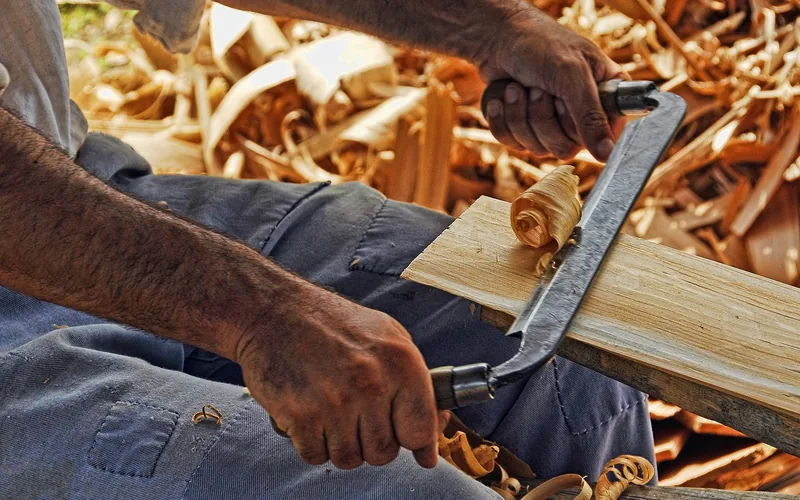
Kiln-Dried vs. Air-Dried Ash
Kiln-dried ash is lumber dried in a heated chamber down to roughly 6%–8% moisture content, ready for indoor furniture and cabinetry without further drying time. Air-dried ash is stacked and dried outdoors or in an unheated shed, which is slower and usually only reaches 12%–20% moisture depending on climate — fine for outdoor projects or rough construction, but it needs to come down further before it’s stable indoors. Most hardwood dealers sell kiln-dried stock by default; sawmills and small local yards are more likely to also carry air-dried or green ash at a lower price.
Ash is a true hardwood with a Janka hardness of 1,320 lbf — just below white oak and slightly harder than red oak — which is part of why it holds up so well in chairs and tool handles. For the full breakdown of grain, workability, and how it stacks up as a species, see our guide to whether ash is a hardwood. If you’re deciding between species for a specific build, our ash vs. white oak comparison covers price and workability differences in more depth.
Not Looking for Ash Wood? Wood Ash Is a Different Material
If you actually searched for ash wood but meant the leftover residue from burning wood — used in gardens, soap-making, or de-icing walkways — that’s wood ash, not ash lumber, and it’s sourced completely differently (fireplaces, wood stoves, and some garden centers, rather than lumber yards). See our guide to where to buy wood ash near you for local and online sources.
Frequently Asked Questions
Is ash wood expensive?
No. Ash is one of the more affordable native hardwoods. Online specialty dealers price 4/4 ash between about $3.75 and $5.60 per board foot as of 2026 — cheaper than walnut or hard maple, and close to red oak.
Can I buy ash wood at Home Depot or Lowe’s?
Sometimes, but selection is inconsistent by store. Both chains list ash hardwood boards on their websites, but in-store stock varies by location and is usually limited to a few widths and lengths — call your local store or check its online inventory tool before making a special trip.
What’s a fair price per board foot for ash?
Expect roughly $3.50 to $6 per board foot for surfaced 4/4 ash from a specialty hardwood dealer, with 6/4 and 8/4 thicknesses running higher. Prices climb further for wide, clear boards or orders under 100 board feet.
Is ash a good wood for furniture?
Yes. Ash is a true hardwood with a Janka rating of 1,320 lbf — close to white oak and roughly on par with red oak — and its straight grain and shock resistance make it a common choice for chairs, tool handles, and other furniture that needs to flex without breaking.
How do I know if ash lumber is dry enough to use?
Check it with a moisture meter rather than trusting a “kiln-dried” label alone. Hardwood destined for indoor furniture should read 6% to 8% moisture content, the range the USDA Forest Products Laboratory’s Wood Handbook lists as stable for conditioned U.S. interiors.
Ash isn’t a wood you’ll usually grab off a big-box shelf — the fastest real path is a phone call to a local hardwood yard or sawmill, backed up by a specialty retailer or online dealer if nothing local pans out. Confirm stock before you drive, check moisture before you build, and use the price ranges above as your baseline for a fair deal.
Sponsored / affiliate links. As an Amazon Associate I earn from qualifying purchases. I may earn additional commission from eligible campaigns.