Can Ash Wood Be Bent? Yes – Steam Bending Ratios & Moisture Range
Yes, ash wood bends well when steamed – it’s one of the most reliable domestic hardwoods for the job. But the moisture range that actually works is narrower than most guides claim, and getting that number wrong is the single biggest reason ash splits mid-bend.
Ash owes its bendability to a straight, ring-porous grain structure that takes steam evenly and flexes without much resistance once heated. That’s why it shows up in chair backs, boat ribs, snowshoes, and tool handles more than almost any other domestic hardwood. This guide covers the real moisture and thickness-to-radius numbers, the steam-bending process step by step, and the two mistakes that crack more ash than anything else.
Why Ash Bends So Well
Ash is a ring-porous hardwood, meaning the large, dense earlywood pores form in a distinct band at the start of each growth ring. That structure, combined with typically straight and uniform grain from fast, even growth, lets steam penetrate quickly and lets the wood fibers slide past each other under load instead of snapping. Oak bends the same way for the same reason – the two woods dominate steam-bent furniture and boatbuilding for that reason. Softer, less porous species like pine or poplar don’t behave the same way and are rated poor choices for steam bending even though they’re easier to cut and shape otherwise.
Not every board of ash bends equally well. Straight, defect-free grain is what actually determines success – a piece with knots, grain runout, or reaction wood will fail at the defect regardless of species. Quarter-sawn stock also tends to bend more predictably than flat-sawn stock of the same species, because the growth rings are oriented to resist the compression forces on the inside of the bend.
Best for DIY Ash Steam Bending
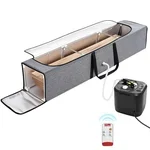 |
Wood Bending Steam Generator Kit, 63″ Foldable Box – $94.99 Ash takes steam fast, but only if the box holds a steady temperature for the full soak – this kit does that without you jury-rigging a heater, hose, and PVC pipe.
|
The Moisture Content Myth (What Actually Works)
A lot of ash-bending guides tell you to aim for 20–30% moisture content before steaming. That range is too wide and, at the top end, too wet. Forest Products Laboratory guidance and working steam-benders both put the practical target closer to 15–22% moisture content, with air-dried stock in the 15–25% range giving the most consistent results. Wood above roughly 30% moisture doesn’t bend better – it just takes longer to heat through and is more prone to scorching or blistering at the surface before the core ever gets pliable.
The practical takeaway: don’t reach for green, dripping-wet lumber assuming “wetter is better.” Air-dried ash that’s been sitting a few weeks to a couple of months, checked with a moisture meter, bends more predictably than either kiln-dried stock (too dry, prone to cracking) or freshly milled green stock (too wet, slow to heat and prone to surface damage). If you don’t own a moisture meter, a simple test is to weigh a sample offcut, oven-dry it, and re-weigh – but for most shop use, buying a $20–30 pin-type meter is faster and pays for itself the first time it saves a bend.
Thickness-to-Radius Ratio: How Tight Can You Bend Ash
This is the number most articles skip entirely, and it’s the one that actually predicts whether your bend will hold. The thickness-to-radius ratio compares the thickness of your stock to the tightest radius it can form without cracking:
- With a metal compression strap: straight-grained ash can achieve ratios as tight as roughly 1:2 (a 1″-thick piece bending to a 2″ radius). The strap holds the outer face in compression and stops it from tearing as the inside of the bend compresses.
- Without a strap: expect closer to 1:7 or looser with carefully selected, defect-free ash. Try to force a tighter radius than that freehand and the outer fibers will tear before the inside finishes compressing.
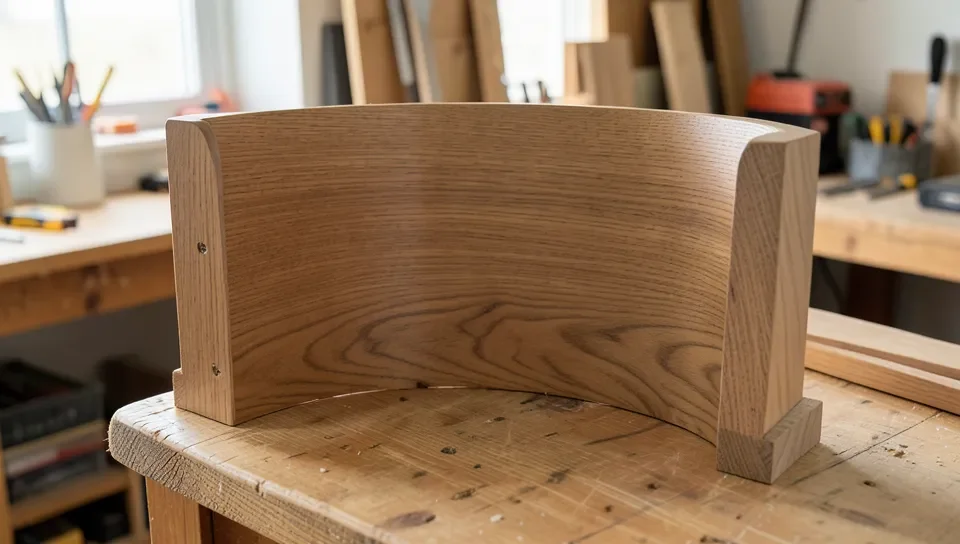
In practice, most shop projects use ash strips between 3/4″ and 1″ thick. A 3/4″ strip without a strap should comfortably handle a radius down to around 5–6 inches – tight enough for chair backs and tool handles. If your design needs a tighter curve than that, either thin the stock, add a compression strap, or switch to lamination (covered below), which sidesteps the ratio limit entirely because each thin layer bends on its own before being glued into the final shape.
Steam Bending Ash Step by Step
1. Build or Set Up a Steam Box
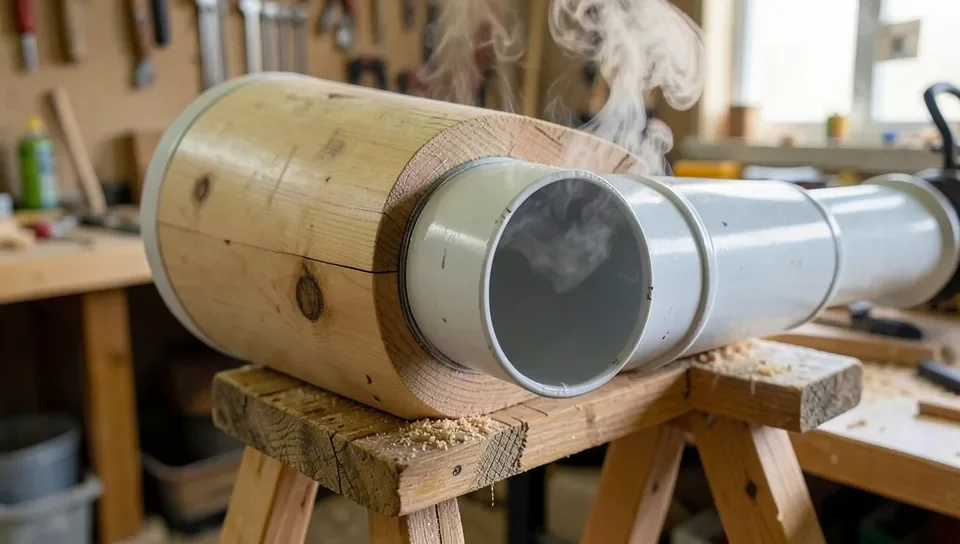
A steam box needs to be sealed enough to hold steam but vented enough not to pressurize – a small gap or weep hole at one end is normal. Shop-built versions are usually a length of large PVC pipe or a plywood box fed by a wallpaper steamer, a turkey fryer burner and pot, or a dedicated steam generator kit. Whatever you use, support the wood on dowels or a rack inside the box so steam reaches all four faces, not just the side touching the box floor.
2. Steam for One Hour Per Inch of Thickness
The standard rule of thumb is one hour of steaming per inch of stock thickness, at a box temperature as close to 212°F (100°C) as you can hold. A 3/4″ strip needs roughly 45 minutes; a full 1″ strip needs about an hour. Over-steaming past 90 minutes or so doesn’t help and can start to leach color and strength from the wood, so don’t treat “longer is safer” as a rule here.
3. Bend on the Form Immediately
Pull the wood out and get it onto the bending form within 30–60 seconds – ash cools and stiffens fast once it’s out of the steam. Bend in one smooth, continuous motion rather than easing it back and forth; stopping partway lets the fibers start to set in the wrong position. Clamp it to the form as soon as the curve is set.
4. Let It Dry Fully Before Unclamping
This is the step most people rush. Ash needs to dry completely on the form – typically several days to a week depending on thickness and shop humidity – before you remove the clamps. Pull it too early and it will spring back toward its original shape, sometimes losing much of the curve you just spent an hour steaming to get.
Alternatives When Steam Bending Isn’t Practical
Lamination
Lamination glues several thin strips of ash together over a form instead of steaming one thick piece. Because each layer is thin, it bends far past the thickness-to-radius limits that apply to solid steamed stock, and the glue lines add strength once cured. It’s the standard choice for tight curves or structural bent parts, at the cost of visible glue lines unless you’re careful with layer selection and clamping pressure.
Kerf Cutting
Kerf cutting saws a series of closely spaced cuts partway through the wood on the inside face of the bend, which lets that face compress without steaming at all. It’s fast and needs no special equipment beyond a table saw, but the cuts weaken the piece and are usually hidden on a face that won’t be seen or structurally loaded.
Cold Bending
Cold bending uses clamps and a form to bend thin, flexible ash stock with no heat at all. It only works on thin material and gentle curves, but it’s the quickest option when the project doesn’t need a tight radius.
Common Problems and How to Prevent Them
Cracking
Cracking almost always traces back to one of three causes: moisture content outside the 15–22% window, grain that isn’t straight through the bend area, or bending too fast instead of one smooth motion. Check your stock for grain runout before you steam it – hold it up to a light and look for the grain lines running off the edge of the board rather than parallel to it. A compression strap also meaningfully reduces cracking risk on tight bends by keeping the outer face from stretching past its limit.
Spring-Back
Some spring-back after unclamping is normal – ash typically relaxes a few degrees from the exact form shape. Compensate by over-bending slightly past your target curve, and always leave the piece clamped to the form until it’s fully dry rather than judging “dry enough” by touch.
Finishing Bent Ash Wood
Once the piece is fully dry and unclamped, sand with the grain using progressively finer grits, finishing around 220-grit for most finishes. Ash’s open pores take stain and oil finishes well but can look blotchy with certain film finishes unless you seal first with a thin coat of sanding sealer or diluted finish. After that, a standard wipe-on oil or polyurethane protects the bent shape the same way it would on any ash project – the bending process itself doesn’t change how the wood finishes.
Frequently Asked Questions
What Is the Disadvantage of Ash Wood?
Ash is vulnerable to insect damage – particularly the emerald ash borer, which has killed large numbers of ash trees in North America and can affect lumber supply and cost. It’s also prone to warping if dried too quickly or exposed to fluctuating humidity after finishing.
What Is the Bending Strength of Ash Wood?
White ash has a modulus of rupture (bending strength) of approximately 15,000 psi in USDA Forest Products Laboratory testing, putting it among the strongest common domestic hardwoods for bending applications – notably higher than red oak and most maples.
Does Ash Wood Warp?
Ash can warp if it’s dried unevenly or exposed to significant moisture swings after a project is finished. Proper drying before use and a sealed finish afterward largely prevent it.
How Flexible Is Ash Wood?
Very, once steamed within the correct moisture range. Straight-grained ash can bend to roughly a 1:2 thickness-to-radius ratio with a compression strap, or about 1:7 without one, which is why it’s a standard choice for chair backs, boat ribs, and tool handles.
Conclusion
Ash bends reliably when three things line up: straight, defect-free grain, moisture content in the 15–22% range rather than the wetter range often quoted, and a bend done in one smooth motion followed by full drying time on the form. Get those right and ash will hold a tight curve better than almost any other domestic hardwood available at a home center.
Sponsored / affiliate links. As an Amazon Associate I earn from qualifying purchases. I may earn additional commission from eligible campaigns.