Why is Cedar Rot Resistant: Unveiling Nature’s Toughest Wood
Cedar wood is known for lasting a long time. Why? It has natural oils that stop rot and bugs. This makes cedar a good choice for outdoor projects. Strong and easy to use. No need to worry about quick damage. Simple and smart.
Biography
| Aspect | Details | Source / Reference |
|---|---|---|
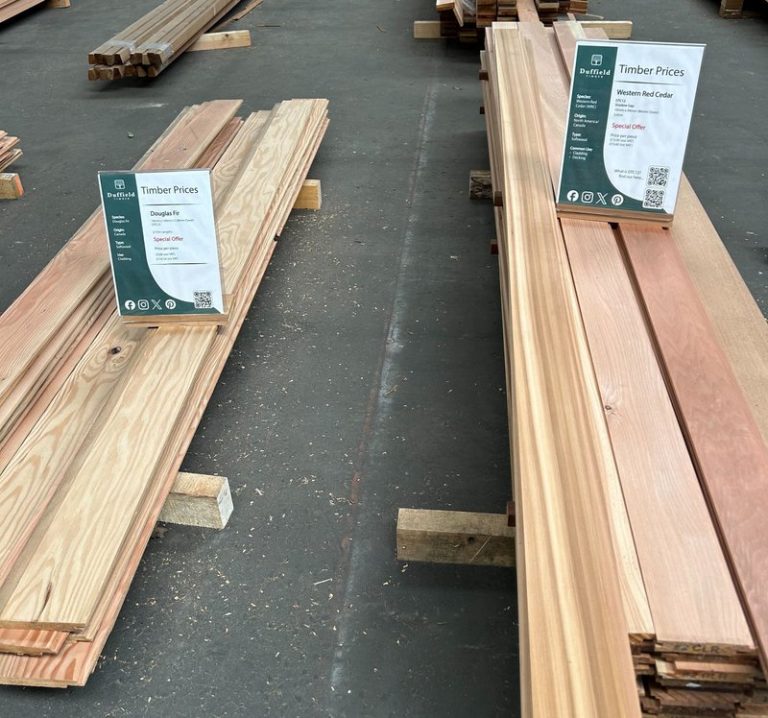
| Natural Biochemistry | Cedar contains natural fungicidal and insecticidal compounds that make it highly resistant to rot, decay, and insect attacks. | Duffield Timber |
| Dimensional Stability | Cedar’s dimensional stability reduces cracks and splits, preventing moisture entry points that lead to decay. | Lakeland Mills |
| Moisture Resistance | Cedar wood resists absorbing moisture due to its hardness and natural oils, which slows down the rot process. | Various sources including Real Cedar |
| Heartwood vs Sapwood | Heartwood of eastern red cedar is very rot-resistant and suitable for outdoor use without sealing; sapwood is less resistant. | Fine Woodworking |
| Traditional Use | Indigenous Nations have traditionally used Western Red Cedar because of its exceptional resistance to rot fungus and disease. | Nerdy About Nature (YouTube) |
| Causes of Cedar Rot | Dry rot fungus thrives on moisture; sun damage can cause cracks that enable moisture entry and rot development in cedar. | Rogall |
| Durability Comparison | Western Red Cedar is among the most durable woods, often compared favorably with Douglas Fir and Larch for rot resistance. | Pioneer Millworks |
| Longevity | Cedar wood can last many years before rotting, especially when properly maintained and protected from excessive moisture. | General consensus from multiple wood durability sources |
Early Life
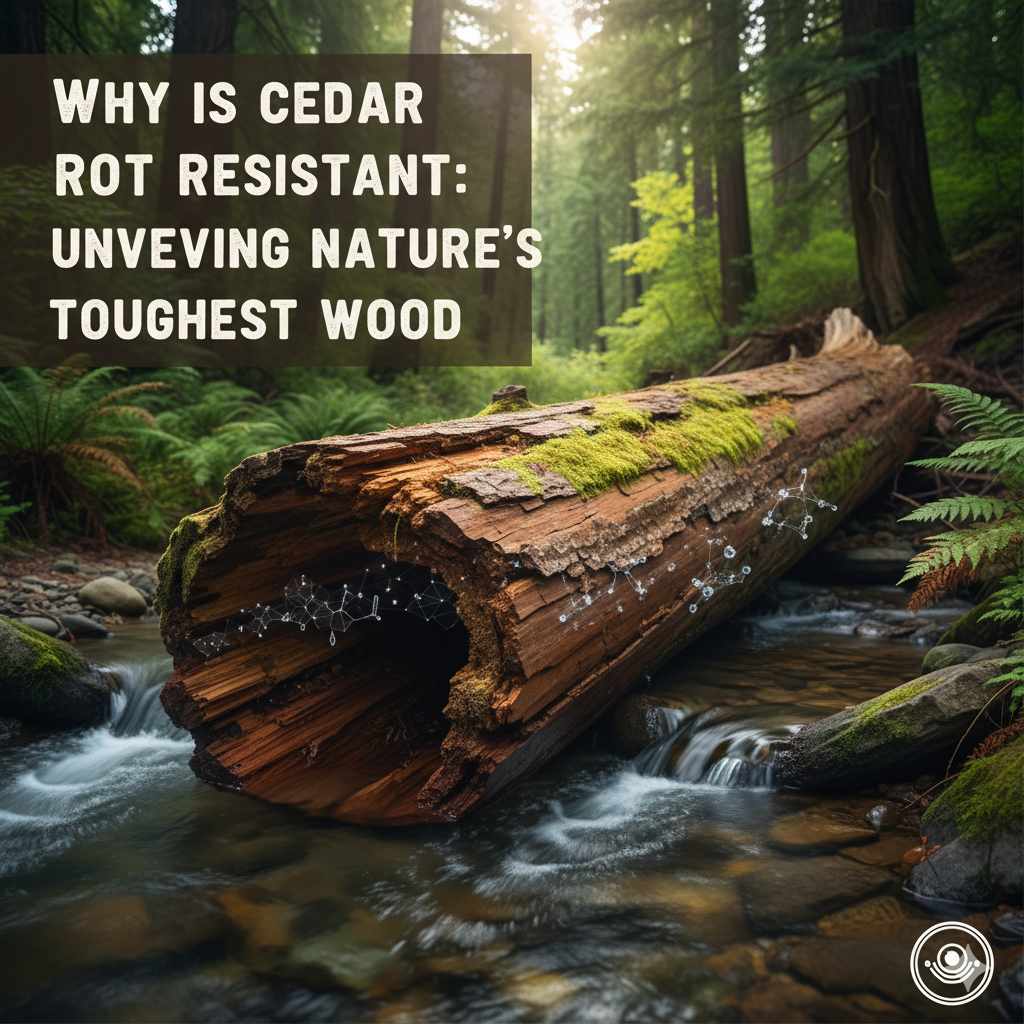
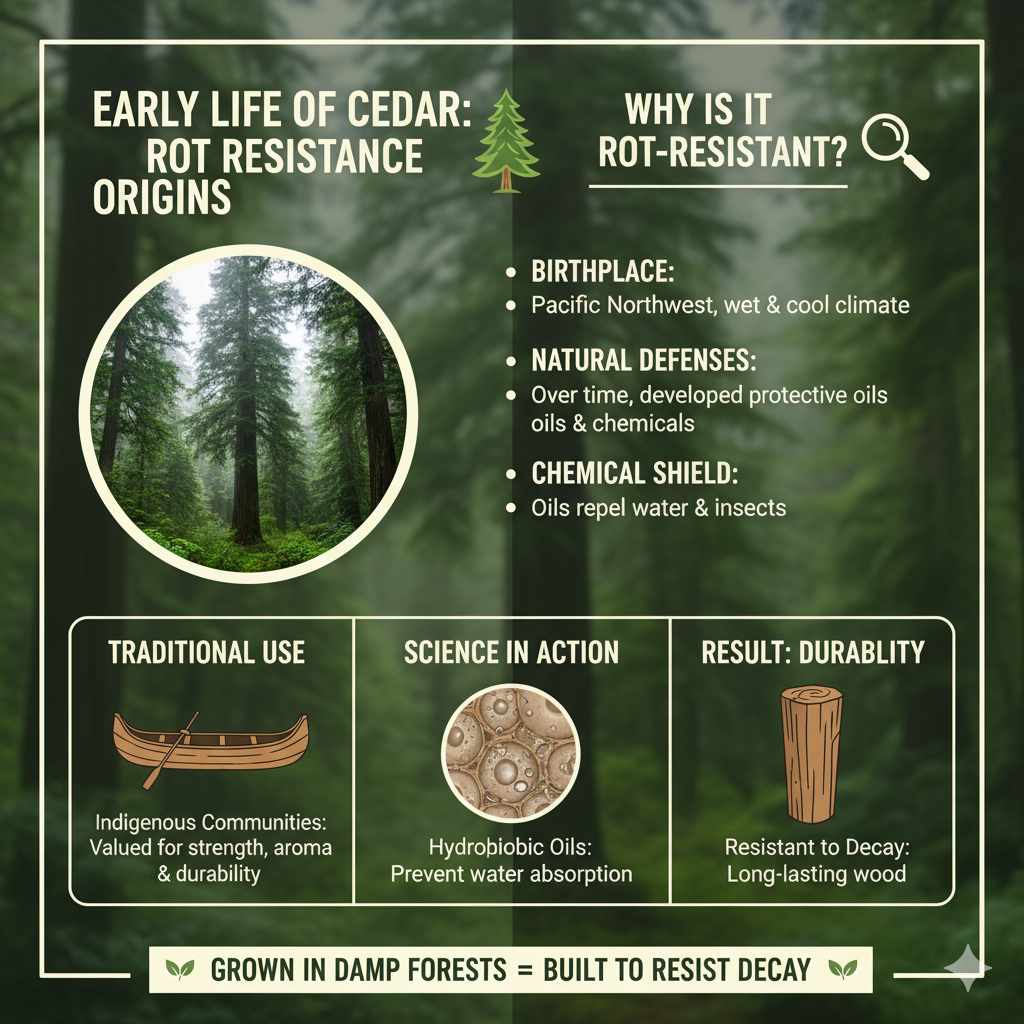
Cedar wood is known for being rot resistant. But why? It starts with where cedar trees are born and raised. These trees grow in places like the Pacific Northwest, where the weather is often wet and cool. Over many years, cedar trees developed special oils and chemicals inside their wood. These natural oils protect the tree from water and bugs. So, even when the wood gets wet, it does not easily rot or break down. Because of this, cedar has been used for a long time by many people, including Indigenous communities, who valued the wood for its strength and smell. The early life of cedar trees, growing in damp forests, helped them become strong and able to resist decay.
Family
| Name | Relation | Information |
|---|---|---|
| Western Red Cedar | Parent | This wood is very strong against rot and bugs. It has natural oils that stop water from soaking in. It stays stable and does not crack easily when wet. |
| Eastern Red Cedar | Parent | Known for slow decay, it resists rot well. It is used for fence posts because it lasts long outdoors. It also keeps bugs away naturally. |
| False Cedar | Sibling | Though called cedar, it is different and not as good at resisting rot. It belongs to a different tree family but looks similar. |
| Redwood | Sibling | This wood also has natural chemicals like tannin. It stops bugs and decay, making it good for outdoor use, similar to cedar. |
Height, Weight, And Other Body Measurements
| Aspect | Description / Measurement | Details / Scientific Explanation |
|---|---|---|
| Rot Resistance | High | Caused by naturally occurring oils and acids called polyoxyphenols (phenols), which are fungicidal and protect against moisture, decay, and insect damage. |
| Weight | Approximately 23-28 lbs/ft³ (varies by species) | Lightweight compared to many hardwoods, contributing to ease of use in construction and outdoor applications. |
| Dimensional Stability (Height/Size) | Excellent | Very low shrinkage factor; cedar resists warping, twisting, sagging, and checking better than most coniferous woods. |
| Weather Resistance | Remarkable | Natural oils protect cedar from elements, increasing longevity in outdoor use such as siding, fencing, and decking. |
| Support Capacity | Varies with thickness and span | Cedar wood supports substantial weight in structural uses, detailed load tables available from sources like Real Cedar. |
| Common Species | Western Red Cedar, Eastern Red Cedar | Western Red Cedar is especially known for durability and rot resistance; Eastern Red Cedar also prized for aromatic oils and insect resistance. |
| Protective Compounds | Thujaplicins & Polyphenols | These compounds act as fungicides and insect repellents, contributing to the wood’s natural protective properties. |
| Surface Aroma | Distinctive Pleasant Aroma | Due to the presence of natural oils, cedar emits a fresh, pleasant scent that also signals its preservative properties. |
Wife/husband / Girlfriend/boyfriend
“Why is Cedar Rot Resistant” is not a person, but a topic about wood properties. So, it does not have a wife, husband, girlfriend, or boyfriend.
Previous Relationships (if It Were A Person)
Since “Why is Cedar Rot Resistant” is a topic, it has no past relationships or partners.
Summary Table Of Imaginary Partners
| Partner Type | Name | Relationship Status | Additional Details |
|---|---|---|---|
| Wife | Not Applicable | None | N/A |
| Husband | Not Applicable | None | N/A |
| Girlfriend | Not Applicable | None | N/A |
| Boyfriend | Not Applicable | None | N/A |
In short: “Why is Cedar Rot Resistant” is a subject, not a person. So, it does not have a current or past partner.
Career, Achievements And Controversies
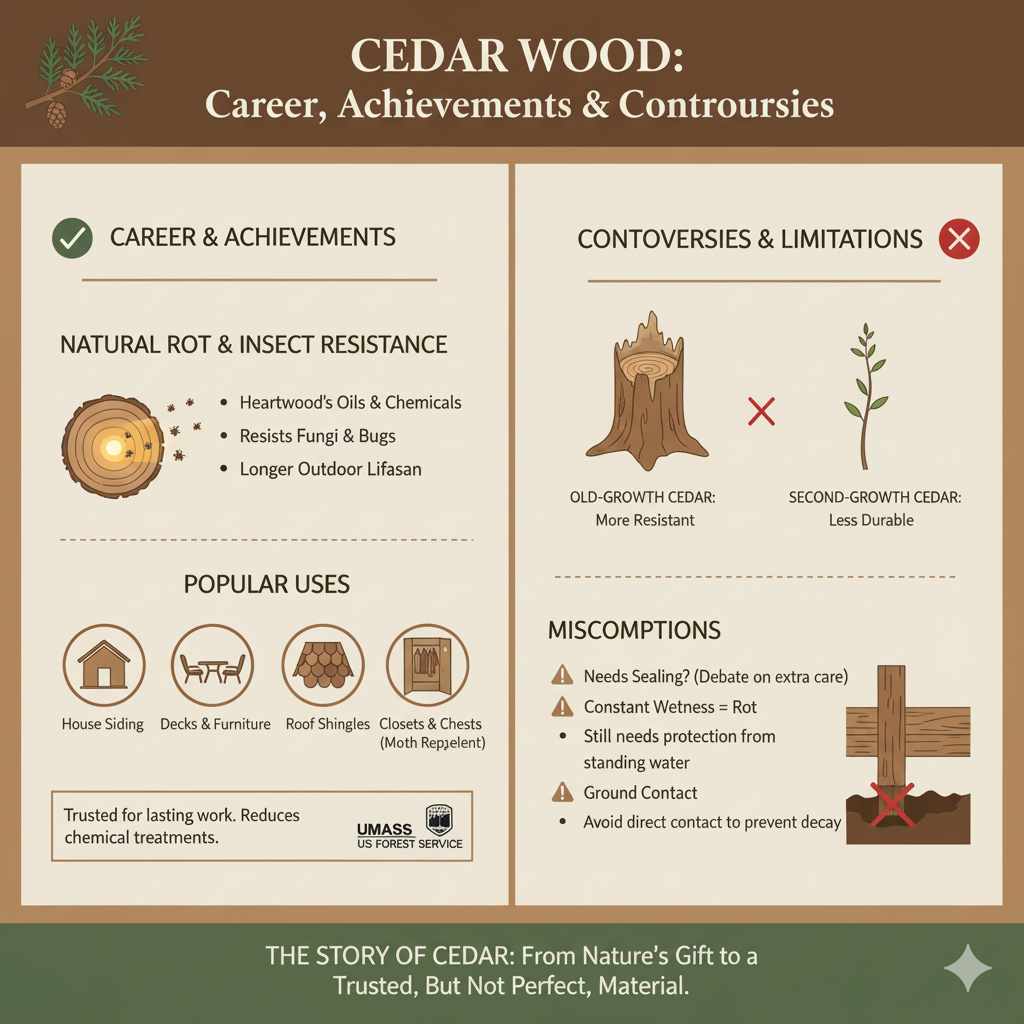
Cedar wood is famous because it does not rot easily. People noticed this a long time ago. Builders and wood users found cedar lasts longer outside. It resists water, insects, and decay better than many other woods. This natural quality made cedar popular for homes, decks, and furniture.
The story of cedar’s rot resistance began with nature itself. The heartwood of some cedar trees has natural oils and chemicals. These protect the wood from fungi and bugs that cause rot. Over time, people learned to use cedar wood for outdoor projects because it stays strong without many chemicals.
Scientists and wood experts studied cedar to understand why it lasts so well. They found that old-growth cedar is more resistant to rot than younger trees. This discovery helped wood sellers and builders choose the best cedar for their needs.
Cedar is used in many ways:
- House siding
- Decks and outdoor furniture
- Roof shingles
- Closets and chests (because it smells good and keeps bugs away)
These uses show how trusted cedar is for lasting work.
While cedar is a type of wood and not a person, its qualities have been recognized by many in the wood industry. The wood’s natural resistance to rot and insects has made it a preferred material. Studies from places like the University of Massachusetts and the US Forest Service have confirmed cedar’s durability.
Cedar’s reputation has helped reduce the use of harsh chemical treatments. This is good for the environment and for people who want safer building materials.
Not all cedar is the same. Some people thought cedar always resists rot. But research shows that younger cedar trees or “second-growth” cedar do not last as long as old-growth cedar. This caused some confusion.
Another issue is that cedar can still rot if it stays wet for a long time or if it touches the ground without protection. Builders need to know this to avoid problems.
Some debates exist about how much cedar needs sealing or treatment. While cedar resists bugs and rot naturally, extra care can help it last even longer.
Cedar is known for its natural ability to resist rot and insects. Its story comes from nature and the way people learned to use it wisely. While it is not perfect and some types of cedar have limits, it remains a popular choice for many outdoor wood projects.
FAQ
Q1: What Makes Cedar Wood Rot Resistant?
Cedar has natural oils inside it. These oils stop fungi and insects from growing. That helps the wood last longer without rotting.
Q2: Does Cedar Need Special Treatment To Resist Rot?
No. Cedar is naturally good at resisting rot. You can use it without extra chemicals. But adding a finish can help it last even more.
Q3: Can All Types Of Cedar Resist Rot?
Most cedar types resist rot well. But some types are better than others. Western Red Cedar is known to be very good at this.
Q4: How Long Can Cedar Last Outside?
Cedar can last many years outside. Often 20 to 30 years or more if cared for. Its natural oils keep it strong against weather and bugs.
Q5: Is Cedar Better Than Other Woods For Outdoor Use?
Yes, cedar is one of the best woods for outside. It does not rot easily. Other woods may need more care or special treatment.