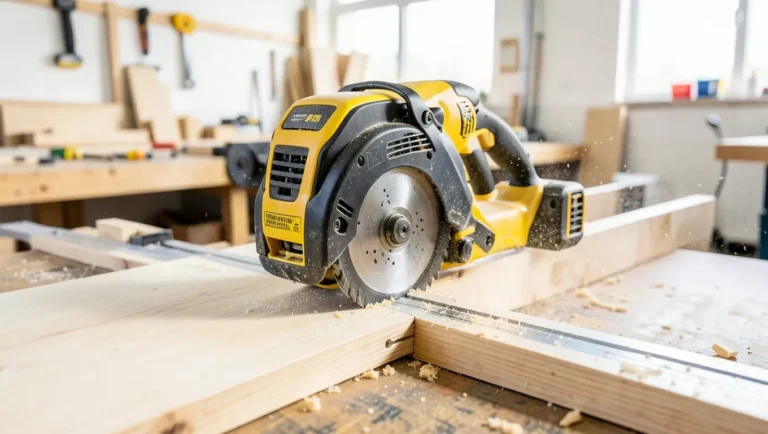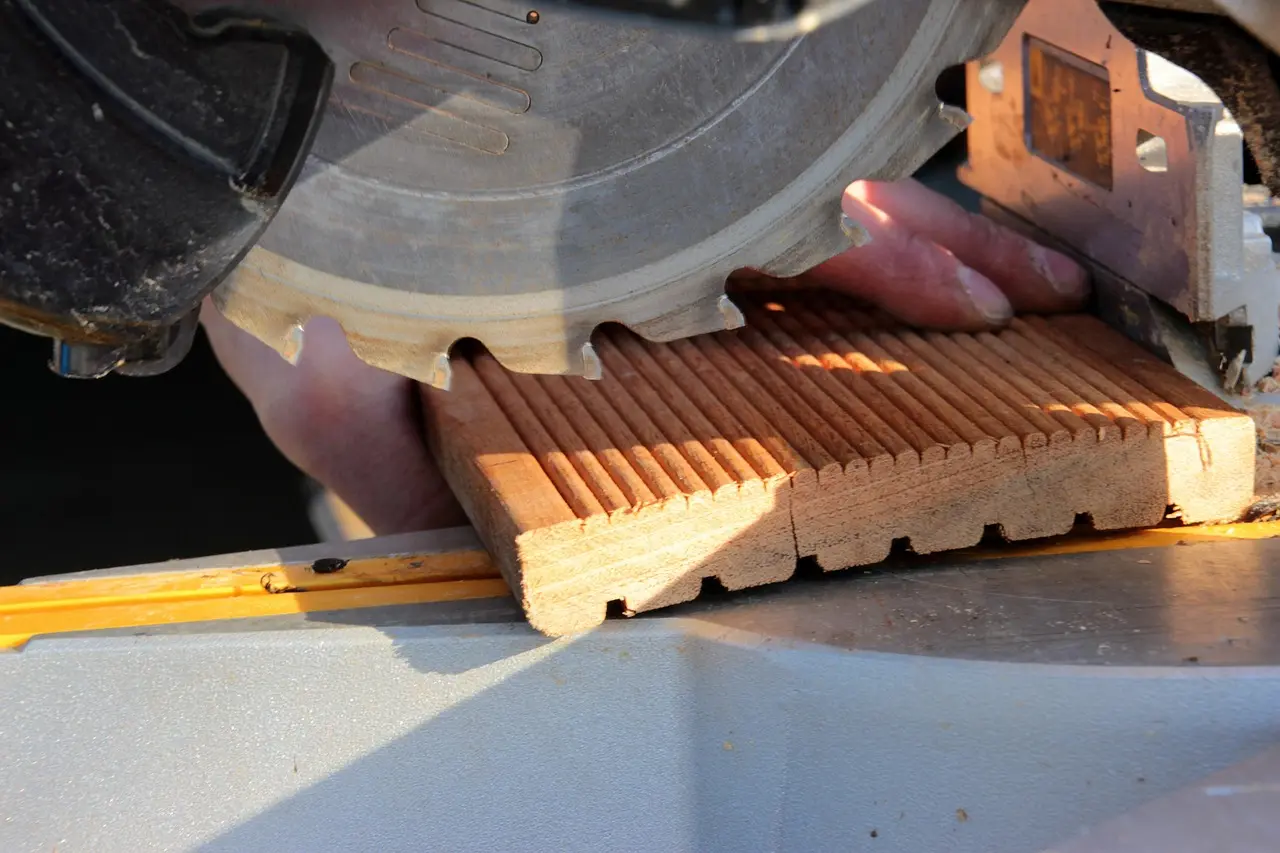
Makita XGT 40V Max Review for Woodworking
Makita XGT 40V Max is worth buying for woodworking if you need steady power for track-style ripping, miter saw work, and dust extraction; for drills and light drivers, 18V LXT usually makes more sense. Pick the wrong tools or batteries, and you pay extra for weight, chargers, and packs you do not need. This guide breaks down which XGT tools earn a place in a woodshop, which are overkill, and the real cost to enter the platform.
Verdict

XGT makes the most sense when your shop work pushes cordless tools hard for long stretches. It is a 40V Max platform aimed at demanding cuts, drilling, demolition, and intensive outdoor maintenance, with battery sharing across compatible machines in the system.
Pros and cons
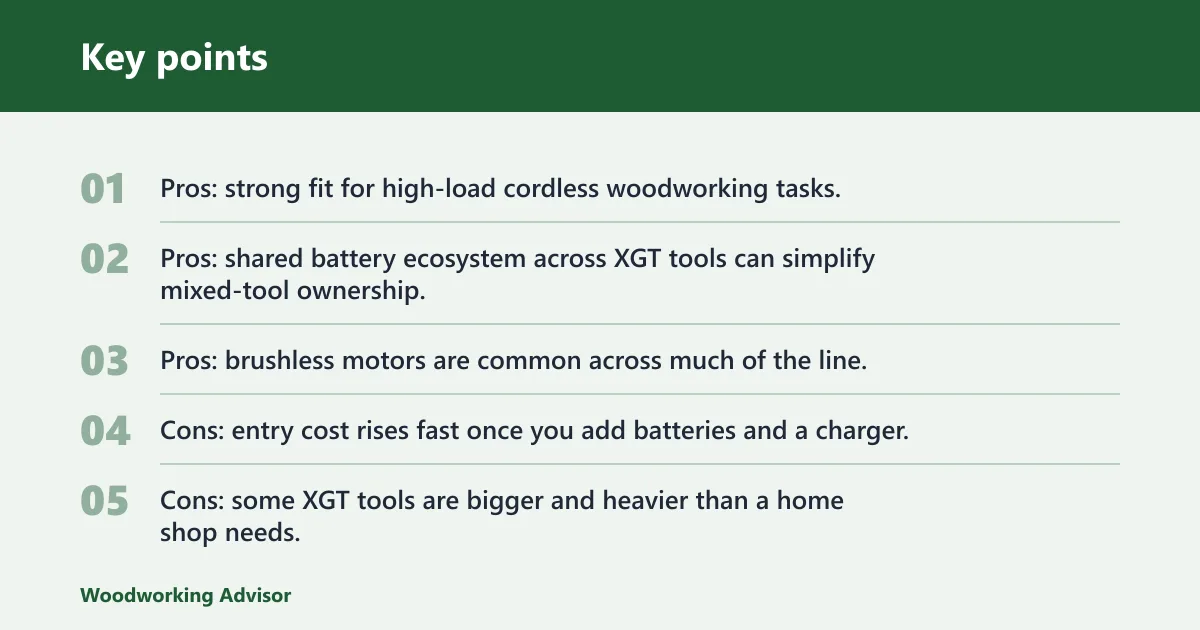
- Pros: strong fit for high-load cordless woodworking tasks, especially saws and larger tool categories.
- Pros: shared battery ecosystem across XGT tools can simplify mixed-tool ownership.
- Pros: brushless motors are common across much of the line, which supports runtime and lower maintenance.
- Cons: entry cost rises fast once you add batteries and a charger.
- Cons: some XGT tools are bigger and heavier than a home shop needs.
- Cons: dual-battery 80V max tools can be more platform than most woodworkers require.
Who it
XGT fits woodworkers who want cordless saw capacity, a tougher duty cycle, or one battery platform that can cover saws, sanders, planers, routers, and oscillating tools. It is a weaker fit for hobby users who mainly drill pocket holes, drive screws, and do light assembly. If your cordless work is trim-first and occasional, LXT 18V is usually the simpler buy.
Picture a trim carpenter cutting casing and base in a house without easy cord access. A cordless miter saw, jigsaw, and oscillating tool make more sense here than a full XGT lineup built around heavy ripping. Now picture a shop that rips plywood, planes stock, sands panels, and uses the same battery family across several tools. That is where XGT starts to earn its keep.
Specs at a glance
| Spec | What it means for woodworkers |
|---|---|
| Platform | 40 V lithium-ion XGT system |
| Use case | Demanding cuts, drilling, demolition, and intensive outdoor maintenance |
| Battery compatibility | Shared across multiple compatible machines in the system |
| Battery sizes | 4 Ah, 5 Ah, and 8 Ah are usable on supported models |
| Motor type | Brushless motors are used across a large part of the line |
| Protection | Selected models have XPT protection against dust and moisture |
| Dual-battery tools | Some models use two 40 V batteries and operate at 80 V max |
| System entry | Available as solo tools or as sets with batteries and chargers |
Battery and charger setup
The battery choice changes runtime and purchase cost. A 4 Ah pack keeps weight down, a 5 Ah pack is the middle ground, and an 8 Ah pack makes more sense on tools that pull harder or stay in use longer. A Makita XGT battery charger is part of the system entry cost, so a solo tool only makes financial sense if you already own XGT packs and a charger.

Is Makita XGT 40V Max worth it for woodworking?
Yes, if your work leans on saws, steady cutting, and larger cordless tools. XGT is strongest when you need a platform that can handle demanding load, but it is not the best first buy for light-drill or occasional assembly work. For many home shops, the value depends on whether you will actually use more than one XGT tool.
Best woodworking use cases
XGT is a good fit for sheet-good ripping, miters, plunge cuts, and repeated trim work where runtime and battery interchange matter. It also makes sense for sanding, planing, routing, and oscillating-tool tasks if you want to stay cordless across several jobs. The system is less about raw voltage bragging and more about whether the tool family matches the work you do most.
A common first-timer mistake is buying an XGT drill driver first because it looks like the platform entry point. That can be expensive if the real need is a saw and one battery family for a trim crew or a plywood-heavy shop. Start with the task, then choose the tool category.
Where it beats LXT 18V
XGT pulls ahead when you want heavier-duty cordless tools, longer sustained cuts, or a platform built around demanding work. LXT 18V still makes more sense for smaller drills, drivers, and many light-duty shop jobs. If you already own several LXT batteries and chargers, the upgrade has to justify both the tool cost and the new battery ecosystem.
Where it is overkill
XGT is more platform than many woodshops need for cabinet hardware, pocket holes, brad-nailing support tools, and short, light-duty drilling. It can also be overkill if you only need one cordless saw and one light sander. In those cases, the extra battery and charger cost matters more than the added headroom.
What does the XGT woodworking buyer matrix show?
The right XGT choice depends on the task, not the logo on the battery. The matrix below maps common woodshop jobs to the XGT tool category that fits best, the battery setup that makes sense, the main overkill risk, and a clear buy or no-buy recommendation.
| Woodworking task | Best XGT tool category | Battery setup | Likely overkill risk | Buy or no-buy |
|---|---|---|---|---|
| Rip sheet goods | Circular saw or plunge saw | 5 Ah or 8 Ah; go larger if you rip often | High if you only cut trim or short stock | Buy for frequent plywood work |
| Crosscut trim | Miter saw | 4 Ah or 5 Ah for lighter carry | High if you already have a corded miter saw on site | Buy if portability matters |
| Flush cuts and cutouts | Jigsaw or oscillating multi-tool | 4 Ah or 5 Ah | Medium if the task is occasional | Buy only if these are regular tasks |
| Surface prep and smoothing | Sander or planer | 5 Ah or 8 Ah for longer sessions | Medium if you sand only small parts | Buy when cordless workflow matters |
| Edge trimming and joinery cleanup | Router | 5 Ah is the safer baseline | High if you only need occasional edge work | Buy for repeat production work |
| Demolition or rough remodeling | Reciprocating saw | 5 Ah or 8 Ah | High in a fine-finish cabinet shop | Buy for remodel crews, not all shops |
| Heavy-duty cutting on larger tools | Dual-battery 80V max models | Two 40 V batteries | Very high unless you truly need that class of tool | Usually no-buy for small shops |
Battery setup by task
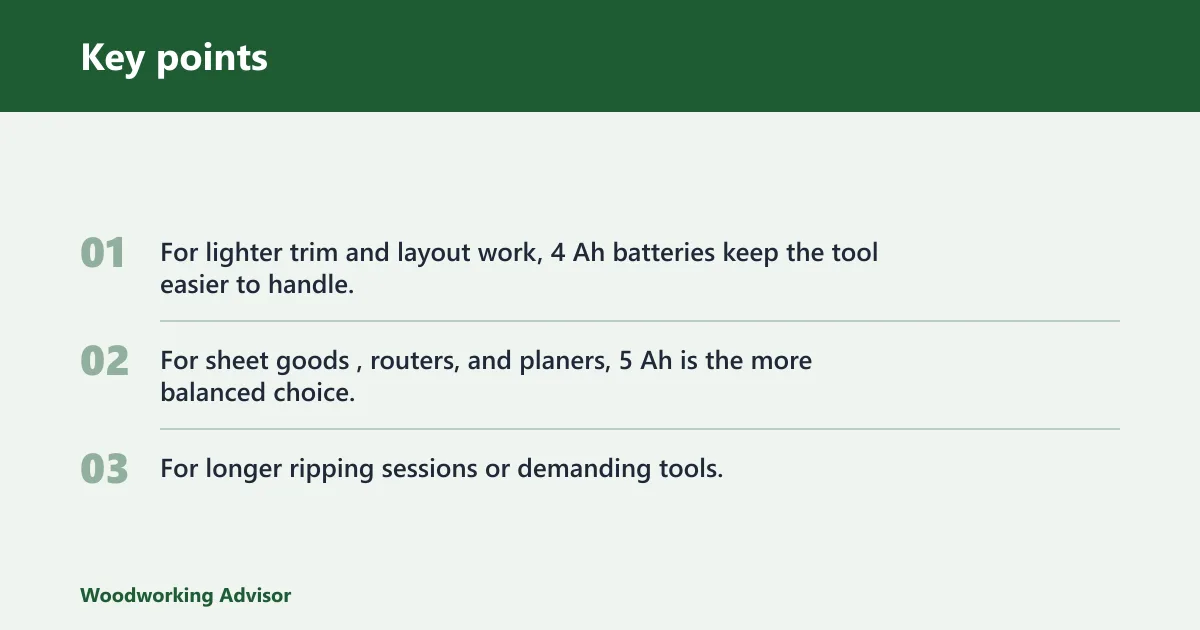
For lighter trim and layout work, 4 Ah batteries keep the tool easier to handle. For sheet goods, routers, and planers, 5 Ah is the more balanced choice. For longer ripping sessions or demanding tools, 8 Ah is the more practical option because runtime matters more than shaving a little weight.
What works in the XGT line
The XGT ecosystem includes saws, sanders, planers, routers, and oscillating tools, and that mix matters for woodworking. The platform includes circular, plunge, miter, jig, and band saws, plus oscillating multifunction tools. That is a useful spread for a shop that needs one battery family across cutting, shaping, and cleanup.
Saws for sheet goods and trim
For sheet goods, the most relevant XGT saw categories are circular saws and plunge saws. For trim work, miter saws and jigsaws matter more than raw voltage. Band saws and reciprocating saws are useful, but they solve narrower problems and are not the first XGT tools most woodworkers should buy.
Suppose you are breaking down plywood on sawhorses, then switching to baseboard cuts and then to a quick notch in a cabinet panel. A circular saw, miter saw, and jigsaw cover that workflow better than a general-purpose grab bag of tools. The platform helps most when those tools share batteries.
Finishing and shaping tools
Sanders, planers, routers, and oscillating tools are the finishing and shaping side of XGT. These are the tools that make cordless ownership feel less like a novelty and more like a workflow choice. They also reveal the main tradeoff: if you only need one of them occasionally, the platform cost can outweigh the convenience.
Brushless motors and XPT
Brushless motor use across much of the line matters because it supports better efficiency and usually less maintenance than brushed motors. Selected XGT models also have XPT protection against dust and moisture, which helps in shop and jobsite conditions where fine dust and weather exposure are part of the job. That is not the same as waterproofing, and it should not be treated that way.
What does not make sense for most shops?
XGT is not a universal answer for a woodshop. The biggest drawbacks are weight, size, and the cost of entry once batteries and a charger are included. If your work rarely pushes a cordless tool hard, the platform can be more capacity than you need.
Weight and size tradeoffs
Larger batteries add runtime, but they also add bulk. That matters on overhead cuts, long trim days, and extended sanding. A woodworker who wants a nimble cordless drill or light driver may find XGT unnecessary compared with smaller-platform tools.
Entry cost with batteries and charger
The charger requirement changes the buying math. A bare tool is sensible only if you already own XGT batteries and a charger. If you are starting from zero, a set that includes batteries and a charger is often the cleaner entry, because a solo tool plus separate battery purchases can stretch the budget fast.
Tools that are more platform than necessity
Dual-battery 80V max tools can be legitimate, but they are not default woodworking buys. They make sense only when the task genuinely needs that class of output. For many shops, the better answer is one good saw, one sander, and one charger setup, not a full jump into every XGT category.
How does Makita XGT 40V compare with LXT 18V for a woodworker?
XGT is the better fit for woodworkers who need more sustained power, larger saws, or a cordless platform built around harder work. LXT 18V is usually better for lighter shop tasks, smaller drills, and users who already own batteries and chargers. The right choice depends on whether your work is mostly trimming and assembly or more often ripping, planing, and repeated cutting.
Runtime and power differences
XGT’s 40V Max platform is aimed at high-load use. That makes it a stronger match for saws and larger tools that stay under load longer. LXT remains the simpler choice for jobs that do not ask much from the motor or battery in the first place.
Battery ownership and charger cost
If you already own LXT batteries, switching platforms means buying into a second charger system and a second battery family. That is the hidden cost many woodworkers miss. XGT can be a smarter buy only when the tool mix justifies that extra ownership cost over time.
Which platform fits home shop users?
Home shop users with occasional woodworking needs usually do better with LXT 18V. Users who keep reaching for saws, sanders, routers, and planers may prefer XGT because the system is built for more demanding work. The platform pays off only when you use it like a platform, not like a single oversized drill.
Should you buy XGT in a set or solo?
Buy solo only if you already have XGT batteries and a charger. Buy a set if you are entering the platform for the first time, because the charger and battery bundle changes the real cost of ownership. The decision is mostly about what you already own and how many XGT tools you expect to run.
When a bare tool makes sense
A bare tool makes sense when you are adding a second or third XGT tool to an existing system. It also works if you need a specific saw or shaping tool but already have enough compatible packs for a normal workday. In that case, the system buy-in is already paid.
When the battery and charger bundle is smarter
Choose the set when you are starting from scratch or when the tool will be used often enough to justify multiple packs. A charger is not optional to the system. Without it, runtime planning gets awkward, and the platform loses one of its main advantages.
How many batteries you actually need
For most woodworkers, one battery is not enough if the tool will see regular use. Two packs let you rotate charging and work without waiting. Three packs can make sense for heavier saw use or longer sanding sessions, especially if you plan to keep one pack on the charger while the others are in rotation.
Alternatives
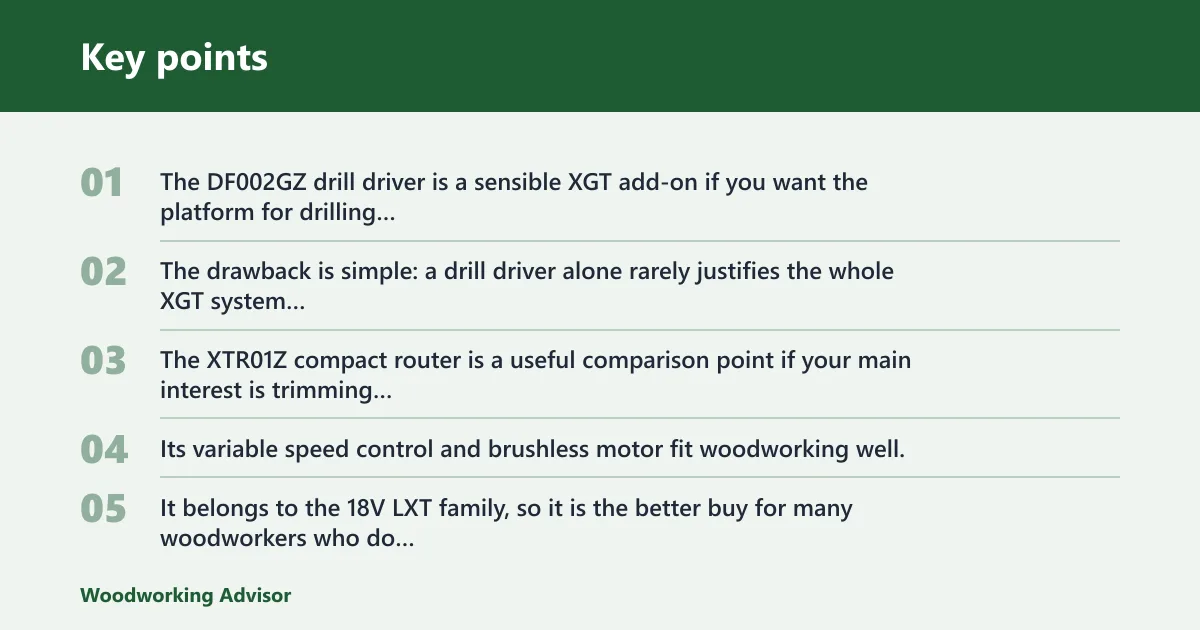

The DF002GZ drill driver is a sensible XGT add-on if you want the platform for drilling and fastening, not just saws. The drawback is simple: a drill driver alone rarely justifies the whole XGT system unless you are already buying into it for other tools.

The XTR01Z compact router is a useful comparison point if your main interest is trimming edges and small routing jobs. Its variable speed control and brushless motor fit woodworking well, and the compact form is easier to manage than larger shaping tools. It belongs to the 18V LXT family, so it is the better buy for many woodworkers who do not need the heavier XGT platform.
The GSR01Z rear-handle circular saw is the clearest XGT woodworking case here. It is the strongest fit for sheet goods, and the 7-1/4 in format points directly at ripping and framing-type cutting. The drawback is that this is a specialized purchase; if your work is mostly light trim or occasional shop cuts, it can be more tool than you need.
Frequently asked questions
What woodworking tools are available in the Makita XGT 40V system?
The XGT line includes saws, sanders, planers, routers, and oscillating tools. It also includes circular, plunge, miter, jig, and band saws. That spread makes the platform relevant for sheet goods, trim, shaping, and cleanup.
Does Makita XGT use brushless motors?
Brushless motors are used across a large part of the XGT line, but not every individual model should be assumed to have one without checking. Brushless design matters because it generally supports better efficiency and less maintenance than brushed motors, which suits cordless woodworking tools that see regular use.
Can Makita XGT tools run on two batteries for 80V max?
Yes. Some XGT tools use two 40 V batteries and operate at 80 V max. Those models are intended for higher-demand applications, so they are worth considering only when the tool category and workload actually call for that level of output.
What batteries are compatible with Makita XGT 40V tools?
The system uses XGT batteries, and the published capacities mentioned for supported models include 4 Ah, 5 Ah, and 8 Ah. Battery choice changes runtime, so bigger packs are usually the better match for sustained cutting or longer sessions, while smaller packs can help keep the tool lighter.
Should I buy Makita XGT in a set or solo?
Buy solo if you already own XGT batteries and a charger. Buy a set if you are starting the platform or need a second battery for continuous work. The charger is part of the ownership cost, so a set often makes more sense for first-time buyers than a bare tool.
Is Makita XGT good for dust, moisture, and heavy-duty shop use?
Selected XGT models have XPT protection against dust and moisture, which is useful in shop and jobsite conditions. That does not mean every model has it, and it does not mean the tools are waterproof. The line is built for demanding work, but you still need to check the exact model before buying.
Sponsored / affiliate links. As an Amazon Associate I earn from qualifying purchases. I may earn additional commission from eligible campaigns.