Wood vs Nylon Tip Drumsticks: Essential Guide
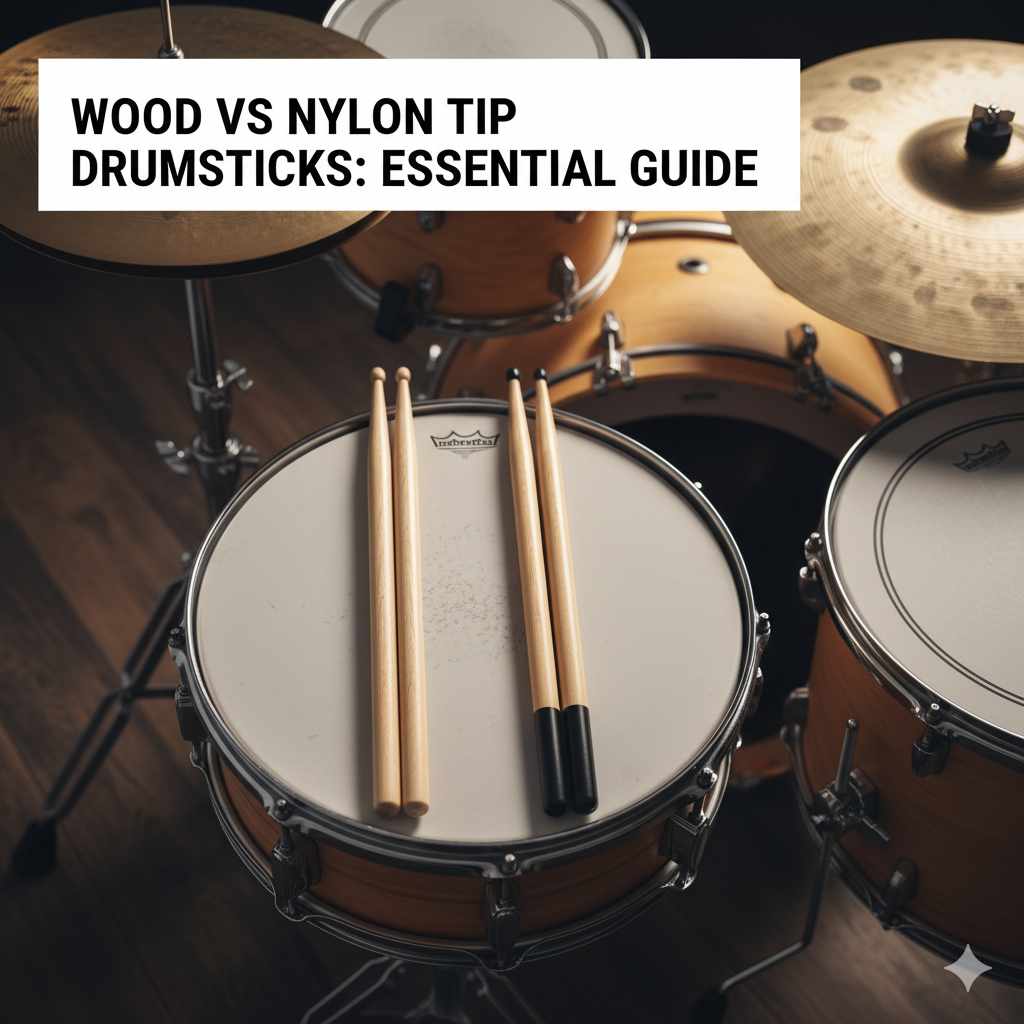
Choosing between wood and nylon tip drumsticks depends on your sound, durability needs, and playing style. Wood offers a warm, natural tone great for various genres, while nylon provides brighter articulation and longer tip life, ideal for electronic drums or heavy hitters. This guide breaks down the key differences to help you make the best choice.
Hey there, aspiring drummers and curious music makers! Md Meraj here, your go-to guide for all things hands-on and creative. Today, we’re diving into a question that might seem small but can make a big difference in your drumming journey: wood versus nylon tip drumsticks. It’s easy to feel a bit overwhelmed when you first look at all the drumstick options. What’s what? What does it mean for your sound and how long they’ll last? Don’t worry! We’re going to walk through this together, step-by-step, so you can pick the perfect pair for your playing style and your budget. By the end of this guide, you’ll feel confident choosing sticks that feel just right in your hands and sound amazing on your drums.
Wood vs Nylon Tip Drumsticks: The Essential Guide
As a woodworking enthusiast, I appreciate the craft and materials that go into making tools, and drumsticks are no exception! The tip of a drumstick is like the chisel on a carving tool – it’s where the magic happens. It’s the point of contact with the drumhead, and the material it’s made from significantly impacts the sound, feel, and longevity of the stick. For beginners, understanding this difference is a great starting point to developing your drumming voice.
Think of it this way: just like choosing different types of wood for furniture, different materials for drumstick tips offer distinct characteristics. We’ll explore what makes them different and which might be the best fit for you.
Understanding Drumstick Materials
Drumsticks are typically made from a variety of woods, with hickory, maple, and oak being the most common. Each wood has its own weight, density, and flex, which affect how the stick feels in your hand and the sound it produces. However, the tip is where we see the most direct contrast between wood and nylon.
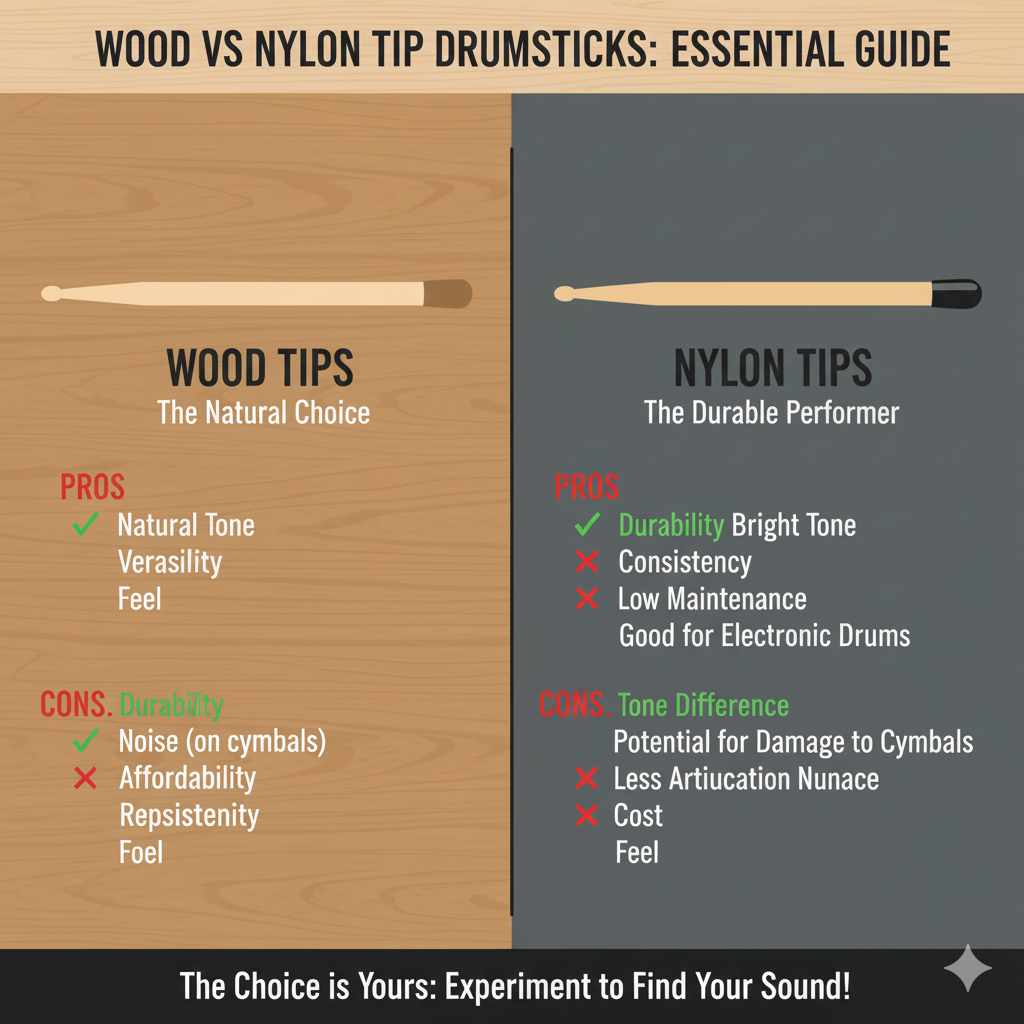
Wood Tips: The Natural Choice
Most drumsticks come with wood tips. These are carved directly from the same wood as the shaft of the stick, or sometimes from a slightly different type of wood for specific tonal qualities. They offer a classic, warm, and organic sound.
Pros of Wood Tips:
- Natural Tone: Wood tips produce a rich, warm, and full sound when they hit the drumhead. This is often preferred for acoustic drums and a wide range of musical genres.
- Versatility: They are incredibly versatile and work well for everything from light jazz to heavy rock.
- Feel: Many drummers prefer the natural feel of wood tapping against the drumhead, offering subtle nuances in articulation.
- Affordability: Generally, wood-tipped drumsticks are more budget-friendly, making them a great option for beginners.
- Repairability: While not easily repairable, worn-out wood tips can sometimes be reshaped or sanded down by experienced users.
Cons of Wood Tips:
- Durability: Wood tips are the most susceptible to wear and tear. Repeated heavy hitting can chip, crack, or splinter the tip, eventually affecting its sound and breaking the stick.
- Noise: They can sometimes produce a slightly softer “thwack” sound on cymbals, which might not be preferred for drummers looking for sharp, defined cymbal work.
- Consistency: Wood grain can vary, leading to minor inconsistencies between identical stick models, though quality manufacturers minimize this.
Nylon Tips: The Durable Performer
Nylon tips are small caps made of durable plastic that are securely attached to the end of the drumstick shaft. They became popular because they offer a different sonic character and significantly increased longevity compared to wood tips.
Pros of Nylon Tips:
- Durability: Nylon is a very tough material. These tips are highly resistant to chipping, cracking, and breaking, meaning your drumsticks will last much longer, especially with consistent and powerful playing.
- Bright Tone: Nylon tips produce a brighter, more articulate sound when they hit cymbals and drumheads. This is fantastic for drummers who want a clear, cutting sound, especially on hi-hats and ride cymbals.
- Consistency: Because they are manufactured plastic, nylon tips offer a very consistent sound and feel every time, with no variations due to wood grain.
- Low Maintenance: They require very little maintenance and can withstand a lot of abuse without showing significant wear.
- Good for Electronic Drums: The bright, consistent attack is ideal for triggering electronic drum pads, where clarity is key.
Cons of Nylon Tips:
- Tone Difference: The brighter sound isn’t for everyone. Some drummers find it too sharp or less organic than wood, especially on acoustic drums.
- Potential for Damage to Cymbals: The harder nylon tip can potentially cause more wear and tear on delicate cymbals over time compared to wood. This is something to be mindful of, especially with vintage or expensive cymbal sets.
- Less Articulation Nuance: While they offer bright articulation, they might not pick up the subtle tonal variations that wood tips can produce with different striking angles or pressures.
- Cost: Nylon-tipped drumsticks can sometimes be slightly more expensive than their wood-tipped counterparts, though the increased lifespan often offsets this.
- Feel: Some drummers find the feel of nylon to be a bit stiff or less natural compared to wood.
Key Differences at a Glance
To make comparing them even easier, let’s look at a quick table outlining the main differences:
| Feature | Wood Tip Drumsticks | Nylon Tip Drumsticks |
|---|---|---|
| Sound Character | Warm, natural, organic, full | Bright, articulate, sharp, cutting |
| Durability | Moderate; prone to chipping and breaking with heavy use | High; very resistant to wear and damage |
| Longevity | Shorter lifespan, especially for heavy hitters | Longer lifespan, consistent performance |
| Best For | Acoustic drums, versatile genres, drummers seeking natural tone | Electronic drums, heavy hitters, drummers seeking bright articulation, cymbal focus |
| Cost | Generally more affordable | Can be slightly more expensive, but often cost-effective due to lifespan |
| Feel | Natural, varied nuances | Consistent, sometimes perceived as stiffer |
| Wear on Cymbals | Less risk of cymbal damage | Slightly higher risk, especially with aggressive playing |
Which Type of Drumstick is Right for You?
Now that we’ve broken down the differences, let’s talk about making a choice. It’s not about which is “better,” but which is better for you and your drumming goals.
Consider Your Playing Style and Musical Genre
Your musical style is a huge factor. If you’re playing in a jazz band, a blues trio, or a folk group where a warm, natural tone is king, wood tips will likely be your best friend. The subtle nuances they offer can really add to the musicality of your playing.
On the other hand, if you’re in a rock band, a metal band, or playing pop music where you need to cut through the mix with bright cymbal accents, nylon tips might give you that edge. Their sharp attack is fantastic for making hi-hats and ride cymbals sing.
Think About the Drums You’re Playing On
Are you practicing solely on an acoustic drum kit, or do you frequently use an electronic drum set? For electronic drums, nylon tips are often preferred. Their consistent, bright attack translates well to the triggers and sample sounds of electronic kits. The durability is also a plus, as electronic pads can be quite forgiving but consistent response is key.
For acoustic drums, both can work, but the natural resonance of wood might be preferred by many to complement the acoustic tone of the drums themselves. As mentioned, be a bit more mindful of cymbal wear on acoustic kits with nylon tips.
Your Budget and How Often You Play
If you’re just starting out and experimenting, or if your budget is a primary concern, wood-tipped drumsticks are usually the most cost-effective choice. You can get a solid pair for a reasonable price. However, if you’re a heavy hitter or play very frequently, you might find yourself going through wood-tipped sticks more quickly. In this scenario, the initial higher cost of nylon-tipped sticks might actually save you money in the long run because they will last significantly longer.
Experimentation is Key!
The absolute best way to know what works for you is to try both! Many music stores have demo sticks you can feel, and it’s not a huge investment to buy one pair of wood-tipped sticks and one pair of nylon-tipped sticks. Pay attention to:
- The feel in your hands.
- The sound they make on your snare drum.
- The sound they make on your cymbals (hi-hats, ride, crashes).
- How much effort it takes to get the sound you want.
This hands-on experience is invaluable. What one drummer loves, another might not. It’s all about personal preference and finding what inspires you to play.
Drumstick Care and Maintenance for Longevity
Regardless of whether you choose wood or nylon tips, taking good care of your drumsticks can extend their life and ensure consistent performance. Here are some simple tips:
General Drumstick Care:
- Store them properly: Keep your sticks in a drumstick bag or case when not in use. This protects them from moisture, extreme temperatures, and physical damage. Avoid leaving them in humid environments or direct sunlight.
- Inspect regularly: Before and after playing, give your sticks a quick look-over. Check for cracks, splinters, or loose tips. Addressing small issues early can prevent bigger problems.
- Avoid over-tightening in stands: When placing sticks in a gig bag or stand, don’t force them in. This can cause them to bend or break.
- Use appropriate surfaces: While it’s great to drum with passion, try to avoid hitting things other than your drums and cymbals intentionally.
Specific Care for Wood Tips:
- Gentle Striking: If you want to prolong the life of wood tips, particularly during practice, consciously aim for a well-rounded stroke rather than “choking” the stick, which can lead to premature damage.
- Reshaping (Advanced): For experienced players, very minor damage to wood tips can sometimes be sanded down to restore a smoother playing surface. However, this is a delicate process and can compromise the stick’s balance. Beginners should probably avoid this.
Specific Care for Nylon Tips:
- Listen for wear: While durable, the nylon tip can eventually wear down, especially on worn cymbals. Usually, the sound will change before the tip catastrophically fails.
- Clean them: If dirt or residue builds up on the nylon tip, it can affect the sound. A slightly damp cloth can be used to wipe them clean.
For more detailed information on caring for your equipment, including drums and cymbals, resources from organizations like the National Association of Music Merchants (NAMM) can provide valuable insights into instrument maintenance.
The History and Evolution of Drumstick Tips
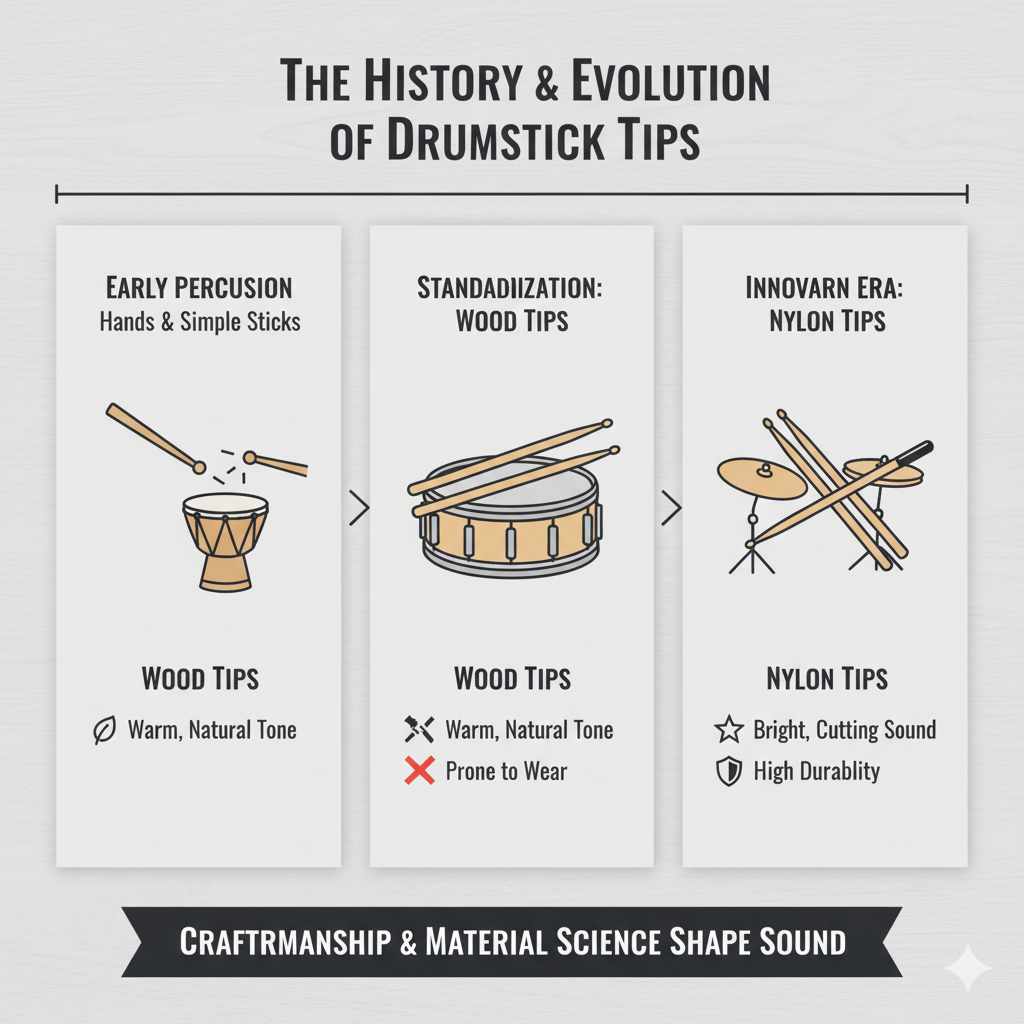
Drumsticks haven’t always had standardized tips. Early percussion instruments were struck with hands or rudimentary sticks fashioned from natural materials. As musical instruments evolved and styles developed, so did the tools used to play them.
The development of standardized drumsticks, often made from woods like hickory, became common in the early to mid-20th century. The tips were naturally shaped wood. The introduction of nylon tips was a significant innovation, driven by a desire for increased durability and a brighter, more consistent sound, particularly as music production and amplification technologies advanced. This allowed drummers to have more predictable sounds in live settings and recordings. The ability to reproduce a consistent bright tone from nylon was particularly appealing for certain genres and for drumming on practice pads or electronic kits where rubber or mesh heads were used.
This evolution shows how craftsmanship and material science go hand-in-hand to enhance musical expression. It’s fascinating to think about how simple changes in materials can have such a profound impact on the sound and feel of an instrument!
Frequently Asked Questions (FAQ)
Q1: What is the main difference between wood and nylon tip drumsticks?
A1: The main difference lies in the tip material. Wood tips offer a natural, warm tone and feel, while nylon tips provide increased durability and a brighter, more articulate sound. Wood tips are carved from wood, and nylon tips are durable plastic caps attached to the stick.
Q2: Which type of drumstick is better for beginners?
A2: For beginners, wood-tipped drumsticks are often recommended because they are generally more affordable and offer a versatile, natural sound that’s great for learning. However, if a beginner is playing electronic drums, nylon might be a better choice for responsiveness. Ultimately, trying both is best.
Q3: Will nylon tips damage my cymbals faster than wood tips?
A3: Nylon is harder than wood, so there is a slightly higher potential for increased wear on cymbals over a long period of aggressive playing. However, for most drummers, this difference is minimal, and proper technique is more important than the tip material in protecting cymbals.
Q4: How long do nylon tip drumsticks typically last compared to wood tips?
A4: Nylon tip drumsticks generally last significantly longer due to the material’s durability. While wood tips can chip or break with heavy use, nylon tips are very resistant to damage and can last for many months or even years depending on playing intensity and style.
Q5: Can I replace a broken nylon tip on a drumstick?
A5: No, nylon tips are securely attached during manufacturing and are not designed to be replaced by the user. If a nylon tip breaks or comes loose, the drumstick is generally considered worn out and should be replaced.
Q6: Which type of drumstick is best for playing electronic drums?
A6: Nylon tip drumsticks are often preferred for electronic drums because their bright, consistent attack offers excellent response and articulation when triggering electronic drum pads. They also tend to be very durable.
Q7: Does the wood of the drumstick shaft affect the sound of a wood tip?
A7: Yes, the type of wood used for the shaft (like hickory, maple, or oak) influences the stick’s weight, balance, and overall response, which in turn can subtly affect the sound produced by the wood tip. However, the tip material has a more direct and significant impact on the direct tone produced upon impact.
Conclusion
Choosing between wood and nylon tip drumsticks is a foundational decision that impacts your sound, your budget, and how long your sticks last. Wood offers that classic, warm tone that’s a staple for many genres, providing a natural feel and great versatility for acoustic drumming. Nylon steps in as the durable workhorse, delivering a bright, cutting sound and exceptional longevity, making it ideal for electronic kits or drummers who play hard and fast.
Don’t be afraid to experiment! Grab a pair of each, play them on your kit, and see what resonates with you. Listen to the nuances, feel the difference in your hands, and trust your instincts. There’s no single “right” answer, only what’s right for your drumming journey. With a little exploration and understanding of these fundamental differences, you’re well on your way to finding the perfect pair of sticks to help you make incredible music. Happy drumming!