Teak Wood Kitchen Cabinets: Cost, Durability & Sourcing Guide
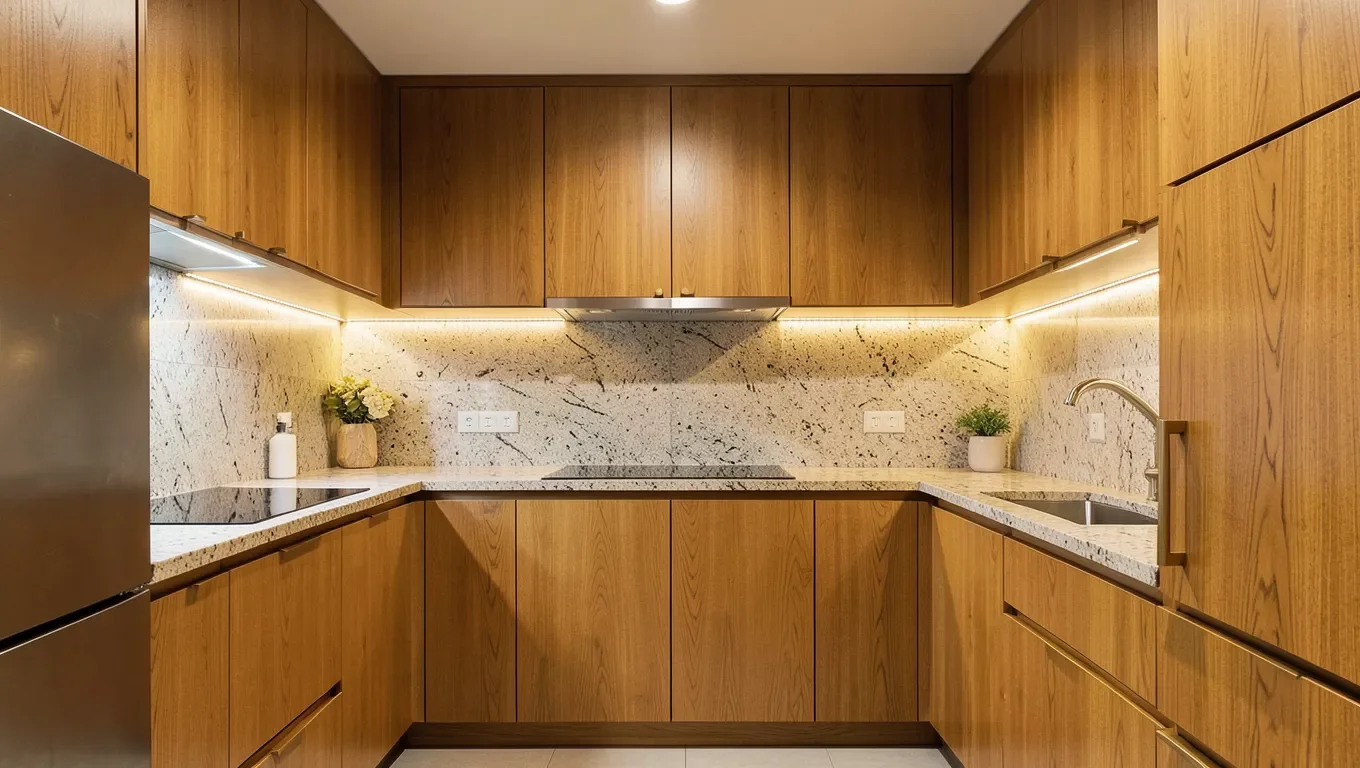
Teak is one of the few premium cabinet woods that’s genuinely suited to kitchen conditions, not just kitchen looks. Its natural oils resist water absorption, its density stands up to daily use, and it doesn’t need constant babying to stay presentable for decades. It’s also expensive, harder to source responsibly than most marketing copy admits, and not the right fit for every budget. Here’s what teak wood kitchen cabinets actually cost, how they hold up under real kitchen use, and what to check before you commit to them.
Why Teak Handles Kitchen Conditions Well
Most cabinet woods need a film-forming finish to survive splashes, steam, and the occasional dishwater overflow. Teak is different. It’s naturally rich in oils and resins that sit inside the wood’s cell structure, so the wood forms its own barrier against surface moisture rather than depending entirely on a topcoat. That’s a real, practical advantage in the one room of the house where cabinets get wet the most often.
Best Teak Cabinet Oil Pick
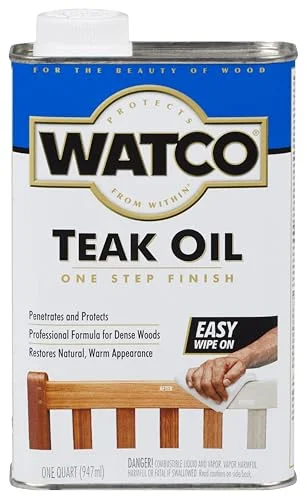 |
Watco Teak Oil Finish – $18.98 This is the same category of penetrating teak oil the maintenance section below recommends for keeping an oiled teak cabinet finish from drying out between deep cleans.
|
The oils responsible for that resistance also carry natural compounds, including tectoquinone and naphthoquinone, that discourage mold, mildew, and insect activity without any added chemical treatment. That matters in a kitchen specifically, where humidity and food residue give fungus more to work with than almost any other room. On top of that, teak registers a Janka hardness of roughly 1,070 lbf, hard enough to shrug off the dings of daily cabinet use without being so hard that it scratches the cookware and dishware that inevitably bump into it.
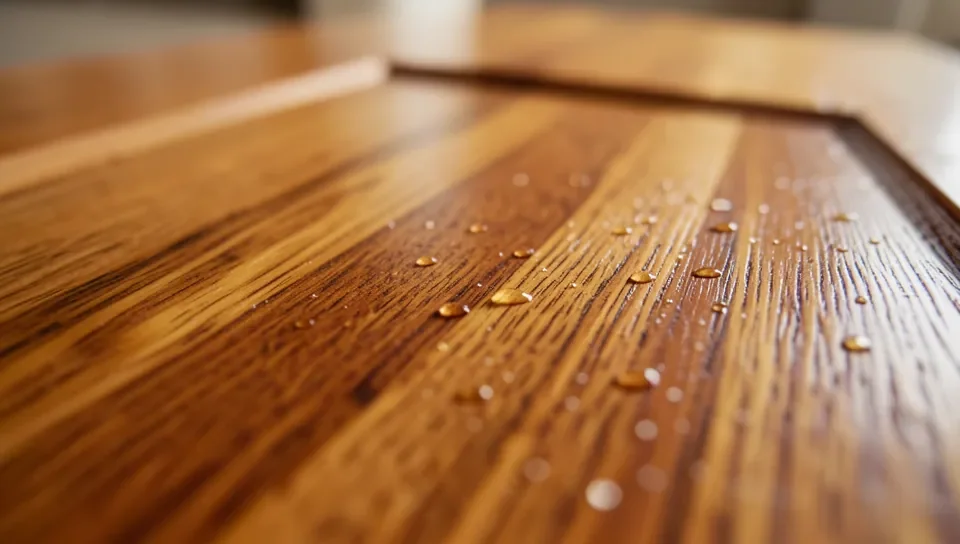
None of this makes teak waterproof. Standing water or a leaking sink line left unaddressed will still eventually cause problems, and the wood’s natural oils do fade under years of direct sun if the cabinets are never touched up. The honest summary is that teak starts with a real head start on moisture resistance that other cabinet woods don’t have, not that it’s maintenance-free.
What Teak Kitchen Cabinets Actually Cost
Custom kitchen cabinetry in general runs roughly $500 to $1,200 per linear foot depending on the shop, the hardware, and the complexity of the design, with stock and semi-custom lines running well below that. Teak doesn’t compete at the low end of that range. It’s a slow-growing hardwood that’s largely imported, which pushes material cost up before a single cabinet box is even built, so expect teak cabinetry to land in the upper half of typical custom pricing rather than anywhere near stock-cabinet territory. If budget is the deciding factor, a wood like ash gets you a lighter, more affordable alternative with a similarly visible grain, just without teak’s built-in moisture resistance.
Simple slab-style doors cost less than raised-panel or heavily detailed custom designs, and solid-teak construction costs more than teak veneer over a plywood or MDF core. Veneer isn’t a downgrade to be embarrassed about here. It stretches a limited, expensive material further while keeping the same face grain, and it’s a common, sensible choice even in high-end teak kitchens.
The Real Sourcing and Sustainability Picture
Teak sustainability claims deserve more scrutiny than most kitchen-remodeling content gives them. Forest Stewardship Council (FSC) certification is the standard most reputable suppliers point to, and it’s a genuine, meaningful system when it works as designed, tracing lumber back to responsibly managed forests and plantations rather than illegally logged old growth. But FSC’s own integrity investigations into teak supply chains specifically have found real problems: cases where non-certified timber entered certified supply chains, and shipments where the chain of custody couldn’t be fully traced back to the originating forest.
That doesn’t mean FSC-certified teak is meaningless, but it does mean the certificate alone isn’t proof of anything by itself. Before paying a premium for “sustainable” teak, ask the supplier or fabricator for their actual chain-of-custody documentation, not just a logo on their website. A supplier who can’t produce it, or gets vague when you ask, is a bigger red flag than the absence of certification entirely.
Getting The Finish Right
Teak looks noticeably different depending on how it’s finished, and that choice matters more for teak than for most woods because the grain and color are the whole point of choosing it. An oiled, matte finish keeps the wood’s natural texture and lets it darken gradually and evenly with age, which is the look most people picture when they think of teak. A sealed satin or semi-gloss finish locks in the color at installation and resists fingerprints and smudges better, at the cost of some of that raw, tactile grain.
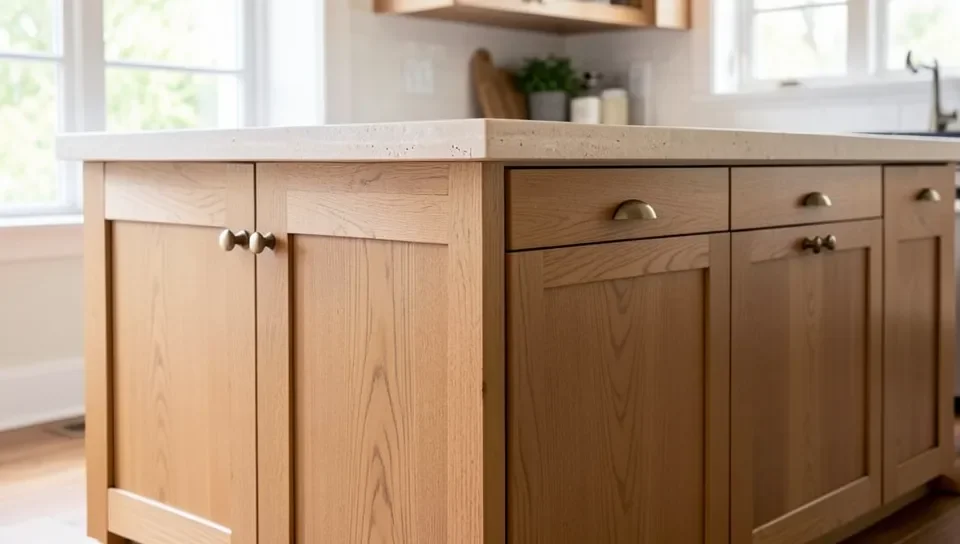
Hardware choice makes a bigger visual difference on teak than on darker or more uniform woods, since teak’s warm gold-brown tone contrasts cleanly against both warm and cool metals. Brushed brass and matte black are the two most common pairings right now, brass for a warmer, more traditional feel and black for a sharper, more contemporary contrast. If you’re deciding between a natural oil finish and a film-forming topcoat like polyurethane for the rest of your kitchen’s wood surfaces, our Danish oil vs. polyurethane comparison breaks down the tradeoffs in more depth.
Keeping Teak Cabinets Looking Right
Weekly maintenance is simple: dust with a soft, dry cloth and wipe up spills before they sit, especially near the sink and stove where moisture and grease collect fastest. For a deeper clean, a mild soap and water solution works fine. Skip harsh degreasers and abrasive pads, since they strip away the wood’s own protective oils faster than normal wear does.
Beyond routine cleaning, an oiled teak finish benefits from reoiling every few months in a kitchen, more often than teak furniture that isn’t exposed to daily cooking steam and splashes. Apply a penetrating teak oil with a soft cloth, working with the grain, then wipe off any excess after a few minutes so it doesn’t attract dust or leave a hazy film. If your cabinets have faded, grayed, or gone dull under years of sun and use, a full refinish rather than a quick reoil may be the better fix. Our guide to redoing teak wood covers that process step by step.
Teak vs. Other Cabinet Woods
Against walnut, teak is generally less expensive and more moisture-tolerant, though walnut’s darker, more uniform color reads as more formal to a lot of homeowners. Against oak and maple, teak costs noticeably more but doesn’t need the added moisture-resistant finish those woods typically require to hold up near a sink. None of these woods is objectively “better.” The right call comes down to how much moisture exposure your kitchen actually sees, how much upkeep you’re willing to do, and what your budget allows. Our full wood types guide is a useful next stop if you’re still weighing teak against other cabinet-grade hardwoods.
Frequently Asked Questions
Is teak wood good for kitchen cabinets?
Yes. Teak’s natural oils and resins repel surface moisture, and its compounds tectoquinone and naphthoquinone resist mold and mildew, which matters more in a kitchen than in almost any other room. It also registers a Janka hardness of about 1,070 lbf, hard enough to resist daily dings without being so hard that it damages cookware that brushes against it.
How much do teak kitchen cabinets cost?
Teak sits at the premium end of custom cabinetry. General custom cabinet pricing runs roughly $500 to $1,200 per linear foot, and because teak is a slow-growing, largely imported hardwood, expect it to land in the upper half of that range rather than the bottom.
Is FSC-certified teak actually sustainably sourced?
FSC certification is a genuine standard, but it isn’t an absolute guarantee. FSC’s own integrity investigations have found cases where non-certified timber entered certified teak supply chains and where the chain of custody couldn’t be fully traced back to the original forest. Ask a supplier for their chain-of-custody documentation rather than relying on the FSC label alone.
Does teak need to be sealed or oiled for kitchen use?
It doesn’t strictly need a sealer, since the wood’s own oils provide some protection, but most cabinet makers still apply a penetrating teak oil or a sealed matte finish to even out color and make cleanup easier. Reoiling every few months keeps the finish from drying out under regular kitchen use.
Conclusion
Teak earns its reputation in a kitchen specifically, not just in a showroom. The natural moisture and pest resistance are real, the hardness is genuinely practical for daily cabinet use, and a well-oiled teak kitchen can look good for decades with fairly modest upkeep. The tradeoffs are just as real: it costs more than almost any other cabinet wood, and “sustainable” sourcing claims deserve a closer look before you take them at face value. If you’re weighing teak for more than cabinets, our broader teak wood kitchen ideas guide covers islands, flooring, and outdoor teak kitchens as well.
Sponsored / affiliate links. As an Amazon Associate I earn from qualifying purchases. I may earn additional commission from eligible campaigns.