Acacia Vs Walnut Cutting Board: Essential Guide
Choosing between Acacia and Walnut for your cutting board comes down to balancing cost savings, wood density, and appearance. Acacia generally offers excellent durability at a lower price point, while Walnut provides superior richness in color and a slightly softer grain, making both fantastic, safe choices for your kitchen countertop.
Welcome to the workshop! Deciding on the right wood for a cutting board can feel tricky, especially when you see beautiful options like Acacia and Walnut sitting side-by-side on the lumber rack. You want a board that lasts, keeps your knives sharp, and looks great, but jargon about Janka hardness and grain patterns can be confusing. Don’t worry; we’ll break down Acacia versus Walnut side by side. By the end of this guide, you’ll know exactly which timber deserves a spot in your kitchen, easily and safely making the best choice for your budget and style.
Why Wood Choice Matters for Your Cutting Board
As a fellow woodworker, I stress this: the wood you choose isn’t just about looks. For a cutting board, the wood must be durable enough to withstand knife strikes but soft enough not to dull your expensive blades instantly. It also needs to be naturally resistant to bacteria. We look for woods rated as “food-safe.” Both Acacia and Walnut pass this test beautifully because they are closed-grain hardwoods, which is essential for hygiene.
Here’s what we are comparing today:
- Durability and Hardness (How long will it last?)
- Appearance and Aesthetics (How good does it look?)
- Cost and Availability (What does it cost the hobbyist?)
- Maintenance Needs (How much work is it to care for?)
Understanding Hardness: The Janka Scale Explained
When comparing woods, you’ll often hear about the Janka Hardness Test. This measures the force required to embed a steel ball halfway into a piece of wood. Higher numbers mean harder wood, which usually means more durability, but sometimes means faster knife dulling. The Sweet Spot for Cutting Boards Experts recommend woods that fall between 900 and 1500 on the Janka scale. Anything significantly harder can rapidly dull your chef’s knives. Both our contenders fit perfectly into this range.
Let’s look at where Acacia and Walnut land:
| Wood Species | Average Janka Hardness (lbf) | Suitability for Cutting Boards |
|---|---|---|
| Acacia | 1700 – 2100 | Very Hard, Excellent Dent Resistance |
| Black Walnut | 1010 | Ideal Hardness, Excellent for Knives |
Notice that Acacia is quite a bit harder than Walnut. This means an Acacia board might resist dents and scratches better over many years, but you might need to sharpen your knives slightly more often than if you were using a pure Walnut board. Both are completely usable and durable choices!
Acacia Cutting Boards: The Budget-Friendly Workhorse
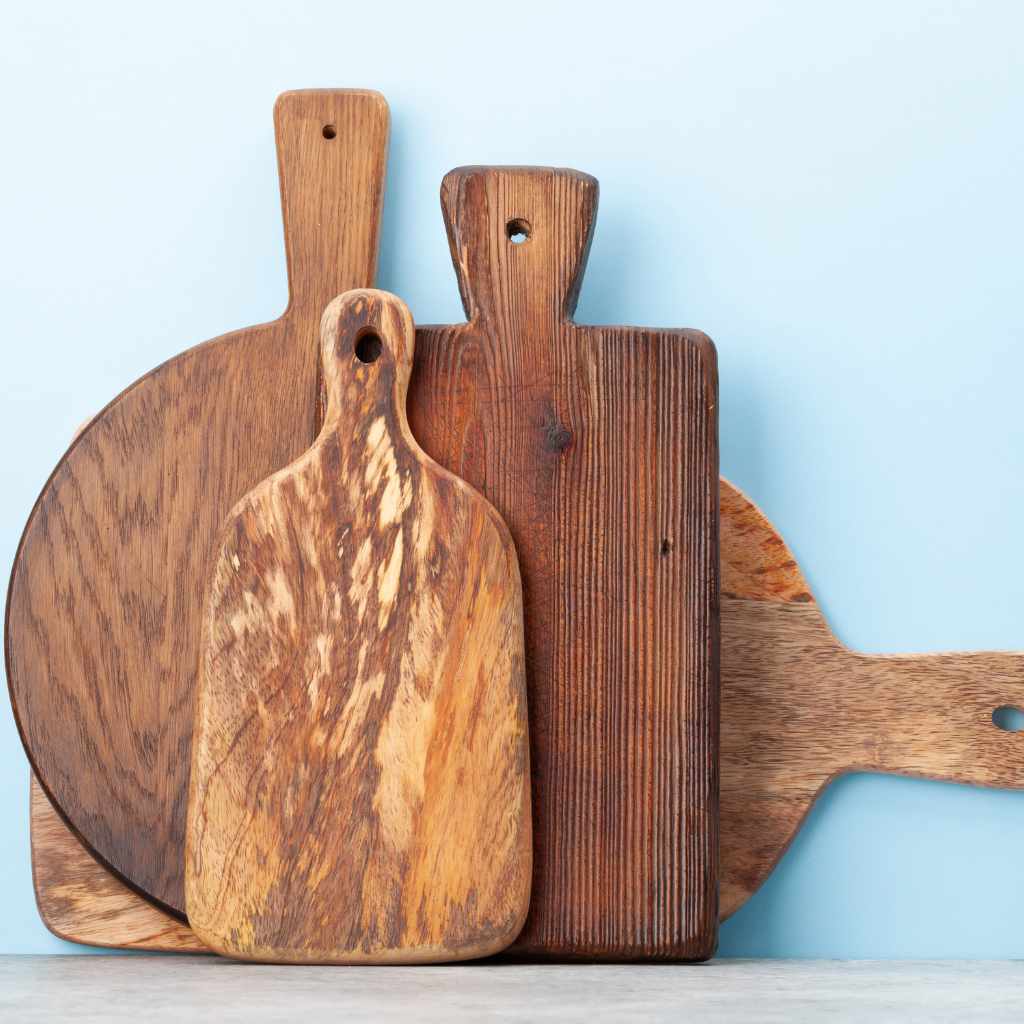
Acacia is gaining huge popularity, especially with DIYers, because it’s often readily available and generally more affordable than premium woods like Walnut. It grows quickly in tropical regions, making it a more sustainable choice in some markets.
Pros of Choosing Acacia
- Affordability: Typically less expensive per board foot than Walnut.
- Durability: Its high Janka rating means it stands up very well to daily chopping abuse and resists deep gouges.
- Water Resistance: Acacia naturally contains high levels of extractives, giving it a decent level of natural resistance to water damage, which is great for busy kitchens.
- Stunning Variation: Acacia features wide color variation, often swinging from light golden tones to deep brown streaks, one board to the next.
Cons of Choosing Acacia
- Color Consistency: If you prefer a uniform look, Acacia can be frustrating because its color blends can be dramatic, sometimes leading to a ‘busy’ appearance.
- Hardness Debate: Because it’s on the higher side of the hardness scale, some sensitive knife enthusiasts worry about knife wear over the long term.
Making and Caring for Your Acacia Board
If you decide on Acacia, you are choosing a board that is hard and forgiving on your wallet. When assembling an end-grain or edge-grain board, be mindful of your glue-up, as the open grain can sometimes require more clamps to ensure a perfectly flat surface.
For maintenance, treat Acacia just like any high-quality wood. Keep it oiled regularly. A good mineral oil application helps seal the pores and prevents the wood from drying out or absorbing too much moisture from damp sponges. For a brilliant finish, look into conditioning boards with a paste wax blend, often called ‘board butter,’ which you can make easily by mixing beeswax and mineral oil.
Black Walnut Cutting Boards: The Classic Aesthetic Choice
Black Walnut is often considered the premium choice for high-end kitchenware. It’s prized for one main reason: its color. A finished Walnut board offers a deep, rich chocolate brown that looks sophisticated on any counter.
Pros of Choosing Walnut
- Incredible Color: Walnut offers a deep, consistent, dark brown color that ages gracefully without bleaching out like some lighter woods.
- Knife Friendliness: At a Janka rating of around 1010 lbf, it’s perfectly balanced for kitchen use—hard enough to be sturdy, soft enough to spare your knife edges.
- Stable Workpiece: Walnut generally holds its shape very well once dried properly, meaning fewer issues with warping or cupping over time if maintained correctly.
- Aesthetic Appeal: It’s the classic choice. If you are gifting a board or building a showpiece for your own kitchen, Walnut screams craftsmanship.
Cons of Choosing Walnut
- Cost: Walnut is significantly more expensive than Acacia, sometimes costing double or triple the material price, depending on current market rates.
- Lighter Grain Visibility: While the dark color is a pro, figuring out the grain pattern during glue-up requires good lighting, as some sapwood contrasting can be hard to see clearly.
- Softer Surface: It will show knife marks sooner than the harder Acacia, requiring more frequent sanding and refinishing if you are a heavy chopper.
Working with Black Walnut
Walnut is a dream to work with on woodworking machinery. It cuts, sands exceptionally well, and finishes beautifully with just oil. Because it is a medium-density hardwood, power tools handle it easily. If you are learning joinery or routing details, Walnut will give you crisp, clean edges.
When choosing slabs for a large board, pay attention to the sapwood (the lighter wood near the bark). While food-safe, a board composed totally of dark heartwood will look much more uniform and striking than one mixed with light-colored sapwood streaks.
Head-to-Head Comparison: Acacia vs. Walnut
To help you make the final call, let’s stack up the essential features in a clear comparison table. This focuses on what matters most to a beginner building their first or next cutting board.
| Feature | Acacia | Black Walnut |
|---|---|---|
| Cost (Material) | $$ (More Budget-Friendly) | $$$ (Premium Pricing) |
| Typical Color | Highly Variable (Golden to Dark Brown) | Deep, Consistent Chocolate Brown |
| Knife Friendliness | Good (Slightly Harder) | Excellent (Perfect Mid-Range Hardness) |
| Resistance to Dents | High | Medium |
| Grain Appearance | Can be busy or striped | Generally smooth and elegant |
| Food Safety Rating | Excellent (Closed Pore Hardwood) | Excellent (Closed Pore Hardwood) |
Construction Considerations for Beginners
Whether you choose Acacia or Walnut, the construction method is crucial for longevity. For beginners, I usually recommend starting with an Edge-Grain orientation. This means the long sides of the wood strips are facing up.
Why Edge Grain First?
- Easier Glue-Ups: Edge grain boards have wider glue surfaces, which are more forgiving if your clamping pressure or glue application isn’t perfect.
- Less Material Waste: You can often use narrower strips of wood effectively.
- Simpler Flattening: Edge grain boards usually require less aggressive leveling after glue-up compared to end-grain boards.
If you are aiming for the very best performance (the kind used by professional chefs), you’d build an End-Grain board, where the wood fibers face upward. This is like having millions of tiny straws that close back up after the knife passes through, which is easier on the blade. Both Acacia and Walnut excel as end-grain materials, but gluing and flattening end-grain boards require more precise milling equipment.
Essential Finishing Steps for Food Safety
No matter which wood you pick, proper finishing is non-negotiable for food safety and durability. Raw wood absorbs liquids, bacteria, and odors. Finishing seals the surface.
The Best Food-Safe Finish Requirements
The finish must be “food-safe” after it cures. This generally means avoiding anything containing toxic solvents or non-food-grade resins. Many commercial finishes contain mineral oil or other safe components.
For practical application, we stick to mineral oil, which is safe, cheap, and readily available:
- Mineral Oil: Look for USP or technical grade mineral oil (often sold as butcher block oil). Do not use cooking oils like olive or vegetable oil; they go rancid quickly, leading to foul odors. Source your food-grade mineral oil from a reputable supplier, like those found via searches referencing health and safety standards, such as those reviewed by the U.S. Food and Drug Administration regarding food contact materials.
- Board Butter/Wax: After the oil soaks in, apply a layer of beeswax/mineral oil blend. This final layer helps push the water away and gives the board a beautiful, soft sheen.
Step-by-Step Oiling Process (Applies to both woods)
- Ensure the board is completely smooth (sanded up to 220 or 320 grit).
- Pour a generous amount of mineral oil directly onto the board surface.
- Use a clean, lint-free cloth (old t-shirt works great) to rub the oil vigorously into the wood grain. Make sure to cover all sides and edges.
- Let the oil sit and soak in for at least 30 minutes—longer is better, especially for the first coat.
- Wipe off any excess oil that hasn’t soaked in.
- Repeat this process two more times until the wood stops soaking up the oil quickly.
- Apply a thin layer of board butter/wax and let it cure for a couple of hours, then buff lightly.
Maintenance and Longevity: Keeping Your Board Beautiful
A cutting board is an investment. Proper care ensures your Acacia or Walnut board stays useful for decades. The key difference here relates back to hardness.
Walnut Maintenance Strategy
Because Walnut is softer, you might notice knife marks (scores) more easily. You will need to lightly sand and re-oil your board more frequently—perhaps annually, depending on usage—to smooth out these shallow scratches and keep the surface hygienic.
Acacia Maintenance Strategy
Acacia’s density means it resists the initial scoring better. You might only need to lightly sand and re-oil every two years. However, because it is slightly harder, if you happen to drop it or hit it sharply, it might be more prone to a deep chip than Walnut, which tends to dent instead.
Critical Warning for Both: Never soak your cutting board in water or run it through the dishwasher. Wood swells when wet and shrinks as it dries. This movement is what causes cracking and warping. Always clean with a quick wipe-down and mild soap, then dry immediately.
Choosing Based on Aesthetics: Color is Key
If you are on the fence, let your kitchen decor be the tie-breaker. Ask yourself what look you are going for:
- Modern/Minimalist: Walnut’s consistent deep brown hue usually fits cleaner, more contemporary designs perfectly.
- Rustic/Farmhouse: Acacia’s strong color variation, featuring light and dark bands, often complements rustic or industrial styles beautifully, adding visual texture.
- Contrast: If you plan to glue strips of different woods together (like maple and walnut), Walnut provides a fantastic dark contrast that really makes white or light-colored wood pop. Acacia provides lighter contrast but can sometimes blend too much if you pair it with wood that has a similar golden tone.
Frequently Asked Questions (FAQ) about Cutting Board Woods
Q1: Is Acacia wood safe to use for food contact?
A: Yes, Acacia is recognized worldwide as a food-safe hardwood. It has dense, closed pores, which helps prevent bacteria from penetrating the surface, provided you keep it properly oiled.
Q2: Will an Acacia board ruin my expensive knives faster than a Walnut board?
A: Potentially, yes, slightly. Acacia is harder than Walnut. While both are safe, harder woods dull blades marginally faster. For a home cook, the difference is barely noticeable, but dedicated chefs might prefer the softer give of Walnut or Maple.
Q3: Which of these two woods stains more easily if I chop red onions or beets?
A: Walnut will show temporary staining from highly pigmented foods like beets or turmeric more easily because it is darker brown. While the stain usually lifts with a gentle scrub, it is more visible. Acacia’s varied grain can sometimes hide these temporary stains better.
Q4: Can a beginner successfully build a cutting board with either Acacia or Walnut?
A: Absolutely! Both woods are stable and easily workable. Walnut is slightly easier to cut and sand cleanly, but Acacia’s affordability makes mistakes less costly while you are learning clamping and glue-up techniques.
Q5: Do I need to use special glue for these woods?
A: No special glue is required. Use a high-quality, waterproof PVA wood glue like Titebond III. This glue is strong, cures rock-hard, and is certified moisture-resistant, which is critical for kitchen items exposed to water.
Q6: Is Walnut better than Maple for a cutting board?
A: Maple is the standard benchmark for hardiness and color neutrality. Walnut beats Maple on color (it’s dark and rich) but is slightly softer. If you want the most durable, light-colored board, pick Maple. If you want a dark, beautiful board that’s a bit gentler on knives than Maple, pick Walnut.
Bringing It Home: Making Your Final Decision
As your workshop mentor, I want you to leave feeling confident. The great news is you really cannot go wrong choosing between Acacia and Walnut for a cutting board. Both are hardwoods, both are safe, and both will look fantastic in your kitchen when properly finished.
Think of it this way: If your primary concern is getting the absolute best visual impact and a wood that is famously kind to your knives, stretch the budget slightly and secure some Black Walnut. It’s the classic, refined choice that showcases craftsmanship beautifully.
However, if you are looking to save some money for other tools, build a very large board, or if you frequently buy lumber on sale, Acacia offers incredible performance for the price. Its superior hardness means it will fight off dents and scrapes slightly longer than Walnut, giving you a rugged, long-lasting surface.
Whichever you select, remember the finishing steps are the most important part of the project. Oiling it well and cleaning it properly after every use—no soaking—will guarantee your new Acacia or Walnut cutting board serves your kitchen well for many wonderful years to come. Happy building!