Spar Urethane vs Polyurethane for Table Top: Which Is Better?
Spar urethane and
Once you’ve picked spar urethane, the next real question is coverage — see how many coats you actually need, since it depends on sun and water exposure, not a fixed number.
polyurethane are both clear protective finishes, but they are built for different jobs. Polyurethane is usually the better finish for an indoor tabletop because it dries harder and handles daily abrasion well. Spar urethane is more flexible and made for outdoor movement, sunlight, and moisture, but that flexibility is not always an advantage on a dining table, desk, or coffee table (and the reverse mistake, using regular interior polyurethane outdoors, fails even faster since it has no real UV protection at all).For most indoor tabletops, polyurethane is better than spar urethane. Use water-based polyurethane when you want a clear finish with less ambering, oil-based polyurethane when you want a warmer tone, and spar urethane only when the table will live outdoors, in a sunroom, on a porch, or in a place with moisture and temperature swings.
A bathroom vanity faces that same kind of humidity and temperature swing every day, which is why it needs its own comparison rather than a general tabletop recommendation — see our breakdown of the best wood finish for a bathroom vanity.
Disclosure: This post may contain affiliate links. As an Amazon Associate we earn from qualifying purchases.
Polyurethane is usually the best choice for an indoor tabletop because it forms a harder, more abrasion-resistant finish. Spar urethane is better for outdoor tables, porch tables, and wood exposed to sunlight, moisture, and temperature movement because it is more flexible and exterior-oriented.
Spar Urethane vs Polyurethane: Fast Tabletop Decision Table
Best for Spar Urethane vs Polyurethane for Table Top
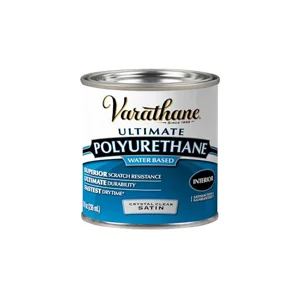 |
Varathane Water-Based Ultimate Satin Polyurethane – $13.49 The product this guide names by name for spar urethane vs polyurethane for table top – matched here to a real, currently listed ASIN.
|
| Table Type | Better Finish | Why | Watch Out For |
|---|---|---|---|
| Indoor dining table | Polyurethane | Harder film and better daily abrasion resistance | Let it cure before heavy use |
| Indoor desk | Water-based polyurethane | Clear finish with good protection and less ambering | Thin coats are important |
| Rustic farmhouse table | Oil-based polyurethane | Warm amber tone and durable film | Can yellow light woods and white paint |
| Outdoor patio table | Spar urethane | More flexible and better suited to weather movement | Still needs maintenance outdoors |
| Porch or sunroom table | Spar urethane or exterior-rated polyurethane | Handles sunlight and humidity better than indoor-only finish | May amber more than water-based poly |
| White painted tabletop | Water-based polyurethane | Lower ambering risk than oil-based products | Always test for color change |
Water-based polyurethane is the safest default for most indoor tabletops when you want a clear protective finish with less ambering than oil-based products.
- Good for dining tables, desks, shelves, and cabinets
- Clearer look on light wood and painted surfaces
- Useful when you want durability without a strong yellow tone
- Apply thin coats and let the finish cure before heavy use
As an Amazon Associate we earn from qualifying purchases.
What Is Spar Urethane?
Spar urethane is a clear finish designed for wood that moves, expands, contracts, and faces outdoor exposure. The word spar comes from marine and boat use, where flexible wood parts need a coating that can tolerate weather and movement. Modern spar urethane is often used on exterior doors, outdoor furniture, porch railings, window trim, and patio tables.
The key difference is flexibility. Spar urethane tends to remain more elastic than standard interior polyurethane. That helps when wood is exposed to sunlight, temperature swings, and seasonal moisture changes. It can also include UV-resistant ingredients, depending on the product.
Worth knowing: those UV-resistant ingredients slow down breakdown, not color change – oil-based spar urethane still ambers over time, indoors or out, because of the oil resin itself.
That does not automatically make spar urethane better for every table. On an indoor tabletop, you usually want hardness, abrasion resistance, and easy cleaning. A softer, more flexible finish can feel less ideal for a table that sees plates, laptops, elbows, books, and daily wiping.
What Is Polyurethane?
Polyurethane is a durable clear film finish commonly used on furniture, floors, cabinets, tabletops, doors, and trim. It creates a protective surface layer over the wood. Polyurethane is available in water-based and oil-based formulas, with different sheens such as matte, satin, semi-gloss, and gloss.
Oil-based polyurethane adds a warmer amber color and is often chosen for traditional furniture. Water-based polyurethane dries clearer and is often preferred for light woods, white paint, maple, pine, or modern finishes. For many indoor tabletops, polyurethane gives the best balance of durability, availability, and ease of maintenance.
For related finishing help, read what is the best clear coat for painted wood and what is the best finish for pine wood. For the full range of finish options beyond these two, see our wood finishing guide.
Main Difference Between Spar Urethane and Polyurethane
| Feature | Spar Urethane | Polyurethane |
|---|---|---|
| Best use | Outdoor wood, porch furniture, exterior doors | Indoor furniture, tabletops, floors, cabinets |
| Flexibility | More flexible | Harder and less flexible |
| Abrasion resistance | Good, but usually not best for indoor table wear | Usually better for indoor daily wear |
| UV/weather resistance | Usually better exterior option | Use exterior-rated versions only outdoors |
| Color change | Can amber, especially oil-based versions | Oil-based ambers; water-based stays clearer |
| Tabletop default | Outdoor table | Indoor table |
Which Is Better for an Indoor Tabletop?
Polyurethane is better for most indoor tabletops. A dining table, desk, coffee table, side table, or kitchen island top usually needs a hard finish that resists scuffs, light scratches, cleaning, and normal use. Standard polyurethane is built for that kind of indoor wear.
Spar urethane can work on an indoor table, but it is usually not the first choice. It may stay slightly softer or more flexible than you need. It may also amber more than a clear water-based polyurethane. If the table is indoors and not exposed to sunlight or outdoor moisture, use polyurethane unless you have a specific reason to use spar urethane. If you would rather skip film finishes on the top altogether, mounting a glass table top on a wood base avoids the sanding-and-recoat cycle entirely.
Which Is Better for an Outdoor Tabletop?
Spar urethane is usually better for an outdoor tabletop. Outdoor wood expands and contracts as humidity and temperature change. It also sees sunlight, rain, morning dew, and surface movement. Spar urethane is designed for that kind of movement better than standard indoor polyurethane.
However, no clear finish is maintenance-free outside. Sunlight and moisture are hard on clear coatings. Most spar urethane finishes only last 2 to 5 years outside before that sanding and re-coating is due. If the table is exposed to full sun and rain, an exterior stain or paint system may last longer than a clear film finish.
For outdoor finish planning, read what is the best wood sealer, what is the best deck stain, and what is the best fence stain.
Spar urethane is the better choice when the tabletop will live outdoors, on a porch, in a sunroom, or anywhere sunlight and moisture movement matter.
- Good for patio tables, exterior doors, and porch furniture
- More flexible than standard indoor polyurethane
- Better suited to seasonal wood movement
- Still needs inspection and maintenance outdoors
As an Amazon Associate we earn from qualifying purchases.
Water-Based vs Oil-Based Polyurethane for Tables
Water-based polyurethane is better when you want the tabletop to stay light, clear, or close to its natural color. It is also better over white paint or light painted surfaces because it is less likely to add a yellow tone. It dries faster and usually has lower odor than oil-based polyurethane.
Oil-based polyurethane is better when you want warmth, amber tone, and a traditional furniture look. It can look beautiful on walnut, oak, cherry, and rustic tabletops. For more rustic-specific picks, see our rustic wood table finish comparison. But it can yellow pale woods and painted surfaces, so it is not the best choice when color clarity matters.
Food Use, Cure Time, and Heat
After a finish fully cures, many film finishes are commonly used on tabletops that contact plates, cups, and normal dining use. That does not mean the surface should be used as a cutting board. For direct food cutting, use a finish designed for cutting boards or butcher blocks instead. Spar urethane and spar varnish in particular are not food safe even once fully cured; see is spar varnish food safe for the full breakdown and safe alternatives.
The most common mistake is using the table too early. Dry to the touch is not the same as fully cured. Follow the label and give the finish enough time before placing hot dishes, wet cups, placemats, or heavy objects on it. See our full breakdown of how long after polyurethane you can actually use a table, broken down by activity and finish type.
How to Apply Polyurethane on a Tabletop
- Sand the tabletop evenly and remove all dust.
- Apply stain or dye first if color is needed, then let it dry fully.
- Use a clean brush, pad, or applicator recommended by the finish label.
- Apply thin coats with the grain.
- Avoid overbrushing, especially with water-based products.
- Let each coat dry as directed.
- Lightly sand between coats if the product recommends it.
- Apply two to four thin coats depending on use level.
- Let the finish cure before heavy table use.
Common Mistakes
Using spar urethane indoors just because it sounds stronger
Spar urethane is not automatically stronger for tabletops. It is more exterior-oriented and flexible. For indoor table abrasion, polyurethane is usually better.
Using indoor polyurethane outdoors
Indoor polyurethane is not made for rain, sun, and temperature movement. Use spar urethane or an exterior-rated finish outdoors.
Rushing the cure time
A finish can feel dry but still be soft under the surface. Let it cure before heavy use, cleaning, or placing objects on the tabletop.
Applying thick coats
Thick coats can cause bubbles, brush marks, soft finish, or uneven drying. Thin coats are safer — see can you pour polyurethane thick for exactly why a heavy poured-on coat fails to cure right, and what to use instead if you actually need a deep, poured-look finish.
How Long Does Polyurethane and Spar Urethane Take to Cure? (Real Timelines)
Manufacturer data gives a more precise cure window than “wait until it feels dry.” According to Minwax’s technical data sheet for Helmsman spar urethane, the finish is dry to the touch in about 24 hours, can be recoated after roughly 6 hours once lightly sanded with 220-grit sandpaper, and needs about 72 hours to fully cure before normal daily use. Oil-based interior polyurethane follows a similar pattern but often recoats faster, in as little as 3 to 4 hours between light coats. Some water-based polyurethane data sheets list a full cure of up to 30 days, so always check the specific product’s own label.
| Stage | Spar Urethane (Minwax Helmsman) | Oil-Based Polyurethane |
|---|---|---|
| Dry to touch | About 24 hours | About 24 hours |
| Recoat window | About 6 hours (sand with 220-grit first) | About 3 to 4 hours |
| Safe for light use | About 24 hours after final coat | About 24 hours after final coat |
| Full cure | About 72 hours or more | About 72 hours or more |
📊 Minwax’s own data sheet lists a 72-hour full cure for Helmsman spar urethane, even though the coating feels dry to the touch after only 24 hours — that gap is exactly why the “rushing the cure time” mistake above happens so often. Source: Minwax Technical Data Sheet, Helmsman Spar Urethane.
“Let dry at least 6 hours, then sand entire surface lightly with very fine sandpaper (220 grit) to ensure an even finish and proper adhesion of additional coats.”
These are manufacturer defaults, not guarantees — a cold shop, high humidity, or a thicker-than-recommended coat all slow every stage down. When timelines are close, wait longer rather than testing the surface early.
Ventilation and Fumes
Both oil-based polyurethane and spar urethane give off strong solvent fumes while wet. Work in a ventilated space, run a fan that moves air out rather than just around the room, and keep the area away from open flames or pilot lights until the finish has dried. Water-based polyurethane has noticeably lower odor if fumes are a concern indoors.
Durability: Hardness vs Flexibility
The biggest misunderstanding is thinking that spar urethane is always tougher because it is used outdoors. It is better for movement, but movement resistance is not the same thing as tabletop hardness. A finish on an outdoor door or patio table needs flexibility so it can move with wood as humidity and temperature change. A finish on an indoor tabletop needs better abrasion resistance because plates, books, elbows, laptops, keys, and cleaning cloths constantly rub the surface.
That is why polyurethane is usually the stronger indoor tabletop choice. It forms a harder film that is better suited to flat horizontal surfaces. Spar urethane can still protect wood, but its softer, more elastic nature may not feel as durable on a high-use indoor table.
Chemical resistance is part of that gap too. Polyurethane generally holds up better against alcohol, wine, and other household chemical spills, which matters on a dining table. Spar urethane leans toward water and UV resistance for outdoor use and can mark more easily from alcohol-based spills, so wipe those up quickly if you use it indoors.
Moisture and Water Rings
Both finishes can resist normal household moisture when applied correctly and fully cured. But no clear finish should be treated as waterproof forever. Wet cups, plant pots, hot plates, and standing water can damage many clear finishes over time. On an indoor dining table, use coasters and wipe spills quickly even if the surface is coated with polyurethane.
For an outdoor table, water resistance is only part of the issue. Sunlight, seasonal expansion, and repeated wet-dry cycles are just as important. That is where spar urethane makes more sense than ordinary indoor polyurethane.
Best Sheen for a Tabletop
Satin is usually the best sheen for a tabletop because it balances appearance and practicality. Matte can look modern and soft, but it may show burnishing or oily fingerprints. Semi-gloss and gloss are easier to wipe clean but can highlight dust, brush marks, dents, and uneven sanding.
| Sheen | Best Use | Look | Downside |
|---|---|---|---|
| Matte | Modern low-sheen tables | Soft and natural | Can show rub marks |
| Satin | Most dining tables and desks | Balanced, clean, practical | Still changes raw wood appearance |
| Semi-gloss | Traditional or easy-clean surfaces | More reflective | Shows imperfections more |
| Gloss | Decorative high-shine tables | Bold and reflective | Highlights every flaw |
Can You Use Spar Urethane Over Polyurethane?
Putting spar urethane over polyurethane is possible only when the old finish is fully cured, clean, scuff sanded, and compatible. It is not usually the best plan for a normal indoor table. If the table already has polyurethane and needs refresh work, it is usually better to clean, sand lightly, and recoat with a compatible polyurethane. For the full step-by-step process, dry times, and common pitfalls, see our guide on putting spar urethane over polyurethane.
If you are moving an indoor table outdoors, do not assume a spar urethane topcoat over old polyurethane will turn it into an outdoor table. The wood species, glue, joinery, sun exposure, and maintenance schedule all matter.
Best Finish Schedule for a Tabletop
A reliable indoor tabletop schedule is simple: sand evenly, stain or dye if needed, let color dry, then apply two to four thin coats of polyurethane. A reliable outdoor tabletop schedule is different: use an exterior-rated system, seal vulnerable end grain, apply thin coats, protect the table from standing water, and plan for maintenance.
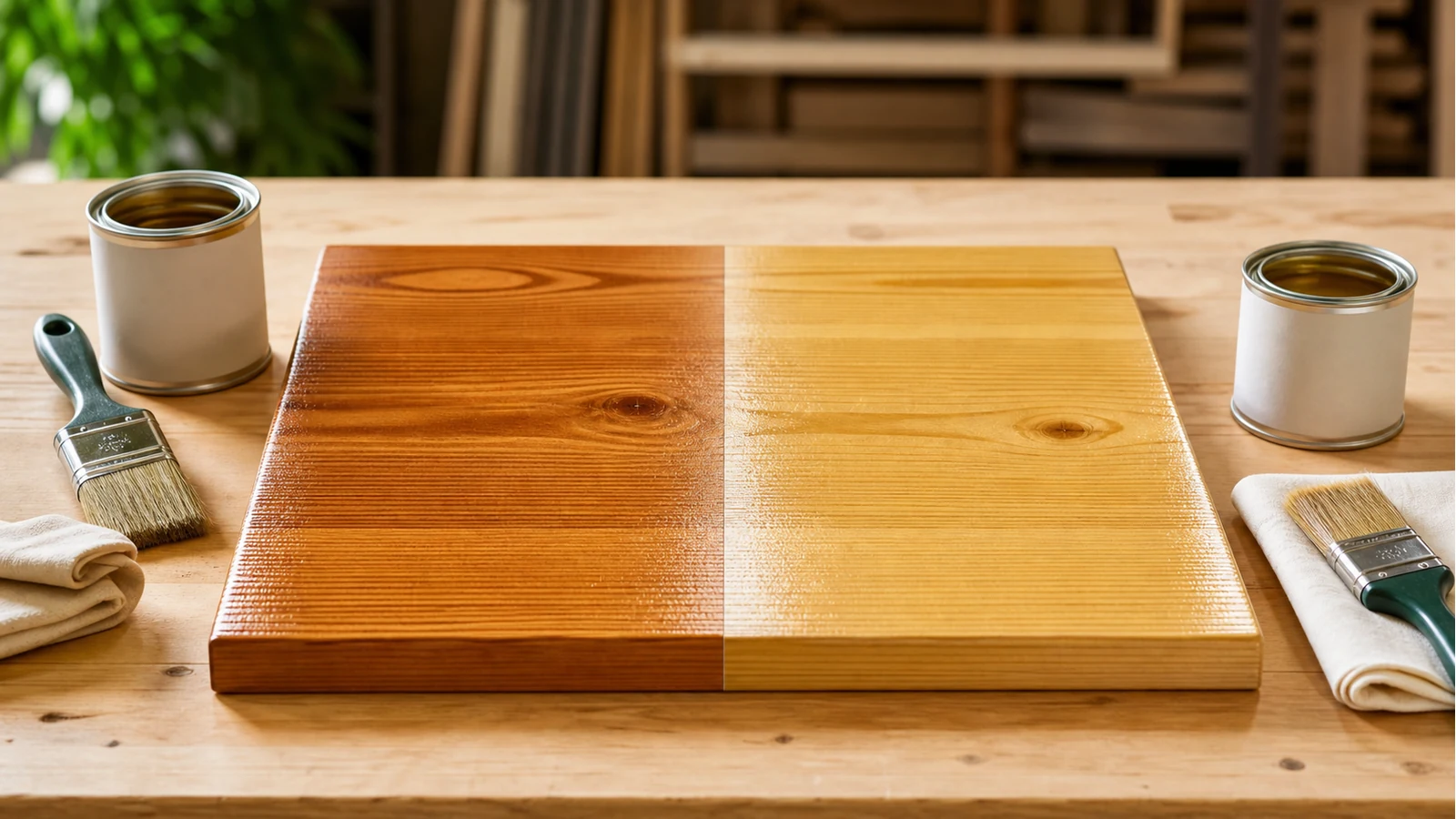
For a table that must look natural but still survive real use, test two boards: one with water-based polyurethane and one with oil-based polyurethane. The best finish is not only about protection; it is also about how the finish changes the wood color.
For a spec-by-spec look at both Minwax products beyond tabletops, see our spar urethane vs polyurethane comparison.
Final Recommendation
Use polyurethane for most indoor tabletops. Choose water-based polyurethane for a clear finish and less ambering. Choose oil-based polyurethane for a warmer traditional look. Use spar urethane for outdoor tables, porch tables, exterior doors, and furniture that will face moisture, sunlight, and seasonal movement.
If the table is indoors, polyurethane is the safer default. If the table is outdoors, spar urethane is the better match. If the table will be used for direct food cutting, choose a cutting-board-safe finish instead of either product.
FAQs About Spar Urethane vs Polyurethane for Table Tops
Is spar urethane better than polyurethane for a tabletop?
Spar urethane is better for outdoor tabletops. Polyurethane is better for most indoor tabletops because it creates a harder, more abrasion-resistant finish.
Can I use spar urethane on an indoor table?
Yes, but polyurethane is usually a better indoor tabletop finish unless the table is in a sunroom, porch, or damp area.
Is polyurethane good for dining tables?
Yes. Polyurethane is a good finish for dining tables when applied in thin coats and allowed to cure fully.
Should I use water-based or oil-based polyurethane on a table?
Use water-based polyurethane for a clearer finish and less ambering. Use oil-based polyurethane for a warmer traditional tone. For woodworking projects like how to make a wooden cross stand up, these same finishing principles apply.
What is the best finish for an outdoor wood table?
Spar urethane, exterior varnish, exterior stain, or exterior sealer can work depending on the look you want. For clear film protection outdoors, spar urethane is usually a better choice than indoor polyurethane.
Does polyurethane resist alcohol and wine spills better than spar urethane?
Yes. Polyurethane generally holds up better against alcohol, wine, and other chemical spills, which matters on a dining table. Spar urethane is formulated more for water and UV resistance outdoors and can be marked more easily by alcohol-based spills, so wipe them up quickly if you use spar urethane indoors.
Sponsored / affiliate links. As an Amazon Associate I earn from qualifying purchases. I may earn additional commission from eligible campaigns.