AdvanTech Subfloor vs Plywood Pros Cons
Choosing the right subfloor material can feel tricky when you’re new to home projects. You want something strong and dependable for your floors. The AdvanTech Subfloor vs Plywood: Pros and Cons question pops up often because both are popular choices, but they act differently.
Don’t worry if it seems like a lot to sort out. We’ll break it down simply, step by step, so you can make the best choice for your build. Let’s look at what makes each one a good fit, or sometimes not so good, for your project.
AdvanTech Subfloor Explained
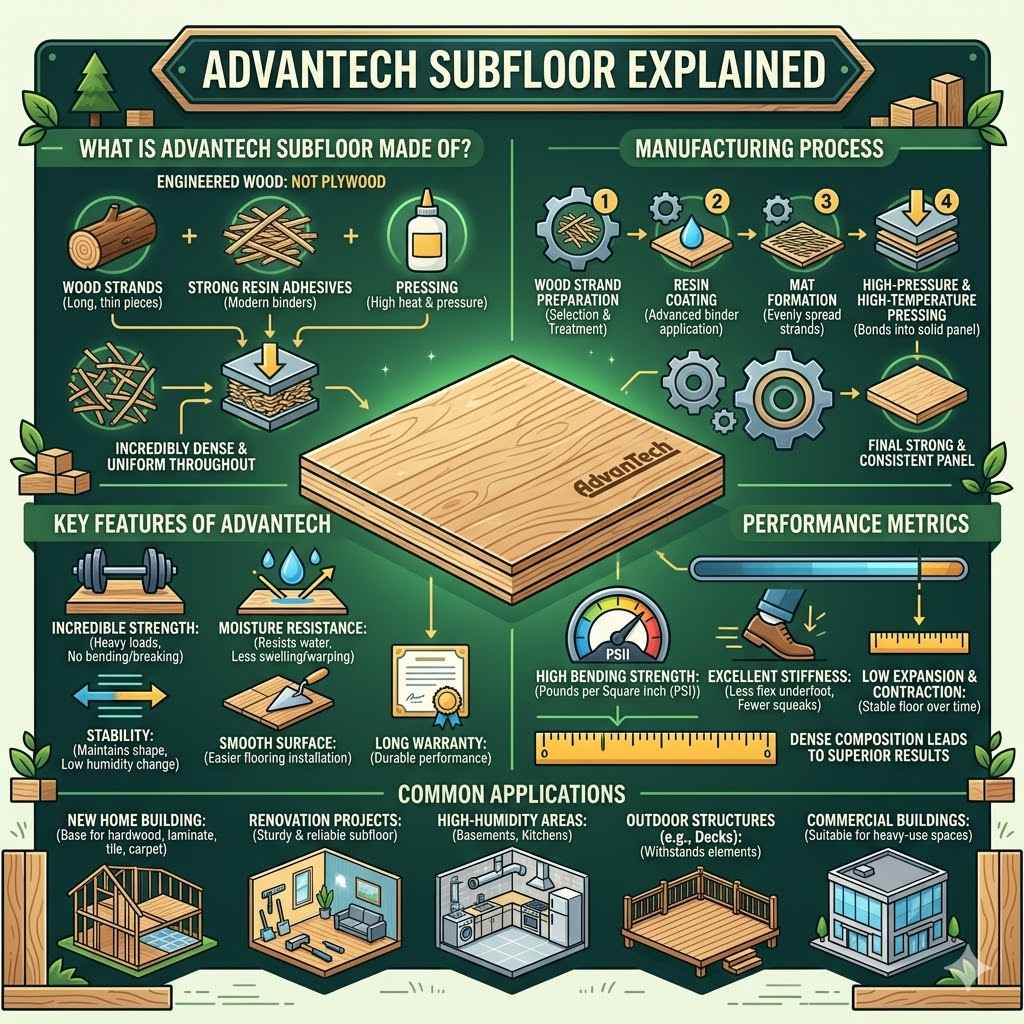
AdvanTech subflooring is a premium engineered wood product designed for floors. It’s made from a blend of wood strands and resins, pressed together under high heat and pressure. This process creates a very dense, strong, and stable panel.
Unlike traditional plywood, AdvanTech is engineered to resist moisture and warping. It’s often used in demanding applications where strength and durability are key. Many builders prefer it for its consistent quality and performance.
What is AdvanTech Subfloor Made Of
AdvanTech subflooring is a special kind of engineered wood. It uses wood strands, which are like long, thin pieces of wood, mixed with strong adhesives. These strands are then arranged in layers and pressed together with a lot of force and heat.
This makes the material incredibly dense and uniform throughout. This is different from plywood, which is made from thin sheets of wood glued together. The way AdvanTech is made gives it superior strength and resistance to water.
Manufacturing Process of AdvanTech
The manufacturing of AdvanTech subflooring involves a precise process. Wood strands are carefully selected and treated. They are then coated with advanced resin binders.
These coated strands are spread evenly onto a mat. This mat is then subjected to high-pressure and high-temperature pressing. This process bonds the strands together, forming a solid panel.
The result is a subfloor panel that is very strong, stable, and consistent in quality. This controlled manufacturing helps eliminate the flaws sometimes found in natural wood products.
Key Features of AdvanTech
AdvanTech subflooring has several standout features. One is its incredible strength. It can support heavy loads without bending or breaking.
It’s also very resistant to moisture. This means it’s less likely to swell or warp if it gets wet during construction or from spills later on. The panels are also very stable, so they don’t change shape much with changes in humidity.
They often come with a strong warranty, reflecting their durability. Builders appreciate its smooth surface, which makes for an easier flooring installation.
AdvanTech Subfloor Performance Metrics
When we talk about performance, AdvanTech shines in several areas. Its bending strength is remarkably high. This is measured in pounds per square inch (psi) and indicates how much weight it can hold before it starts to bend.
It also has excellent stiffness, meaning it doesn’t flex much underfoot. This reduces floor squeaks. AdvanTech is known for its low expansion and contraction rates, ensuring a stable floor over time.
For example, tests show AdvanTech can handle loads far exceeding standard requirements for residential floors. This superior performance comes from its dense composition.
Common Applications for AdvanTech
AdvanTech subflooring is a top choice for many construction needs. It’s widely used in new home building as the base layer for hardwood, laminate, tile, or carpet. It’s also great for renovation projects where a sturdy and reliable subfloor is needed.
Its moisture resistance makes it a good option for areas that might experience more humidity, like basements or kitchens. Some professionals even use it for decks or other outdoor structures where it can withstand the elements. Its strength makes it suitable for commercial buildings as well.
Plywood Subflooring Explained
Plywood is a widely recognized building material. It’s made by gluing together thin layers, or veneers, of wood. These layers are stacked on top of each other with their wood grain running in different directions.
This cross-graining makes plywood strong and stable. It’s been a go-to material for subflooring for decades due to its availability and cost-effectiveness. While it’s a reliable choice, it has certain characteristics that differ from engineered products like AdvanTech.
Understanding these differences is key to choosing the right material.
What is Plywood Made Of
Plywood is essentially a sandwich of wood layers. It starts with thin sheets of wood, called veneers, that are peeled from logs. These veneers are then coated with strong adhesives.
They are stacked so that the grain of each layer runs at a right angle to the layer beneath it. This alternating grain pattern is what gives plywood its strength and prevents it from splitting easily. The number of layers can vary, usually ranging from three to seven or more, depending on the thickness of the plywood.
The Plywood Manufacturing Process
Making plywood is a multi-step process. First, logs are cut into thin, uniform sheets called veneers. This is often done using a rotary lathe.
The veneers are then inspected for defects. They are then coated with a durable adhesive, typically a synthetic resin. The coated veneers are then stacked in alternating grain directions.
This stack is placed into a large press. Under high heat and pressure, the layers are bonded together to form a solid panel. The panels are then trimmed to size and sanded smooth.
Key Features of Plywood
Plywood has several beneficial features. It is generally strong and durable. It’s also relatively lightweight compared to solid wood of the same thickness.
Plywood panels are widely available in many sizes and thicknesses. This makes it easy to find the right product for various projects. It’s also a more affordable option than many other subflooring materials.
Its affordability and widespread availability have made it a staple in construction for many years. However, its performance can be more variable depending on the grade and manufacturing quality.
Plywood Subflooring Performance Considerations
Plywood subflooring performs well in many situations. It offers good structural support for finished floors. Its strength makes it suitable for carrying typical household loads.
However, it can be more susceptible to moisture than engineered products. If exposed to significant water, it can swell, warp, or delaminate. The quality of plywood can vary significantly, affecting its strength and stability.
For instance, construction-grade plywood is designed for structural use, but it might not be as dimensionally stable as higher grades. Its performance is often tied to its grade and the specific type of wood used.
Common Applications for Plywood
Plywood is used in countless construction applications. It’s a very common subfloor material for residential homes. It serves as the base for almost any type of flooring, from carpet to tile.
Plywood is also used for sheathing walls and roofs. It’s found in furniture making, cabinetry, and even in the construction of concrete forms. Its versatility and cost-effectiveness make it a popular choice across a wide range of building and DIY projects.
It is especially favored for its ease of use and wide availability at local hardware stores.
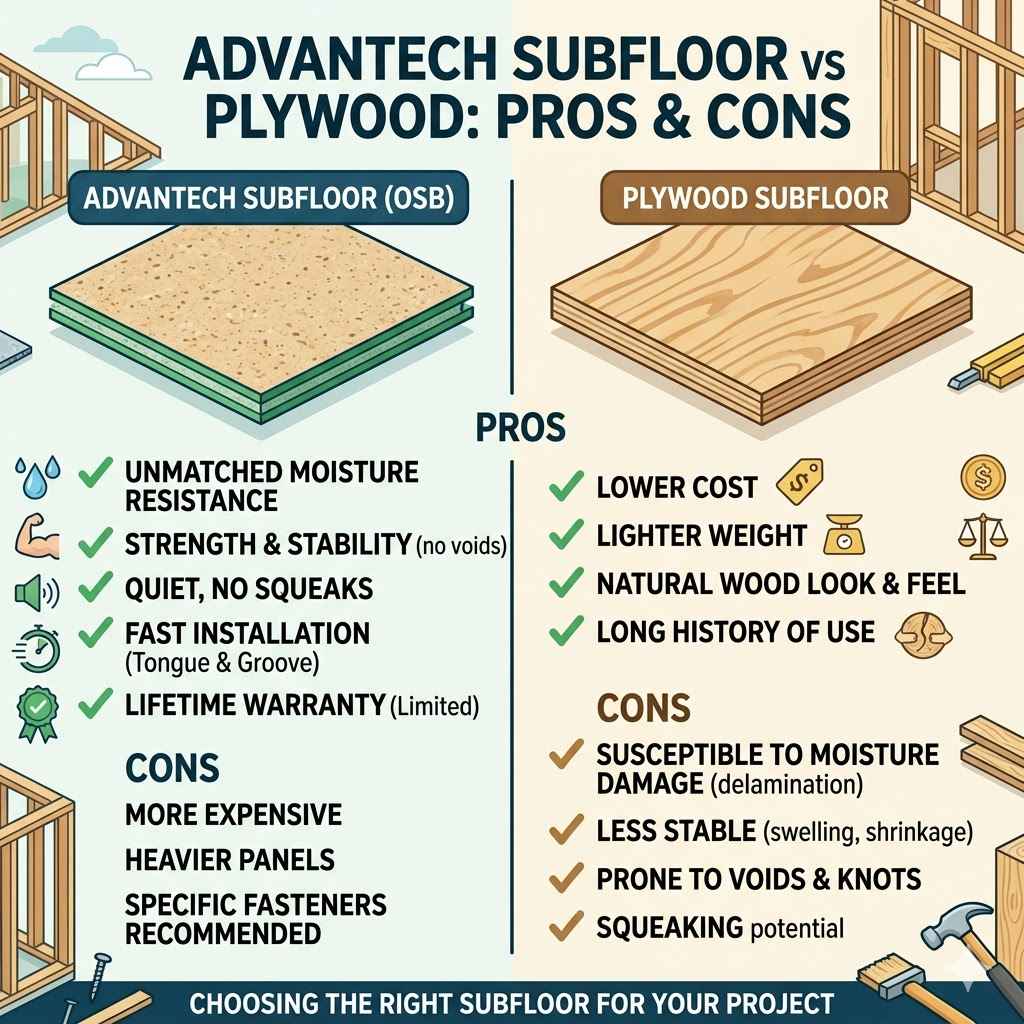
AdvanTech Subfloor vs Plywood Pros and Cons
When comparing AdvanTech subfloor vs plywood, both have their place. However, AdvanTech often stands out for its superior performance in certain areas. Plywood is a tried-and-true material that is budget-friendly.
AdvanTech, while more expensive upfront, can offer better long-term value due to its durability and resistance to common problems. This comparison focuses on the advantages and disadvantages of each so you can see where they excel and where they fall short.
AdvanTech Subfloor Pros
- Superior Strength and Durability
AdvanTech subflooring is engineered for exceptional strength. It can handle heavier loads and resist damage better than standard plywood. This means your floors will feel more solid and last longer. Its dense composition helps prevent cracking or breaking under pressure, ensuring a robust foundation for any finished flooring. This level of resilience is often a key factor for homeowners and builders seeking maximum longevity from their construction materials. - Excellent Moisture Resistance
One of AdvanTech’s biggest advantages is its resistance to moisture. It’s designed to withstand damp conditions better than plywood without swelling or warping. This is crucial during construction when weather can be unpredictable, or in areas prone to spills and humidity like kitchens and bathrooms. This feature helps prevent common subfloor problems like rot or delamination, contributing to a healthier indoor environment and fewer future repair needs. - Reduced Floor Squeaks
AdvanTech panels fit together tightly and maintain their shape well. This snug fit and dimensional stability significantly reduce the chances of floor joists rubbing against the subfloor, which is a common cause of annoying squeaks. Homeowners appreciate a quiet floor, and AdvanTech’s design actively works to prevent this common nuisance. This feature enhances the overall comfort and perceived quality of a home. - Consistent Quality and Performance
Because AdvanTech is an engineered product manufactured under strict controls, its quality is very consistent. You know what you’re getting with every panel, unlike natural wood products where quality can vary. This predictability is highly valued in construction, as it reduces installation issues and ensures reliable results across the entire project. Builders can trust that each piece will perform as expected. - Smooth Surface for Flooring Installation
AdvanTech panels are manufactured to have a very smooth and uniform surface. This makes it easier and faster for flooring installers to lay down finished materials like hardwood, laminate, or tile. A flat, smooth subfloor ensures a better final appearance and reduces the need for additional preparation steps. This efficiency can save time and labor costs on a project.
AdvanTech Subfloor Cons
- Higher Upfront Cost
The most significant drawback of AdvanTech subflooring is its price. It is generally more expensive than standard plywood. This higher initial investment can be a barrier for some projects, especially those with tight budgets. However, many argue that the long-term benefits and reduced risk of future problems can offset this initial cost. - Limited Availability in Some Areas
While widely available in many regions, AdvanTech might be harder to find in more remote or smaller hardware stores compared to basic plywood. This could mean special orders or longer wait times depending on your location. This factor is less of an issue in major construction markets but can be a consideration for DIYers in less populated areas.
Plywood Subflooring Pros
- Cost-Effectiveness
Plywood is usually the more affordable option for subflooring. This makes it an attractive choice for budget-conscious homeowners and contractors. When building or renovating, keeping material costs down is often a priority, and plywood delivers on this front. Its lower price point allows for allocation of funds to other aspects of the project. - Widespread Availability
You can find plywood at virtually any lumber yard or home improvement store. Its commonality means it’s readily available in various thicknesses and grades. This makes it easy for DIYers and professionals alike to source the material quickly, often without needing to place special orders. This accessibility is a major advantage for many projects. - Familiarity and Ease of Use
Most builders and DIYers are very familiar with working with plywood. It’s easy to cut, shape, and install using standard tools. This familiarity can lead to quicker installation times for those accustomed to using it. The learning curve for using plywood is minimal, making it accessible for a wide range of skill levels. - Good Structural Strength
When installed correctly, plywood provides good structural integrity for floors. It can support the weight of furniture, appliances, and foot traffic. Construction-grade plywood, in particular, is designed for load-bearing applications and offers reliable performance for typical residential use. It has a proven track record as a sturdy subfloor material.
Plywood Subflooring Cons
- Susceptibility to Moisture Damage
Plywood is more prone to damage from moisture than engineered products like AdvanTech. Prolonged exposure to water can cause it to swell, warp, and even delaminate. This can lead to costly repairs and potential structural issues over time. It’s important to protect plywood from getting wet during construction. - Potential for Warping and Twisting
Wood is a natural material, and plywood can sometimes warp or twist, especially if stored improperly or exposed to varying humidity levels. This can create an uneven subfloor surface, making it harder to install finished flooring and potentially leading to squeaks or hollow spots. Ensuring proper storage and handling is crucial. - Variable Quality and Performance
The quality of plywood can differ significantly between manufacturers and even between batches from the same manufacturer. This variability means performance can be inconsistent. Lower grades of plywood may have more voids, knots, and weaker glue bonds, affecting their strength and durability. Choosing a higher grade can mitigate this, but at a higher cost. - More Prone to Squeaks
Due to potential warping and less precise panel fit compared to engineered options, plywood subfloors can be more likely to develop squeaks over time. As the wood expands and contracts with humidity changes, it can create friction between the subfloor and the joists, leading to those familiar creaking sounds.
Subfloor Installation Considerations
Proper installation is just as important as choosing the right material. Whether you select AdvanTech or plywood, following best practices ensures the longevity and performance of your subfloor. This involves careful measurement, precise cutting, and secure fastening.
Understanding the specifics for each material can prevent common problems down the line. Even the best materials can fail if they aren’t installed correctly.
Subfloor Panel Preparation
Before laying down either AdvanTech or plywood, ensure the subfloor area is clean and dry. Remove any debris, dust, or old nails. The joists should be sound and properly spaced according to building codes.
If there are any high spots or unevenness in the joists, they should be leveled. For plywood, check for any damage or defects in the panels. For AdvanTech, ensure you have the correct adhesive and fasteners specified by the manufacturer.
Proper preparation sets the stage for a successful installation.
Fastening Techniques
Both AdvanTech and plywood subflooring should be securely fastened to the floor joists. This typically involves using construction adhesive and screws. Adhesives create a strong bond and help prevent squeaks.
Screws provide the primary structural connection. For AdvanTech, the manufacturer often recommends specific types of adhesives and screws. For plywood, you’ll want to use screws long enough to penetrate the joist by at least an inch.
Spacing of fasteners is critical; follow manufacturer guidelines closely for both materials. A common spacing is every 6 inches along the edges and every 12 inches in the field.
Expansion Gaps
It is important to leave small expansion gaps between subfloor panels. Wood materials can expand and contract with changes in temperature and humidity. Leaving a small gap, typically 1/8 inch, around the perimeter of each panel allows for this movement without causing the subfloor to buckle or warp.
This is true for both AdvanTech and plywood. Ensure these gaps are consistent and follow manufacturer recommendations for the specific material you are using.
Moisture Protection
Protecting your subfloor from moisture is crucial, especially during the construction phase. Cover the subfloor with a protective plastic sheeting if the building is exposed to rain. For AdvanTech, while it has good moisture resistance, it’s still best practice to minimize prolonged water exposure.
Plywood is even more vulnerable, so extra care should be taken. Ensure good ventilation within the structure. For areas like bathrooms or kitchens, consider additional underlayment or vapor barriers as part of your flooring system.
AdvanTech vs Plywood Installation Comparison
Installation for both AdvanTech and plywood involves similar basic principles, but there are nuances. AdvanTech’s tight-fitting tongue-and-groove system (if applicable) can simplify installation and reduce the need for expansion gaps in some cases. However, AdvanTech often requires specific adhesives for its panel edges.
Plywood installation is straightforward with standard adhesives and fasteners. The key difference is AdvanTech’s focus on engineered precision for a tighter fit, while plywood relies more on general construction standards.
Sample Scenario 1: New Home Build in a Humid Climate
A builder is constructing a new home in a region known for high humidity and occasional heavy rain. They are choosing between AdvanTech and plywood for the subfloor. Given the climate, the builder is concerned about moisture damage and potential warping.
The project budget allows for a slightly higher upfront cost for materials that offer better long-term protection. The builder selects AdvanTech subflooring. This decision is based on AdvanTech’s proven resistance to moisture and its dimensional stability, which will help prevent future issues like floor squeaks and uneven surfaces.
The builder also plans to use the recommended adhesive for the panel edges, further enhancing the moisture barrier.
Sample Scenario 2: Basement Renovation on a Budget
A homeowner is renovating their basement and wants to install a new subfloor before laying down luxury vinyl plank (LVP) flooring. The budget is a primary concern. The existing concrete slab is relatively flat, but the homeowner wants to ensure a solid and sound base for the LVP.
They are weighing AdvanTech against plywood. Considering the budget, they opt for a good quality exterior-grade plywood. They ensure the plywood is properly sealed, especially at the edges, and use a recommended adhesive and screw pattern to secure it firmly to the concrete slab (using appropriate concrete fasteners).
This choice prioritizes cost savings while still providing a functional and stable subfloor.
AdvanTech Subfloor vs Plywood Cost Analysis
The financial aspect of choosing a subfloor material is a major consideration for most projects. While both AdvanTech and plywood serve the same fundamental purpose, their price points and long-term value can differ significantly. Understanding these cost dynamics helps in making a decision that aligns with both immediate budget needs and future considerations.
This analysis will look at upfront costs and potential long-term savings.
Upfront Material Costs
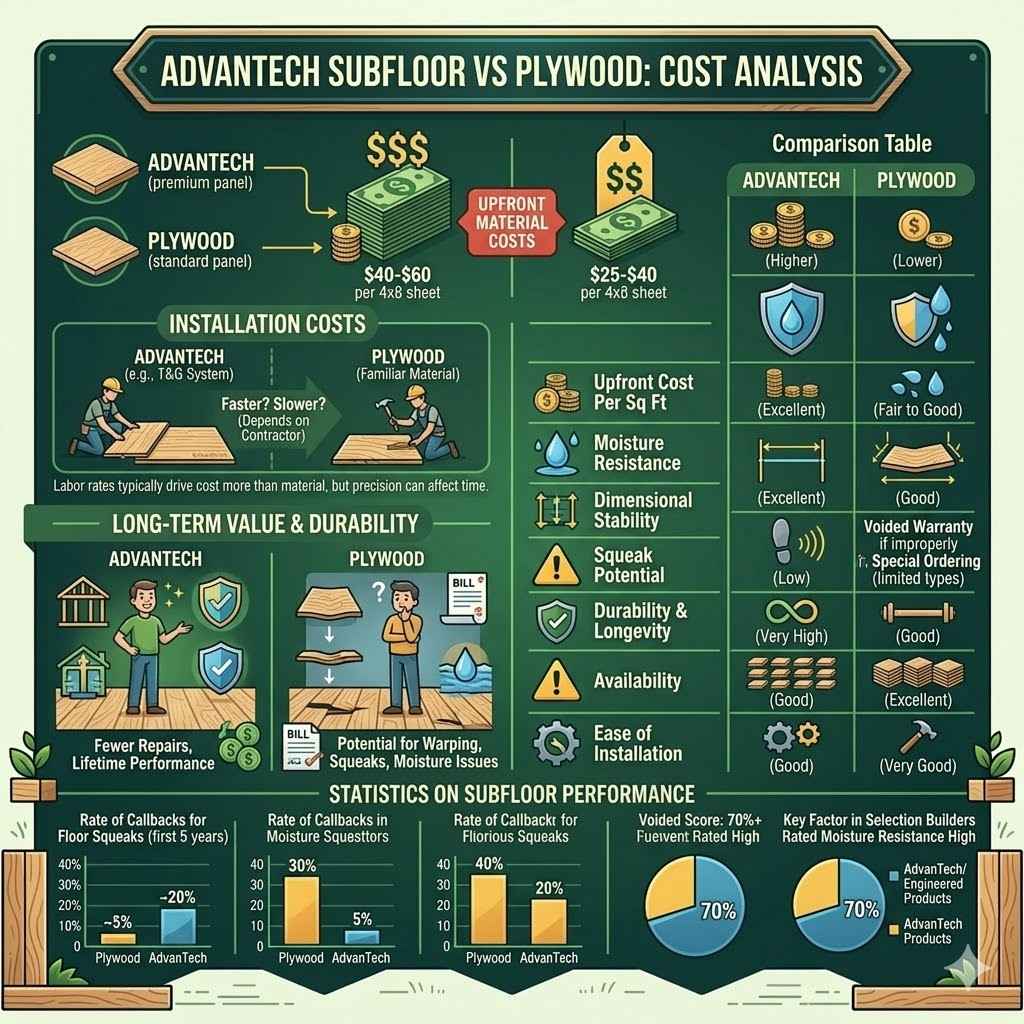
Generally, AdvanTech subflooring is more expensive per square foot than standard plywood. The exact cost difference can vary depending on the specific product grade, thickness, and local market prices. For example, a 4×8 sheet of 3/4-inch AdvanTech might cost between $40-$60, whereas a comparable sheet of good quality plywood could range from $25-$40.
This initial price disparity is a key factor for many builders and homeowners when making their selection.
Installation Costs
Installation costs can be relatively similar for both materials if labor rates are consistent. However, if AdvanTech’s precise fit or tongue-and-groove system speeds up installation, it could potentially lead to slightly lower labor costs. Conversely, if specialized adhesives or fasteners are required for AdvanTech and take longer to apply, installation costs might be higher.
Plywood, being more familiar, might allow for faster installation by less experienced crews. Overall labor costs are often driven more by the contractor’s experience and efficiency than the material itself.
Long-Term Value and Durability
This is where AdvanTech often proves its worth. Its superior moisture resistance and dimensional stability mean fewer problems down the line. This can translate into significant savings on future repairs, such as fixing warped panels or dealing with squeaky floors.
The longevity of AdvanTech can mean it lasts the lifetime of the house without needing replacement. Plywood, if exposed to moisture or not perfectly installed, might require repairs or even replacement of sections over time, adding to its total cost of ownership.
Potential Hidden Costs
Hidden costs can arise if either material is not installed correctly or if unforeseen issues occur. For plywood, potential hidden costs include the expense of fixing warped panels, addressing moisture damage, or dealing with squeaks that develop over time. For AdvanTech, if its unique installation requirements (specific adhesives, fasteners) are not followed, its warranty could be voided, leading to potential out-of-pocket expenses if problems arise.
Also, if a specific size or type of AdvanTech is not readily available, the cost of special ordering could add to the project.
| Feature | AdvanTech Subfloor | Plywood Subfloor |
|---|---|---|
| Upfront Cost Per Sq Ft | Higher | Lower |
| Moisture Resistance | Excellent | Fair to Good (depends on grade) |
| Dimensional Stability | Excellent | Good (can vary) |
| Squeak Potential | Low | Moderate to High |
| Durability & Longevity | Very High | Good |
| Availability | Good (widely available) | Excellent (ubiquitous) |
| Ease of Installation | Good (precise fit) | Very Good (familiar material) |
Statistics on Subfloor Performance
Research indicates that engineered subflooring products like AdvanTech often outperform traditional plywood in crucial areas. Studies have shown that engineered wood panels can have a significantly lower rate of callbacks for floor squeaks compared to plywood. For instance, one industry report suggested that nearly 20% of homeowners reported experiencing floor squeaks within the first five years of living in a home built with traditional plywood subflooring.
In contrast, homes using high-performance engineered subfloors saw that figure drop to under 5%. This statistic highlights the potential for a quieter, more comfortable living environment with engineered options. Furthermore, a survey of builders found that over 70% rated moisture resistance as a key factor in subfloor selection, with engineered products receiving higher marks in this category than standard plywood.
Frequently Asked Questions
Question: Is AdvanTech subflooring worth the extra cost compared to plywood
Answer: AdvanTech is often worth the extra cost if you prioritize long-term durability, moisture resistance, and a quieter floor. While it costs more upfront, it can save you money on repairs and provide a more stable, squeak-free floor over the life of your home.
Question: Can I install tile directly over AdvanTech subflooring
Answer: Yes, you can typically install tile directly over AdvanTech subflooring. Its strength and stability provide an excellent base. However, always check the tile manufacturer’s specific installation guidelines, as some may require an additional underlayment layer.
Question: How does AdvanTech compare to OSB (Oriented Strand Board) for subflooring
Answer: AdvanTech is generally considered superior to OSB in terms of moisture resistance, strength, and stability. OSB can swell significantly when wet and is less resistant to edge swelling than AdvanTech. AdvanTech’s engineered composition offers more consistent performance.
Question: Is plywood a safe choice for subflooring in areas prone to flooding
Answer: Plywood is not the best choice for subflooring in areas prone to flooding. It is highly susceptible to water damage, which can lead to swelling, warping, and structural integrity issues. Engineered products like AdvanTech offer much better protection in such environments.
Question: What is the best way to prepare a subfloor before installing finished flooring
Answer: The best preparation involves ensuring the subfloor is clean, dry, and level. Remove all debris and fasteners. Check for any high or low spots and address them.
For both AdvanTech and plywood, ensure they are securely fastened to the joists and that all panels are properly joined according to manufacturer instructions.
Wrap Up
When looking at AdvanTech subfloor vs plywood, the choice hinges on your project needs and budget. AdvanTech offers superior moisture resistance and stability, leading to fewer issues like squeaks and warping over time. Plywood is more affordable and widely available, making it a practical choice for many projects.
Consider your climate, budget, and desired longevity. Both can create a good subfloor when installed correctly.